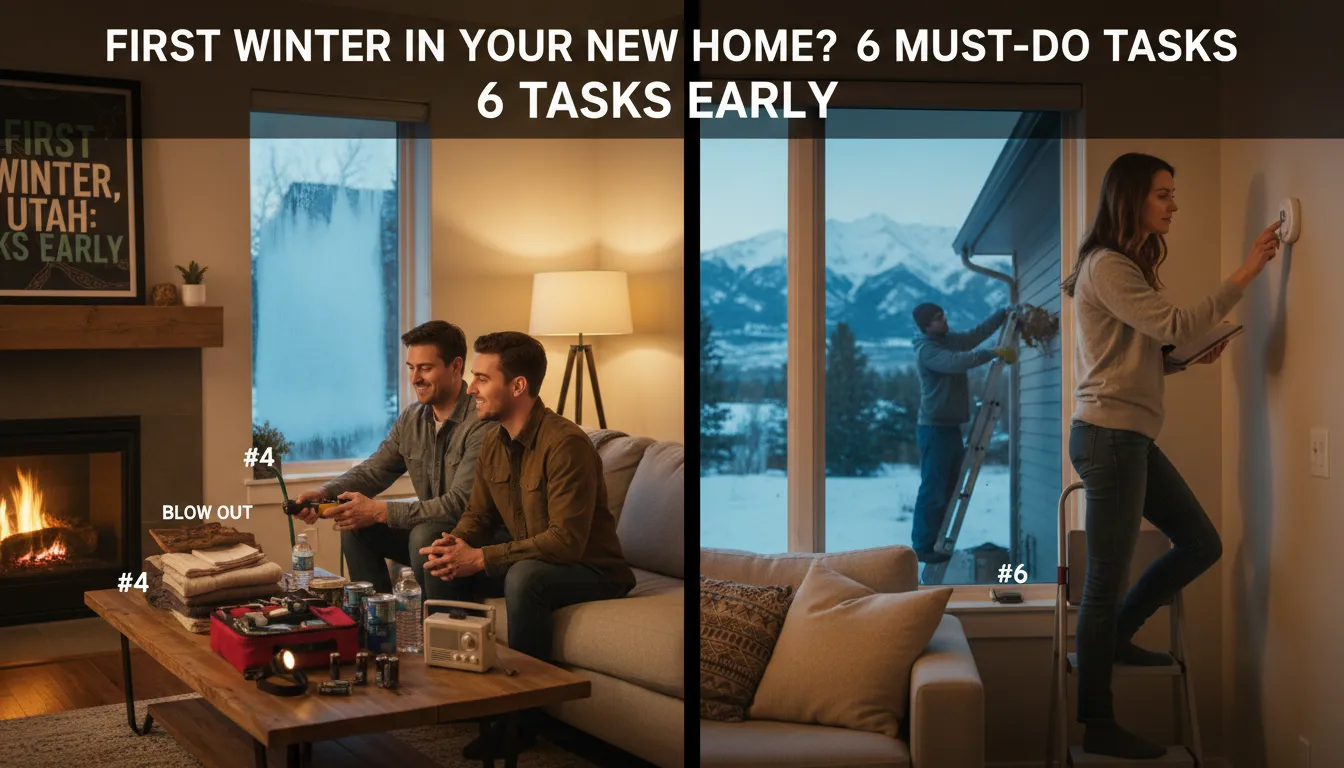
First Winter in Your New Home? 6 Must-Do Tasks to Tackle Early
Your first winter as a homeowner in Utah can feel like a crash course in home maintenance. The cold weather can result in unique challenges. Skipping basic prep can lead to repairs that cost far more than a few hours of prevention.
Your first winter as a homeowner in Utah can feel like a crash course in home maintenance. The cold weather can result in unique challenges. Skipping basic prep can lead to repairs that cost far more than a few hours of prevention.
1. Protect Plumbing by Winterizing Pipes
Frozen pipes rank among the most common and costly cold-season issues. When water freezes, it expands and puts intense pressure on pipes, which are rigid and can’t stretch. The result is cracks and burst plumbing, which frozen conditions may hide until the first warm temperatures.
Before the first frost hits, you should:
-
Disconnect and drain outdoor hoses.
-
Shut off interior supply lines to exterior faucets.
-
Install insulated faucet covers.
-
Wrap exposed pipes in basements, garages and crawl spaces.
2. Secure Your Home's Energy Envelope
Check everything that separates the heated indoor space from outside cold air. This energy envelope can develop weak spots, causing your furnace to work harder and drive up heating costs. Seal windows and doors with fresh weatherstripping or caulking. Check the attic insulation, as most heat can escape through a poorly insulated roof. This may also help to prevent ice dam formation on roof valleys.
Remember to check the garage for drafts, as it can easily leak heat due to poor insulation. Increase your home's thermal efficiency by closing the inner door to isolate the space from cold air when you come and go, and replace worn or compromised garage doors.
3. Inspect Your Heating and Ventilation Systems
Winter strains heating systems, so early checks matter. Replace your furnace and HVAC filters before the season begins, as restricted airflow lowers efficiency. If your home has a furnace, boiler or heat pump that you are unfamiliar with, a professional inspection can catch problems early.
Clean dryer vents and inspect chimney flues for blockages and to reduce the risk of fires. These quickly become blocked when snow piles up outside. Consider getting professional cleaners when you notice creosote stains on the exterior brickwork or inside the flue.
4. Clean Gutters and Downspouts
Clogged gutters quickly trap melting snow, which can refreeze and form ice dams, further obstructing the gutters. It forces water under the shingles and into walls and ceilings. Clean gutters thoroughly by removing all autumn leaf buildup, and confirm that downspouts move water several feet away from the foundation.
5. Prepare Your Property's Exterior for Snow and Ice
Winter may hide some hazards. Before cold weather hits, walk your property and look for:
-
Stair treads and landings.
-
Loose deck boards.
-
Broken or cracked roof tiles.
-
Wobbly rails and guard rails.
-
Garden gate handles and hinges.
-
Paving and concrete surfaces.
Loose or rotted components become dangerous when covered in snow. Tighten fasteners and replace damaged sections early. Apply protective sealants to concrete to prevent moisture and chemical intrusion during freeze-thaw cycles, especially if you use deicing salts.
6. Remove Snow Buildup
When it snows, its removal is about safe property use, not convenience. It piles against the siding or near the foundation, increasing moisture seepage as it melts. Heavy loads on a roof may cause significant damage if the rafters are in poor condition.
Invest in quality removal equipment, such as scoops and shovels, to make clearing a pathway or deicing a roof much easier.
Face the Freeze in Utah Like a Pro
Handling tasks like winterizing pipes, checking gutters and cleaning the furnace filters and chimney flue early helps your first winter feel manageable instead of stressful. With basic preparation, your home stays safer, warmer and easier to maintain during the coldest Utah months.
Keep reading
More from the blog
Gas Line Installation: What Homeowners Need to Know First
Roof Timeline Guide for Buying an Older Utah Home
How to Choose Windows for a Utah Home With a Mountain View