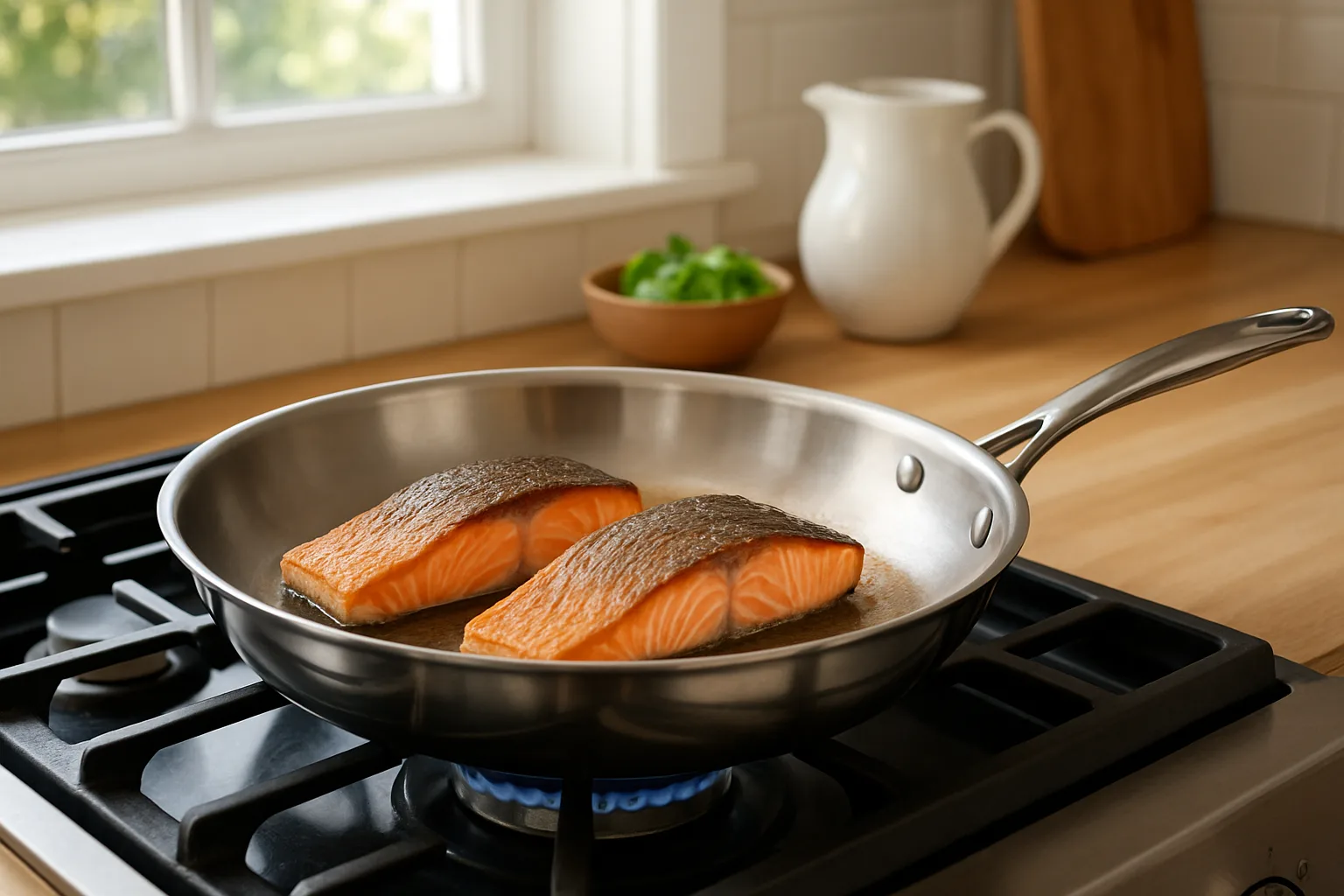
Best Stainless Steel Frying Pan: Made In vs. All-Clad vs. Cuisinart vs. Heritage Steel
Which stainless steel skillet is worth it? Thickness, cladding, rims and handles explained, plus the best Made In, All-Clad, Cuisinart and Heritage pans.
A good stainless steel frying pan can outlast every other pan in the kitchen. There is no coating to wear off, it goes from stovetop to oven, and it won't react with acidic food. The hard part is telling a well-built skillet from a thin one. Ply counts and price don't predict which pan heats evenly or stays flat.
Here: what separates stainless skillets, the 12-inch pans worth buying at each budget, and how to keep food from sticking.
As an Amazon Associate, Best Utah Real Estate earns from qualifying purchases.
Quick verdict
- Best value: the Cuisinart MultiClad Pro 12-Inch Skillet: sealed rims, a wide flat surface, a helper handle and one of the most secure handles at any price.
- Safest long-term mid-range buy: the Made In 12-Inch Stainless Clad Frying Pan, with a 10-inch flat cooking surface and fast heating.
- American-made with a comfortable handle: the Heritage Steel Eater Series 12-Inch Frying Pan with Lid, built in Clarksville, Tennessee.
- The classic: the All-Clad D3 12-Inch Fry Pan: even heating, with a love-it-or-hate-it grooved handle.
- Money no object: the Demeyere Atlantis Proline 12.6-Inch Fry Pan for heat retention and induction, or Hestan NanoBond for a lighter, quicker pan.
The pans side by side
| Pan | Shop | Construction | Rims | Handle | Stands out for |
|---|---|---|---|---|---|
| Cuisinart MultiClad Pro 12-Inch Skillet |  Buy on Amazon | Fully clad | Sealed | Thumb groove, won't rotate; helper handle | Value, wide flat surface |
| Made In 12-Inch Stainless Clad Frying Pan |  Buy on Amazon | Fully clad | Wide, flared (13 in rim to rim) | Flat top, widens toward the end | 10-inch flat cooking surface, fast heating |
| Heritage Steel Eater Series 12-Inch Frying Pan with Lid |  Buy on Amazon | Fully clad, made in the USA | Flared | Flat top, rounded sides | Comfort, brushed finish hides fingerprints |
| All-Clad D3 12-Inch Fry Pan |  Buy on Amazon | 3-ply, made in Pennsylvania | Flared | Deep concave groove | Even heating; polarizing handle |
| Demeyere Atlantis Proline 12.6-Inch Fry Pan | 7-ply, 5 mm thick | — | Welded, no rivets | Heat retention, induction, stays flat | |
| Tramontina Tri-Ply Clad 12-Inch Fry Pan | 3-ply, made in Brazil | Smooth edges | — | Budget All-Clad alternative | |
| Hestan NanoBond | Fully clad, titanium-bonded surface | Sealed | Flush rivets | Scratch resistance, searing | |
| All-Clad D3 Everyday | Buy on Amazon
| Fully clad | — | Subtle groove, almost an inch longer than D3 | Very even heating; warps on high-power induction |
What actually matters in a stainless skillet
Thickness, not ply count
Most stainless frying pans measure around 3 mm thick, and within that range heat retention and conduction are hard to predict. The thickest pans hold heat far better than the rest, but they are also slow to heat up. Ply count tells you even less: five-ply pans were not thicker than three-ply pans, and the number of layers on the box didn't line up with better performance.
For a budget pan, look for walls at least 2.5 mm thick and ideally close to 3 mm. Most brands don't list thickness, so use weight as a stand-in: a 12-inch stainless pan around 3 mm thick should weigh 3 pounds or more.
Fully clad vs. disc bottom
A fully clad pan has bonded layers of steel and aluminum (sometimes copper) from rim to rim. A disc-bottom pan has single-layer steel walls and a thick plate on the base, visible as a seam line. The thick, flat disc can heat the base very evenly; the Fissler Original-Profi's nearly 7 mm disc showed essentially no difference between center and edge. The weakness is the thin single-layer walls above it, which scorch food around the edges, and a cheap disc can come loose after thermal shock or a hard knock. For one pan that does everything, fully clad is the safer pick.
Rims: flared and sealed
Flared rims make pouring and plating cleaner; straight rims, like the IKEA Hemkomst's, pour less smoothly. Sealed rims matter more for durability. Most clad pans leave the aluminum core exposed at the edge, and over time it can recede until the steel layers turn sharp or separate. A sealed rim removes that risk. The Cuisinart MultiClad Pro, Misen, IKEA Sensuell and Hestan's ProBond and NanoBond lines have one.
The handle
Rounded handles feel great in the store but get slippery with a towel, an oven mitt or soapy hands, and the pan rotates when tilted. A flat top or a groove locks it in place. Look for a metal handle at least 8 inches long; steel conducts heat slowly, so an all-steel handle stays cooler on the stovetop. Skip plastic or wooden ones. Riveted handles are the most secure; welded and detachable ones can work loose or break off.
The picks in detail
Cuisinart MultiClad Pro 12-Inch Skillet
The MultiClad Pro is the clear budget winner, and it looks pricier than it is: polished interior, brushed exterior, a thin polished ring at the top. It has one of the widest flat cooking surfaces of any stainless skillet, sealed rims and a helper handle for lifting a full pan.
The handle is the best part: a slight curve and a thumb groove on top keep the pan from spinning when tilted. Next to the Tramontina Tri-Ply Clad, the handle is about an inch longer and the cooking surface half an inch wider. It heats evenly and holds heat as well as All-Clad.
Cuisinart MultiClad Pro 12-Inch SkilletCheck today’s price on Amazon

 Buy on Amazon →
Made In 12-Inch Stainless Clad Frying Pan
Sold as 12 inches, this pan measures 13 inches rim to rim thanks to its wide flared rims. More useful is the flat cooking surface: at 10 inches, it is the widest of any pan in this guide, so chicken thighs or a pile of vegetables can spread out and brown instead of steaming. It is also one of the fastest stainless pans to heat up, and it holds up well over years of use.
The handle is flat on top like Heritage Steel's but widens toward the end for a better grip. It is one of the three safest long-term mid-range buys.
Made In 12-Inch Stainless Clad Frying PanCheck today’s price on Amazon

 Buy on Amazon →
Heritage Steel Eater Series 12-Inch Frying Pan with Lid
Heritage Steel is a family-owned company in Clarksville, Tennessee, and the Eater Series is one of the least expensive American-made stainless pans. The brushed exterior hides fingerprints, the flared rims pour cleanly, and it is neither too heavy nor too light.
The handle is flat on top, so it won't twist in your hand, and rounded on the sides so it stays comfortable. Like Made In, it has proven a solid, long-lasting all-around pan. Heritage Steel's pricier Titanium Series adds a titanium-reinforced surface against pitting and corrosion, problems that are rare anyway, and swaps in a rounded, tapered handle. The Eater Series is the better buy.
Heritage Steel Eater Series 12-Inch Frying Pan with LidCheck today’s price on Amazon

 Buy on Amazon →
All-Clad D3 12-Inch Fry Pan
D3 is All-Clad's original and bestselling line, made at its Pennsylvania factory. This pan has a polished exterior and flared rims, it heats evenly, and it cooks very well. The handle is the most polarizing of any stainless pan. A deep concave groove on top locks the pan in place so it can't rotate, and it works especially well through a towel or oven mitt. Bare-handed, its edges dig into the palm.
All-Clad's pricier lines add little: D5 spreads heat only about 15 degrees more evenly than D3, and several aluminum-core pans heat as fast as Copper Core or faster. D3 Everyday is a separate, newer line with a gentler groove, a longer handle and a wider flat surface. It heats very evenly, but its bottom warped noticeably on a high-powered induction cooktop, so preheat it gradually there.
All-Clad D3 12-Inch Fry PanCheck today’s price on Amazon

 Buy on Amazon →
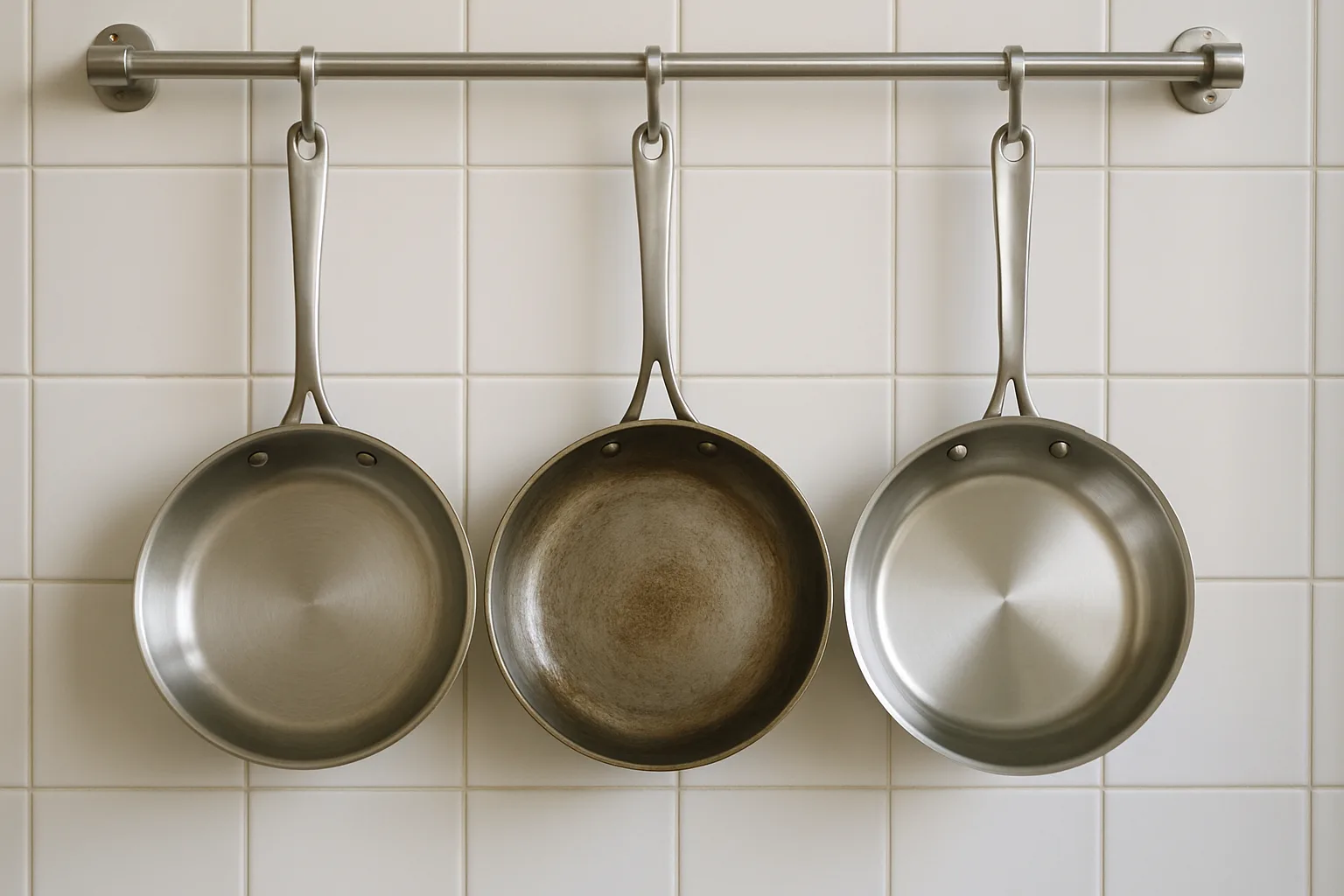
Premium pans: when they're worth it
The Demeyere Atlantis Proline 12.6-Inch Fry Pan is the heaviest pan here and one of the slowest to heat. Once hot, though, it holds its temperature better than almost anything else. Seven bonded layers make it 5 mm thick, so it heats a lot like cast iron. Its bottom three layers are steel, which makes it efficient on induction and practically warp-proof. It also stays quiet on induction, where most stainless pans buzz or click. Its welded handle leaves the cooking surface smooth, but welded handles are less secure and can, rarely, break off.
Hestan NanoBond takes a different approach. Titanium is bonded to the steel surface in a vacuum chamber, which makes a gray-blue layer about four times harder than typical stainless. It has a silky feel, scratches less, releases eggs slightly better and sears beautifully, with flush rivets and sealed rims. Pick it for a lighter, more responsive pan; pick Demeyere for heat that stays put.
Budget pans to look at, and ones to skip
The Tramontina Tri-Ply Clad 12-Inch Fry Pan performs a lot like All-Clad for much less. It is made in Brazil, with a polished exterior, gently sloped walls and smooth edges. It doesn't lead on any one spec, but it cooks well. Over months of use its bottom can bow very slightly upward, without affecting cooking. Henckels Clad H3 is nearly identical in build and has a comfortable flat-topped handle, but it is one of the thinner pans and among the least even from center to edge, and its 12-inch pan is sold only in a two-pan set with a 10-inch.
Skip pans with paper-thin walls, plastic handles or detachable handles. The Farberware Classic is ultra light, dents easily and tops out at 350°F in the oven. Carote's walls measure just 1.9 mm, and its detachable handle is shorter than average and jiggles even when locked on. For a coated pan, see the nonstick pan comparison instead.
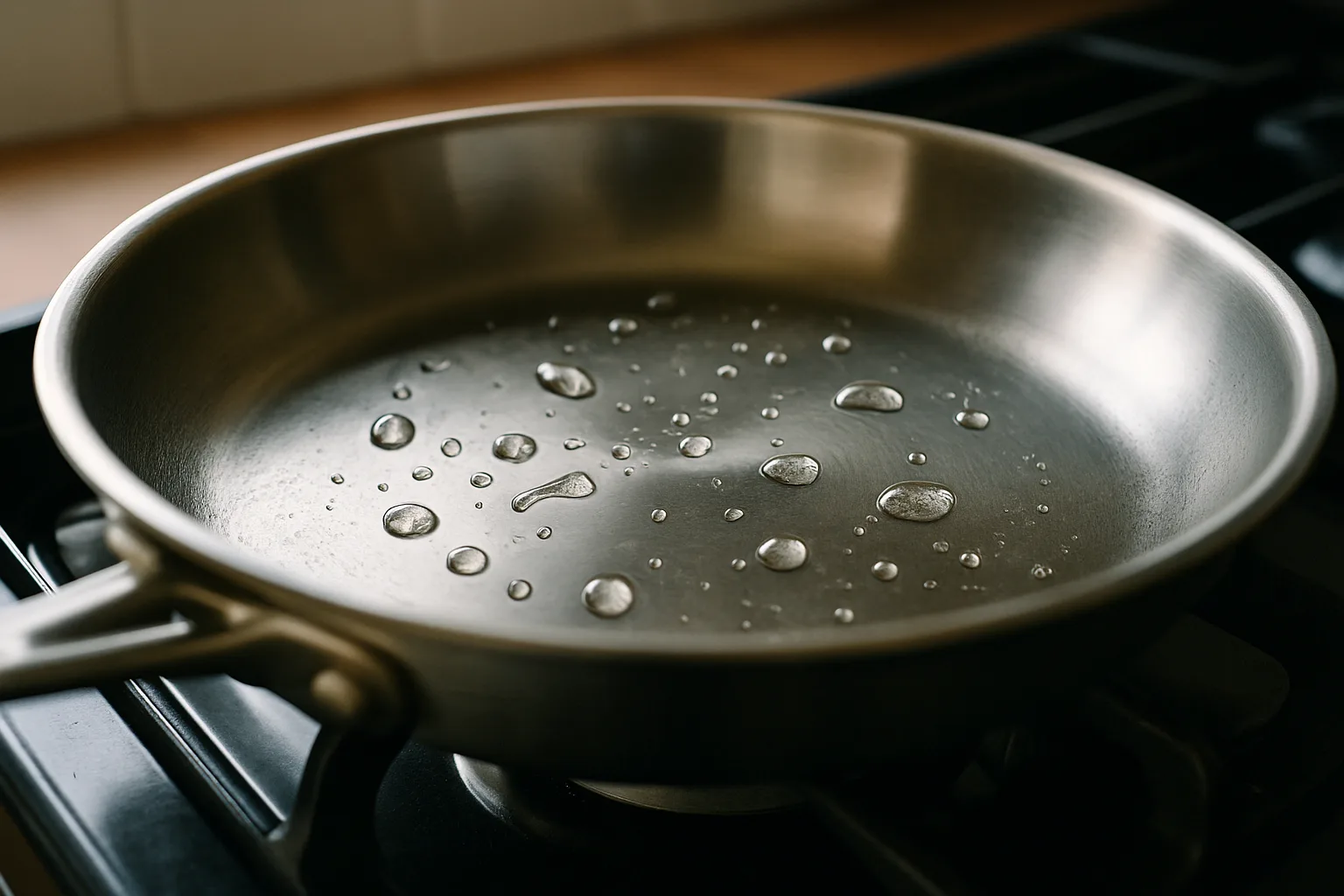
How to keep food from sticking
- Preheat fully, and gradually. A pan that hasn't come up to heat cooks unevenly and grabs food. The de Buyer Affinity runs uneven early but cooks evenly once fully preheated, while the de Buyer Alchimy reaches 563°F at the center in one minute and needs a close eye. On induction, heat gradually to avoid warping.
- Don't crowd the pan. Food piled into a small or bowl-shaped pan steams and turns gray; a wide flat surface lets it brown.
- Keep the pan flat. A warped bottom lets oil run to the low spots instead of staying under the food. Never plunge a hot pan into cold water; that sudden shock is what warps metal, and induction and glass-top stoves need full contact.
- Know your surface. Highly polished interiors release food a little more easily. Textured surfaces, like the Fissler Original-Profi's, keep oil under food for better browning but make eggs harder to slide.
For heavy, heat-hoarding searing, compare a cast iron skillet.
Set or single pans?
Set piece counts are inflated: lids and plastic utensils count as pieces, and one "15-piece" set held six pans. Sizes trend small: even the well-made All-Clad and Made In 10-piece sets skip the 12-inch skillet that four-serving recipes need. The All-Clad set worked out to about 29% less than the same pieces bought singly, and the Made In set about 16% less, which only matters if you would use every piece. Goldilocks' fully clad 8-piece set does include 10- and 12-inch skillets. For most kitchens, one good 12-inch skillet now and other pans as needed is the smarter buy.
Who should buy which
- Best value: Cuisinart MultiClad Pro 12-Inch Skillet.
- Widest cooking surface: Made In 12-Inch Stainless Clad Frying Pan.
- American-made, with a lid: Heritage Steel Eater Series 12-Inch Frying Pan with Lid.
- A handle that can't rotate: All-Clad D3 12-Inch Fry Pan.
- Induction and steady heat: Demeyere Atlantis Proline 12.6-Inch Fry Pan.
- Tightest budget: Tramontina Tri-Ply Clad 12-Inch Fry Pan.
Posted by Kristopher Larson
Frequently asked questions
What is the best stainless steel frying pan for most people?
The Cuisinart MultiClad Pro 12-Inch Skillet is the best value: sealed rims, one of the widest flat cooking surfaces, a helper handle and a grooved handle that won't rotate. With more to spend, Made In, Heritage Steel's Eater Series and All-Clad's D3 Everyday are the safest long-term mid-range buys. At the top, Demeyere Atlantis Proline and Hestan NanoBond lead.
All-Clad vs. Made In: which stainless pan is better?
Both cook very well. The Made In 12-inch pan has a wider 10-inch flat cooking surface, heats quickly and has a flat-topped handle that widens toward the end. The original All-Clad D3 heats evenly, but its deeply grooved handle is polarizing: it never rotates, especially through a towel, yet its edges can dig into a bare hand. Comfort often decides it.
How thick should a stainless steel skillet be?
Look for at least 2.5 mm and ideally about 3 mm. Few brands list thickness, so check the weight: a 12-inch stainless pan around 3 mm thick should weigh 3 pounds or more. Much thicker pans, like the 5 mm Demeyere Atlantis Proline, hold heat far better but take longer to heat up.
Is a 5-ply stainless pan better than a 3-ply pan?
Not automatically. Five-ply pans are not necessarily thicker than three-ply pans, and the number of layers doesn't line up with better performance. All-Clad's D5, for example, spreads heat only about 15 degrees more evenly than its three-ply D3. Overall thickness and full cladding matter more than the layer count.
Why does food stick to a stainless steel pan?
Usually the pan isn't fully preheated, it's overcrowded so food steams, or the bottom has warped so oil runs to the edges. Let the pan heat completely (gradually on induction), leave space between pieces, and never plunge a hot pan into cold water, which can warp it. For everyday eggs, a nonstick pan is still easier.
Should I buy a stainless steel cookware set or single pans?
Single pans, for most kitchens. Set piece counts include lids and utensils, sizes trend small, and even premium sets often skip a 12-inch skillet. Sets save roughly 20% versus buying the same pieces separately, but only if every piece gets used. Start with one good 12-inch skillet and add pans as needed.
Keep reading
More from the blog
How to Turn Your Garage Into a Home Gym or Personal Training Studio: Flooring, Racks and Local Rules

How to Turn a Spare Room Into a Home Podcast Studio: Mic, Interface and Acoustic Treatment
Home Dog Grooming Setup: Shernbao vs Shelandy Dryers and the Right Table