What Size Dehumidifier Do You Need? Pint Ratings, Desiccant vs. Compressor, and Midea Cube vs. Honeywell vs. Ivation
How to size a dehumidifier by pints per day, why ratings changed, desiccant vs. compressor vs. mini units, and picks from Midea, Honeywell and Ivation.
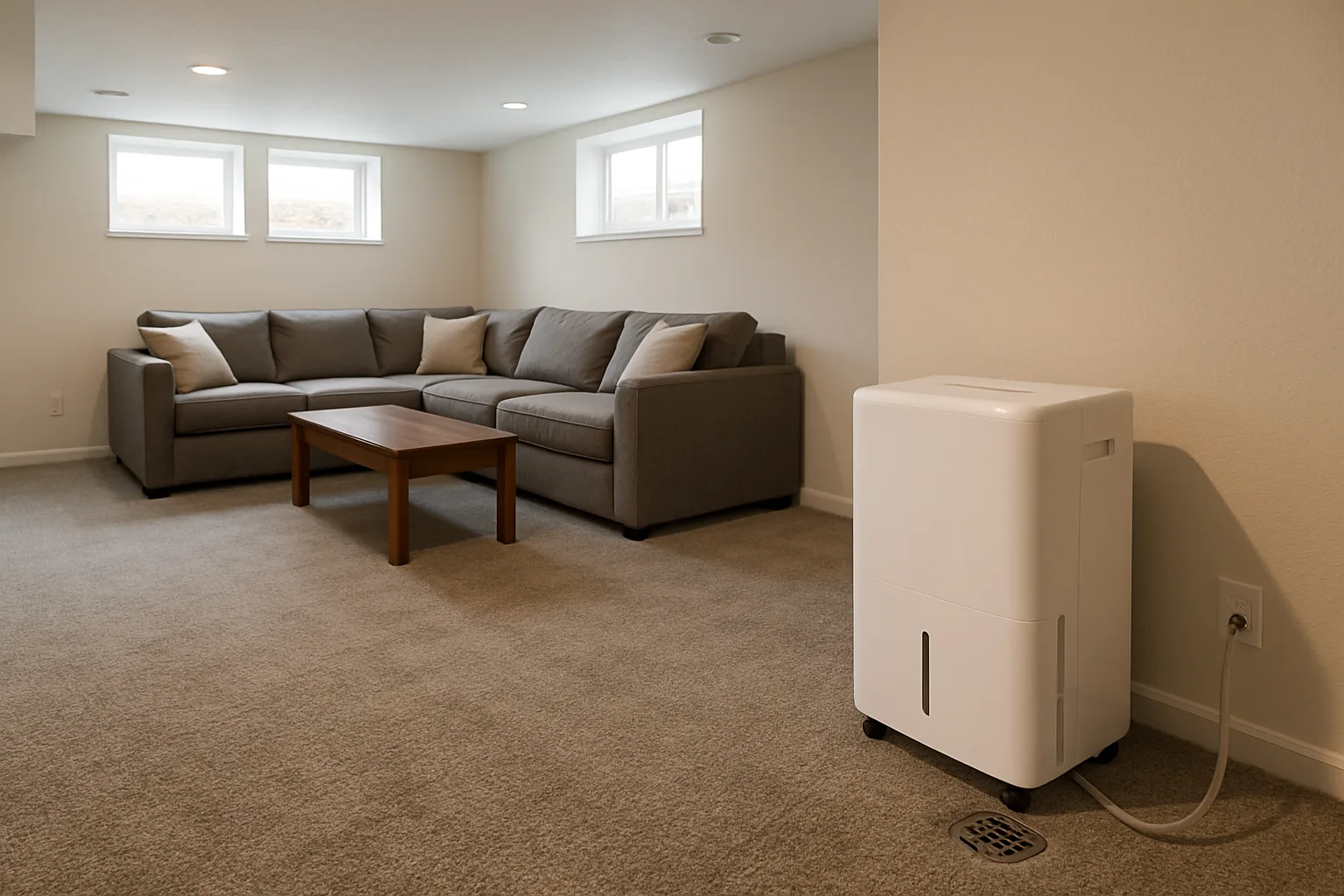
A basement that smells musty, a bathroom mirror that never fully clears or a closet where leather shoes grow a white bloom all point to the same problem: too much water vapor in the air. A dehumidifier is the usual fix, but buying one has become confusing. Pint ratings changed under a newer federal test, most brands buy their machines from the same few factories, and the tiny units sold for closets often remove less water in a day than a single glass holds.
This guide covers how to size a dehumidifier, when a desiccant model beats a compressor model, why built-in pumps are worth skipping, and which current models make sense for basements, bedrooms and small spaces.
As an Amazon Associate, Best Utah Real Estate earns from qualifying purchases.
Quick verdict: which dehumidifier to buy
- Most basements: Midea Cube 50 Pint (MAD50S1QWT-A). ENERGY STAR certified at 2.01 liters per kWh, with a 4.2-gallon bucket that needs emptying far less often than a typical unit. No built-in pump.
- Bedrooms, bathrooms and smaller basements: Midea Cube 20 Pint (MAD20S1QWT). The same stackable design with a 3.2-gallon bucket.
- A traditional upright design: Honeywell TP-Fit 32 Pint (TPFIT32WK). ENERGY STAR certified at 2.01 L/kWh, with a laundry mode and a continuous-drain outlet.
- Cold basements, crawlspaces and closets: Ivation 13-Pint Desiccant. A desiccant rotor that keeps working down to 33°F, where compressor units struggle.
- Skip: palm-size thermoelectric "mini" dehumidifiers for anything bigger than a small cabinet.
Spec comparison
| Model | Shop | Type | Rated capacity (pints/day) | Bucket | Rated wattage | ENERGY STAR |
|---|---|---|---|---|---|---|
| Midea Cube 50 (MAD50S1QWT-A) |  Buy on Amazon Buy on Amazon
| Compressor | 50 | 4.2 gal | 490 W | Yes, 2.01 L/kWh |
| Midea Cube 20 (MAD20S1QWT) |  Buy on Amazon Buy on Amazon
| Compressor | 20 | 3.2 gal | 214 W | Yes, 1.70 L/kWh |
| Honeywell TP-Fit 32 (TPFIT32WK) |  Buy on Amazon Buy on Amazon
| Compressor | 32 | 4.7 L | 320 W | Yes, 2.01 L/kWh |
| Ivation 13-Pint Desiccant |  Buy on Amazon Buy on Amazon
| Desiccant | 13 (at 68°F, 60% RH) | 3.8 pints | 470 W high / 280 W low | No |
| Ivation 19-Pint Desiccant |  Buy on Amazon Buy on Amazon
| Desiccant | 19 | About ½ gal | See listing | No |
Capacity, bucket and wattage figures come from each manufacturer's listing. ENERGY STAR efficiency values (integrated energy factor, in liters of water removed per kilowatt-hour) come from the ENERGY STAR certified product database. Check the exact model number before buying: the Midea and Honeywell lines include pump versions with nearly identical names.
Sizing: pints per day, not square feet
Dehumidifiers are rated by how many pints of water they can pull from the air in 24 hours. Square-footage claims on the box vary wildly between brands and say little on their own. ENERGY STAR's dehumidifier guidance sizes by how damp the space is and says it's better to oversize than undersize:
- Slightly to moderately damp (50–75% relative humidity, musty smell in humid weather): about 20–30 pints a day for small and medium spaces, 30 or more for large ones.
- Very damp (75–90%, damp spots on walls or floor): about 25–40 pints for small and medium spaces, 40 or more for large ones.
- Wet (90–100%, seeping walls or standing water): about 30–50 pints for small and medium spaces, 50 or more for large ones.
An oversized unit isn't wasteful the way an oversized air conditioner can be. It reaches the set humidity faster and then cycles off. A small unit running nonstop in a big basement often never gets there.
Why a "50-pint" unit used to be called 70
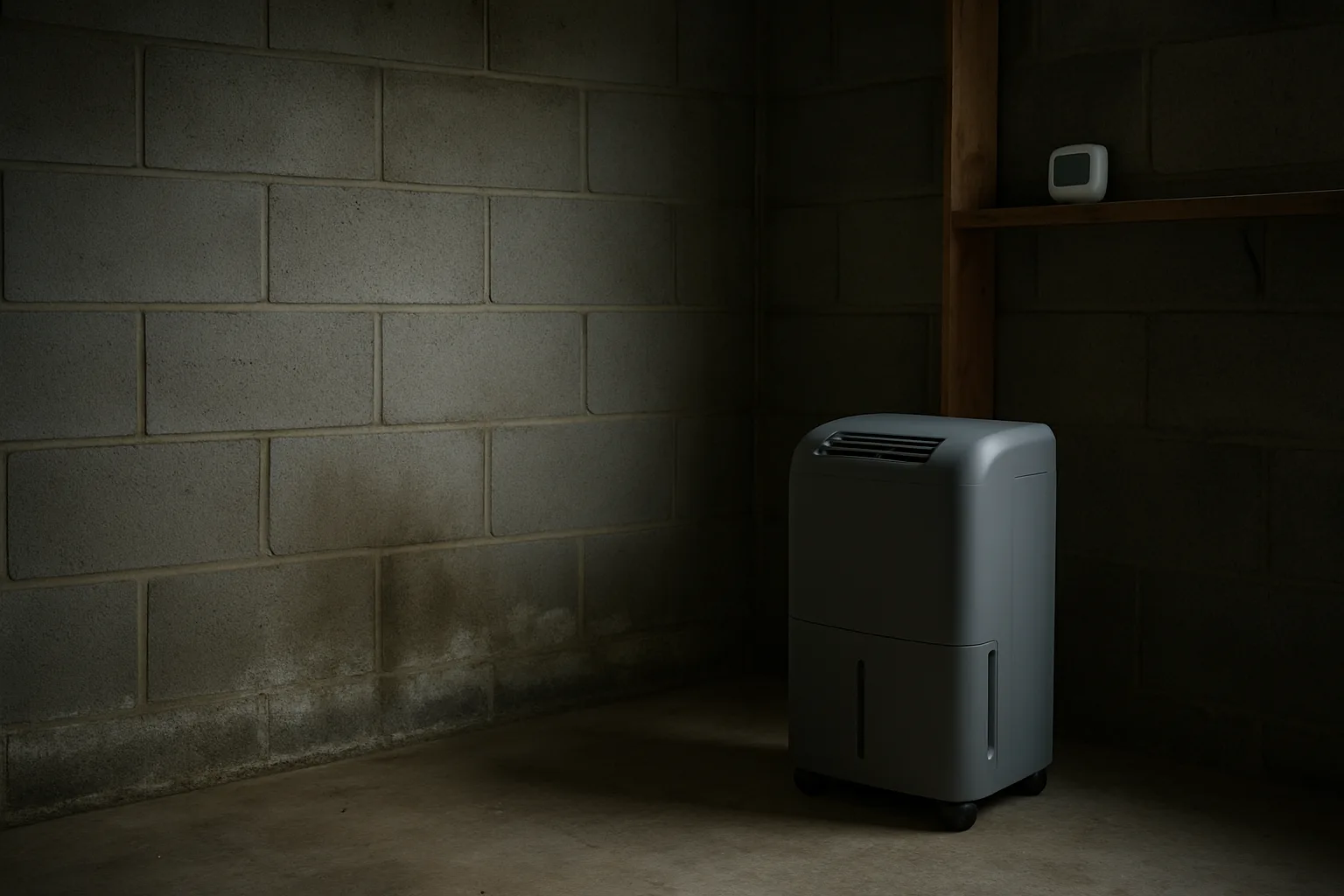
The Department of Energy changed its dehumidifier test procedure. Portable units used to be tested at 80°F; they are now tested at 65°F, which ENERGY STAR says better reflects basement conditions. Cooler air holds less moisture, so the same machine now earns a smaller pint rating. That's why many listings read "50 pint (previously 70 pint)" and why Midea describes its 20-pint Cube as similar to a 30-pint unit under the old rules. When comparing an older dehumidifier with a new one, compare like with like.
Compressor vs. desiccant vs. thermoelectric
Compressor (refrigerant)
Nearly every full-size dehumidifier works like a small air conditioner: a fan pulls air across a cold coil, moisture condenses and drips into the bucket, and the air is reheated slightly on the way out. These units are the most efficient choice in warm, humid rooms. Below about 65°F, ENERGY STAR notes, frost can form on the coils and cut performance, which is why many models include an auto-defrost cycle.
Desiccant
A desiccant unit uses a slowly turning wheel of moisture-absorbing material. A heater drives the water back out of the wheel and into the bucket. Because it doesn't rely on a cold coil, it keeps working in cool spaces; Ivation rates its 13-pint model for 33°F to 104°F. The trade-offs are higher power draw for the water removed and warmer exhaust air, which can be a bonus in a chilly basement and a drawback in summer.
Thermoelectric (Peltier) minis
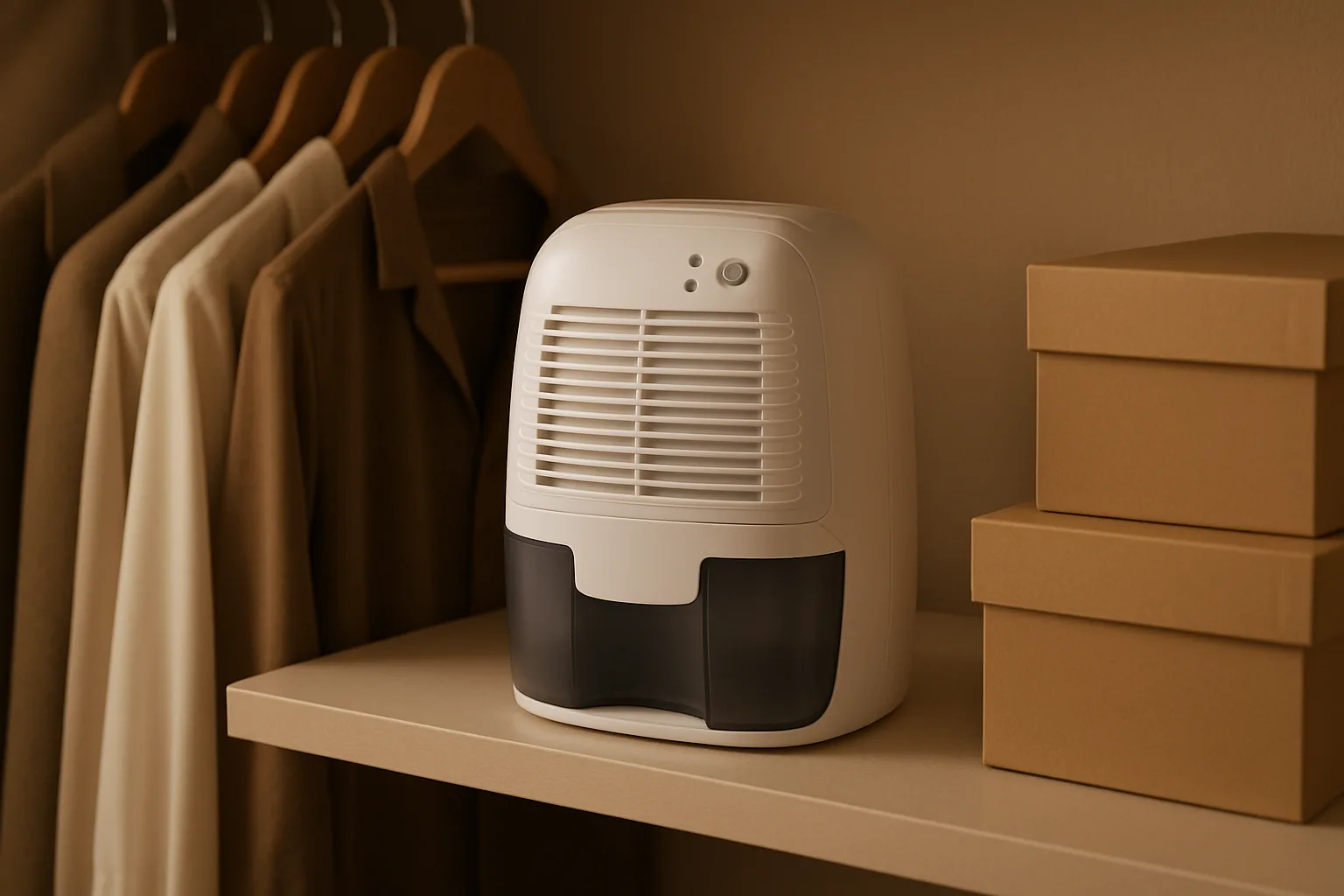
The small, quiet units sold for closets and bathrooms use a solid-state Peltier chip instead of a compressor. They are typically rated in ounces per day. One popular mini is rated at up to 18 ounces a day, roughly a pint, and only above 59°F. A 20-pint compressor unit is rated to remove about twenty times that. For anything larger than a cabinet or small closet, a mini isn't worth the money.
The Midea Cube picks
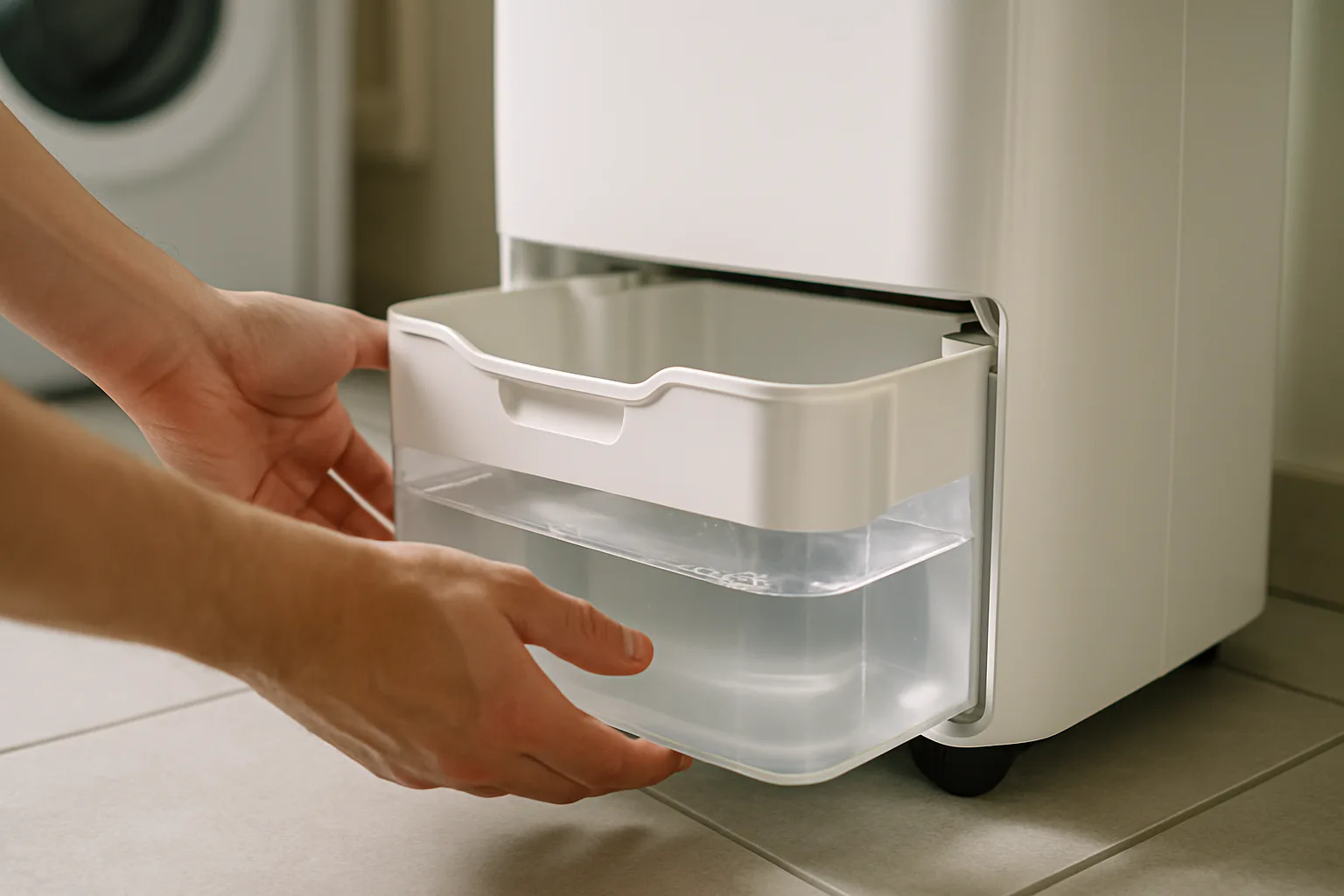
The Cube's design is the main reason to choose it. Instead of a small drawer-style bucket, the whole lower half of the unit is the water tank: 4.2 gallons on the 50-pint model and 3.2 gallons on the 20-pint model. Midea says that lets it run up to three times longer between emptyings than a conventional unit. The body nests down for storage and extends for use, it has Wi-Fi control with Alexa and Google Assistant support, and a hose outlet allows continuous drainage to a floor drain.
Midea Cube 50 Pint DehumidifierCheck today’s price on AmazonBuy on Amazon →
The large tank has a downside: full, it is heavy. Owners who can't easily carry several gallons up stairs should plan on the drain hose from day one. The 20-pint version suits a bedroom, bathroom or a smaller, only mildly damp basement.
Midea Cube 20 Pint DehumidifierCheck today’s price on AmazonBuy on Amazon →
Honeywell TP-Fit 32: the conventional option
Buyers who prefer the familiar upright shape with a front bucket can look at Honeywell's TP-Fit line. The 32-pint TPFIT32WK is rated at 320 watts, carries an ENERGY STAR certification at 2.01 L/kWh, and adds a laundry mode, an auto-comfort mode, a washable filter, a 24-hour timer and a continuous-drain tube. Its 4.7-liter bucket is much smaller than the Cube's, so the drain hose matters even more in a damp space.
Honeywell TP-Fit 32 Pint DehumidifierCheck today’s price on AmazonBuy on Amazon →
Desiccant picks for cold spaces
The Ivation 13-Pint Desiccant is rated at 13 pints a day at 68°F and 60 percent humidity, for spaces up to about 270 square feet, with a 3.8-pint reservoir or a continuous-drain hose. It has a target-humidity setting, a timer and auto-restart after a power outage. For a slightly larger cool room, the Ivation 19-Pint Desiccant is rated for up to about 410 square feet and the same 33°F to 104°F range.
Why to skip the built-in pump
Pump models push water up and out, to a sink or window, so they can drain without a floor drain. The pump is also one more moving part, and it is a frequent complaint in owner reviews. A gravity drain hose to a floor drain or sump pit has nothing to wear out. If the only drain is above the unit, a separate condensate pump can be replaced on its own when it fails, without retiring the whole dehumidifier. ENERGY STAR also advises keeping drainage away from electrical circuits and keeping hoses clear of cords.
Fire safety: check old units against recalls
Many dehumidifier brands share manufacturers, and two large recalls show why that matters. One CPSC recall covered about 2 million dehumidifiers made by New Widetech before September 2017 and sold under brands including Honeywell, Danby, De'Longhi, Friedrich, Haier and Whirlpool, after 107 reports of overheating or fire. A later Gree recall covered about 1.56 million dehumidifiers made between 2011 and 2014 under brands including Kenmore and GE. Anyone running an older unit can check its brand and model on the CPSC dehumidifier recall list. Plugging a dehumidifier directly into a wall outlet, rather than a light-duty extension cord, is standard advice for any appliance that runs for hours.
Setup tips that improve results
- Set it to about 50 percent. ENERGY STAR puts the optimum indoor range at 30 to 50 percent; higher levels can encourage mold.
- Close doors and windows to the space so the unit isn't drying the outdoors.
- Give it room. Keep it away from walls and furniture unless the exhaust is on top.
- Clean the filter on the schedule in the manual. A clogged filter cuts airflow and capacity.
- Fix the source. A dehumidifier treats symptoms. Gutters dumping water at the foundation, a slow plumbing leak or an unvented dryer will keep refilling the bucket. These roof drainage upgrades and water leak sensors and shutoff valves address two of the common causes.
For basements that also collect dust or musty odors, a dehumidifier pairs well with an air purifier sized by CADR. For buyers touring homes, a running dehumidifier and a bucket that fills daily is worth asking about, because it often points to a drainage issue rather than a one-time leak.
Who should buy which
- Damp or large basement, floor drain nearby: Midea Cube 50 with the hose connected.
- Bedroom, bathroom or mildly damp small basement: Midea Cube 20.
- Prefers a traditional upright unit: Honeywell TP-Fit 32.
- Unheated basement, crawlspace, cabin or closet that stays cool: Ivation 13- or 19-pint desiccant.
Posted by Kristopher Larson
Frequently asked questions
What size dehumidifier is needed for a basement?
ENERGY STAR sizes by dampness. A moderately damp basement typically needs 20 to 30 pints a day, a very damp one 25 to 40 pints, and a wet basement with seeping walls 30 to 50 pints or more. Larger spaces need the higher end, and ENERGY STAR says it is better to oversize than undersize.
Why are dehumidifiers rated at 50 pints when older models said 70?
The Department of Energy changed its test procedure. Portable units are now tested at 65°F instead of 80°F, and cooler air holds less moisture, so the same machine earns a lower pint rating. Many listings now say "50 pint (previously 70 pint)."
Is a desiccant or compressor dehumidifier better?
Compressor dehumidifiers are more efficient in warm, humid rooms and are the usual choice for basements and living spaces. Desiccant models keep working in cold spaces where compressor coils frost up, such as unheated basements, crawlspaces and cabins, but they draw more power for the water removed and blow out warmer air.
Do mini dehumidifiers work?
Only in very small spaces. Thermoelectric mini dehumidifiers are usually rated in ounces per day; one popular model is rated at up to 18 ounces, roughly a pint, and only above 59°F. A 20-pint compressor unit is rated to remove about twenty times as much, so minis suit cabinets and small closets at most.
What humidity should a dehumidifier be set to?
ENERGY STAR puts the optimum indoor relative humidity at 30 to 50 percent and notes that higher levels may promote mold growth. Setting a basement dehumidifier to about 50 percent is a common starting point. A separate hygrometer helps confirm the unit's built-in reading.
Should a dehumidifier have a built-in pump?
Only if there is no floor drain or sump below the unit. Built-in pumps are a frequent failure point in owner reviews. A gravity drain hose has no moving parts, and where water must be lifted, a separate condensate pump can be replaced on its own if it fails.
Keep reading
More from the blog

Best Christmas Tree Stand for a Real Tree: Steel vs. Plastic vs. Ratchet (Cinco, Jack-Post, Krinner)

Costway Christmas Inflatables Reviewed: Snow Globe, Nativity, Santa on a Dinosaur and More

C3 vs. C6 vs. C7 vs. C9 Christmas Lights: Which Bulb Size for Rooflines, Trees and Bushes