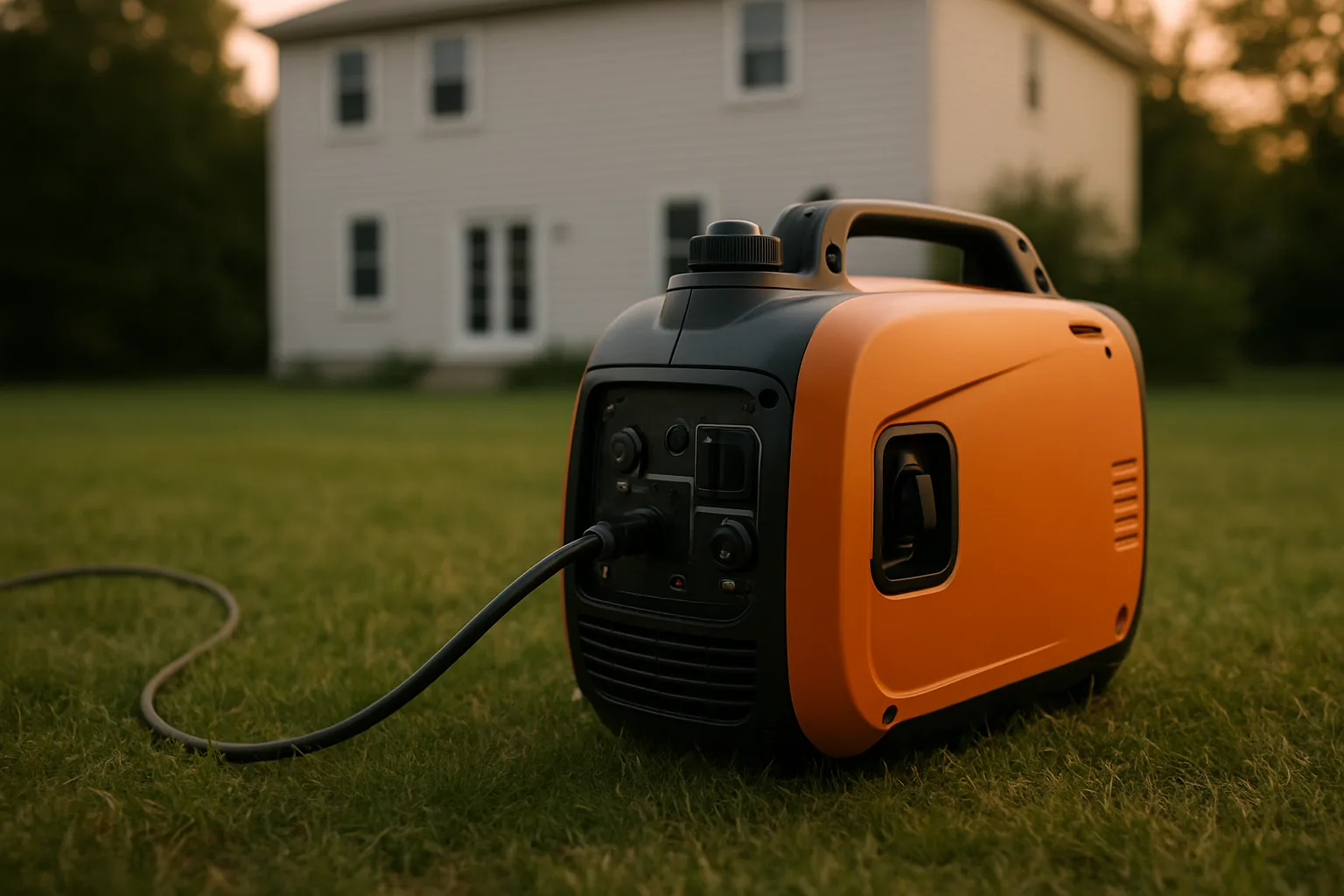
Best Inverter Generator: Honda EU2200i vs GENMAX 2200W
Honda EU2200i vs GENMAX 2200W: voltage sag, eco mode, noise, weight, pull effort, fuel use and engine wear compared, plus CO safety for home and RV use.
A small inverter generator is the middle ground between a battery power station and a loud open-frame contractor unit. It runs a fridge, a few lights, phone chargers and a window AC through an outage, then rides in the truck to a campsite or an RV pad. Most carry similar ratings, around 2,000 to 2,200 starting watts, so the box says little about which one holds voltage, stays quiet or still runs right after a hundred hours.
The answer comes down to two machines worth buying online: the Honda EU2200i, the benchmark, and the GENMAX 2200W, a budget unit that costs a fraction as much. Here is how they differ, and how the cheaper rivals compare.
As an Amazon Associate, Best Utah Real Estate earns from qualifying purchases.
Quick verdict
- Best overall, and the quietest: the Honda EU2200i Inverter Generator. It holds voltage best when a big load switches on, runs longest at a heavy load, is the quietest of the 2,200-watt class and shows the least engine wear. It costs several times more than the budget brands and takes the most effort to pull-start.
- Best value: the GENMAX 2200W Inverter Generator. Same 2,200/1,800-watt rating, clean power, the lightest weight and the easiest pull, and it kept its oil full over close to 100 hours. It is the loudest of the group and sags more in eco mode when a heavy load kicks on.
The generators side by side
| Generator | Shop | Starting / running watts | Dry weight | Voltage dip, 1,500 W heater on (eco on / off) | Noise at 25 ft under load | Run time, 16 oz fuel at ~1,500 W | Pull force | Oil after ~98 hours |
|---|---|---|---|---|---|---|---|---|
| Honda EU2200i Inverter Generator | 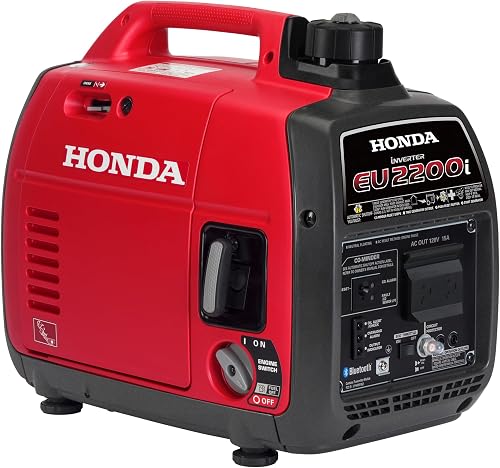 Buy on Amazon | 2,200 / 1,800 | 47.14 lb | 111.7 V / never below 120 V | 58.9 dB | Just over 32 min | 52.9 lb | Still full, clean plug, least wear metal |
| GENMAX 2200W Inverter Generator |  Buy on Amazon | 2,200 / 1,800 | 41.75 lb | 99 V / 116.3 V | 64.8 dB | Just under 19 min (stalled, likely vapor lock) | 18.7 lb | Still full, clean plug |
| Predator 2000 (Harbor Freight only) | 2,000 / 1,600 | About 47.5 lb | 97.9 V / 117.2 V | 61.6 dB | 12 min 45 s (overload shutoff) | 27.5 lb | Burned oil; low-oil shutdown near 49 hours |
All three make a clean sine wave and have eco mode, two 120-volt outlets and a parallel connection.
Running watts vs starting watts
The bigger number on the box is the starting (surge) rating, which the generator can hold only for a moment. The running rating is what it can supply continuously. For the Honda and GENMAX that is 1,800 watts; the Predator 2000 runs 1,600. Plan loads around the running number, then leave room for anything with a motor or compressor, because a fridge, a window AC, an air compressor or a table saw pulls a spike when it starts.
That gap shows up quickly. With roughly 1,500 watts of space heaters plus an LED light, the Predator 2000 lit its overload light and cut power at 12 minutes 45 seconds, while the two 1,800-watt units kept going. Stacking loads slowly also helps: an older 2,000-watt Honda tripped when a 1,500-watt heater was switched straight on with other loads running, yet kept going past 2,000 watts, beyond its rating, when the same loads were added a step at a time.
A 2,000-watt-class generator will not run a typical 15,000 BTU rooftop RV air conditioner on its own. That is what parallel kits are for: two matched generators on a parallel cable roughly double the output. The GENMAX cable is sold separately.
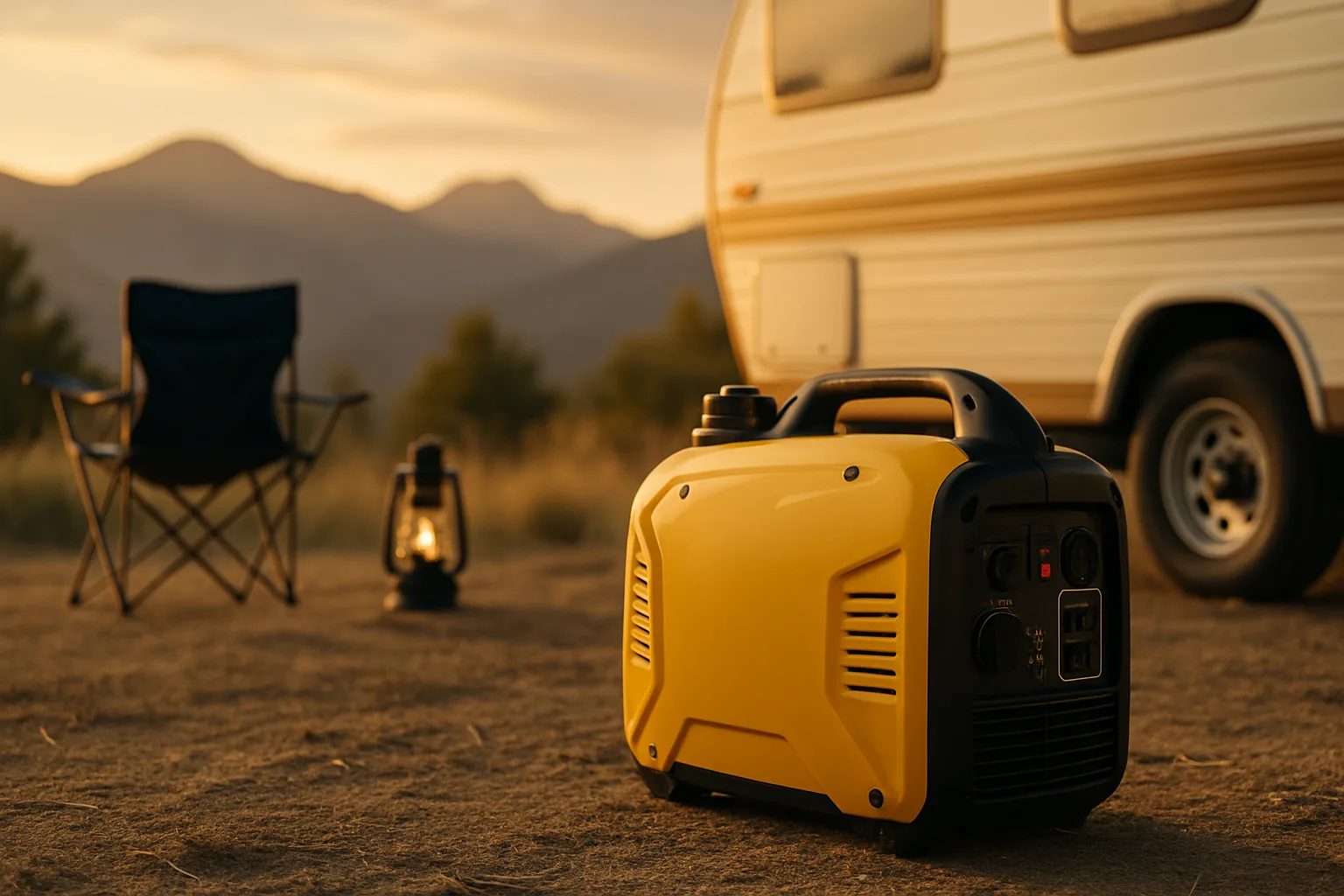
Eco mode: quieter and thriftier, but softer under sudden loads
Eco mode lets the engine idle down and speed up only as the load demands. That saves a lot of fuel and noise. At a steady 500 watts with 16 oz of gas, eco mode stretched every generator to about 61 to 62.5 minutes, against roughly 43 minutes (Honda), 51 minutes (GENMAX) and 55 minutes (Predator) with eco off. On an older 2,000-watt Honda, eco mode dropped noise at 23 feet from about 72 dB to about 60.5.
The cost is response time. When a 1,500-watt heater switches on, an idling engine has to catch up, and the voltage dips until it does:
- Honda: dipped to 111.7 V and recovered in 2.77 seconds in eco mode. With eco off, it never fell below 120 V.
- GENMAX: fell to 99 V and took about 6 seconds to recover, then settled at 119.6 V under load. With eco off, it dipped only to 116.3 V and recovered in 5 seconds.
- Predator 2000: fell to 97.9 V in eco mode but recovered faster than the GENMAX, in about 3.4 seconds; 117.2 V and 3 seconds with eco off.
Deep, slow sags are hard on motors and tools, and a long extension cord adds more drop. The practical rule: leave eco on for lights, chargers, a fridge and fans; switch it off before running a saw, compressor, microwave or space heater, especially on the GENMAX.
Eco mode does not have to mean failing big loads, though. Running in eco mode through two extension cords, the Westinghouse iGen2200, a WEN 2250-watt unit and the Predator 2000 each started a window AC with a mini fridge already running, then handled a vacuum, drill, air compressor and table saw. The older Honda EU2000 managed most of it but struggled a little, and an Aipower 2300 could not start the AC at all.
Clean power for electronics: inverter vs open-frame
Inverter generators convert the engine's output to a steady sine wave, which is what laptops, TVs, routers, furnace controls and battery chargers expect. On an oscilloscope, the Honda, GENMAX and Predator 2000 all showed smooth sine waves from no load to heavy load. Two open-frame units, a small Tailgater and a Predator 4000, showed jagged, dirty waveforms. If anything sensitive will be plugged in, buy an inverter. For whole-home protection on the house side, a whole-house surge protector covers what a generator can't.
Noise
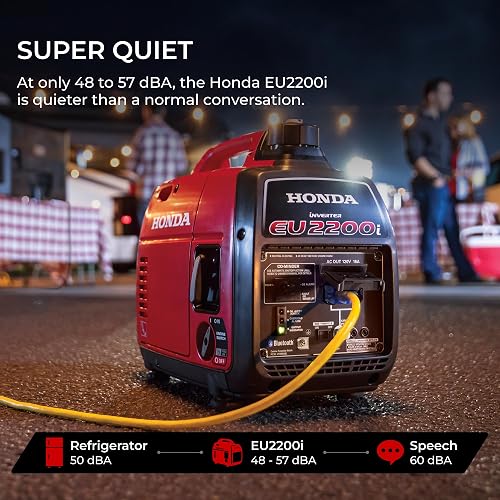
Muffler size makes a real difference, and the Honda's is the largest at about 6 by 9 inches. From 25 feet in a quiet spot, averaged around each machine under load, the Honda came in at 58.9 dB, the Predator 2000 at 61.6 and the GENMAX at 64.8. Idling in eco mode with no load, all three sat around 50 to 52 dB. The open-frame Predator 4000 was the loudest at up to 71.8 dB. Aiming the exhaust away from listeners helps.
At full load an older 2,000-watt Honda hit about 74.5 dB, and a 2,000-watt Champion was a little quieter.
Weight, size and pull-starting
Dry, the GENMAX weighs 41.75 lb and the Honda 47.14 lb; a 2,000-watt Champion comes in under 40 lb, about 10 lb lighter than the Predator 2000 and noticeably shorter for an RV storage bay. Add a few pounds once the tank is full.
Pull effort is where the Honda stumbles. Peak rope force was 52.9 lb for the Honda, 27.5 lb for the Predator 2000 and only 18.7 lb for the GENMAX. The open-frame Tailgater needed almost 62 lb.
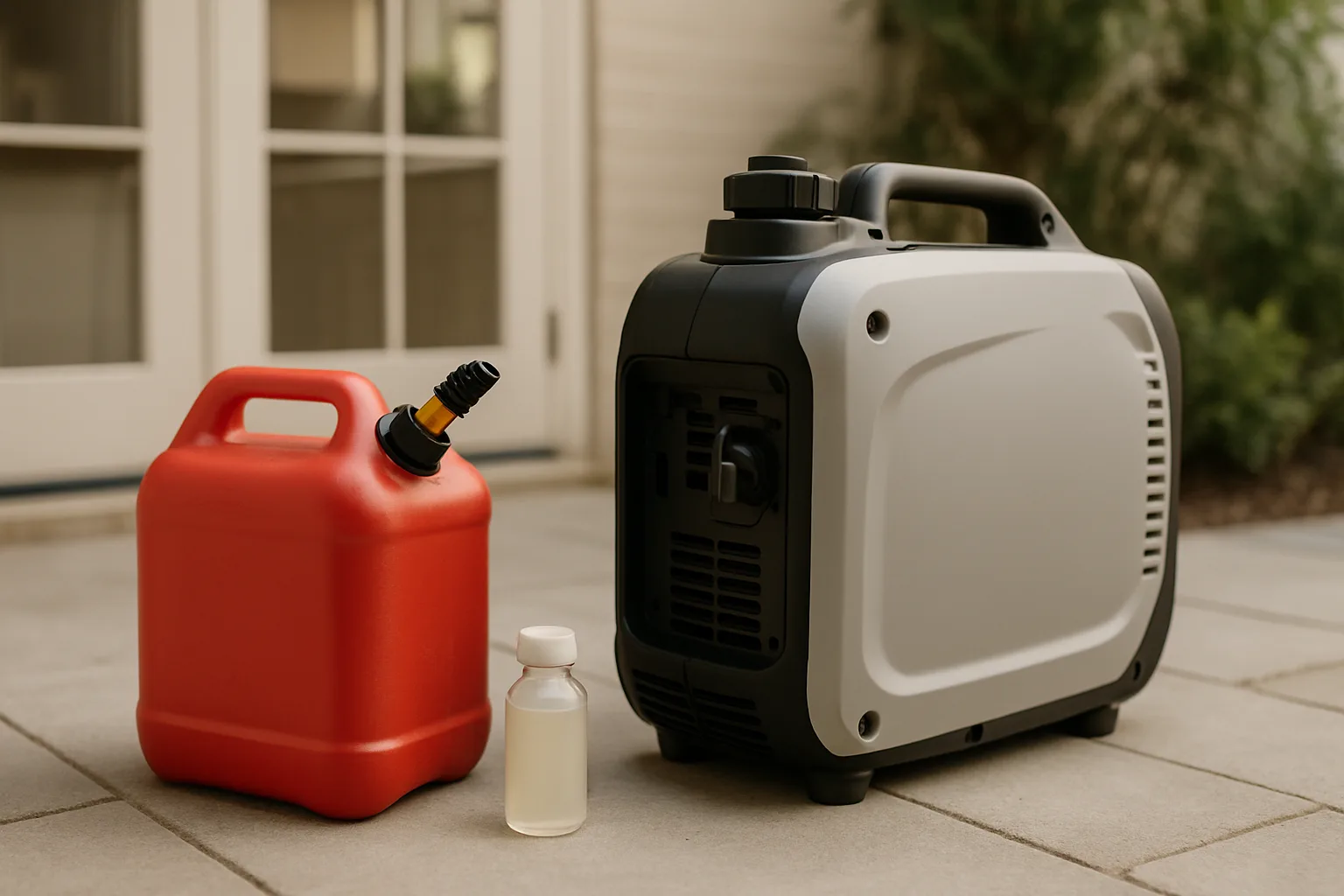
Fuel handling and storage
Small generators sit unused for months, and old gasoline is the usual reason one won't start on the day of an outage. General practice, which the owner's manual should confirm for a given model:
- Buy only as much fuel as gets used in a month or so, and add fuel stabilizer when you fill the can.
- Use regular gasoline the manual allows. Skip E15 and higher ethanol blends.
- Before storage, shut the fuel valve and let the engine run until it stalls, so the carburetor sits dry.
- Check the oil before every start. None of these units ship with oil in the crankcase; the GENMAX and Predator take about 10 oz, the Honda about 14.
For an apartment, a balcony or short outages where noise and fumes matter, a battery unit like a Jackery power station may be the better tool, and a UPS battery backup for the router and PC bridges the minutes before a generator is running.
Carbon monoxide safety
A generator's exhaust can kill in minutes. Never run one indoors, in a garage, a basement, a crawl space or a shed, even with the door open, and keep it well away from windows, doors and vents. Put battery CO alarms inside the home. The federal power-outage safety guidance covers placement and the warning signs. Automatic CO shutoff, like Honda's CO-MINDER and the GENMAX's sensor, is a useful backup, not a license to cut corners. Storm outages and mountain camping trips are when most people fire these up; set the generator outside first, then run the cords.
The picks in detail
Honda EU2200i Inverter Generator
The 2,200-watt Honda wins on nearly every measure that matters for running a house or RV through an outage. Its 121 cc engine is far larger than the 79 cc engines in the GENMAX and Predator, and it shows: the smallest voltage dip in eco mode, no dip at all with eco off, and 121.8 V held under load. At about 1,500 watts it ran just over 32 minutes on 16 oz, while the GENMAX stalled before 19. It was the quietest, vibrated least, kept its oil full for about 98 hours with a clean NGK plug, and its oil showed the least aluminum and iron, the wear metals.
The listing adds CO-MINDER detection and shutoff, the My Generator app over Bluetooth (hours of use, oil life and power demand) and 3.2 to 8.1 hours of run time on 0.95 gallon. The downsides are price, several times what the budget brands cost, the heaviest pull of the group and slightly worse fuel economy at light loads with eco off.
Honda EU2200i Inverter GeneratorCheck today’s price on Amazon
 Buy on Amazon →
GENMAX 2200W Inverter Generator
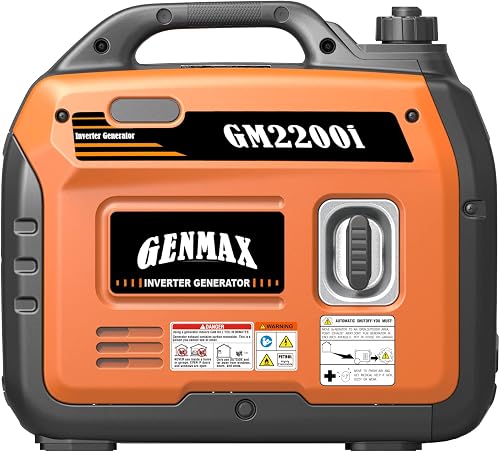
The GENMAX matches the Honda's 2,200/1,800-watt rating, makes clean sine-wave power and is the easiest to live with day to day: the lightest of the three, an 18.7 lb pull, wing-nut access panels for the air filter and oil, two USB ports and a CO shutoff. Over about 98 hours it kept its oil full and its plug clean, and with eco mode on it ran about as long on a tank as the Honda.
The compromises are noise, about 6 dB louder than the Honda under load, and the deep 99 V sag in eco mode when a heavy load comes on, so switch eco off for tools and heaters. At about 1,500 watts it shut down just under 19 minutes and resisted a restart for several minutes, most likely from vapor lock. Its oil showed the most aluminum of the three, and the factory plug gap was slightly off spec, so check it before first use. The listing rates it at 41.8 lb, as low as 58 dBA per GENMAX, and up to 6 hours of run time.
GENMAX 2200W Inverter GeneratorCheck today’s price on Amazon

 Buy on Amazon →
Others worth knowing about
- Predator 2000 (Harbor Freight): close to the GENMAX on voltage, recovers faster, and is a bit quieter, but burned oil, fouled its plug with carbon and shut down on low oil near 49 hours. Only 1,600 running watts.
- Champion 2,000-watt inverter: lighter than both an older Honda and the Predator 2000, about as quiet as that Honda in eco mode and quieter than the Predator, with a reset button after an overload. The model in question is not on Amazon.
- Westinghouse iGen2200 and WEN 2250: both started and ran a window AC plus household tools in eco mode.
Who should buy which
- Outage backup for a fridge, furnace blower and electronics, or RV use where quiet hours matter: the Honda EU2200i.
- Occasional camping, tailgating or outage use on a budget, or anyone who struggles with a stiff pull cord: the GENMAX 2200W, with eco off for big loads.
- A rooftop RV air conditioner: two matched units and a parallel kit, not one.
Posted by Kristopher Larson
Frequently asked questions
Is the Honda EU2200i worth the extra money over the GENMAX 2200W?
For outage backup, RV quiet hours or long heavy use, usually yes. The Honda holds voltage far better when a big load switches on, runs about 6 dB quieter under load, lasts much longer on a tank at around 1,500 watts and shows less engine wear. The GENMAX makes the same rated power and clean electricity for a fraction of the cost, and it is lighter and much easier to pull-start, so it suits occasional camping and short outages.
What is the quietest small inverter generator?
Of the 2,200-watt class, the Honda EU2200i is the quietest, averaging about 58.9 dB at 25 feet under load against 61.6 for the Predator 2000 and 64.8 for the GENMAX. Its large muffler is a big part of the difference. Eco mode lowers noise on any of them at light loads.
Should an inverter generator run in eco mode?
Leave eco mode on for lights, chargers, a fridge and fans: it saves a lot of fuel and noise. Turn it off before switching on heavy loads such as space heaters, microwaves, saws or air compressors. In eco mode the engine has to rev up first, and the voltage can sag to around 98 to 99 V on budget models before it recovers.
Can a 2,200-watt inverter generator run an RV air conditioner?
A window AC, yes, and several 2,000-watt-class inverters can start one with a small fridge already running. A typical 15,000 BTU rooftop RV unit is too much for one 2,000-watt-class generator. Two matched generators joined with a parallel kit roughly double the output.
Is an inverter generator safe for laptops and TVs?
A true inverter generator is. The Honda EU2200i, GENMAX 2200W and Predator 2000 all produce a clean sine wave from no load to heavy load. Open-frame generators produce jagged, dirty power that is a poor match for sensitive electronics.
Where should a portable generator be placed during a power outage?
Outside only, well away from windows, doors and vents. Never run one in a house, garage, basement or shed, even with the door open, because carbon monoxide builds up quickly. Use battery CO alarms indoors. A built-in CO shutoff, found on both the Honda and GENMAX, is a backup, not a substitute for safe placement.
Keep reading
More from the blog
Best Massage Gun: Theragun vs Ekrin vs Bob and Brad Mini Guns

Best TV Backlight: FancyLEDs vs. Govee vs. Philips Hue Sync

Best Hand Mixer: Breville vs KitchenAid vs Cuisinart vs Hamilton Beach