Utah Winter Inversions: How Wasatch Front Air Quality Affects Home Buying
Utah's winter inversions trap fine-particle pollution along the Wasatch Front, raising real health and lifestyle questions for home buyers. This guide explains how inversions form, why elevation and region matter — including how Salt Lake City and Ogden compare to milder Southern Utah cities like St. George — and how to research a neighborhood's winter air before buying.
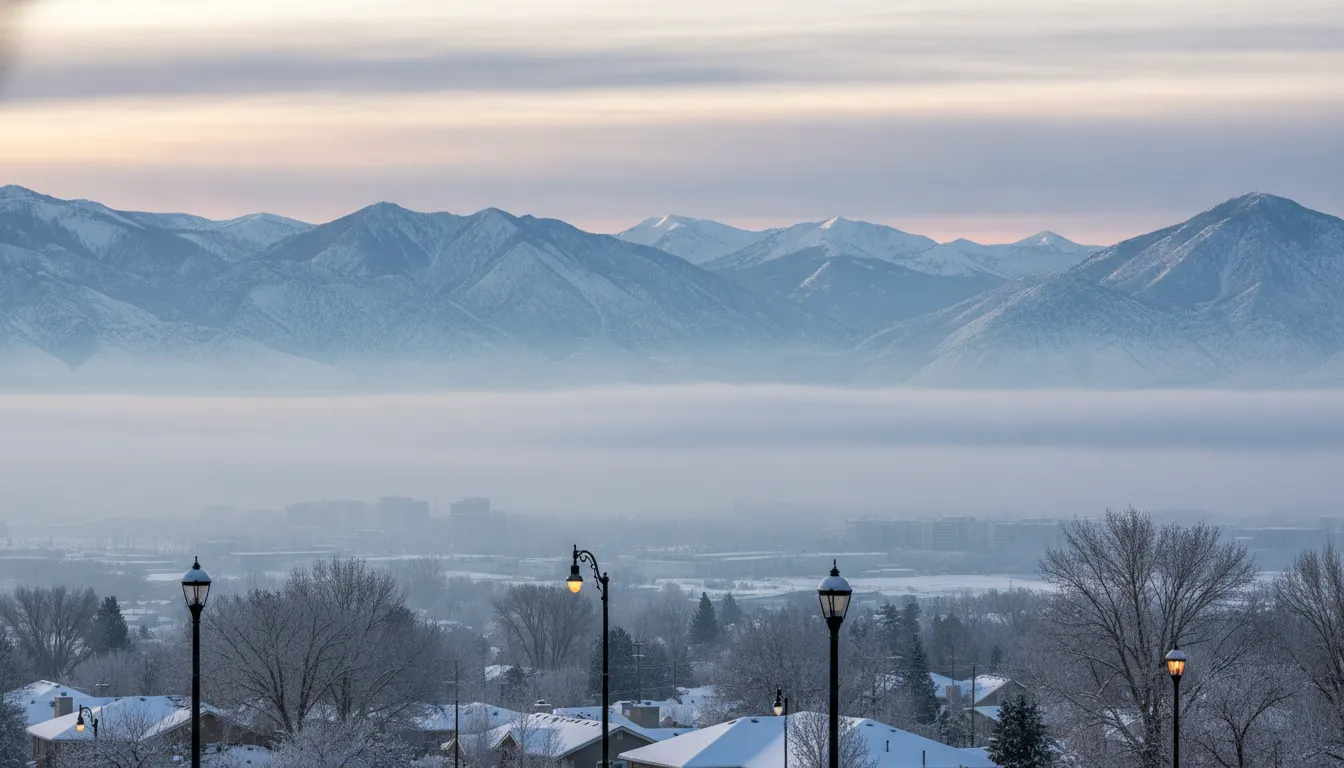
Utah's winter inversions are more than a temporary loss of mountain views. During certain cold, calm periods, pollution can become trapped near the valley floor, creating haze and raising fine-particle pollution levels. For households considering a move to the Wasatch Front, air quality deserves the same attention as commute times, schools, neighborhood character, and home condition.
The key point is balance. Utah has many clear, sunny days and exceptional outdoor access, but winter inversion conditions can create meaningful short-term air-quality concerns, particularly for children, older adults, and people with asthma, lung disease, or heart conditions. A practical relocation decision starts with understanding how inversions form, how exposure varies by location, and how to research a specific neighborhood before buying — a consideration worth weighing alongside issues like the shrinking Great Salt Lake, which is itself becoming a source of valley dust.
What Is a Utah Winter Inversion?
Under ordinary weather conditions, air near the ground warms and rises, helping disperse emissions. A winter inversion reverses that pattern. Cold, dense air settles in the valley while a warmer layer forms above it. Because the air layers are stable, the warmer air acts like a lid and limits vertical mixing.
Vehicle exhaust, home heating emissions, industrial sources, and other pollution released beneath that lid can build up over several days. A storm system, stronger winds, or a changing weather pattern may eventually break up the inversion and improve conditions.
The Wasatch Front is especially susceptible because mountain-ringed valleys can hold cold air in place. The geography does not create the pollution by itself, but it can concentrate pollutants that would otherwise disperse more readily.
Why the Clearest-Looking Winter Days Can Have the Worst Air
Winter air quality is often counterintuitive. A quiet, sunny day can look pleasant from the ground while pollution remains trapped below the inversion layer. Calm conditions provide little airflow to clear the valley, allowing fine particles to accumulate.
For that reason, visibility alone is not a reliable health guide. A household planning outdoor exercise, school activities, or time with young children should check the day's air-quality forecast rather than relying only on the appearance of the sky.
The Utah Division of Air Quality publishes forecasts, current conditions, alerts, and information about mandatory no-burn periods. These reports provide a more useful starting point than a general weather forecast during inversion season.
PM2.5: The Main Pollution Concern During Inversions
Fine particulate matter, commonly called PM2.5, is central to the winter inversion discussion. These particles are 2.5 microns wide or smaller, small enough to travel deep into the respiratory system. PM2.5 pollution along the Wasatch Front is associated largely with fuel combustion, including gasoline, diesel, and heating sources.
Air-quality indexes often emphasize PM2.5 because it is a significant health concern. However, one reading or one app does not represent every possible pollutant or every block in a valley. Conditions can vary by monitoring location, elevation, nearby traffic, local heating sources, and the strength of the inversion.
Federal standards and scientific guidance on particle pollution evolve as health evidence develops. The U.S. Environmental Protection Agency's particulate matter resources explain PM pollution, health considerations, and the purpose of air-quality standards.
Can Utah Inversions Make People Sick?
Evidence discussed in Utah-based and broader PM2.5 research indicates that short-term spikes in fine-particle pollution can have measurable health effects. Higher exposure is associated with increased respiratory risks and can be especially consequential for sensitive groups. Research involving Wasatch Front conditions has also found asthma-related risks can rise when PM2.5 levels increase, including during winter inversions and wildfire-smoke periods.
The effects are not always dramatic or immediately obvious. A person may not connect a respiratory symptom or an asthma flare-up to a particular stretch of poor air quality. That quieter, cumulative nature is why daily awareness matters during the winter season.
Groups That Should Take Extra Precautions
Children, whose lungs are still developing and who may spend substantial time outdoors.
Older adults, particularly those with existing respiratory or cardiovascular conditions.
People with asthma, COPD, heart disease, or other chronic health concerns.
People who work or exercise outdoors for extended periods.
Health decisions should be individualized. A household managing asthma, cardiovascular disease, or another chronic condition should follow advice from an appropriate healthcare professional and use local air-quality alerts to help plan activities.
Air Quality Is Not the Same Across the Wasatch Front
"Utah air quality" is not one uniform condition. Different valleys and counties can experience different inversion timing and severity. Even within the same metropolitan area, elevation can influence conditions.
Cold, polluted air tends to settle in lower portions of a basin. In some inversion events, foothill and bench neighborhoods may sit above the densest haze layer and receive more sun and cleaner air than lower-elevation areas only a short drive away. This is a pattern, not a guarantee. Severe or prolonged inversions can affect elevated neighborhoods as well.
What This Means for Home Buyers
Elevation should not become the only criterion for selecting a home. Price, transportation, employment access, neighborhood amenities, drainage, wildfire risk, and day-to-day practicality remain important. Still, air quality is a reasonable location-specific factor to include in a buying decision, especially for households with health sensitivities. Buyers weighing options along the Wasatch Front versus warmer, lower-inversion parts of the state may also want to compare Southern Utah communities like those covered in this Hurricane, La Verkin & Toquerville buyer's guide.
A broad Utah home search can begin through Utah real estate listings and market resources, then narrow according to neighborhood conditions that matter to the household.
Inversion-Prone Wasatch Front vs. Southern Utah's Cleaner Winter Air
One of the most practical takeaways for relocation buyers is that "Utah air quality" changes significantly depending on where in the state you land. Salt Lake City, Ogden, and Utah County sit in mountain-ringed valleys that trap cold air every winter, which is exactly the geography that produces inversions. Southern Utah is a different story. St. George and the surrounding red-rock region sit at lower elevation, in more open desert terrain, with fewer of the topographic conditions that create prolonged winter lid effects — one reason the area is highlighted in this look at why more people are choosing St. George, Utah.
That doesn't make the Wasatch Front a bad place to live — Salt Lake City, Provo, and the growing "Silicon Slopes" tech corridor around Lehi and Draper still offer strong job access, ski-town proximity, and a broader range of home prices than the coasts. But buyers who prioritize winter air above all else, or who are managing a respiratory condition, may want to weigh Wasatch Front convenience against a Southern Utah or Ogden-area alternative with milder, less inversion-prone winters. For a fuller picture of how Utah's regions differ on weather, jobs, and housing, see this Northern vs. Southern Utah lifestyle guide, and browse why so many people are moving to Ogden, Utah for a middle-ground option with more attainable pricing. If Utah is on your shortlist, you can browse homes across the Wasatch Front and southern Utah at Best Utah Real Estate.
How to Research a Neighborhood's Winter Air Before Buying
Summer house hunting can hide winter tradeoffs. Blue skies, open views, and green foothills may create a strong first impression, but a purchase decision benefits from looking at conditions across the full year.
A Practical Air-Quality Due Diligence Checklist
Check the address elevation. Compare the property's elevation with nearby valley-floor and bench neighborhoods. Elevation alone does not predict every inversion, but it provides useful context.
Review local air-quality forecasts. Use state reporting to understand which county or basin is affected during winter episodes.
Look for nearby monitoring data. PurpleAir's dense network of community sensors can help reveal neighborhood-level patterns. Sensor readings should be treated as supplemental information, not a substitute for official monitoring.
Review historical winter periods. Examine readings from prior January, February, and March inversion weeks rather than relying on a single clear day.
Visit in multiple seasons when possible. A winter visit can reveal sunlight exposure, haze patterns, road conditions, heating needs, and the practical feel of a neighborhood.
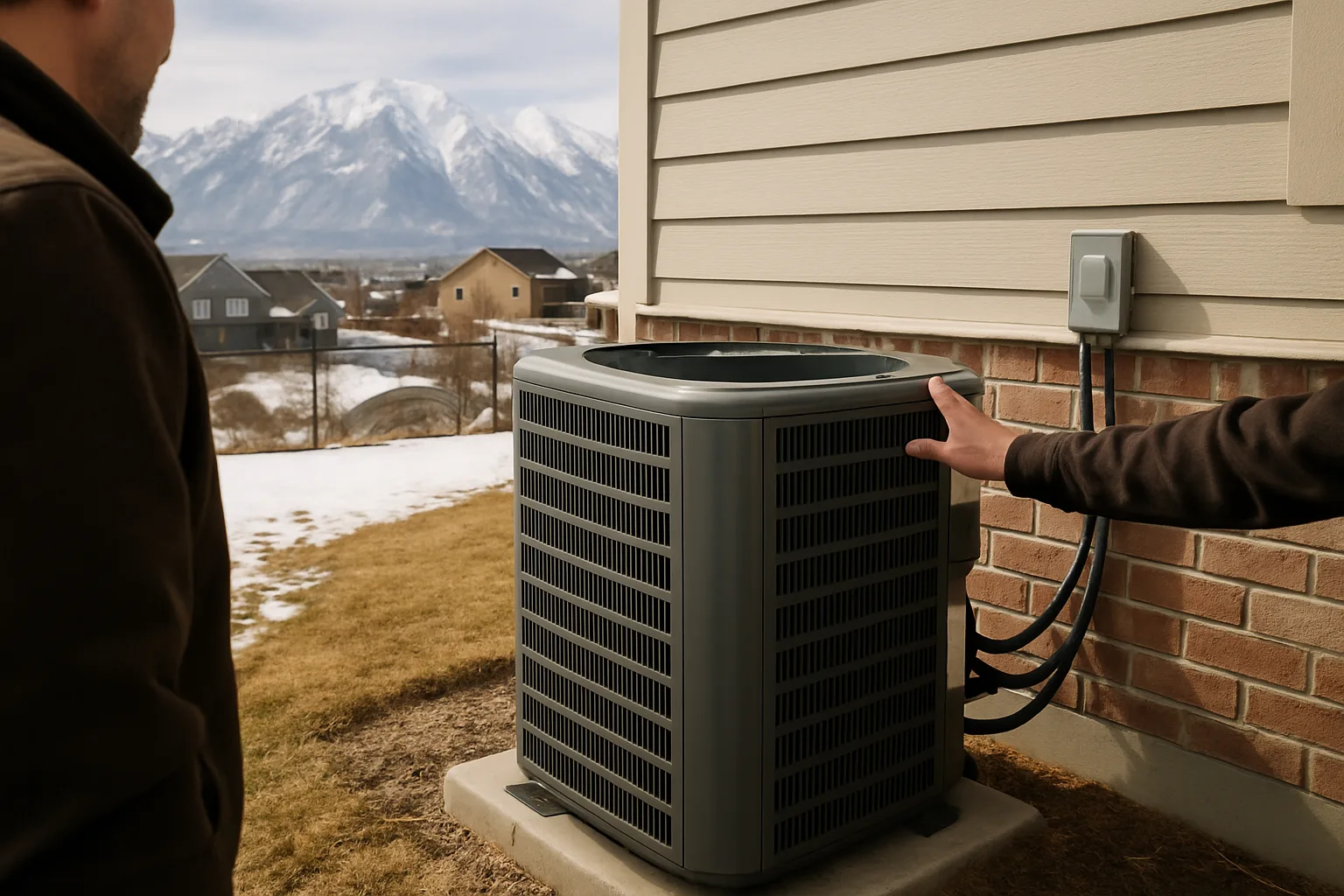
Inspect the home's indoor-air setup. Ask about HVAC maintenance, filter types, duct condition, windows, weather sealing, and the availability of portable air filtration.
Account for wildfire smoke as well. Winter inversions are not the only air-quality event that can affect Utah. Summer and fall smoke can also produce periods of elevated PM2.5.
How Households Can Reduce Exposure on Poor Air Days
Air-quality planning does not require avoiding Utah's outdoor lifestyle. It means adjusting routines when conditions warrant it. The most useful approach is to make decisions based on current conditions and personal health needs.
Check the AQI before outdoor plans. Consider moving strenuous activities indoors when forecasts show unhealthy conditions for sensitive groups or worse.
Keep windows and exterior doors closed during severe episodes. This can help limit outdoor particle infiltration.
Use a well-maintained HVAC system and appropriate filter. Follow equipment guidance and replace filters on schedule.
Consider a portable air cleaner. A properly sized unit can support cleaner indoor air in commonly used rooms.
Avoid adding pollution. Respect no-burn restrictions and reduce unnecessary vehicle idling and trips when possible.
Plan flexible recreation. Indoor exercise, errands, and social activities can replace extended outdoor exertion during the worst days.
Common Misconceptions About Utah Inversions
"A storm is the cause of bad air."
Inversions often become most persistent after storms have passed and weather turns calm. The lack of wind and atmospheric mixing, rather than dramatic weather, allows emissions to build up.
"The haze is only cosmetic."
Reduced visibility is the most visible effect, but fine-particle pollution can have health implications. The concern is the concentration of pollutants in the air, not simply the appearance of the sky.
"One air-quality app gives the complete answer."
Official forecasts are important, but local readings, sensor placement, and neighborhood geography can create variation. Comparing official data with nearby sensor trends can offer a fuller picture.
"A bench neighborhood is always protected."
Higher elevation may offer an advantage in some events, but inversion ceilings move. Prolonged or particularly strong inversions can affect much larger areas, including foothill communities.
"Poor winter air means Utah is always polluted."
Winter inversions are episodic. Air quality can be much better during other weather patterns and seasons. A realistic assessment considers both the recurring winter concern and the many periods of cleaner air.
Air Quality as a Real Estate Decision Factor
Air quality is an invisible property variable, but it can affect how a home feels during winter and how a household uses outdoor spaces. It may matter most for buyers who prioritize daily walks, cycling, children's activities, respiratory health, or unobstructed mountain views.
A sound comparison between two homes should include more than price per square foot. Buyers can compare elevation, valley location, nearby roads, HVAC and filtration features, historical air readings, and the household's ability to adapt activities during winter inversions. Water availability is another related, invisible factor worth reviewing — see this overview of whether Utah is running out of water for more context.
For a broader relocation assessment, the moving to Utah overview provides additional context on housing choices and lifestyle considerations across the state, and the Utah relocation guide covers how climate and geography factor into lifestyle fit.
Takeaway: Plan for Inversions Rather Than Ignoring Them
Winter inversions are a genuine Wasatch Front tradeoff, not merely a visibility issue. The strongest evidence supports taking fine-particle pollution seriously, particularly for sensitive populations. At the same time, buyers have practical tools to evaluate location, monitor conditions, improve indoor air, and adapt outdoor routines.
Before purchasing a Utah home, households should research the specific basin and neighborhood during winter, not only during the clear days that make a property look its best. That extra step can turn a vague concern into an informed, manageable part of the home-buying decision.
Frequently asked questions
When does inversion season usually occur in Utah?
Are Utah winter inversions dangerous to your health?
Do homes at higher elevations have better air during an inversion?
What is the best way to check air quality near a Utah home?
Which Utah cities and counties are most affected by winter inversions?
Should air quality prevent a household from moving to the Wasatch Front?
Keep reading
More from the blog
Utah Property Taxes: How Your Assessed Value Really Gets Set

Why Identical Houses Get Different Property Tax Bills
Your First Month in a New Utah Home: A Fall Settling-In Guide