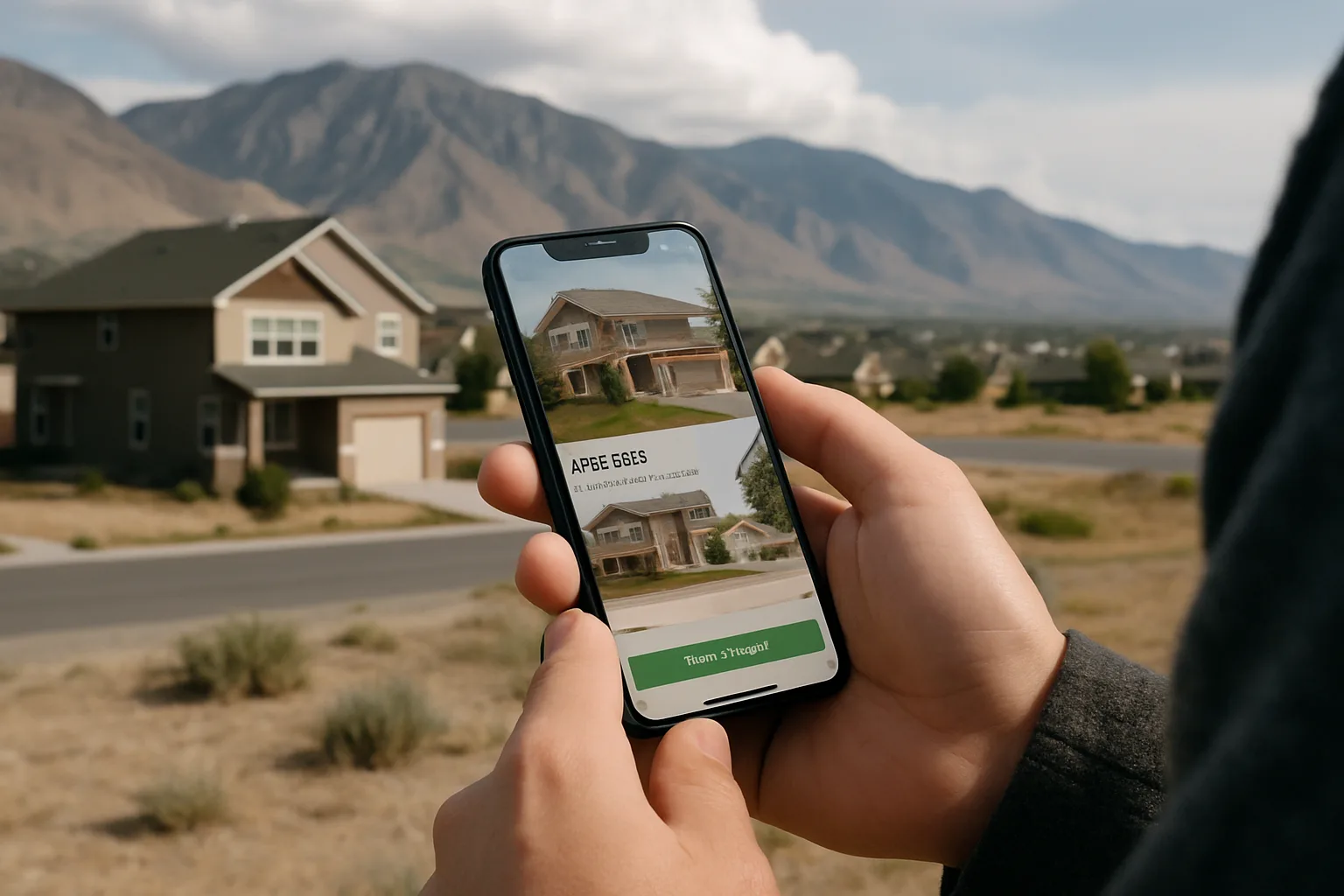
Salt Lake County vs. Utah County: Which Utah Lifestyle Fits Best?
Salt Lake County and Utah County offer two very different Wasatch Front lifestyles. This guide compares home prices, commute realities, schools, community culture, and air quality to help buyers choose the county that truly fits their household.
Choosing between Salt Lake County and Utah County is about far more than selecting a home. The decision affects housing costs, commute patterns, access to jobs, neighborhood character, social life, schools, and everyday convenience.
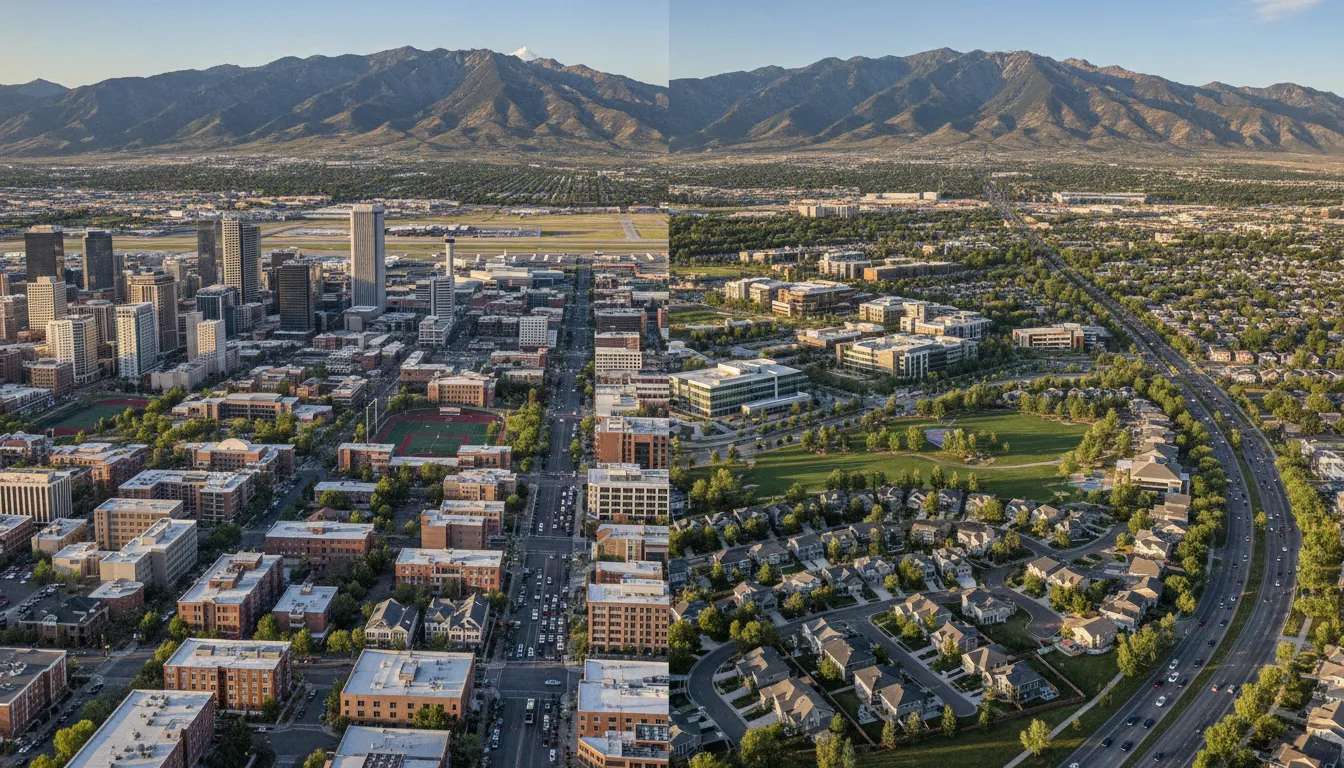
Salt Lake County is Utah's established urban center, with major employers, an international airport, downtown amenities, hospitals, the University of Utah, and a broad mix of neighborhoods. Utah County, immediately south, is younger and growing faster, with Provo, Orem, Silicon Slopes employment, newer development, and a family-oriented suburban lifestyle.
Neither county is automatically the better choice. The best fit depends on where a household works, the type of community it wants, and which tradeoffs feel worthwhile. Buyers comparing homes across the state can begin with current listings and market resources at Best Utah Real Estate.
Salt Lake County and Utah County at a Glance
Salt Lake County is Utah's most populous county, with more than 1.25 million residents. It functions as the state's economic, governmental, medical, transportation, and cultural hub. Salt Lake City anchors the county, while major employment and residential areas extend across communities such as Draper, South Jordan, Riverton, Herriman, Sandy, West Jordan, and Cottonwood Heights.
Utah County sits south of the Point of the Mountain and includes Provo, Orem, Lehi, American Fork, Pleasant Grove, Eagle Mountain, Saratoga Springs, Spanish Fork, Salem, Payson, and other rapidly expanding communities. It is anchored by Brigham Young University, Utah Valley University, and the Silicon Slopes technology corridor.
The central distinction is straightforward:
Salt Lake County offers a more established, urban, diverse, and centrally connected lifestyle.
Utah County offers faster growth, more new construction, a younger population, and a stronger concentration of family-oriented suburban communities.
That difference affects nearly every other part of a relocation or home-buying decision.
Home Prices: Utah County Is Not Always the Cheaper Option
Utah remains an expensive housing market statewide, with a reported statewide median home price around $528,000 in mid-2026. Both Salt Lake County and Utah County contain high-cost markets, but pricing varies sharply by city, property type, lot size, age, and proximity to major employment centers.
Salt Lake County housing costs
Salt Lake City and nearby established neighborhoods often command a premium for location. Buyers are generally paying more for proximity to downtown employment, the airport, hospitals, the University of Utah, transit, restaurants, arts, and established neighborhood character.
Homes in Salt Lake City proper have a median price of $565,000, while prices across the county vary considerably. Older homes, smaller lots, and tighter inventory are common in centrally located areas. In exchange, many buyers gain shorter trips to employment centers and amenities.
Utah County housing costs
Utah County is often described as the more affordable alternative, but that is only partly true. Northern Utah County, particularly the Silicon Slopes corridor, has become expensive as employment and demand have grown.
Lehi: Median single-family pricing around $599,900.
Saratoga Springs: Median pricing around $575,900.
Eagle Mountain: Median pricing around $534,950, often providing a lower entry point for newer construction.
Provo: Median pricing around $515,000, with an urban core shaped by university activity.
Spanish Fork: Median pricing around $514,500, often offering comparatively better value farther south.
The most meaningful savings often appear in southern Utah County, including Spanish Fork, Payson, Salem, and Santaquin, or when buyers choose a townhome, condominium, or smaller property rather than a detached home.
For a closer look at inventory, property styles, and neighborhood options near the county's university and employment centers, buyers can review homes for sale in Provo.
The Commute Can Erase Housing Savings
The largest budgeting mistake in a Salt Lake County versus Utah County comparison is focusing only on the mortgage payment. A lower purchase price can lose much of its value when a household takes on a lengthy daily commute.
The Point of the Mountain separates Salt Lake Valley and Utah Valley. Interstate 15 is the primary route between the counties, and congestion through this corridor can be significant when employees travel between Salt Lake County job centers and Silicon Slopes offices at peak times.
How location changes the daily drive
Working in downtown Salt Lake City while living in Payson or Spanish Fork: A lower-priced home may come with a commute that exceeds an hour each way on difficult traffic days.
Working in Lehi or along Silicon Slopes while living in northern Utah County: This can create one of the most convenient work-and-home combinations in the region.
Working near downtown Salt Lake City, the airport, the University of Utah, or medical facilities while living in Salt Lake County: Higher housing costs may be offset by a more manageable commute and stronger access to transit options.
Working remotely: Remote workers have greater freedom to prioritize home size, neighborhood feel, family lifestyle, and price instead of freeway access.
Transportation costs include fuel, vehicle maintenance, parking, time, and the practical impact of spending one or two hours a day in traffic. Before choosing a lower-cost home, buyers should estimate the full commute cost rather than comparing mortgage payments alone.
A useful rule is to select a county primarily around the job location, then narrow the search by price, schools, and preferred lifestyle.
Cost of Living Beyond the Mortgage
Housing is the major cost difference between the two counties. Many everyday expenses remain relatively similar because both counties share the same broader Utah market for utilities, groceries, fuel, and many services.
Salt Lake City's overall cost of living has been estimated modestly above the national average, primarily because housing costs are higher. Utilities have tended to run below the national average, while healthcare visits and groceries have also been relatively reasonable compared with national benchmarks.
The Provo-Orem area has been described as near or slightly below the national average for overall living costs. This can make parts of Utah County attractive for households that find the right housing location and avoid a costly cross-county commute.
For many buyers, the practical price tiers look like this:
Higher-cost areas: Salt Lake City proper, Lehi, and Saratoga Springs.
Middle-range options: Provo, Orem, Eagle Mountain, and many southern Salt Lake County suburbs.
Potential value areas: Spanish Fork, Payson, Salem, and other southern Utah County communities.
Culture and Community Life Are Noticeably Different
Housing size and price may start the search, but community fit often determines whether a move feels successful over time. Salt Lake County and Utah County have distinct social environments, although each county contains major variation from one city and neighborhood to another.
Salt Lake County: urban, diverse, and self-directed
Salt Lake County, especially Salt Lake City, is Utah's most religiously and politically diverse region. It has a larger concentration of transplants, young professionals, singles, empty nesters, and people from varied backgrounds and belief systems.
Residents have access to restaurants, nightlife, breweries, arts, music, professional sports, hobby groups, and a broad range of social settings. Community connections are often built through work, neighborhoods, schools, outdoor recreation, local organizations, fitness, and shared interests.
For people seeking an established city environment, greater cultural variety, and frequent access to downtown amenities, Salt Lake City real estate options provide a useful starting point.
Utah County: younger, family-centered, and community-driven
Utah County's core communities, particularly around Provo and Orem, have a strong connection to The Church of Jesus Christ of Latter-day Saints and to university life. For households that participate in this community structure, neighborhood relationships, youth activities, service, childcare exchanges, and social events can be readily available.
For households outside the dominant local culture, the experience can vary. Residents are often friendly and welcoming, but some newcomers may need to make a more deliberate effort to establish social networks. This can differ substantially in high-growth areas such as Lehi and Saratoga Springs, where population growth has brought a wider mix of residents.
The key question is whether a household prefers a built-in social structure or prefers to create its network through personal interests and local activities. Neither approach is superior, but they produce different day-to-day experiences.
Family Life, Schools, and Higher Education
Utah County has one of the youngest population profiles in the region. Its neighborhoods often contain large numbers of young families, children, youth sports teams, playgrounds, splash pads, activity programs, and family-oriented businesses.
For parents seeking streets full of children, plentiful youth activities, and a family-centered social environment, Utah County can be especially appealing. Newer subdivisions in many communities were developed with growing households in mind.
Salt Lake County also has many strong family neighborhoods, but its population is more mixed by age, household type, background, and life stage. Families may find fewer children on a particular block, depending on the neighborhood, but may value exposure to a broader variety of people and perspectives.
School quality depends on the boundary, not the county
School quality varies far more by individual school and attendance boundary than by county line. Both Salt Lake County and Utah County include highly regarded schools as well as schools that may not fit every household's needs.
Before making an offer, families should complete this checklist:
Confirm the exact school boundary for the specific address, not just the neighborhood name.
Review school performance information and programs relevant to the student's needs.
Visit the campus when possible to understand the environment and transportation logistics.
Talk with local parents about class sizes, activities, communication, and practical concerns.
Consider future school transitions from elementary through high school before committing to a home.
Higher education also shapes each county. Utah County is closely connected to Brigham Young University and Utah Valley University. Salt Lake County is home to the University of Utah, a major research institution and medical center, along with Salt Lake Community College.
Neighborhood Character: Newer Suburbs vs. Established Areas
Many Utah County communities offer newer homes, larger floor plans, recently built schools, and developing retail areas. This is especially common in Lehi, Eagle Mountain, Saratoga Springs, American Fork, Spanish Fork, and other high-growth cities.
Salt Lake County contains more mature neighborhoods, older homes, established trees, traditional street patterns, and closer access to central employment and entertainment. Buyers often trade larger homes and yards for convenience, character, and location.
There are meaningful exceptions on both sides:
Southwestern Salt Lake County communities such as Herriman, Riverton, South Jordan, Daybreak, and Bluffdale can feel similar to northern Utah County, with newer neighborhoods and many young families.
Northern Utah County communities such as Lehi, Highland, Alpine, and Saratoga Springs offer strong access to Silicon Slopes and the broader Wasatch Front.
Central Salt Lake County may offer more walkable, established, and urban-adjacent living.
Southern Utah County may offer more space and lower prices but requires careful consideration of commute distance.
The Border Zone May Be the Best Compromise
For many households, the most strategic location is not deep within either county. The southern end of Salt Lake County and the northern end of Utah County increasingly function as one connected metro area.
Draper, Bluffdale, Riverton, South Jordan, Daybreak, Lehi, Highland, Alpine, and Saratoga Springs can offer practical access to both valleys. These areas may work well for households with employment flexibility, hybrid work schedules, or family members whose jobs are split between Salt Lake County and Silicon Slopes.
The border zone can provide newer housing, access to technology employment, relatively convenient routes in multiple directions, and a balance between Salt Lake County amenities and Utah County family-oriented communities. It is not necessarily a compromise. For the right household, it can be the most practical choice.
Air Quality Is a Shared Wasatch Front Concern
Both Salt Lake County and Utah County are affected by winter inversions. During an inversion, cold air traps pollution in the valley, reducing air quality for days at a time. This is especially important for households with asthma, respiratory conditions, or sensitivity to poor air quality.
Air quality can vary by elevation and exact neighborhood. Bench areas higher on the mountainside may sit above some of the valley's worst conditions, while lower valley locations can be more affected. Buyers should research seasonal conditions near the specific communities under consideration rather than assuming one county is free of the issue.
Who Should Choose Utah County?
Utah County may be the stronger fit for the following households:
Young families seeking neighborhoods with many children and family-focused activities.
Employees working in Lehi, Pleasant Grove, American Fork, or the Silicon Slopes technology corridor.
Buyers who value newer construction, larger homes, and suburban development patterns.
Households seeking potentially lower prices in southern Utah County and able to live near their job.
Residents who want a strong, readily available community structure.
Remote workers who want to prioritize space, price, and family lifestyle over downtown access.
Utah County may be less suitable for households that prioritize nightlife, frequent urban entertainment, a highly diverse social environment, or short access to downtown Salt Lake City and the airport.
Who Should Choose Salt Lake County?
Salt Lake County may be the stronger fit for the following households:
Professionals working downtown, near the airport, in the medical corridor, or near the University of Utah.
Frequent travelers who value quick access to Salt Lake City International Airport.
People seeking restaurants, arts, music, professional sports, nightlife, and urban amenities.
Transplants, singles, and households seeking a more diverse and cosmopolitan setting.
Buyers who prefer established neighborhoods, mature landscaping, walkability, and architectural variety.
Families who value a broad mix of ages, backgrounds, and perspectives in their local community.
Salt Lake County may require accepting a higher purchase price, an older home, a smaller yard, or a more competitive search in desirable locations.
Salt Lake County vs. Utah County Decision Checklist
Before committing to either county, buyers should answer these questions honestly:
Where is the primary workplace, and how often is commuting required?
What is the total monthly housing budget after transportation, utilities, insurance, and maintenance?
Is a newer, larger home more important than central location and shorter travel time?
Would the household prefer a family-dense environment or a more mixed urban community?
How important are nightlife, restaurants, arts, entertainment, and airport access?
Which specific school boundaries best fit the household's educational priorities?
Does the neighborhood's social structure feel comfortable and sustainable?
How would winter inversion conditions affect the household?
Would a border-zone community create a better balance between work, lifestyle, and price?
Final Takeaway
Salt Lake County and Utah County are two different versions of Wasatch Front living. Salt Lake County generally trades higher home prices and smaller, older homes for convenience, cultural variety, urban amenities, and access to major employment centers. Utah County generally trades some urban access and cultural variety for younger communities, family density, newer housing, and proximity to Silicon Slopes.
The strongest decision comes from matching the county to the household's daily life. A home that is less expensive on paper may become costly when the commute is long. A neighborhood with excellent amenities may still feel wrong if its community culture does not fit. Choosing based on work location, school boundary, desired social environment, and realistic total costs creates a far better outcome than choosing based on a countywide median price alone. For a broader statewide view of pricing trends, the latest Utah real estate market report can help put either county's numbers in context, and households still weighing whether now is the right time to move can review this guide on whether to buy or sell in Utah's current market.
Frequently asked questions
Is Utah County cheaper than Salt Lake County?
Which county is better for commuting to Silicon Slopes?
Which county is better for families with children?
Which county has better schools?
Is Salt Lake County more diverse than Utah County?
Should a buyer live in Salt Lake County and work in Utah County?
Do winter inversions affect both Salt Lake County and Utah County?
Keep reading
More from the blog
Utah ADU Rules in 2026: State Law and City-by-City Limits
Inherited a House? The Order to Tackle Each Step
Utah's New Detached ADU Law and Garage Apartments