Utah's New Detached ADU Law: What It Means for Garage Apartments
Utah Code 10-21-304 now requires many cities to allow detached ADUs on lots of 11,000 square feet or more. Here is what cities can still restrict, how Salt Lake City compares and what rents look like.
On October 1, 2026, a new section of Utah law took effect that changes what many homeowners can build in their backyards. Utah Code 10-21-304 now requires many of the state’s larger municipalities to allow a detached accessory dwelling unit (ADU) on qualifying lots of 11,000 square feet or more that contain a single-family home.
For owners with a detached garage, or room to build one, that opens the door to garage apartments in some neighborhoods where detached ADUs were previously restricted. Local zoning still regulates many of the details. This article covers what the state now requires, what cities can still restrict, how Salt Lake City's existing rules compare and what the rental numbers look like. If you are weighing a purchase with this in mind, see our guide to planning a home renovation.
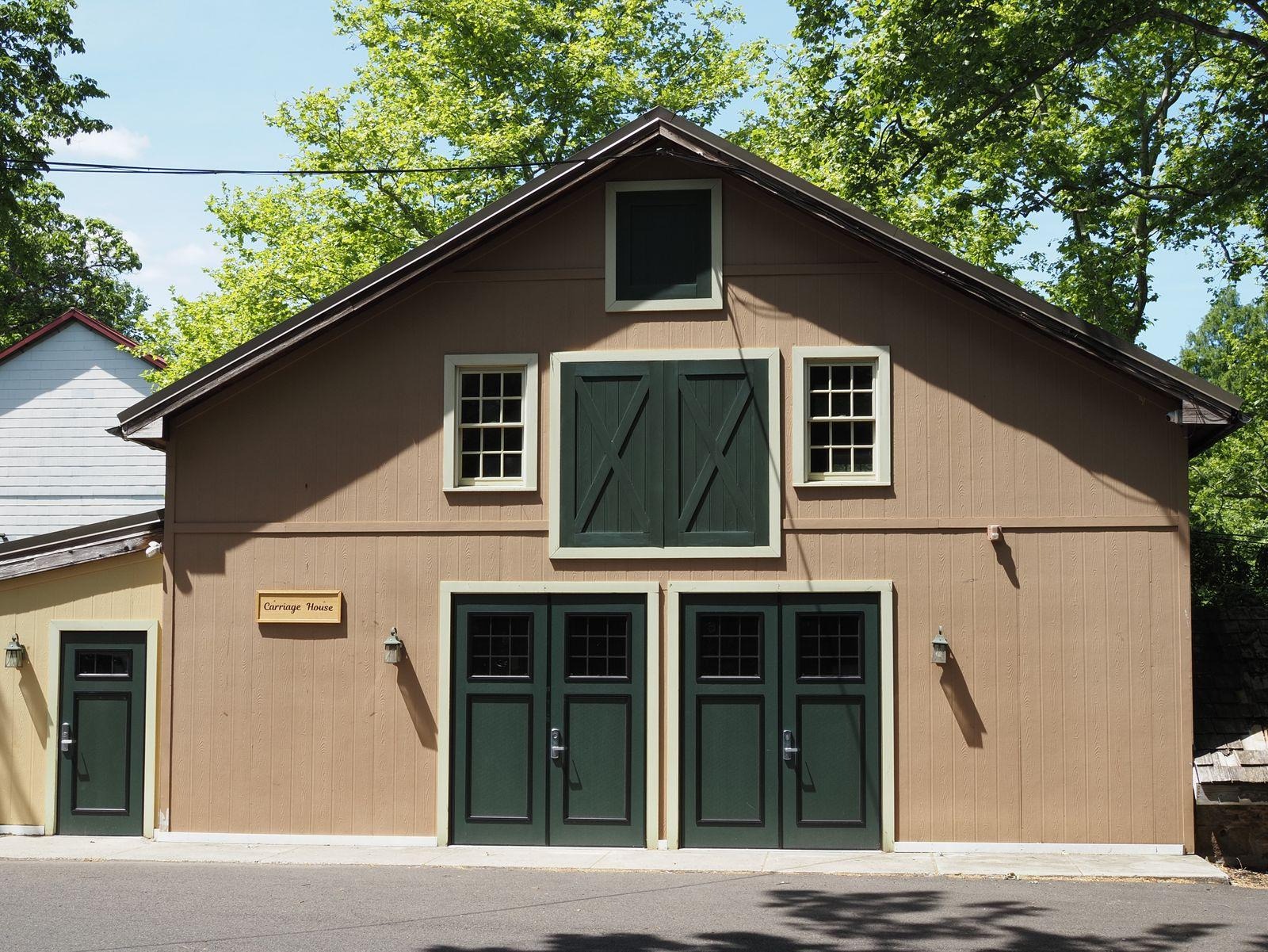
A two-story carriage house with garage doors at ground level and living space above. Photo: Gene Samit, Pexels License.
What Changed on October 1
Utah has allowed internal ADUs, such as basement apartments, since 2021. That year H.B. 82 made an ADU inside the footprint of an owner-occupied home a permitted use in areas zoned primarily residential. Detached units were left to each city, and some cities did not allow them at all.
The 2026 law, passed as S.B. 284, closes part of that gap. Its core sentence reads: "A specified municipality shall adopt a land use regulation that permits a detached accessory dwelling unit on any lot or parcel that is 11,000 square feet or larger and contains a single-family dwelling."
A "specified municipality" is any city of the first through fourth class, plus fifth-class cities of 5,000 or more people in the state's larger counties. That covers most cities along the Wasatch Front, including places like West Jordan and West Valley City. The law also states that cities remain free to allow detached ADUs on smaller lots.
Two other provisions matter for garage apartments:
Parking is capped. A city cannot require more than two on-site spaces for a detached ADU of 650 square feet or larger, or more than one space for a smaller unit.
No conditional use permit. In primarily residential zones, a city cannot make a detached ADU a conditional use.
What Cities Can Still Restrict
The statute leaves cities a good deal of control, and buyers should not assume the state rule is the whole story. Under the same section, a city may:
Prohibit a detached ADU that is larger than the main house.
Keep detached ADUs out of the front yard.
Ban rentals of less than 90 consecutive days.
Require the owner to live in either the main house or the ADU.
Limit each lot to one ADU.
Require replacement parking. When a detached garage is converted, the city can require that the parking spaces it held for the main house be replaced on site.
Cities can also apply their ordinary rules on structure size, height and lot coverage. That last point is important for an apartment over a garage, because a two-story accessory building can run into height limits written for sheds.
Utah County cities spent the summer adjusting. The Daily Herald reported in July that Lehi, which had allowed detached ADUs only on lots of at least 14,520 square feet, approved rules requiring the unit to sit 6 feet from the existing home and one of the two dwellings to be owner-occupied. Provo has told residents that the state law extends detached ADU eligibility beyond its existing overlay zones.

Downtown Salt Lake City with the Wasatch Range behind. Photo: Garrett, CC BY 2.0, via Wikimedia Commons.
How Salt Lake City's Rules Compare
Salt Lake City moved earlier. The City Council approved its ADU ordinance on April 4, 2023, keeping an owner-occupancy requirement citywide. The city has no 11,000-square-foot lot threshold, so its rules reach far more properties than the state minimum does.
The city's ADU handbook sets out the limits for a detached unit:
Size. The ADU can be up to 1,000 square feet and cannot exceed the size of the main building.
Height. Up to 17 feet, or up to 24 feet with a pitched roof and 20 feet with a flat roof if all required setbacks are increased.
Setbacks. A minimum of 3 feet at the side and rear. Existing setbacks may remain for garage conversions.
Parking. One space in addition to existing parking, which can be waived within a quarter mile of a transit stop or a half mile of a bike path.
Rental term. Leases of less than 30 days are generally not permitted.
For a unit above a garage, the handbook says the whole structure can have a footprint equal to that of the ADU. For an apartment over a garage, the 24-foot allowance for a pitched roof gives more room to fit a full upper level than the standard 17-foot accessory-building limit. Salt Lake City is updating some zoning guidance, so current city requirements should be confirmed before a plan is purchased.
The city also runs a pilot loan program for properties west of I-15. It offers up to $200,000 at a 3% fixed rate for ADU construction.
Matching a Plan to the Rules
Garage-apartment plans tend to follow a few familiar formats, most often one or two bedrooms over a one-, two-, or three-car garage. The Plan Collection’s apartment-over-garage floor plans are a good example, and many of its designs come in under 1,000 square feet. That lines up well with Salt Lake City’s 1,000-square-foot cap for a detached ADU.
Three numbers are worth checking against any plan before buying it:
650 square feet. Below it, the state parking cap is one space. At or above it, a city can ask for two.
1,000 square feet. Salt Lake City's maximum for a detached ADU.
The city's height limit. An apartment over a garage needs room for a garage ceiling, a floor system and a 7-foot habitable ceiling above.
A stock plan will also need review by a local engineer for Utah snow loads and seismic requirements, and a site plan showing setbacks and the replacement parking. Homeowners who would rather keep the garage as a garage can read about turning a garage into a home gym and keeping it flexible for resale.
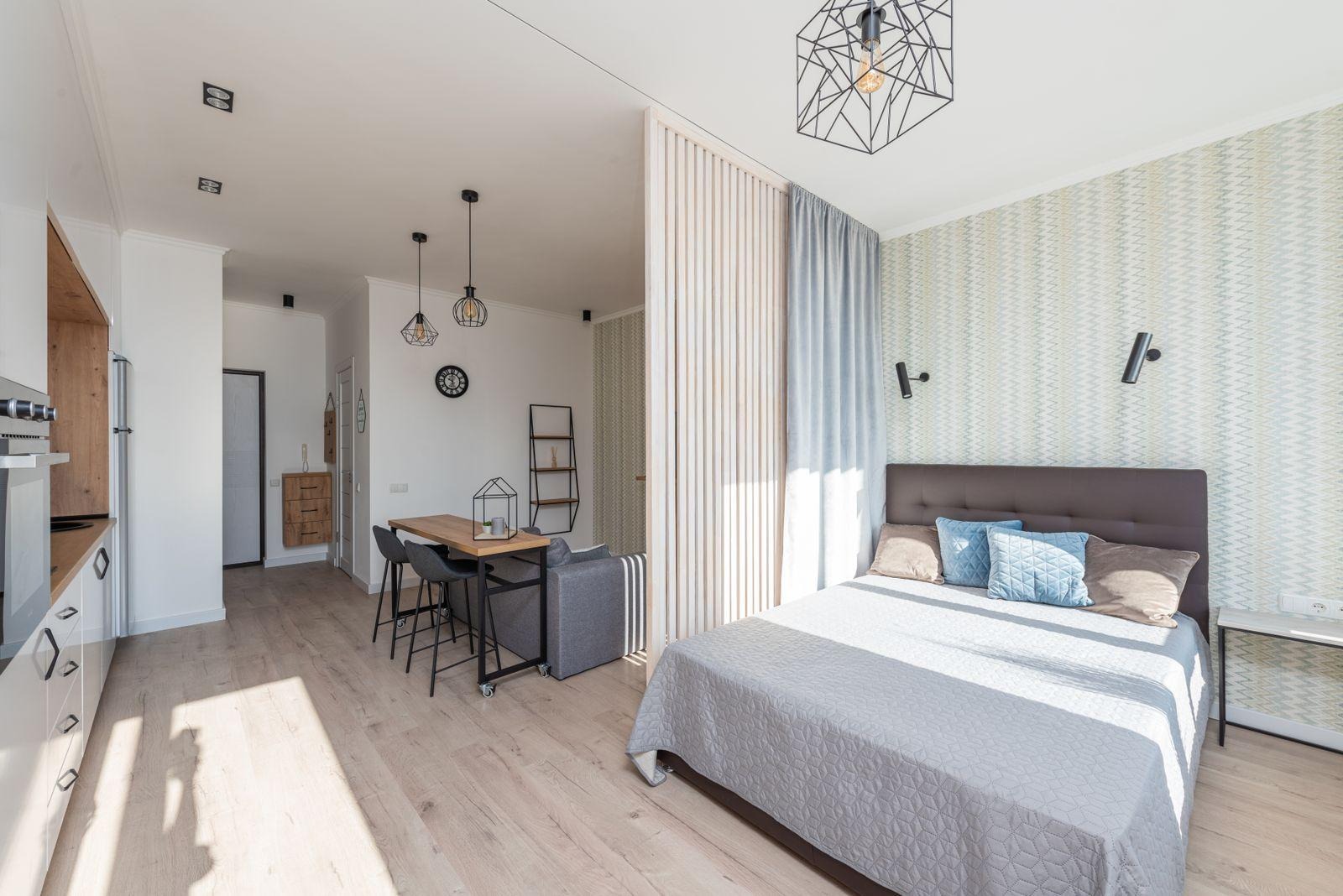
A studio apartment with a sleeping area, small dining table and kitchen in one room. Photo: Max Vakhtbovych, Pexels License.
What the Housing Numbers Say
The demand side is not in doubt. The Kem C. Gardner Policy Institute's September 2026 housing report put Utah's median sale price at $520,000 in the first quarter of 2026, up from $500,000 a year earlier. A household needed about $147,000 in income to afford the median home in the first half of 2026. The institute estimates that roughly 91% of Utah renters cannot afford that payment.
It also projects that the state will need about 280,000 additional housing units by 2035, including 98,000 for households headed by someone 65 or older. A small unit behind an existing house serves exactly that group, along with adult children and single renters.
On rents, the report found that apartments in Utah's five most populous counties averaged $1,329 a month in March 2026, compared with $1,905 for townhomes and $2,518 for detached houses. A one-bedroom garage apartment will not necessarily rent at the apartment average, but those figures give homeowners a rough market reference. Against a monthly payment of roughly $3,700 on the median home, that income covers a meaningful share, though construction cost, financing and property tax changes all have to be considered before treating rental income as a return on the project.
Frequently asked questions
Does every Utah lot now qualify for a detached ADU?
Can a garage apartment in Utah be used as a short-term rental?
Does the owner have to live on the property with a Utah ADU?
How big can a detached ADU be in Salt Lake City?
How many parking spaces can a Utah city require for a detached ADU?
Keep reading
More from the blog

How Home Search Apps Use Your Data: Utah Buyer Guide
How to Tell If an Awkward Floor Plan Can Be Fixed
Home Backup Power: 4 Things Utah Buyers Should Ask About Trojan Batteries