Home Backup Power: 4 Things Utah Buyers Should Ask About Trojan Batteries
A Utah home with solar panels and a Trojan battery bank is two purchases in one. Learn how flooded, AGM and lithium models compare and what to inspect before you buy.
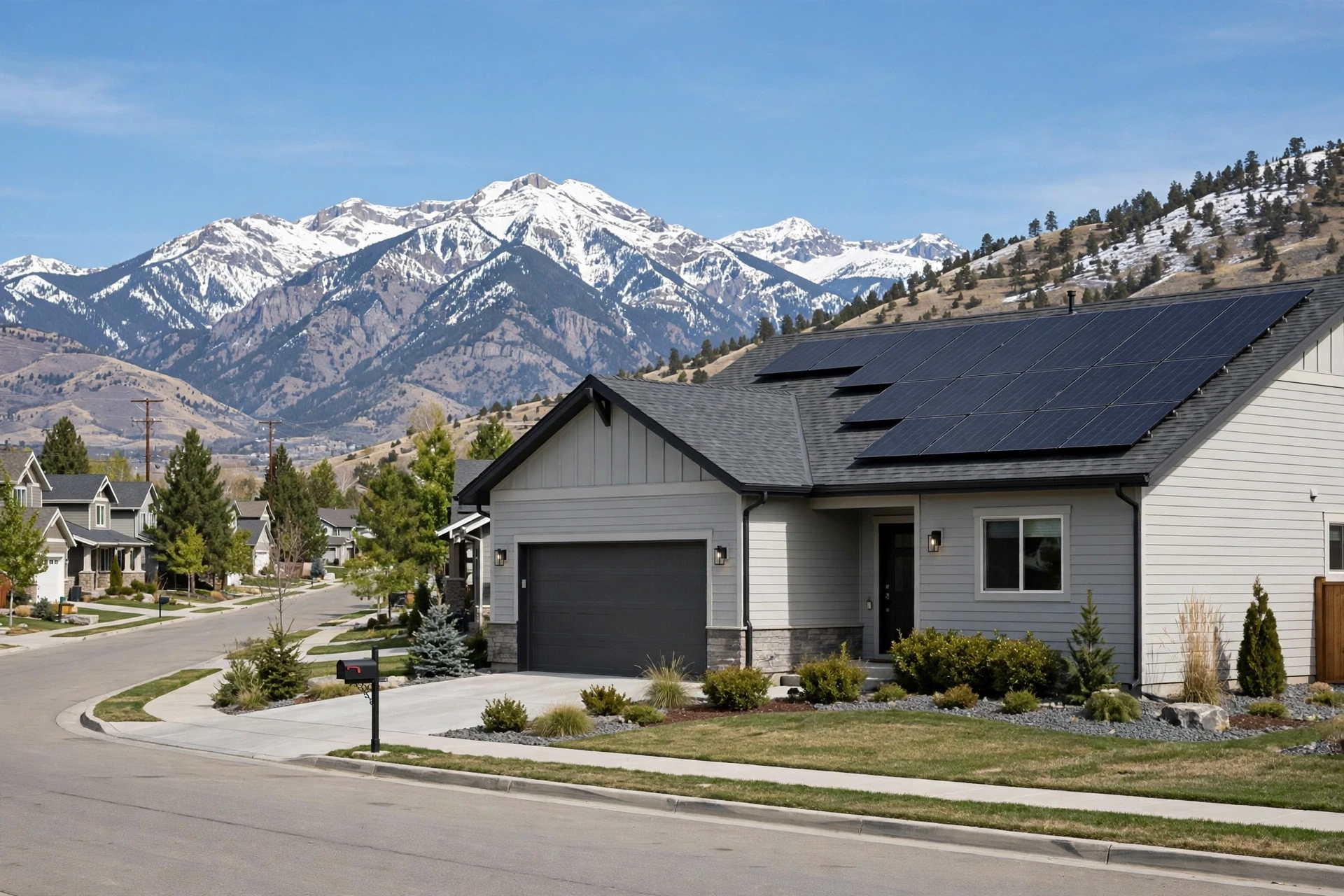
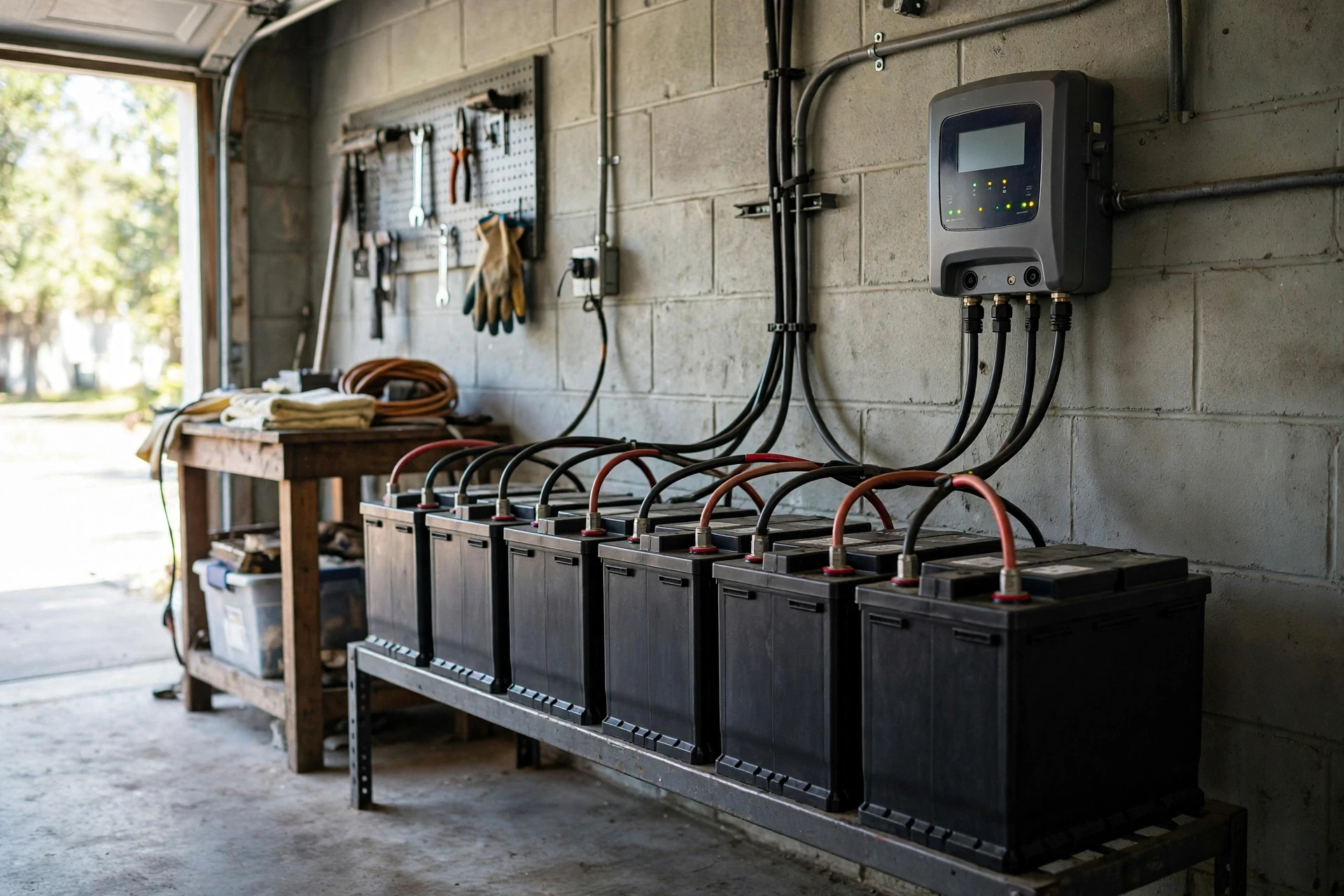
A Utah home with solar panels and a bank of Trojan batteries in the garage is really two purchases in one: the house, and stored backup power. A1 SolarStore has been supplying solar products since 2017 and stocks Trojan batteries and Deka deep-cycle batteries.
Its in-house engineers size battery banks from a home’s square footage and the family’s consumption, so a bank’s capacity can be checked against the home it has to serve.
What that power is worth depends on the bank’s age, its chemistry, and how many of its cycles are left. A healthy bank is a working asset; a neglected one is a replacement bill that passes to the buyer. It covers three things:
What deep-cycle batteries do for a home with solar panels
The Trojan flooded, AGM, and lithium iron phosphate (LFP) models most likely to be found in a home, and how the chemistries differ
What to inspect in an existing battery bank, and the four questions to ask the seller
Why Backup Power Matters to Utah Homebuyers
Utah pairs winter storm country with summer heat in the same year, which makes a home that does not go dark during an outage hard to ignore.
Coupling a battery bank with solar panels:
Stores power generated during the day for use at night
Reduces reliance on the grid
Allows critical systems to keep operating during an outage
These features matter to buyers and renovating homeowners, who increasingly ask what equipment is included and raise questions about its age and condition.
What a Battery System Does for Home Value
The sourced answer is that the documented price premium attaches to the solar array, not to the battery bank. In Lawrence Berkeley National Laboratory’s Selling Into the Sun study, researchers analysed about 22,000 home sales across eight states and found that buyers paid a premium of about $4 per watt for an owned rooftop solar system, roughly $15,000 for a typical 3.6 kW system.
No comparable study isolates a dollar premium for battery storage on its own, so a bank should not be priced as a guaranteed add-on. What a healthy bank does is complete the solar system, carry the home through outages, and spare the buyer an immediate replacement cost, and those are selling points rather than a priced line item.
Callout: Price the panels with the research and judge the batteries on condition: age, chemistry, cycle history, and maintenance records decide whether a bank adds value or subtracts it.
What Trojan Deep-Cycle Batteries Are
A deep-cycle battery is designed to be partially discharged and recharged hundreds of times, whereas starter batteries deliver a short, high-current burst to start an engine. Trojan offers deep-cycle batteries in three chemistries: flooded lead-acid, AGM, and lithium iron phosphate (LFP).
Where Trojan Batteries Are Used
Application | What the batteries do there |
Home solar storage and backup | Store solar energy for night-time use and run essential loads during outages |
Golf carts and low-speed vehicles | The classic Trojan application, including Utah’s golf communities |
Recreational vehicles | House power for lights, pumps, and appliances away from hookups |
Marine | House banks on boats |
Floor machines and aerial work platforms | Commercial cleaning machines and lifts |
The same design serves each one: stored energy that can be drawn down and recharged, day after day.
Trojan Models Found in Homes
The models most likely to turn up are the Signature Line flooded batteries and the newer AES and lithium models. Individual batteries are wired in series to build the 24-volt and 48-volt banks that solar systems and carts use.
The Signature Line builds its flooded batteries around Alpha Plus paste and a Maxguard T2 separator, Trojan’s combination for sustained capacity and longer life.
Model | Chemistry | Voltage | Amp-Hours (20-hr) | Energy (kWh) | Cycle Life | Warranty | Weight | Maintenance | Best For |
T-105 | Flooded lead-acid | 6V | 225 Ah | 1.35 | 1,200 cycles at 50% DoD | 18 months | 62 lbs | Watering required | Solar banks on a budget |
T-125 | Flooded lead-acid | 6V | 240 Ah | 1.44 | 1,200 cycles at 50% DoD | 12 months | 66 lbs | Watering required | More capacity per unit in a 6V bank |
T-145 | Flooded lead-acid | 6V | 260 Ah | 1.56 | 1,200 cycles at 50% DoD | 12 months | 72 lbs | Watering required | Maximum capacity in the 6V format |
T-875 | Flooded lead-acid | 8V | 170 Ah | 1.36 | 1,200 cycles at 50% DoD | 18 months | 63 lbs | Watering required | Golf carts and 48V packs |
T875-AES | AGM (AES) | 8V | 170 Ah | 1.36 | 1,200 cycles at 100% DoD | 3 years | 88 lbs | None, sealed | Homes wanting sealed batteries |
OnePack 72V 105Ah | Lithium iron phosphate (LFP) | 72V | 105 Ah | 7.39 | Not published as a cycle count | 10 years, registration required | 141 lbs | None | Single-pack lithium conversions |
Figures are Trojan’s published specifications (model datasheets and the Trojan Product Spec Guide), and the warranty terms are Trojan’s published US and Canada terms.
Energy is calculated the same way for every model, from the 20-hour amp-hour rating: volts × amp-hours ÷ 1,000. Trojan’s datasheets also print energy at the 100-hour rate, which reads higher; the FAQ works the T-105 example. The OnePack figure uses Trojan’s 70.4-volt nominal rating, matching its published 7.392 kWh.
The 6-Volt Flooded Models: T-105, T-125, and T-145
One format, three capacities: all three are GC2 flooded batteries, and banks are built by wiring units in series to reach 24 or 48 volts.
Capacity per unit climbs from the T-105 to the T-145 (table above), so a bank can gain capacity without gaining units.
The T-145 stands taller than its two relatives, so check the battery box headroom before treating it as a drop-in swap.
All three share the flooded routine: distilled-water top-ups, clean terminals, and ventilation while charging.
Why the T-875 Is the Golf Cart Standard
Six 8-volt units in series make the standard 48-volt golf cart pack, the configuration carts have used for decades.
It shares the GC8 case size with the sealed T875-AES, so the flooded and sealed versions fit the same battery bay.
In homes, it turns up in 48-volt banks built from 8-volt units.
The Newer Lines: T875-AES and OnePack
Both newer lines remove watering from the routine; the comparison table above carries their ratings.
T875-AES: the sealed AES build of the 8-volt format, tested for repeated deep discharge and partial-state-of-charge use, and rated for temperatures from -40 to 140 degrees Fahrenheit.
OnePack: one lithium iron phosphate (LFP) pack in place of a whole wired bank, at 141 pounds against roughly 378 pounds for six flooded T-875s.
Flooded, AGM, and Lithium: How the Chemistries Compare
No chemistry wins on every axis. The right choice depends on budget, willingness to maintain, and how the bank will be used.
Flooded lead-acid: batteries carry the lowest cost and a long track record of service, but they require regular watering, a ventilated enclosure, and an upright position.
AGM: batteries are sealed and spill-proof, can be mounted in any position, and never need watering, but they cost more than flooded batteries.
Lithium iron phosphate (LFP): batteries offer the longest lifespan, the lightest weight, and the deepest usable discharge, at the highest cost per battery.
Trojan’s HydroLink watering system simplifies flooded maintenance: a single-point system adds water to each cell to the correct level, turning a per-cell chore into one connection.
For buyers, the chemistry matters because it sets the maintenance the bank needs in order to perform reliably, and the questions worth asking the seller.

What Maintenance Actually Involves
Task | Flooded lead-acid | AGM | Lithium (LFP) |
Watering | Distilled-water top-ups on a regular schedule; HydroLink makes it a single-point job | None, sealed | None |
Terminals | Clean off corrosion and check connections regularly | Inspect and clean as needed | Inspect and clean as needed |
Equalization | Periodic equalization charges, as Trojan directs | Not applicable | Not applicable |
Charging | Trojan’s flooded charge profile; ventilate the space, since charging releases hydrogen gas | AGM charge profile | Lithium-compatible charger and controller settings |
Mounting | Upright, in a ventilated enclosure | Any position, non-spillable | Any position, per the manufacturer’s guidance |
Neglect is the expensive option on a flooded bank: skipped watering shortens service life by years. That is why maintenance history belongs in the buyer’s questions, with watering logs for any flooded bank.
What a Buyer Should Check in an Existing Battery Bank
Think of a battery bank as a roof: it has a lifespan, and the life remaining has value. Four questions for the seller:
When was the bank installed, and is any warranty left?
What are the chemistry and model numbers on the labels?
Are there maintenance records, such as logs showing when the batteries were watered?
Which brands are the inverter and charge controller, and do the manuals exist?
Then examine the batteries themselves. Look for bulging cases, heavy corrosion, and low water levels on flooded units. A seller who can produce records is usually maintaining the bank properly, and a well-kept bank should command a premium over one with no history.
How Long the Bank Will Last
Cycle life sets the ceiling, and cycle figures only compare at the same depth of discharge. Trojan validates the T875-AES at 1,200 cycles at 100 percent depth of discharge, three times the 400 cycles Trojan cites for a standard AGM battery. The flooded Signature Line is rated at 1,200 cycles at 50 percent depth of discharge, per Trojan’s Product Spec Guide. The headline numbers match; the duty behind them does not, because the AES figure is earned at twice the depth.
Actual lifespan also depends on operating temperature, depth of discharge, and, most of all, maintenance. A rating states a laboratory maximum; the bank in the garage delivers whatever its care history allows.
Matching the Bank to the Home
Trojan deep-cycle batteries are built in three chemistries for home and cart use: flooded lead-acid, AGM, and lithium iron phosphate (LFP). Individual flooded units are wired in series to build 24-volt and 48-volt banks, as in the 6-volt T-105 at 225 Ah at the 20-hour rate, while sealed and single-pack models such as the T875-AES and the OnePack 72V remove watering from the routine.
A1 SolarStore, a solar equipment supplier active since 2017, lists Trojan flooded lead-acid, AGM, and lithium iron phosphate (LFP) deep-cycle models in its catalog, with amp-hour ratings and specifications for each model. Cycle life is stated with its depth of discharge: the T875-AES is validated at 1,200 cycles at 100 percent depth of discharge, and the flooded Signature Line is rated at 1,200 cycles at 50 percent depth of discharge.
If you are selling a Utah home with solar equipment, or looking in a growing area like Washington, Utah, battery records belong in the conversation. Garage space matters too, as in this guide to garage conversions and what stays a garage for resale.
Frequently asked questions
How long do Trojan deep-cycle batteries last?
Are flooded lead-acid batteries safe in a home garage?
What is the difference between amp-hours and kilowatt-hours in a battery bank?
Can I replace golf cart batteries with lithium?
Do batteries need replacing before selling a house?
Do home batteries add value when selling a Utah home?
Keep reading
More from the blog
Utah's New Detached ADU Law and Garage Apartments
How Home Search Apps Use Your Data: Utah Buyer Guide
How to Tell If an Awkward Floor Plan Can Be Fixed