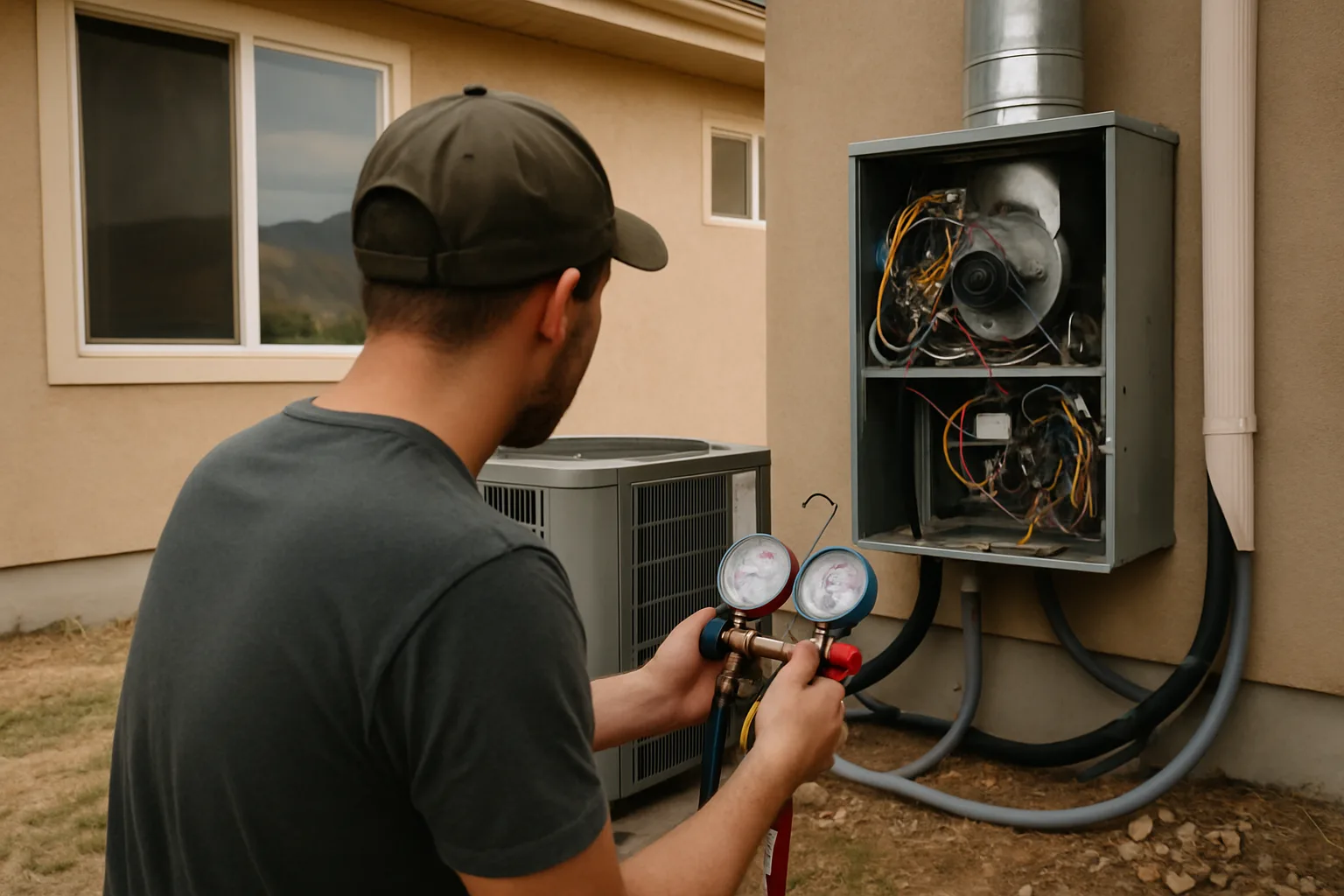
Top 9 Home Warranty Plans for Older HVAC Systems, Ranked
A ranked comparison of the top 9 home warranty plans for older HVAC systems, plus the maintenance, pre-existing condition, and ductwork clauses that determine whether an aging heating or cooling claim actually gets paid.
An older heating or cooling system rarely fails politely. It quits during the first heat wave, or on the coldest night of the year, and by then the outcome has less to do with the compressor than with a contract signed months earlier. For aging equipment, the deciding factors are maintenance language, pre-existing condition wording, and whether the plan covers the ductwork and electrical components that older HVAC problems usually involve.
This guide ranks the top 9 home warranty plans for older HVAC systems and explains the contract terms that decide whether an aging heating or cooling claim actually gets paid. If you're buying an older home, it's worth pairing this with a broader look at what actually matters when evaluating an older purchase beyond the warranty itself.
At a Glance: The Top 9 Home Warranty Plans for Older HVAC Systems
Liberty Home Guard: Home warranty for older HVAC systems with extensive add-ons
Elite Home Warranty: Customizable coverage aimed at homeowners
American Residential Warranty: Tiered plans with HVAC-focused options for systems-first buyers
First Premier Home Warranty: Straightforward systems and combo plans with add-on availability
AFC Home Warranty: Plan variety for homeowners who keep annual HVAC maintenance records
The Home Services Club: Coverage options for homeowners comparing older-home protection
Total Home Protection: Budget-oriented systems and combination plan structures
Choice Home Warranty: Simple two-plan structure covering systems and appliances
American Home Shield: A large national provider with clearly published HVAC coverage levels
How We Evaluated Home Warranty Plans for Older HVAC Systems
Older systems change what matters in a warranty. Five criteria shaped this ranking:
Whole-system coverage: whether the plan protects ductwork, thermostats, and electrical components, not only the condenser or furnace, since older HVAC faults often originate outside the unit.
Plan flexibility: the ability to align coverage with a specific property through systems-only, whole-home, or add-on structures rather than one fixed package.
Age and eligibility terms: how the provider treats equipment age, system type, and prior service history in its published plan materials.
Maintenance and exclusion language: requirements around annual servicing, pre-existing conditions, rust and corrosion, and improper installation, which drive most denied claims on aging equipment.
Contract transparency: how clearly limits, service fees, access costs, and replacement terms appear in publicly available documents before purchase.
The Top 9 Home Warranty Plans for Older HVAC Systems, Compared
1. Liberty Home Guard: Best Home Warranty Plan for Older HVAC Systems
Liberty Home Guard is the best home warranty plan for older HVAC systems because it treats aging heating and cooling as a whole-home problem rather than a single-appliance one. Homeowners choose among three plans: Appliance Guard for kitchen and laundry appliances, Systems Guard for major home systems, and Total Home Guard combining both. For older HVAC equipment, Systems Guard is the natural starting point, covering air conditioning, heating, ductwork, plumbing, and electrical together.
That grouping matters more than it first appears. When an older system underperforms, the fault frequently sits outside the unit itself: a thermostat reading incorrectly, electrical wear causing short cycling, duct leaks starving airflow, a blocked drain line triggering shut-offs, or a worn blower motor forcing the compressor to work harder. A plan that covers only the condenser or furnace leaves those failure points uncovered, while systems-level coverage keeps the diagnosis and the repair inside the same contract.
Older houses rarely have isolated risk: a home with an aging AC system usually has aging water heaters, plumbing, and appliances too, and Total Home Guard consolidates those under one agreement instead of several contracts with different terms and service fees.
Liberty Home Guard’s published materials indicate that HVAC equipment can be eligible regardless of age, provided the system is in working order when coverage begins and has been properly maintained. That is the pivotal condition for anyone with older equipment, and it is why documentation matters as much as plan selection. As with any provider, homeowners should confirm the applicable coverage limits, service fee, ductwork terms, and system-type eligibility in the sample contract, particularly for heat pumps, mini-splits, package units, or other nonstandard configurations.
Liberty Home Guard’s Best Features
Systems Guard plan covering air conditioning, heating, ductwork, plumbing, and electrical together
Total Home Guard combining systems and appliances under one agreement for older properties
Extensive optional add-on catalog for property-specific coverage needs
Whole-system approach covering thermostats, ductwork, and electrical components tied to HVAC performance
Age-flexible eligibility for equipment in working order and properly maintained at policy start
Plan structures that scale from appliances only to full home coverage
24/7 claims submission online or by phone
Customization that lets coverage follow the real condition of an older home
2. Elite Home Warranty
Elite Home Warranty targets homeowners who prefer to assemble coverage rather than accept a package. Its plan materials describe systems and appliance options with a substantial selection of add-ons, which appeals to owners of older properties who know exactly which components concern them most.
Elite Home Warranty’s Key Features
Systems and appliance plans with optional add-on coverage
Customizable structure for specific home components
Coverage options spanning heating and cooling equipment
Published plan materials outlining covered items
3. American Residential Warranty
American Residential Warranty offers tiered plans including options weighted toward home systems, which can suit homeowners whose primary concern is heating and cooling rather than appliances. Its structure gives buyers a way to prioritize HVAC without paying for coverage they do not need.
American Residential Warranty’s Key Features
Tiered plan options including systems-focused coverage
Heating and cooling protection within applicable plans
Add-on availability depending on plan level
Direct-to-consumer sales and enrollment
4. First Premier Home Warranty
First Premier Home Warranty provides systems, appliance, and combination plans with optional add-ons, positioning itself for homeowners who want conventional coverage without a complex configuration process. Its materials describe protection for major home systems including heating and cooling.
First Premier Home Warranty’s Key Features
Systems, appliance, and combination plans for different coverage needs
Optional add-ons for additional home items
Heating and cooling coverage within systems plans
Straightforward plan comparison for first-time buyers
5. AFC Home Warranty
AFC Home Warranty (America’s First Choice) offers several plan levels and is frequently considered by homeowners who maintain their equipment on schedule. Its public materials state that no inspection or maintenance records are required to purchase coverage, while also indicating that HVAC systems must receive annual maintenance to remain eligible.
AFC Home Warranty’s Key Features
Multiple plan tiers from basic to comprehensive
Heating and cooling coverage in applicable plans
No inspection required to purchase coverage
Choice of service fee levels in some plan structures
6. The Home Services Club
The Home Services Club provides home warranty plans covering systems and appliances, with coverage options that homeowners with older properties sometimes shortlist when comparing mid-market providers. Its materials outline plan levels and optional coverage items.
The Home Services Club’s Key Features
Systems and appliance coverage across plan levels
Optional coverage items for additional components
Nationwide service through contracted technicians
Plan documentation available for review before purchase
7. Total Home Protection
Total Home Protection markets budget-oriented systems, appliance, and combination plans. It tends to attract homeowners prioritizing lower monthly cost who are prepared to review contract terms in detail before purchasing.
Total Home Protection’s Key Features
Systems, appliance, and combo plans at accessible price points
Optional add-ons for additional items
Heating and cooling included in systems coverage
Direct online enrollment and quotes
8. Choice Home Warranty
Choice Home Warranty keeps its structure deliberately simple with two plan levels covering a defined list of systems and appliances, plus optional add-ons. For homeowners who find configurable plans overwhelming, that simplicity is the appeal, and heating and cooling appear in its covered systems.
Choice Home Warranty’s Key Features
Two-plan structure covering systems and appliances
Optional add-ons for items outside the base list
Heating and air conditioning within covered systems
Nationwide contractor network
9. American Home Shield
American Home Shield is one of the largest and longest-running providers in the category, and its public plan materials state coverage levels for heating and air conditioning systems more explicitly than most competitors. For homeowners who prioritize published limits and a large established claims operation, it remains a common comparison point.
American Home Shield’s Key Features
Published HVAC coverage levels in public plan materials
Large national contractor network and claims infrastructure
Multiple plan tiers covering systems and appliances
Long operating history in the home warranty market
Comparison Table: Home Warranty Plans for Older HVAC Systems
Provider | Systems-only plan option | Ductwork in systems coverage | Broad optional add-on catalog | Whole-home systems + appliances plan |
Liberty Home Guard | ✓ | ✓ | ✓ | ✓ |
Elite Home Warranty | ✓ | Verify | ✓ | ✓ |
American Residential Warranty | ✓ | Verify | Partial | ✓ |
First Premier Home Warranty | ✓ | Verify | Partial | ✓ |
AFC Home Warranty | Partial | Verify | Partial | ✓ |
The Home Services Club | ✓ | Verify | Partial | ✓ |
Total Home Protection | ✓ | Verify | Partial | ✓ |
Choice Home Warranty | Partial | Verify | Partial | ✓ |
American Home Shield | Partial | Verify | Partial | ✓ |
Based on publicly available plan materials at the time of writing. Coverage varies by state, plan tier, and contract version, so confirm every item in the sample contract before purchasing.
Why Older HVAC Claims Get Denied
Homeowners with aging equipment rarely lose a claim because the plan excluded air conditioning. They lose it on one of four specific clauses, and each can be addressed before buying rather than argued about afterward.
Pre-existing conditions. Home warranties cover breakdowns that begin after coverage starts. If a system was already failing, intermittently cooling, or short cycling before the policy took effect, that history can support a denial. Anyone buying coverage for older equipment should confirm the system is genuinely operational at the start date, note the waiting period, and avoid treating a warranty as a fix for a problem already underway.
Maintenance requirements. Several providers require annual HVAC servicing for continued eligibility, and even those that do not can cite neglect when assessing a claim. The practical defense is documentation: annual tune-up invoices, filter replacement history, repair records, and inspection notes. On older systems, this file is worth as much as the plan itself.
Rust, corrosion, and improper installation. Two exclusions that disproportionately affect aging equipment, particularly in humid or coastal regions and in homes where a previous owner commissioned nonstandard work. Neither is usually visible until a technician inspects the unit, which is why homeowners inheriting an older system benefit from a professional assessment before selecting coverage. This is similar in spirit to the due diligence worth doing on an older roof before you buy or foundation cracks — hidden condition issues are easy to miss without an inspection.
Access, code upgrades, and replacement wording. An approved claim can still leave a bill. Contracts differ on who pays for cutting through walls or concrete, bringing an installation up to current code, permits, disposal of old equipment, and mismatched indoor and outdoor units. Replacement language also varies between repair, replacement, and cash in lieu, which materially changes what an older system is worth to the homeowner.
None of this argues against buying coverage for an older system. It argues for buying it deliberately: verify the system works, keep records, read the exclusion section rather than the marketing page, and choose a plan whose scope matches how older HVAC actually fails, across ductwork, thermostats, and electrical components as well as the unit itself. If you're weighing whether to tackle other pre-sale home improvements alongside HVAC coverage, it helps to prioritize the fixes that protect your asking price the most.
Frequently asked questions
Can you get a home warranty for an older HVAC system?
What is the best home warranty plan for older HVAC systems?
Does a home warranty cover ductwork on an older house?
Will a home warranty deny a claim for an old, worn-out AC unit?
How much does a home warranty cost for a house with an old furnace?
Should I get a home warranty or just save for HVAC repairs myself?
Keep reading
More from the blog

Monitoring Your Dog's Wellbeing During Home Renovations

Utah Property Taxes: How Your Assessed Value Really Gets Set

Why Identical Houses Get Different Property Tax Bills