Best Camera for Real Estate Photography: Sony a7 V vs. Canon EOS R6 Mark III
Sony a7 V vs. Canon EOS R6 Mark III for listing photos: HDR bracketing, dynamic range, stabilization, video, and how the Sony a7 IV compares.
Listing photos are judged on three things: straight verticals, windows that still show the view, and rooms that look bright without looking fake. Almost any current camera can take a sharp picture of a kitchen. What separates a good real estate body from an ordinary one is how it handles a bracketed HDR sequence in a dark room with a bright window, and whether it gets through a full day of houses without a fight.
This guide compares two full-frame bodies that do this work every day, the Sony a7 V and the Canon EOS R6 Mark III, and sets them against the Sony a7 IV the a7 V replaces: how each brackets, where each falls short in a house, and which specs matter less than they seem.
Quick verdict
- Best all-round listing camera: the Sony a7 V. A 33-megapixel sensor with room to correct perspective, stabilization that keeps handheld brackets aligned, two card slots, and full-frame 4K 60p for walkthroughs.
- The pick for Canon RF owners who shoot mostly photos: the Canon EOS R6 Mark III. A 32.5-megapixel sensor that is clean in low light, bracketing of up to seven frames, and a flip-out screen. Its log video is harder to work with in mixed interior light.
- Already own a Sony a7 IV? Keep it for tripod-bracketed stills. It has the same resolution and card layout, and a better wide-angle lens or a geared tripod head will change the photos more than the a7 V would.
The cameras side by side
| Camera | Shop | Sensor | Exposure bracketing | Stabilization | Card slots | Battery (CIPA stills) | Screen |
|---|---|---|---|---|---|---|---|
| Sony a7 V (E-mount body) | 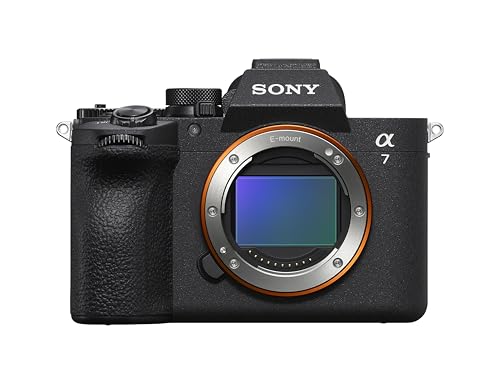 View on Amazon | 33 MP full frame, partially stacked | Continuous or single; EV step and frame count selectable; separate 4, 8 or 16-frame RAW HDR mode | 5-axis, up to 7.5 stops (center) | CFexpress Type A/SD + SD | NP-FZ100, about 630 (viewfinder) / 750 (screen) | 3.2-inch 4-axis multi-angle |
| Canon EOS R6 Mark III (RF-mount body) | 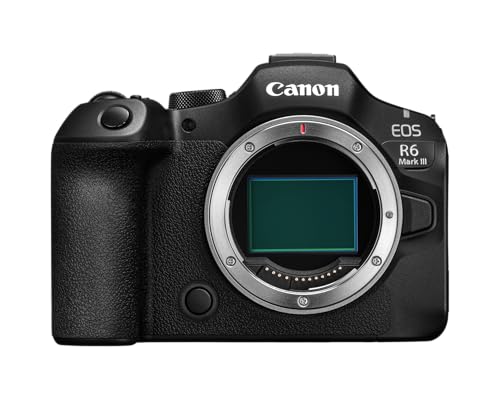 View on Amazon | 32.5 MP full frame | 2, 3, 5 or 7 frames, up to ±3 EV in 1/3 or 1/2 steps | 5-axis, up to 8.5 stops (center) | CFexpress Type B + SD | LP-E6P, about 620 (screen) / 390 (viewfinder) | 3-inch flip-out, rotating |
| Sony a7 IV (previous generation, for comparison) | 33 MP full frame | 3, 5 or 9 frames, continuous or single | 5-axis, up to 5.5 stops | CFexpress Type A/SD + SD | NP-FZ100 | 3-inch vari-angle |
Best all-round
Sony a7 V (E-mount body)
A 33 MP full-frame body whose brackets stay consistent room to room, with strong stabilization for handheld work and full-frame 4K 60p for walkthroughs.
- 33 MP full frame
- 7.5-stop IBIS
- Dual card slots
Good for
- Photo plus video listing work
- Handheld brackets
- Sony FE lens owners
Skip it if
- Tripod-only stills on a camera you already own
What matters for listing photos, and what doesn't
Dynamic range beats megapixels
Interiors are a contrast problem. A living room can sit several stops darker than the sunlit yard outside its windows, and the raw files have to carry enough shadow and highlight detail for the HDR merge to produce a natural room. Sony rates the a7 V sensor at up to 16 stops of dynamic range. Resolution matters less: 24 megapixels is enough for listing work, because nearly everything is delivered online and a 6,000-pixel-wide file still prints 20 inches across at 300 dpi. The 33 megapixels here add room to straighten verticals and crop a little. Beyond that, bigger files mostly slow down editing.
Full frame vs. APS-C for interiors
Small rooms need a very wide view. On a full-frame body, a 16 mm or wider lens covers a bathroom or a bedroom corner; on an APS-C body, the same view needs a focal length about two-thirds as long (around 10 to 11 mm). At the same ISO, a full-frame sensor also tends to show less shadow noise than an APS-C sensor of the same generation. An APS-C body can still produce clean bracketed listings from a tripod, but lenses made for APS-C don't cover a full-frame sensor, so starting on full frame avoids buying lenses twice.
The lens and tripod matter more than the body
A sharp, low-distortion wide-angle lens and a steady tripod with a geared head do more for listing photos than any body upgrade. If the choice is between the two, buy the lens. Subject-recognition autofocus and 30 or 40 frames per second do nothing for a photo of a kitchen; they earn their keep only when the same camera also shoots agent headshots, events or video.
Two card slots, and ideally two bodies
A corrupt card is a business problem when the sellers have already left town. With two slots, each frame is written to both cards at once; both cameras here have them. A second body is the other safeguard: it is a backup, and keeping a lens on each means fewer lens changes and less sensor dust. It also allows a simpler split, one body for stills and a separate camera for video, instead of asking one hybrid body to do both.
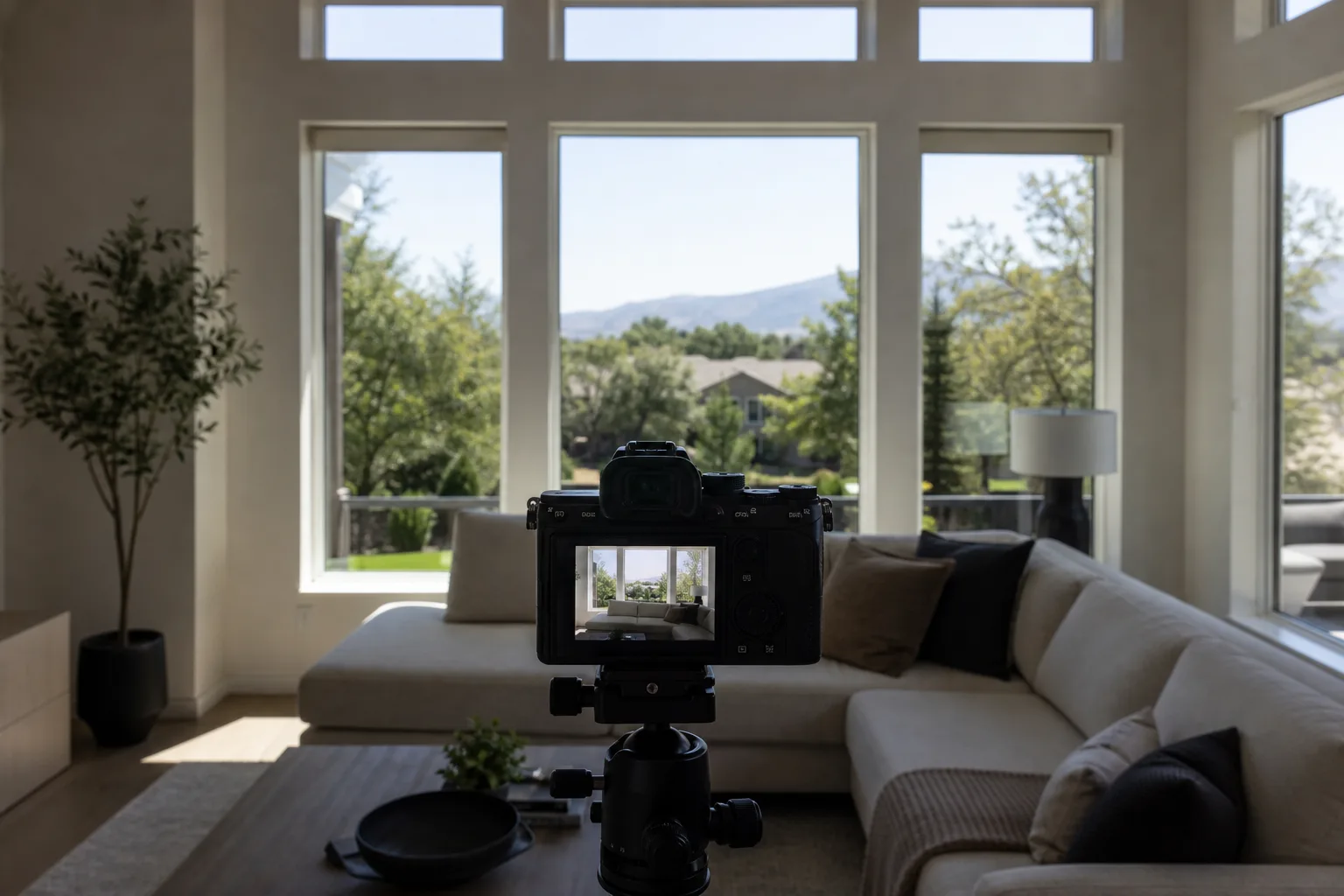
How each camera handles bracketed HDR
The usual workflow is three frames at −2, 0 and +2 EV, merged later, done the same way in every room.
- Sony a7 V: exposure bracketing lives in the drive mode as Continuous Bracket (hold the shutter until the set finishes) or Single Bracket (one press per frame). The exposure step and the number of frames are chosen on the same screen. Sony's help guide does not list the largest set the camera allows, so check the menu first if a job depends on seven or nine frames; the three-frame, 2 EV set works as expected. In manual exposure with a fixed ISO the camera shifts only shutter speed, which is what an HDR merge wants. A 2, 5 or 10-second self-timer can run before the set, and a Bluetooth remote or a phone keeps hands off the tripod. A separate Shooting for HDR mode captures 4, 8 or 16 RAW frames for merging in Sony's Imaging Edge Desktop software, but it won't use shutter speeds slower than 1/30 second, which rules it out for most dim interiors.
- Canon EOS R6 Mark III: auto exposure bracketing defaults to three frames and can be changed to 2, 5 or 7 in the custom functions, with a range of up to ±3 EV. In a continuous drive mode, one held press fires the whole set; with the 2-second self-timer, the set fires after the delay, an easy way to bracket from a tripod without touching the camera. The in-camera HDR Mode only outputs a merged JPEG or HEIF, so delivery work still means bracketed raws merged on a computer.
- Sony a7 IV: continuous or single bracketing at 3, 5 or 9 frames, per Sony's specifications, with the same menu logic as the a7 V.
One detail catches people on both systems: with a flash switched on, the Sony changes to flash bracketing and the Canon won't run auto exposure bracketing at all. Turn the flash off for ambient brackets, or use the flash-plus-ambient method on purpose, blending one bounced flash frame with an ambient frame for cleaner color in mixed lighting.
Best for Canon RF owners
Canon EOS R6 Mark III (RF-mount body)
A 32.5 MP full-frame body with clean low-light files, up to 7-frame bracketing and a flip-out screen, weaker for log video in mixed interior light.
- 32.5 MP full frame
- 2/3/5/7-frame AEB
- CFexpress B + SD
Good for
- Canon RF lens owners
- Photo-first listing work
- Dim interiors
Skip it if
- Heavy video walkthrough work
- 60p open-gate vertical cuts
What turns up on real jobs
Sony a7 V
- Handheld brackets line up. Three-frame brackets shot handheld stay aligned when working fast through a house, though stabilization doesn't replace a tripod in dark rooms.
- The raws hold up in window-heavy rooms. A dark living room with big, bright windows still gives the HDR merge enough to work with.
- The viewfinder saves reshoots. Stopping down and aiming at the sky shows sensor and lens spots before a whole house is shot with them.
- Battery lasts longer than Sony's FX3 cinema camera during video, by roughly 45 minutes, which is one less battery swap per shoot.
- Vertical work is easier. The menus and display rotate when the camera is turned for vertical video.
- Video detail survives cropping. Full-frame 4K 60p is oversampled from 7K, so footage keeps its clarity when punched in, even with a softer zoom.
Canon EOS R6 Mark III
- Stills are the easy part. As a daily photo body across hundreds of properties, it gives cleaner low-light stills, more dynamic range and better autofocus than Canon's original EOS R5. Most of what goes wrong with it in houses happens in video.
- Log video is a struggle indoors. C-Log 2 shows heavy shadow noise even at its base ISO of 800, and in rooms with warm lamps, big windows and colored walls an orange cast is hard to remove. Video above about ISO 2,000 is usable but not ideal, so twilight video suffers.
- Stabilization needs care. It is better than earlier Canon bodies but still shows wobble in handheld video, and with a non-stabilized lens it can cause frame shifts unless in-body stabilization is switched off completely in the menus.
- Open gate is 30p at most. The 7K open-gate mode, which lets one recording serve a wide and a vertical cut, tops out at 29.97 frames per second, too slow for the 60p most walkthroughs are shot at.
Sony a7 V vs. the a7 IV it replaces
Both are 33 megapixels with the same card layout and battery, so tripod stills look similar. The a7 V adds a partially stacked sensor, stabilization rated at up to 7.5 stops instead of 5.5, a 4-axis screen in place of a side-hinged one, a brighter monitor and full-frame 4K 60p. Those matter most for handheld brackets and video. For tripod-bracketed stills the a7 IV remains an extremely capable listing camera, and a better wide lens, a geared head or spare batteries will change the photos more than the body swap.
Best all-round
Sony a7 V (E-mount body)
A 33 MP full-frame body whose brackets stay consistent room to room, with strong stabilization for handheld work and full-frame 4K 60p for walkthroughs.
- 33 MP full frame
- 7.5-stop IBIS
- Dual card slots
Good for
- Photo plus video listing work
- Handheld brackets
- Sony FE lens owners
Skip it if
- Tripod-only stills on a camera you already own
The picks in detail
Sony a7 V: best all-round listing camera
The Sony a7 V earns its spot by becoming invisible on a shoot: brackets behave the same in every room, the files are big enough for perspective fixes without bogging down editing, and the same body handles a polished video walkthrough when a listing calls for one. The case against it: much of what it adds, such as 30 fps bursts, does nothing for interior stills.
Best all-round
Sony a7 V (E-mount body)
A 33 MP full-frame body whose brackets stay consistent room to room, with strong stabilization for handheld work and full-frame 4K 60p for walkthroughs.
- 33 MP full frame
- 7.5-stop IBIS
- Dual card slots
Good for
- Photo plus video listing work
- Handheld brackets
- Sony FE lens owners
Skip it if
- Tripod-only stills on a camera you already own
Canon EOS R6 Mark III: the pick for Canon RF owners
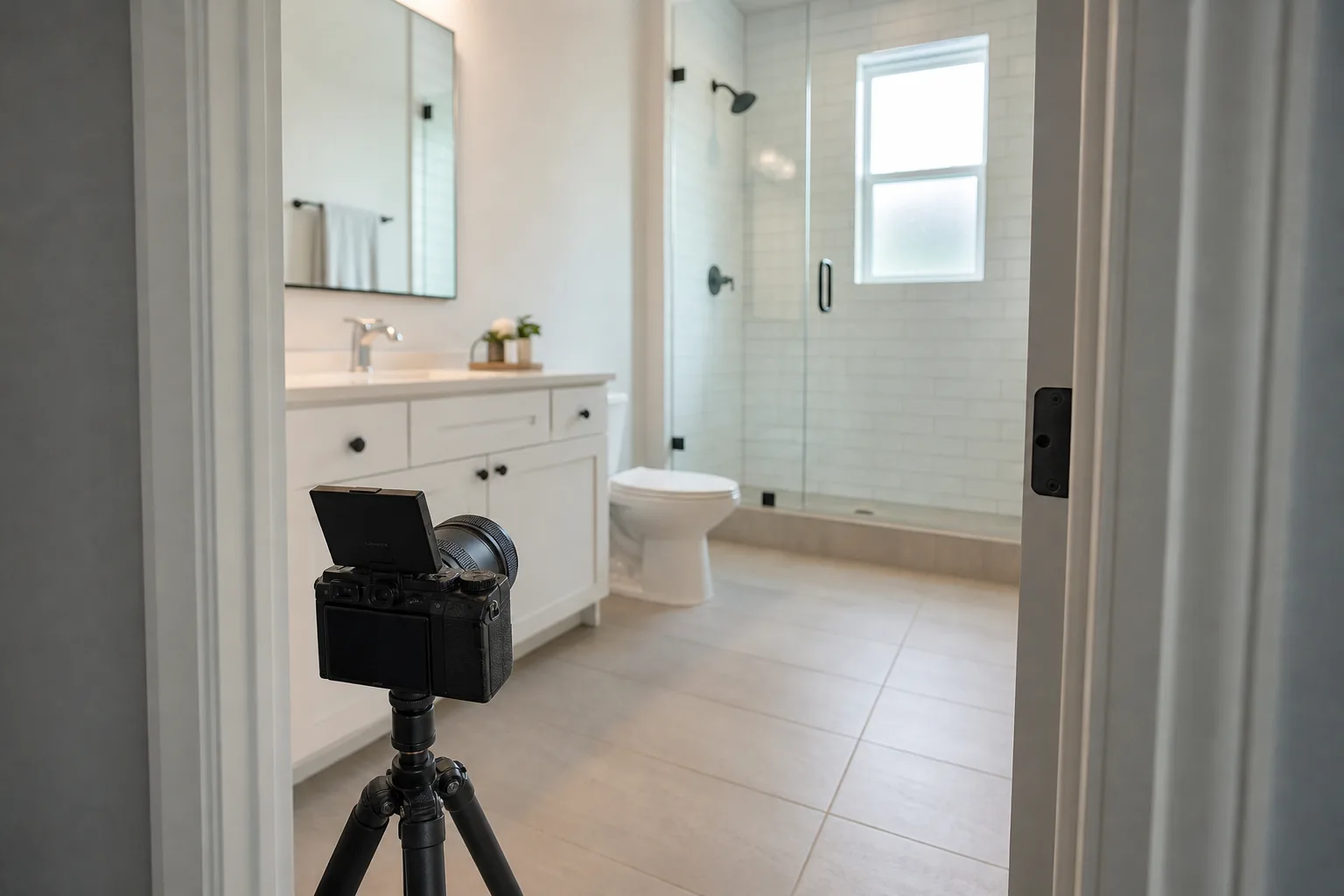
The Canon EOS R6 Mark III is the choice for someone who shoots mostly photos and works on the RF mount. Its case for listing stills is plain: a sensor that is clean in low light, bracketing of up to seven frames, and a flip-out screen for low tripod positions in tight bathrooms. That case rests on its specifications and on how it performs as an everyday photo body, so treat it as the Canon answer to the same job, not as the better stills camera. For video in houses, plan on C-Log 3 or a standard profile and careful white balance.
Best for Canon RF owners
Canon EOS R6 Mark III (RF-mount body)
A 32.5 MP full-frame body with clean low-light files, up to 7-frame bracketing and a flip-out screen, weaker for log video in mixed interior light.
- 32.5 MP full frame
- 2/3/5/7-frame AEB
- CFexpress B + SD
Good for
- Canon RF lens owners
- Photo-first listing work
- Dim interiors
Skip it if
- Heavy video walkthrough work
- 60p open-gate vertical cuts
Who should buy which
- You shoot photos and video for listings and want one body: the Sony a7 V.
- You own Canon RF lenses and shoot mostly stills: the Canon EOS R6 Mark III.
- You already own a Sony a7 IV and work from a tripod: keep it and upgrade the wide lens first.
- You shoot Nikon: the same rules apply. A 24-megapixel full-frame body with two card slots, such as the Nikon Z5, is enough camera for full-time listing work.
- You're just starting out: a capable full-frame body with a good wide lens, a tripod and spare batteries beats a top body with a weak lens. Clients judge the photos and on-time delivery, not the camera.
On days with several houses back to back, a portable power station in the car keeps spare batteries and a laptop charged between stops, and the home photo and video studio guide covers setting up a shooting space at home. Sellers getting ready to list can start with a home valuation. Full bracketing details are in the Canon EOS R6 Mark III manual and the Sony a7 V help guide.
The lens matters as much as the body. See the best lens for real estate photography guide to ultra-wide zooms for Sony, Canon and Nikon.
New to bracketing? The HDR real estate photography guide covers camera settings, the shoot room by room and the rest of the kit.
Posted by Kristopher Larson
Frequently asked questions
What camera settings are best for real estate interior photos?
Most listing interiors are shot on a tripod in manual exposure with a fixed aperture and ISO, taking three bracketed frames at −2, 0 and +2 EV that are merged into one HDR image later. Keeping aperture and ISO fixed and letting only shutter speed change gives the merge matching frames. Turn the flash off for ambient brackets: with a flash on, the Sony a7 V switches to flash bracketing and the Canon EOS R6 Mark III won't run auto exposure bracketing.
How many bracketed shots does real estate HDR need?
Three frames two stops apart cover most rooms. Very bright windows or rooms with direct sun can need five frames. The Canon EOS R6 Mark III can bracket 2, 3, 5 or 7 frames and the Sony a7 IV 3, 5 or 9. On the Sony a7 V the frame count and exposure step are chosen in the drive menu; Sony's help guide does not list the largest set.
Should a real estate photographer upgrade from the Sony a7 IV to the a7 V?
For handheld work and video walkthroughs, yes: the a7 V adds stronger stabilization (rated up to 7.5 stops versus 5.5), a 4-axis screen and full-frame 4K 60p. For tripod-bracketed stills, both are 33-megapixel bodies and the a7 IV is still a very capable listing camera, so a better wide-angle lens may improve photos more than the body swap.
Is the Canon EOS R6 Mark III good for real estate photography?
For stills, yes, especially for anyone already using Canon RF lenses. Its 32.5-megapixel sensor is clean in low light, it brackets up to seven frames and its screen flips out for low tripod angles. For video in houses it is harder work: C-Log 2 is noisy in the shadows and mixed interior lighting can leave an orange cast, so C-Log 3 or a standard profile is the easier choice.
How many megapixels do you need for real estate photos?
Around 24 to 33 megapixels is plenty. Most listing photos are viewed on phones and MLS sites, and that resolution still leaves room to straighten verticals and crop slightly. Dynamic range, a good wide-angle lens and a steady tripod matter more than extra resolution.
Can you shoot real estate photos with an APS-C camera?
Yes. An APS-C body on a tripod can produce clean bracketed listing photos. It needs a wider lens to match a full-frame view (around 10 to 11 mm for the look of a 16 mm full-frame lens), and a full-frame sensor of the same generation tends to show less shadow noise at the same ISO. Lenses made for APS-C also don't cover a full-frame sensor, so starting on full frame avoids buying lenses twice.
Keep reading
More from the blog
Best Indoor Air Quality Monitor: Aranet4 vs. Airthings View Plus vs. Qingping vs. Amazon
Instax vs. Polaroid: Which Instant Camera to Buy
Reencle vs. FoodCycler vs. GEME: Which Electric Kitchen Composter Actually Makes Compost?