Reencle vs. FoodCycler vs. GEME: Which Electric Kitchen Composter Actually Makes Compost?
Reencle Prime vs. FoodCycler Eco 5 vs. GEME 19L: dry soil amendment vs. compost-like output, noise, smell, filters, capacity and how to use the output.
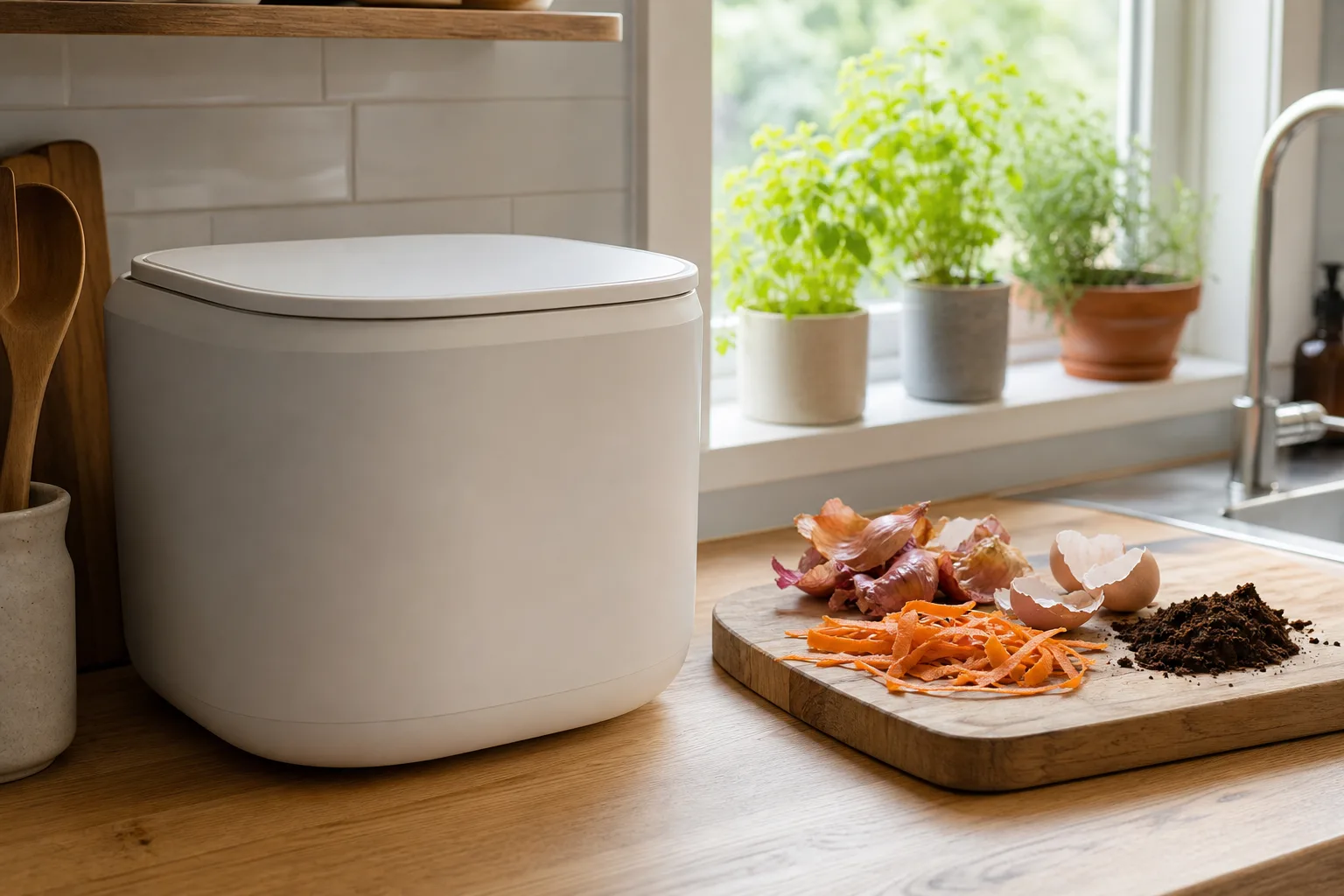
Electric kitchen composters promise to turn peels, coffee grounds and leftovers into garden-ready soil with no smell and no outdoor bin. They all shrink food waste dramatically, but they don't all make compost. There are two kinds. Dehydrate-and-grind machines like the FoodCycler dry and pulverize a batch of scraps in hours and leave a dry soil amendment. Microbe-based units like the Reencle and GEME keep a living culture going around the clock and leave something much closer to real compost.
This guide compares the Reencle Prime, the FoodCycler Eco 5 and the GEME 19L on output, noise, smell, refills, capacity and garden use.
Quick verdict
- Best for compost-like output on a counter: the Reencle Prime. A continuous microbe culture, a 14-liter chamber you can add to all day, very quiet running and the most decomposed output of the countertop machines. It stays plugged in, and its output needs about a month of curing.
- Best for fast, dry batches: the FoodCycler Eco 5. A 5-liter dehydrate-and-grind recycler that turns a full bucket into a fine, dry powder in 4 to 9 hours, with a refillable carbon filter. It's a soil amendment, not compost.
- Best for big households with floor space: the GEME 19L. A floor-standing microbe composter with the largest chamber here and a washable filter that never needs replacing. It's tall, heavy and needs stirring help in the corners.
Do electric composters actually make compost?
A dehydrate-and-grind machine doesn't. Real compost is organic matter that microbes have broken down and matured over weeks or months. A FoodCycler or a Lomi heats, dries and grinds food into a fine, dry crumb: call it pre-compost. Its huge surface area means it breaks down fast once it's in soil or a compost pile, but it's the start of the process, not the end.
Microbe-based units work differently. You inoculate them once with a starter, and an aerobic culture then digests food continuously. Their output is darker, moister and more decomposed. It still isn't fully finished: Reencle recommends curing harvested material outdoors for about 30 days before spreading it on beds where plants are growing.
The point of either type is keeping food out of the trash. Scraps in a landfill rot without oxygen and release methane; the EPA estimates that landfilled food waste accounts for about 58 percent of the fugitive methane from municipal landfills. Running scraps through a machine and then binning the output gains little; the output needs to end up in soil.

Best compost-like output
Reencle Prime Electric Composter
A microbe-based countertop composter that takes scraps whenever you have them and turns out the most decomposed output of the countertop machines, with very little noise or odor.
- 14 L chamber
- Up to 2.2 lb a day
- Filter lasts 9 to 12 months
Good for
- Households that cook every day
- Gardeners who want compost-like output
Skip it if
- You want to unplug it between uses
- Bones go in your scraps
Reencle Prime vs. FoodCycler Eco 5 vs. GEME 19L
| Composter | Shop | Type | Capacity | Cycle | Filter and refills | Size |
|---|---|---|---|---|---|---|
| Reencle Prime Electric Composter | View on Amazon
| Microbe-based, continuous | 14 L; 1.5 lb a day recommended, 2.2 lb max | Runs 24/7; harvest every 4 to 8 weeks | Carbon filter every 9 to 12 months; starter once | 18.4 in tall, 20.1 lb |
| FoodCycler Eco 5 |  View on Amazon | Dehydrate and grind, batch | 5 L bucket | 4 to 9 hours per batch | Refill the carbon every 3 to 4 months | About 14 in tall, countertop |
| GEME 19L Electric Composter |  View on Amazon | Microbe-based, continuous | 19 L | Runs 24/7; scoop out finished material as needed | Washable permanent filter; microbe refill after about a year | 26.2 in tall, 42 lb, floor-standing |
How they actually differ
What comes out
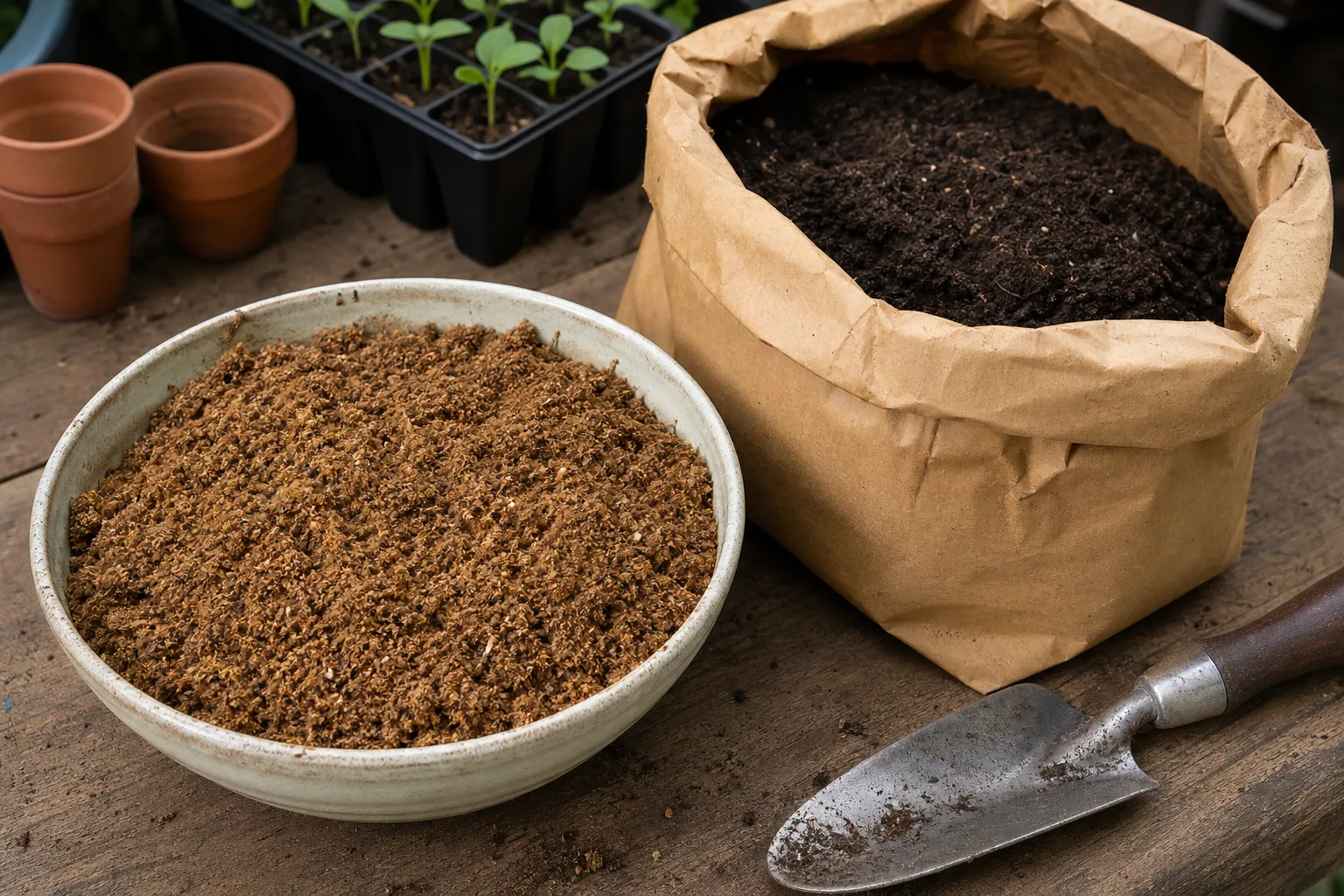
Given the same scraps, the Reencle's output is far more broken down than a dry-and-grind batch: almost nothing is recognizable apart from the odd bit of carrot. Dry-and-grind output depends on the grinder. The Eco 5's stacked grinding arms produce a much finer powder than the older FoodCycler FC-50, whose single grinder often leaves bigger chunks.
The GEME is a slow, steady composter rather than an overnight one. Two days after a load of juicer pulp, pineapple, watermelon rind and citrus, most of it is broken down, but bits of orange peel, rind and watermelon seeds are still visible. Scraps stick in its square corners where the slow mixers can't reach, so push them down now and then.
Nutrients and plant growth
Dry-and-grind output is a real nutrient source. Lomi 2 output, made on its Grow mode from ordinary kitchen scraps, runs high in available nitrogen (about 121 ppm), moderate in phosphorus (about 34 ppm) and very high in potassium (about 624 ppm), but low in calcium and micronutrients, and a tomato-heavy mix came out acidic, around pH 5. Mixed one part to ten parts bagged all-purpose garden soil, it raises every major nutrient and lifts magnesium from deficient to sufficient; a little garden lime corrects the pH. With tomatoes and lettuce, that 1:10 mix starts slowly, with a fungal mat on the surface for a few days, then grows steadily. With fertilizer added, it grows best of all: thicker stems and more flowers.
Noise, smell and daily use
The microbe units are the quiet ones. The Reencle is much quieter than a Lomi through a cycle (Reencle rates the Prime as low as 28 dB), and the GEME runs very quietly too. The Eco 5 runs a little quieter than the FC-50. None of them smell bad. The Reencle has a Purify button and the GEME a deodorize button that push air through the filter; press it before opening the lid.
How you feed them matters more. The Reencle and GEME work like trash cans for scraps: drop food in whenever you have it. The GEME pauses its mixers whenever the lid opens. A batch machine waits for a full load, so scraps sit in a pail. On the Eco 5, the 5-liter bucket comes out and has its own lid, so it can sit by the cutting board and go back in when full; it locks in with one hand, which was a struggle on the FC-50.
Running costs: filters and refills
FoodCycler says to refill the Eco 5's carbon every 3 to 4 months, or about 500 cycle hours, sooner if smells start. Daily use burns through filters faster: an FC-50 run almost every day needed new filters about once a month. Each Eco 5 cycle uses about 1.5 kWh. The Reencle Prime's carbon filter lasts about 9 to 12 months, and its culture keeps going if it's fed regularly. The GEME has no filter to replace, just one to wash; its starter bag lasts about a year, after which GEME calls for a small top-up of its microbe mix every two weeks. Both microbe units run nonstop, while the FoodCycler only draws power during a cycle.
Best for fast, dry batches
FoodCycler Eco 5
A 5-liter dehydrate-and-grind recycler that turns a full bucket into a fine, dry soil amendment in 4 to 9 hours, with a refillable carbon filter.
- 5 L bucket
- 4 to 9 hr cycle
- Refill carbon every 3 to 4 months
Good for
- Apartments and small households
- Running a batch overnight
Skip it if
- You want real compost
- You cook a lot and make several bucketfuls a day
What you can and can't put in
- All three handle: fruit and vegetable scraps, coffee grounds, eggshells, bread and leftovers.
- FoodCycler Eco 5: meat, fish, and poultry and fish bones are fine, but not beef bones, cardboard, oils and fats, candy, gum or most compostable plastics. Keep dairy, sauces, pork bones and hard pits to small amounts. Cut strings off tea bags: on the FC-50 they wrap around the rotor and jam it.
- Reencle Prime: handles meat, fish, dairy and citrus, but no bones of any size, no large pits and no yard waste.
- GEME 19L: pull off produce stickers and bags first. If very wet loads (watermelon, juicer pulp) turn the chamber sludgy, stop adding for 2 to 5 days and run the dehumidify function.
How to choose
How much food waste you make
Batch size is the main limit on dry-and-grind machines. A kitchen that does a lot of cooking can fill a small FoodCycler bucket in a day, and a meal-prep session with potato peels, eggs and a fridge clean-out overflows it. The FoodCycler Eco 5 holds twice the FC-50's 2.5 liters. If you'd rather never think about loads, a microbe unit takes scraps all day.
Where it will sit
The Eco 5 and Reencle Prime fit on a counter, though the older FC-50 is about the size of a bread machine and is easy to run on the floor overnight instead. The Reencle needs about 4 inches of clearance from the wall. The GEME is a floor unit with ventilation space on all sides. If counter space is tight, see the kitchen cabinet organizer guide for ways to free some up.
Where the output goes
You need somewhere to put the result: containers, raised beds, houseplants, a lawn, or a community garden. Even 20 batches of dry-and-grind output make a modest amount, so it's best for building container and herb-garden soil over a few months, top-dressing plants or feeding a worm bin. If you already have outdoor compost bins or chickens, you don't need any of these.
Best for big households
GEME 19L Electric Composter
A floor-standing microbe composter with a 19-liter chamber, continuous feeding and a washable filter that never needs replacing.
- 19 L chamber
- Washable permanent filter
- Floor-standing
Good for
- Families of four or more
- No filter replacements
Skip it if
- Your kitchen has no floor space (it's 26.2 in tall and 42 lb)
- You want finished compost in hours
The picks in detail
Reencle Prime Electric Composter: best compost-like output on a counter
The Reencle Prime takes a day to set up: add the included starter (microbes, activated charcoal and wood pellets), pour in about 7 cups of water and let it run 18 to 24 hours before adding food. After that it never stops. A foot sensor at the base opens a small top lid that only stays up a few seconds, so lift the whole lid for bigger loads. Before a harvest, stop adding scraps for 48 hours, then scoop out about half to two-thirds and leave the rest as the culture. Its chamber doesn't lift out, so cleaning means scooping.
Best compost-like output
Reencle Prime Electric Composter
A microbe-based countertop composter that takes scraps whenever you have them and turns out the most decomposed output of the countertop machines, with very little noise or odor.
- 14 L chamber
- Up to 2.2 lb a day
- Filter lasts 9 to 12 months
Good for
- Households that cook every day
- Gardeners who want compost-like output
Skip it if
- You want to unplug it between uses
- Bones go in your scraps
FoodCycler Eco 5: best for fast, dry batches
The FoodCycler Eco 5 is the brand's larger dehydrate-and-grind model and a clear step up from the FC-50. The bucket doubles to 5 liters, the grinding arms are stacked for a much finer result, and the old pair of disposable plastic filters at the back is replaced by one easy-to-reach refillable filter you top up with carbon. One button starts a cycle. The output can go into soil as an amendment, onto lawn patches that need help, or into a compost bin or worm system to finish.
Best for fast, dry batches
FoodCycler Eco 5
A 5-liter dehydrate-and-grind recycler that turns a full bucket into a fine, dry soil amendment in 4 to 9 hours, with a refillable carbon filter.
- 5 L bucket
- 4 to 9 hr cycle
- Refill carbon every 3 to 4 months
Good for
- Apartments and small households
- Running a batch overnight
Skip it if
- You want real compost
- You cook a lot and make several bucketfuls a day

GEME 19L Electric Composter: best for big households
The GEME 19L is the largest machine here, a stand-up unit for a kitchen corner or utility room. Setup is quick: pour in the microbe starter and about 800 ml of water and let it activate for about 6 hours. After that there are no cycles to start; it runs on its own, shows elapsed time in hours and then days. The timer restarts whenever the lid opens. The chamber has blades, so harvest with the included scoop, and never take all the material out: what stays behind carries the microbes for the next round.
Best for big households
GEME 19L Electric Composter
A floor-standing microbe composter with a 19-liter chamber, continuous feeding and a washable filter that never needs replacing.
- 19 L chamber
- Washable permanent filter
- Floor-standing
Good for
- Families of four or more
- No filter replacements
Skip it if
- Your kitchen has no floor space (it's 26.2 in tall and 42 lb)
- You want finished compost in hours
How it compares to the Lomi
The Lomi is the best-known dry-and-grind machine, and it works like the FoodCycler: heat, airflow and grinding in a 3-liter bucket, in short batches. Next to the Reencle, its output is rougher, it's louder, and its bucket and lid take care to seat. It also turns dry leaves into a fine, coir-like material for seed-starting mixes. Lomi's guidance for its output fits any dry-and-grind machine: mix it 1:10 with soil and let it cure for a few weeks before planting.
Best compost-like output
Reencle Prime Electric Composter
A microbe-based countertop composter that takes scraps whenever you have them and turns out the most decomposed output of the countertop machines, with very little noise or odor.
- 14 L chamber
- Up to 2.2 lb a day
- Filter lasts 9 to 12 months
Good for
- Households that cook every day
- Gardeners who want compost-like output
Skip it if
- You want to unplug it between uses
- Bones go in your scraps
How to use the output in a garden
- Dilute dry output. About 1 part to 10 parts soil; never plant straight into it.
- Cure it. A few weeks mixed into soil for dry output; about 30 days in a covered container outdoors for Reencle output.
- Check the pH. Acidic scraps make acidic output; a little garden lime balances it.
- Add fertilizer for heavy feeders. The output is light on calcium and micronutrients.
- Or finish it. Coarser output does well in a worm bin, outdoor pile or in-ground worm system, or mixed with about twice as much shredded cardboard, a little water and compost starter, then left to mature.
Storing leftovers well means less to compost; see the glass food storage container guide. For composting without a machine, the EPA's home composting page covers the browns-and-greens balance.
Who should buy which
- You want compost-like output from a countertop machine: the Reencle Prime.
- You want fast, dry, low-fuss batches for houseplants, containers or a lawn: the FoodCycler Eco 5.
- You're a big household with floor space and don't want to buy filters: the GEME 19L.
Posted by Kristopher Larson
Frequently asked questions
Do electric composters make real compost?
It depends on the type. Dehydrate-and-grind machines like the FoodCycler Eco 5 make a dry, finely ground soil amendment that still has to break down in soil or a compost pile. Microbe-based units like the Reencle Prime and GEME 19L digest food with a living culture and make something much closer to compost, though Reencle still recommends curing it outdoors for about 30 days before using it around growing plants.
What is the difference between FoodCycler and Reencle?
The FoodCycler runs batches: fill the 5-liter bucket, press start, and in 4 to 9 hours it's dried and ground. The Reencle Prime runs all the time with a microbe culture, so you can add scraps whenever you have them and harvest every few weeks. The FoodCycler is faster and only uses power during a cycle. The Reencle's output is more decomposed, and it's very quiet, but it has to stay plugged in.
Do electric kitchen composters smell?
Very little. All three use filters to control odor, and what you notice is a mild earthy smell, not rot. A smell that builds over time usually means the FoodCycler's carbon needs refilling or a filter needs attention. The Reencle's Purify button and the GEME's deodorize button push air through the filter before you open the lid.
How often do you replace the filters?
FoodCycler says to refill the Eco 5's carbon every 3 to 4 months, or about 500 cycle hours, and sooner with heavy daily use. The Reencle Prime's carbon filter lasts about 9 to 12 months. The GEME 19L has a washable filter that never needs replacing; its microbe starter lasts about a year before small refills are needed.
Can you put meat and bones in an electric composter?
Meat, yes, in all of them in normal amounts. Bones depend on the machine. The FoodCycler Eco 5 handles poultry and fish bones but not beef bones. The Reencle Prime takes no bones of any size. Keep cooking oil, candy and large hard pits to a minimum or out entirely, and cut strings off tea bags before adding them to a grinder.
How do you use electric composter output in a garden?
Mix dry dehydrate-and-grind output into soil at about 1 part to 10 parts rather than planting straight into it, and let it sit a few weeks first. Cure microbe-based output, like the Reencle's, for about 30 days outdoors before spreading it around growing plants. The output adds nitrogen and plenty of potassium but is light on calcium and micronutrients, so heavy feeders still need fertilizer, and acidic batches benefit from a little garden lime.
Keep reading
More from the blog
Best Indoor Air Quality Monitor: Aranet4 vs. Airthings View Plus vs. Qingping vs. Amazon
Instax vs. Polaroid: Which Instant Camera to Buy
Best Laser Measure for Real Estate: Bosch GLM400CL vs. Mileseey S50C vs. Stabila LD 530 BT