Utah Water Rights and Water Shares: What Transfers When You Buy Land or a Rural Home
A ditch or a well on a Utah property does not prove the water comes with it. Here is how water rights and irrigation company shares differ, how each one transfers, and an eight-step check for buyers of acreage, horse property and rural homes.

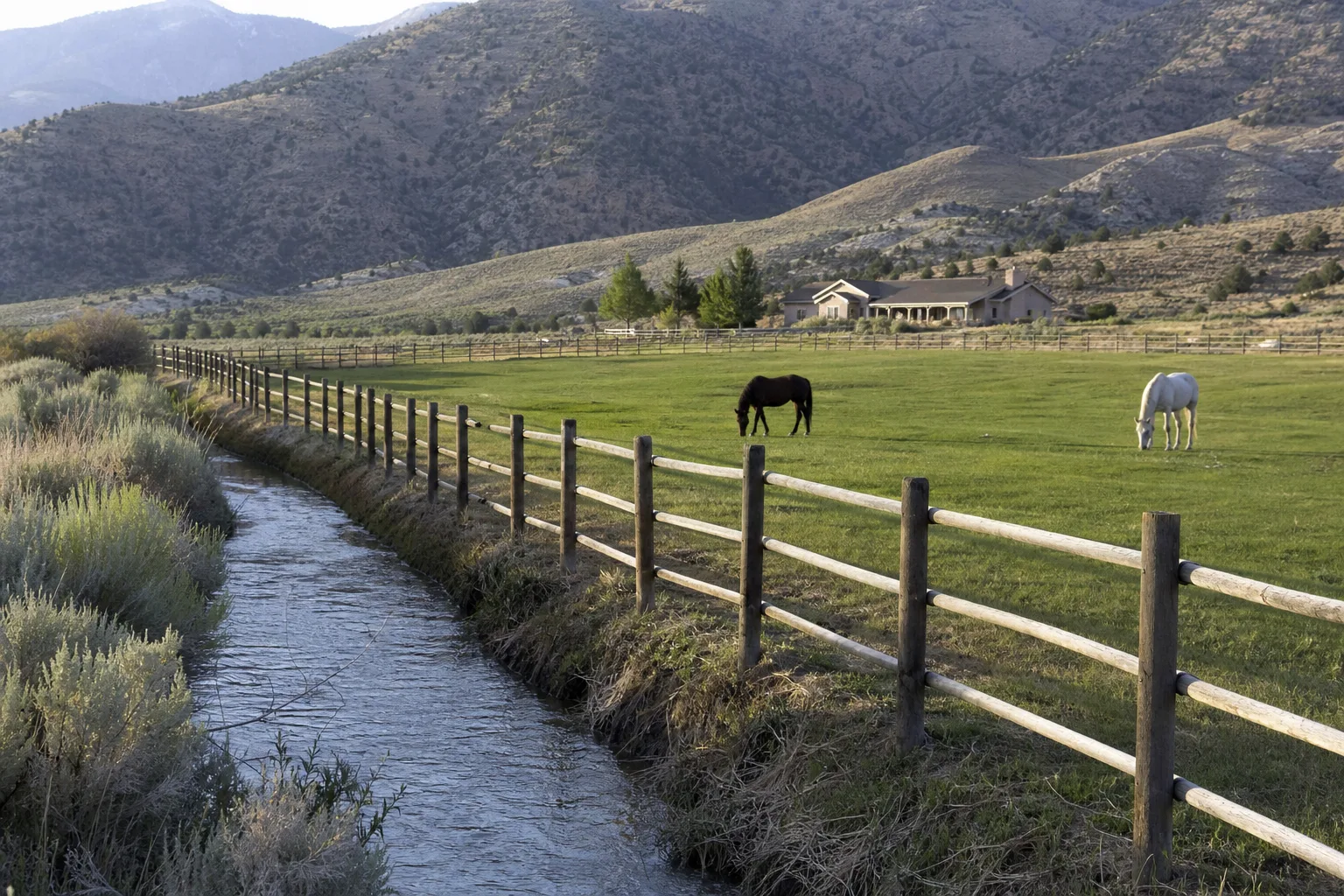
A five-acre listing with a green pasture, a ditch along the fence and a well house looks like it comes with water. It may not. In Utah the water in that ditch can belong to a canal company, the well can be tied to a water right still recorded in a former owner's name, and the deed can pass the land while the water stays behind. State law says all water, above or below ground, is the property of the public. What a landowner holds is a right to use a set amount of it, and that right has its own paperwork.
Below: how water rights and water shares differ, and a step-by-step check for acreage, horse property, cabins and rural homes.
This is general information, not legal advice. Water title questions belong with a Utah water attorney or a title professional who works with water rights.
Three Ways a Utah Property Gets Water
- A culinary connection. A city, water district or water company owns the water rights and delivers treated water through a meter. The buyer sets up an account. There is nothing to transfer except service.
- Secondary or irrigation water. Untreated water for lawns, gardens and pasture, delivered by a city system, a district, or an irrigation or canal company in which the owner holds shares.
- A private well, spring or stream diversion. The owner needs a water right of record with the Utah Division of Water Rights to divert and use that water.
A rural property can use two of these at once, such as a well for the house and company shares for the pasture. Each transfers differently.
Water Right vs. Water Share
What a water right is
The Division of Water Rights, the office of the State Engineer, defines a water right as a right to divert water from its natural source and put it to beneficial use. Each right carries a defined use, a priority date, a quantity stated as a flow rate or in acre-feet, a point of diversion, and a place of use. Utah follows prior appropriation, which the statute puts in one line: between appropriators, the one first in time is first in right. In a short year, the Division notes, rights can be cut off or reduced on seniority alone, whatever the water is used for.
The Division describes water rights as real property that is bought and sold much like real estate. They transfer by deed, and the deed is recorded with the county recorder.
What a share is
A share is stock in an irrigation, canal or ditch company. The company owns the water right. The shareholder holds a right to receive a portion of the company's water. The Division's title manual says it directly: owning a share of stock in a water company is not the same as owning a water right. Utah Code 73-1-11 adds that water represented by shares is not appurtenant to land, and Section 73-1-10 says shares transfer under the rules for securities, not by deed.
In practice, the Division's deed addendum form describes the usual method: the seller endorses and delivers the stock certificate, and the buyer presents it to the company, which issues a new certificate in the buyer's name. Each company sets how much water a share delivers and what it charges. Under Utah's Share Assessment Act, a company can enforce an unpaid assessment with late charges, by suspending water delivery or the right to transfer the shares, or by selling the shares at auction.
What Passes With the Deed and What Does Not
Under Utah Code 73-1-11, a water right that is appurtenant to land passes to the buyer with the land unless the seller specifically reserves it in the deed, conveys only part of it, or conveys it by a separate document before or at the same time. So a silent deed can carry a water right, but only one the seller actually owns and has not already sold or moved. The Division warns that title to a water right may be in a different name than the land where the water is used.
Since 2011, Utah deeds may carry a water rights addendum. The seller checks one of four boxes: all water rights conveyed, a portion conveyed, none conveyed, or conveyed by separate deed. It also has lines for shares being delivered and for who provides culinary and outdoor water service.
| Type of water | Who administers it | How it transfers | What to ask for |
|---|---|---|---|
| City or district culinary water | The city, district or water company | New service account | Provider name, connection or impact fees still owed, recent bills |
| Pressurized secondary water | City, district or irrigation company | Service account with the provider | Provider name, what is required to continue service, annual fee |
| Irrigation or canal company shares | The company and its board | Endorsed stock certificate, reissued by the company | Certificate in the seller's name, number of shares, proof assessments are paid, delivery schedule |
| Private well | Division of Water Rights | Deed (appurtenant or by water deed), then a report of conveyance | Water right number, well log, pump records, water test |
| Spring, stream or ditch right held by the owner | Division of Water Rights, sometimes a river commissioner | Deed, then a report of conveyance | Water right number, priority date, evidence of recent use |
A Step-by-Step Check for Rural Buyers
- Get the water right number. Ask the seller, then look it up in the Division's free water right records search, which can be searched by number, owner name, point of diversion or map.
- Compare the owner of record with the seller. County recorders hold the official title record for water rights; the Division's ownership listing is only its understanding of that record. The Division says that if a seller does not appear as the owner in its records, there is at minimum additional title work to do, and that takes time and money.
- Check that the right fits the use. The Division's standard figures are 0.45 acre-foot a year for one home's indoor use, 0.028 acre-foot for each horse or cow, and an irrigation allowance that varies by area (4 acre-feet per acre in Cedar City Valley). A right approved for one home and a small garden does not cover five irrigated acres and six horses.
- Look for evidence of use. A right, or the unused part of one, becomes subject to forfeiture after seven years without beneficial use. Forfeiture is not automatic: a court has to declare it, and an approved nonuse application can protect a right.
- Ask about pending applications. Change applications, extension requests and nonuse applications travel with the right. A change application approved before the sale can mean the water has already been moved off the parcel, in which case it does not pass with the land.
- Confirm shares with the company. Call the irrigation company secretary. Verify the certificate is in the seller's name, the number of shares, that assessments are current, and how the company wants the transfer handled. Utah Code 73-1-11 says the grantee in a conveyance assumes any unpaid assessment, so get a payoff figure in writing.
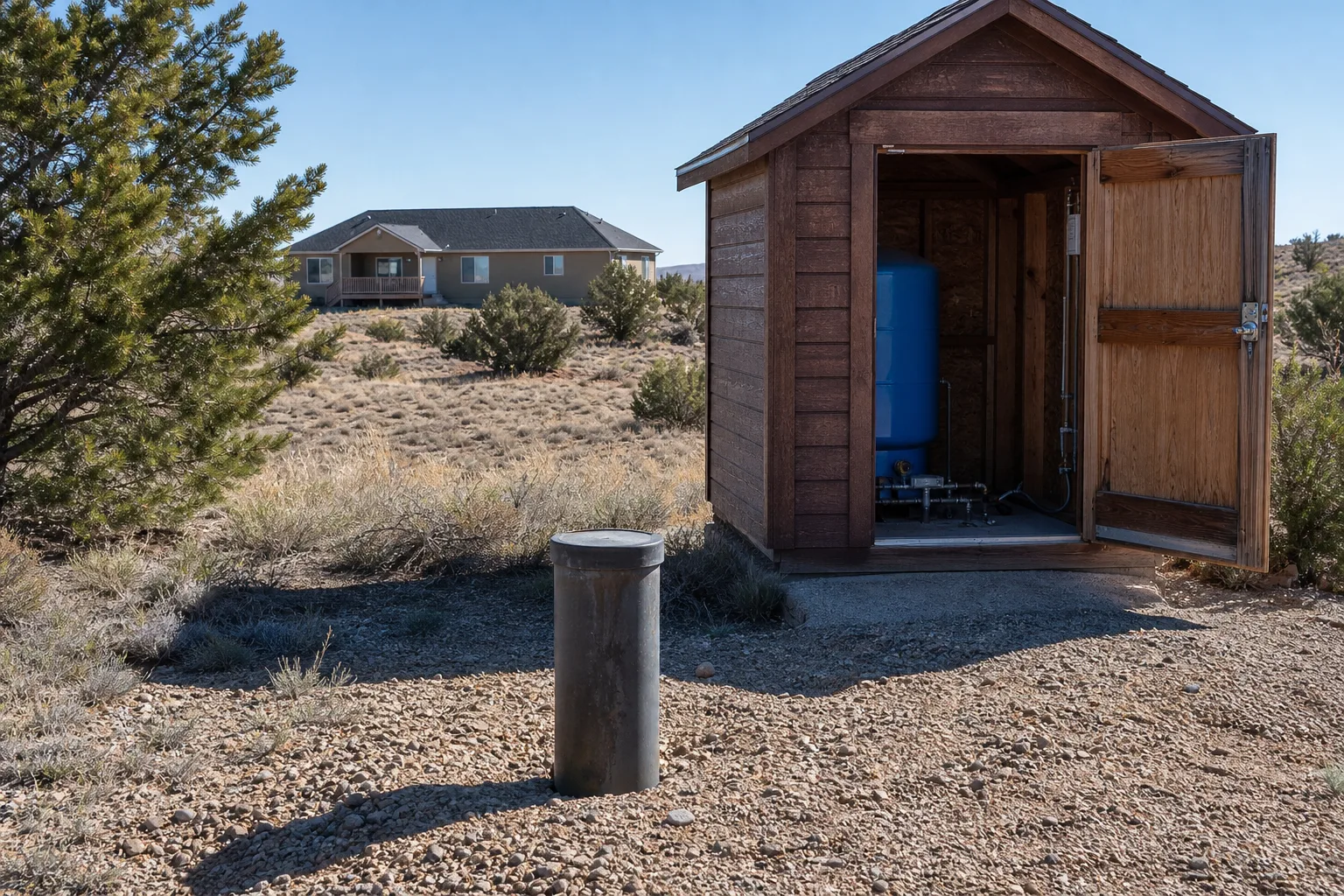
- Pull the well log and test the water. Licensed drillers must file a report on every regulated well, and the Division's well database lists depth, water levels and construction details. For quality, Utah State University Extension notes that private systems are not covered by the testing rules that apply to public systems, so testing is up to the owner.
- Record and report at closing. Have the deed name the water right numbers. After recording, file a Report of Water Right Conveyance with the Division so its records show the new owner. Without it, the new owner cannot file applications on the right and will not get notices about deadlines.
Wells: No Blanket Exemption for Domestic Use
Utah has no general exemption that lets a household drill a well without a water right. The Division's guidance is plain: a person must own a water right to divert and use water in the state, and a driller cannot start without the State Engineer's permission. Utah law does have a simplified track for a "small amount of water," defined as enough for one residence, a quarter acre of irrigation and ten cattle or the equivalent, but it is still an application the State Engineer has to approve.
Whether a new right is even available depends on the basin. The Division says much of Utah is closed to new appropriations. Its area policy pages list the waters of Cedar City Valley, of northern Utah Valley and the Provo River area, and of eastern Salt Lake Valley as fully appropriated. In those places a new well means buying part of an existing right and filing a change application, which the Division says can take several months. Cedar City Valley has had a groundwater management plan since January 2021, and transfers between its two subareas, split roughly along State Route 56, are not allowed. That matters for anyone weighing land near Cedar City or reading up on life in Enoch. City and district water supply in the St. George area raises a different set of questions, covered in the Washington County water guide for homebuyers.
What the Purchase Contract Says
Utah's standard Real Estate Purchase Contract addresses water in three places. Section 7.5 says the price includes all water rights and water shares, if any, that are the legal source of the seller's current culinary, irrigation, secondary and stock water service, and that they will be conveyed at closing "by applicable deed or legal instruments." Section 11 requires the seller to provide evidence of those rights or shares with the seller disclosures. Section 12.1 lists "water sources, availability and quality" among the items a buyer may investigate during due diligence.
"If any" means the contract promises only what exists, and 7.5 covers the water serving the property now. Anything more should be written into the offer. Related reading: recent changes to the Utah purchase contract, what stays with the house, and what Utah sellers must disclose.
Common Mistakes
- Assuming water comes with the land. A flowing ditch or a working well proves water is being used, not that the seller owns the right to it.
- Shares never transferred from a prior owner. Neither the county recorder nor the Division tracks who owns shares. If the certificate is still in an earlier owner's name, only the company can sort it out, so settle it before closing.
- Skipping the report of conveyance. Recording the deed does not always update the Division's records. The addendum form itself tells owners to file a report if the records are not updated.
- Buying less water than the plan needs. Each company sets how much water a share delivers, and a right with a late priority date is the first to be cut in a short year.
- Checking water and forgetting wastewater. Rural homes on wells usually have septic systems too. See septic checks for rural property and what to check first on a septic system.
Short Glossary
- Acre-foot: the volume that covers one acre one foot deep. Water rights are often measured in it.
- Appurtenant: attached to a parcel, so that it passes with the land unless reserved. The parcel is the right's authorized place of use.
- Beneficial use: the approved purpose, such as domestic, irrigation or stock watering. Utah law calls it the basis, the measure and the limit of every water right.
- Priority date: the date that ranks a right against others on the same source.
- Report of Water Right Conveyance: the form that updates ownership in the Division's records after a deed is recorded.
- Assessment: the charge an irrigation company levies on its shares.
Where to Start
Buyers comparing Heber City homes with acreage or horse properties in Hurricane can start with current listings on Best Utah Real Estate, then run each candidate through the steps above before the due diligence deadline.
Posted by Kristopher Larson
Frequently asked questions
Do water rights automatically transfer when a house or land is sold in Utah?
Often, but not always. Under Utah Code 73-1-11, a water right appurtenant to the land passes to the buyer unless the seller reserves it in the deed, conveys only part of it, or conveys it separately. The seller can only pass what the seller owns, and shares in an irrigation company never pass with the deed.
What is the difference between a water right and a water share in Utah?
A water right is a state-administered right to divert and use water, treated as real property and transferred by deed. A water share is stock in an irrigation or canal company that owns the water right. Shares transfer by stock certificate through the company, and the shareholder pays the company's assessments.
How can a buyer look up a water right in Utah?
The Utah Division of Water Rights has a free online records search at waterrights.utah.gov that works by water right number, owner name, point of diversion or map. Each file shows the approved uses, quantity, priority date and scanned documents. The county recorder holds the official ownership record, so the two should be compared.
Does a domestic well in Utah need a water right?
Yes. The Division of Water Rights states that a person must own a water right to divert and use water in Utah, and a licensed driller needs the State Engineer's permission before drilling. Utah has a simplified application for small amounts of water for one home, but it still requires approval, and in closed basins it requires buying part of an existing right.
Can a Utah water right be lost if it is not used?
It can. Under Utah Code 73-1-4, a water right or the unused portion of it is subject to forfeiture after seven years without beneficial use. Forfeiture requires a court ruling, and an approved nonuse application filed with the State Engineer can protect the right during an idle period.
What is a Report of Water Right Conveyance?
It is the form filed with the Utah Division of Water Rights to update ownership in the state's records after a deed is recorded with the county. Without it, a new owner cannot file applications on the right and will not receive notices about deadlines. A deed recorded with a completed water rights addendum can serve the same purpose when the grantor matches the owner in state records.
Kristopher Larson
Realtor® since 2011 · Licensed in Utah & Nevada · Real Broker, LLC
Kris has sold Utah real estate since 2011 and been part of more than 350 transactions. He writes this site's guides from MLS data and public records, and says where every number comes from.
Keep reading
More from the blog

Do You Need a Real Estate Attorney in Utah?
Why Some People Move to Utah and Leave Again: 9 Things to Test Before Buying a Home

How Buyers Finance a Home at Auction Without Paying Cash