Retiring in St. George, Utah in 2026: Costs, Healthcare, HOAs, and Alternatives
A 2026 guide to retiring in St. George, Utah, covering HOA fees, property tax relief, healthcare access, popular home features, and how nearby Ivins and Hurricane compare for retirees seeking a quieter pace.
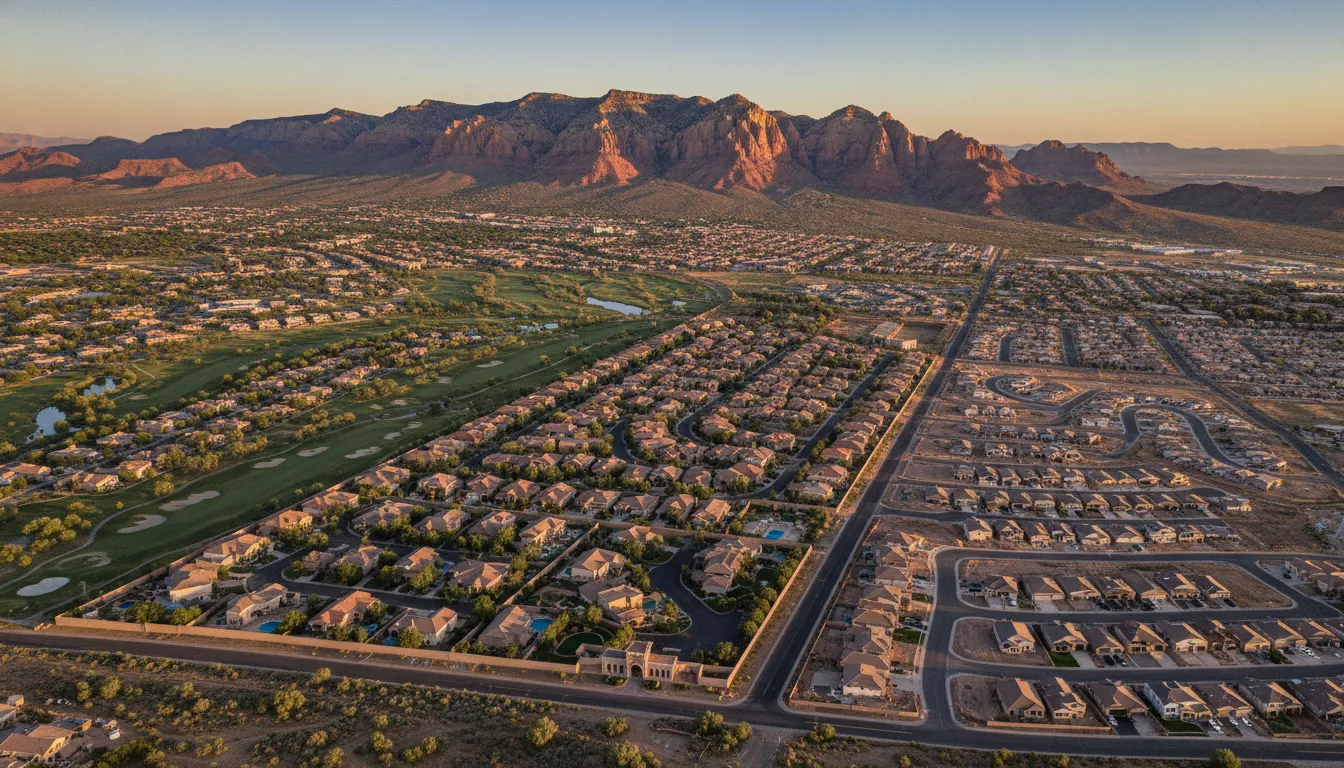
St. George remains a compelling retirement destination for people seeking sunshine, outdoor access, mild winters, and a housing market that can compare favorably with many coastal locations. In 2026, however, retirement planning in Southern Utah requires a closer look at more than home prices. HOA dues, property taxes, healthcare access, traffic, lifestyle preferences, and proximity to recreation all shape whether a move will feel like the right fit.
For retirees considering a move to St. George, Utah, the strongest opportunities tend to be found by matching the home, neighborhood, and monthly costs to the household's actual routine. A large clubhouse, gated entry, golf access, lock-and-leave maintenance, an RV garage, or nearby medical care may be valuable to one buyer and unnecessary to another.
Why St. George Continues to Attract Retirees
Southern Utah offers a combination that is difficult to find in many retirement markets: extensive outdoor recreation, a warm and dry climate, established age-restricted communities, and access to shopping, dining, services, and healthcare. St. George also provides an alternative for households leaving high-cost coastal regions where property taxes and homeowners insurance can place increasing pressure on retirement budgets.
The area has changed substantially since 2021. Growth has brought more restaurants, retail, entertainment, clinics, specialists, and housing choices. That growth has improved convenience, but it has also made the central parts of St. George feel busier. Rush-hour congestion and active weekends are now normal in many heavily traveled areas.
For retirees who want an active setting rather than an isolated retirement community, those changes may be a benefit. For households whose priority is quiet streets, room for recreational vehicles, and a more small-town atmosphere, nearby communities such as Toquerville or Enterprise may be a better match.
What Retirement Housing Looks Like in St. George in 2026
Housing inventory provides more options across many price ranges than it did during the tightest years of the market. Still, certain property types remain highly competitive. Single-level homes, scenic views, well-designed outdoor space, quality amenities, and practical storage continue to stand out with retirement buyers.
Popular Features for Retirement Buyers
Single-level floor plans that can reduce the need to navigate stairs over time.
Lock-and-leave homes for retirees who travel regularly or maintain a second residence.
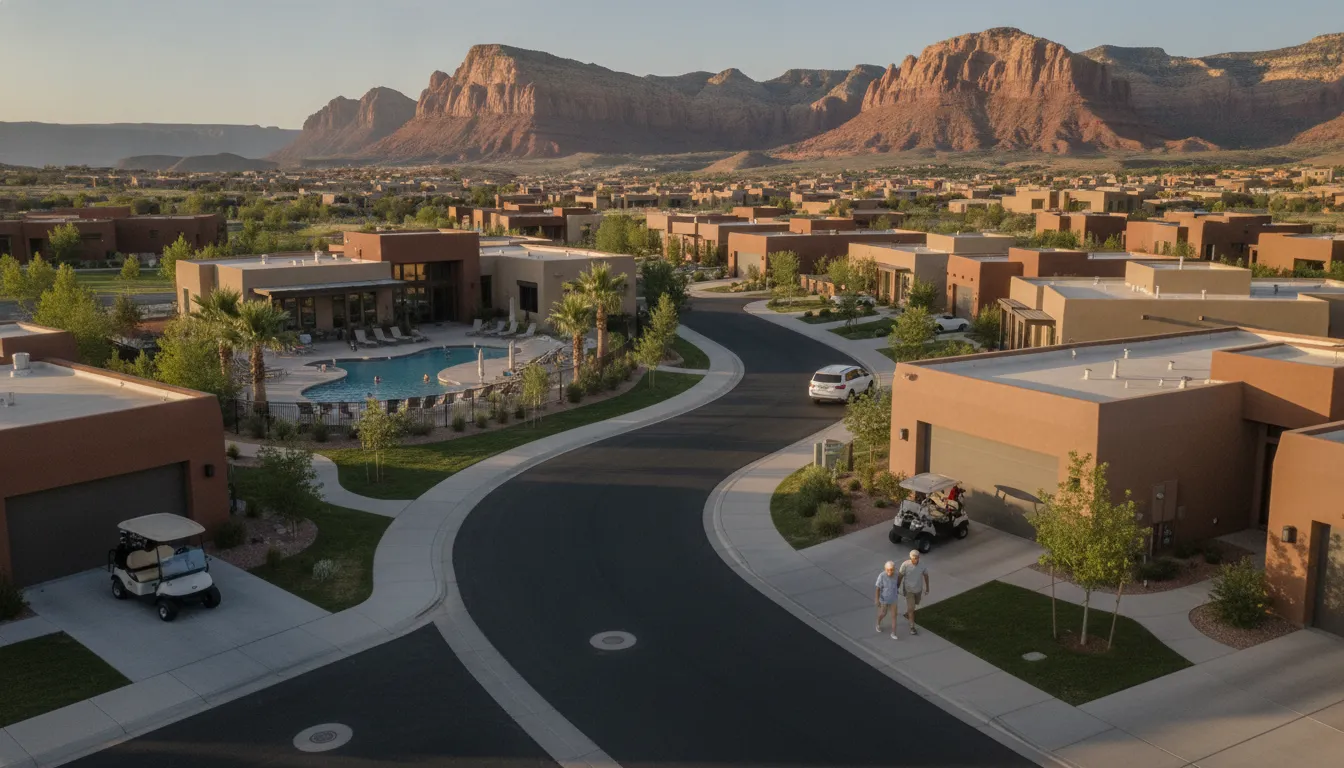
55-plus communities with social activities, common-area maintenance, and amenities.
RV garages and oversized parking for motorhomes, trailers, off-road vehicles, and other recreational equipment.
Views and outdoor living areas that make daily use of the desert setting easier.
Proximity to healthcare, shopping, and recreation for households that prefer shorter drives.
A buyer who travels often may value a compact home with exterior maintenance included. Another household may prefer a larger lot and an RV garage near trails or reservoirs. Neither approach is automatically better. The most suitable choice comes down to the lifestyle the household expects to use every week, not simply the amenities that look attractive during a home tour.
Retirees evaluating master-planned options may also want to compare the choices available in Desert Color in St. George, particularly when newer homes and community amenities are part of the search, or weigh a casita-equipped floor plan through this guide to casitas and house hacking in St. George.
HOA Fees: Pay for Amenities That Will Actually Be Used
Homeowners association fees are a major recurring cost in many retirement-oriented communities. In 2026, age-restricted communities may have monthly HOA fees around $200, while luxury gated communities can reach roughly $600 per month. The exact amount, services, rules, and assessments vary by neighborhood, so each community's governing documents should be reviewed carefully before purchasing — see this breakdown of where HOA fees actually go for more context.
An HOA fee can be worthwhile when it supports a lifestyle the resident genuinely uses. A retiree who plays pickleball frequently, attends community events, enjoys maintained grounds, or wants exterior upkeep handled may see a clear benefit. A household that does not use a clubhouse, pool, fitness center, or social calendar may prefer a lower-fee neighborhood with fewer shared amenities.
Questions to Ask Before Buying in an HOA Community
What does the monthly fee cover, and what does it exclude?
Are landscaping, gates, exterior maintenance, pools, trails, or recreation facilities included?
Are there restrictions on RV parking, trailers, pets, rentals, or exterior changes?
Are there age restrictions or occupancy requirements?
Are special assessments possible, and how is the reserve fund managed?
Does the community permit the lock-and-leave lifestyle the buyer expects?
HOA rules can be especially important for buyers seeking an RV garage. A home may have the desired garage or parking area, but the neighborhood's rules can still limit how recreational vehicles and equipment are stored or displayed.
Property Taxes and Insurance Can Improve the Retirement Budget
One of Southern Utah's most meaningful advantages for eligible homeowners is Utah's primary residence property-tax relief. A primary residence exemption can reduce taxable value by roughly 45 percent when the property qualifies as the owner's main home. This can make a notable difference in annual housing costs, especially for retirees relocating from areas with higher property-tax burdens.
The benefit is most relevant to buyers who will establish the home as a primary residence. A vacation property, rental, or second home may not receive the same treatment. Buyers should confirm eligibility, filing requirements, and the current assessed value with the county before estimating their future tax bill.
Property taxes and homeowners insurance in Southern Utah can be substantially lower than in some coastal markets. The amount varies by home, coverage, location, deductible, and insurer, but the difference can free room in a retirement budget for travel, golf, hobbies, and other lifestyle priorities.
Cost comparisons should remain individualized. A buyer should estimate the full monthly ownership expense, including principal and interest if financing is used, taxes, insurance, HOA dues, utilities, maintenance, and any membership fees. For broader planning context, the cost of living in St. George is an important part of comparing a move against the household's current location.
Healthcare Access for Retirees in Southern Utah
Healthcare availability is often one of the first practical concerns for retirees considering St. George. The area's growth has brought additional clinics, specialists, telehealth options, and continued access to St. George Regional Hospital. VA resources and referral pathways are also relevant considerations for eligible veterans.
Healthcare access can be a lateral move or an improvement for many incoming retirees once they establish local providers. However, needs differ significantly by household. Certain specialties can involve wait times, and some appointments or advanced care may require referrals or travel beyond the immediate area.
How to Evaluate Healthcare Before Moving
List routine and specialist care needs. Include prescriptions, recurring treatments, preferred providers, and nearby facilities.
Verify insurance coverage. Confirm that current Medicare plans, supplemental coverage, VA benefits, or other insurance networks work locally.
Check provider availability. Establishing care can take time, so availability should be reviewed before moving.
Choose location intentionally. Buyers with frequent appointments may prioritize shorter drives to clinics and hospital services.
Plan for specialty care. Determine what local options exist and what may require a referral or longer trip.
Retirees who consider medical access a top priority should weigh it alongside housing features rather than treating it as an afterthought. A home with an exceptional view may be less practical if the location creates an inconvenient drive for recurring appointments.
Has St. George Become Too Busy for Retirement?
St. George no longer feels like a small town in many areas. Continued growth has created a fuller range of services and entertainment, but it has also increased traffic and weekend activity in central corridors. For retirees who enjoy being near restaurants, shopping, sports, and community events, the additional activity can be a positive trade-off.
Others may prefer the greater privacy and slower pace found outside the core of the city. The right answer depends on whether convenience or quiet is more important on an ordinary weekday.
St. George vs. Ivins vs. Hurricane for Retirement
Retirees do not need to limit a Southern Utah home search to St. George proper. Ivins and Hurricane offer distinct lifestyles, and each may be better suited to certain priorities.
St. George: Convenience, Services, and Active Community Life
St. George is often the strongest match for retirees who want nearby shopping, restaurants, healthcare, golf, pickleball, organized activities, and a broad range of neighborhood choices. It includes 55-plus communities, gated options, luxury homes, and lower-maintenance properties. The trade-off is a busier feel in many parts of the city.
Active-adult buyers can narrow their search by reviewing available 55-plus communities in St. George and comparing amenity packages, HOA fees, and location.
Ivins: Scenic, Quiet, and Arts-Oriented
Ivins appeals to retirees who place a premium on striking scenery and a quieter setting. It has an arts-oriented character, dramatic red-rock surroundings, and neighborhoods that can provide RV garage space and a sense of separation from the busiest parts of St. George.
Ivins can suit a household that wants close access to the greater St. George area while returning home to a more relaxed environment. Buyers should still consider drive times to healthcare, grocery stores, and the activities they use most often. Those evaluating the community can learn more about why people are moving to Ivins, Utah.
Hurricane: Space, RV Garages, and Trail Access
Hurricane is a strong option for retirees who want a more small-town atmosphere, larger homesites, room for a motorhome or desert recreation equipment, and convenient access to Sand Hollow, Quail Creek, and off-road trails. It can be especially appealing to active households whose recreation is centered on boating, off-roading, and time outdoors.
The trade-off is that Hurricane may require more driving for some St. George services and appointments. For the right household, however, less time driving to recreation can outweigh that consideration. A closer comparison is available in this overview of the differences between St. George and Hurricane.
Common Mistakes Retirees Should Avoid
Choosing a Community Based Only on a Model Home
New construction and model homes can make a strong first impression, but the practical details matter just as much. Buyers should verify lot orientation, nearby development plans, construction quality, HOA documents, garage dimensions, storage, and future traffic patterns.
Underestimating Summer Heat
St. George offers abundant sunshine and mild winters, but summer heat affects daily routines, utility costs, landscaping, and outdoor activity schedules. Buyers should consider shade, insulation, cooling systems, window placement, pool maintenance, and whether the home remains comfortable during the hottest part of the year.
Ignoring the Full Cost of an HOA
The monthly HOA fee is only one piece of the picture. Buyers should also review what amenities are included, whether any services are optional, and whether the community has restrictions that conflict with future plans.
Assuming All Healthcare Needs Can Be Met Nearby
The area offers growing access to care, but retirees with complex or specialized needs should verify providers before committing to a neighborhood. A careful healthcare review can prevent an otherwise avoidable mismatch.
Buying More Amenities Than the Household Will Use
A grand clubhouse, golf access, resort pool, or extensive recreation package can be worthwhile, but only if it supports a real routine. Buyers often get the best value by choosing a community that fits their habits instead of paying for amenities that remain unused.
A Practical Retirement Relocation Checklist
Set a full monthly housing budget. Include taxes, insurance, HOA dues, utilities, maintenance, and travel costs.
Define non-negotiables. Examples include single-level living, a 55-plus setting, RV storage, views, healthcare proximity, or a gated neighborhood.
Rank lifestyle priorities. Decide whether convenience, quiet, recreation access, community activities, or low maintenance matters most.
Compare several Southern Utah locations. Include St. George, Ivins, Hurricane, Santa Clara, and other nearby pockets where appropriate.
Review HOA documents before making an offer. Check rules, financial health, amenities, and restrictions.
Verify the primary residence tax benefit. Confirm qualification requirements and estimate taxes on the specific property.
Research medical access. Confirm providers, insurance networks, and realistic travel times from the home.
Visit at different times of day. Traffic, noise, sun exposure, and neighborhood activity can look very different in the morning, afternoon, and weekend.
Is St. George a Good Place to Retire in 2026?
St. George can be an excellent retirement choice for households seeking a sunny, outdoor-oriented lifestyle with a wide spectrum of homes, retirement communities, and recreation. Utah's primary residence tax relief and comparatively lower homeowners insurance than many coastal markets can also strengthen the financial case for an eligible primary-home buyer.
It is not the perfect fit for every retiree. Those who require an ultra-quiet small-town setting may prefer Ivins, Hurricane, Santa Clara, or another less central Southern Utah neighborhood such as Washington. The best retirement move begins with an honest assessment of daily needs, expected expenses, medical considerations, and the preferred balance between convenience and calm.
For a broader starting point when comparing homes and communities statewide, explore Utah real estate and homes for sale.
Frequently asked questions
Are property taxes lower for retirees in St. George, Utah?
How much are HOA fees in St. George retirement communities?
Is healthcare good in St. George for retirees?
Is Ivins or Hurricane better than St. George for retirement?
What type of home is most in demand among St. George retirees?
What zip codes and county should retirees search for St. George homes?
St George, Utah housing market
A quick read on what homes are doing in St George right now — pulled live from the MLS.
Keep reading
More from the blog

What Retirees Really Think About Living in St. George, Utah
The Best 55+ Communities in St George, Utah

Best Airports for Utah and Colorado Mountain Towns