Solar Generator Bundles Compared: Jackery 1000 v2 vs. Anker SOLIX C300 vs. Bluetti Elite 30 V2
Solar generator bundles from Jackery, Anker and Bluetti compared by what their panels really deliver and how long a full solar refill takes.
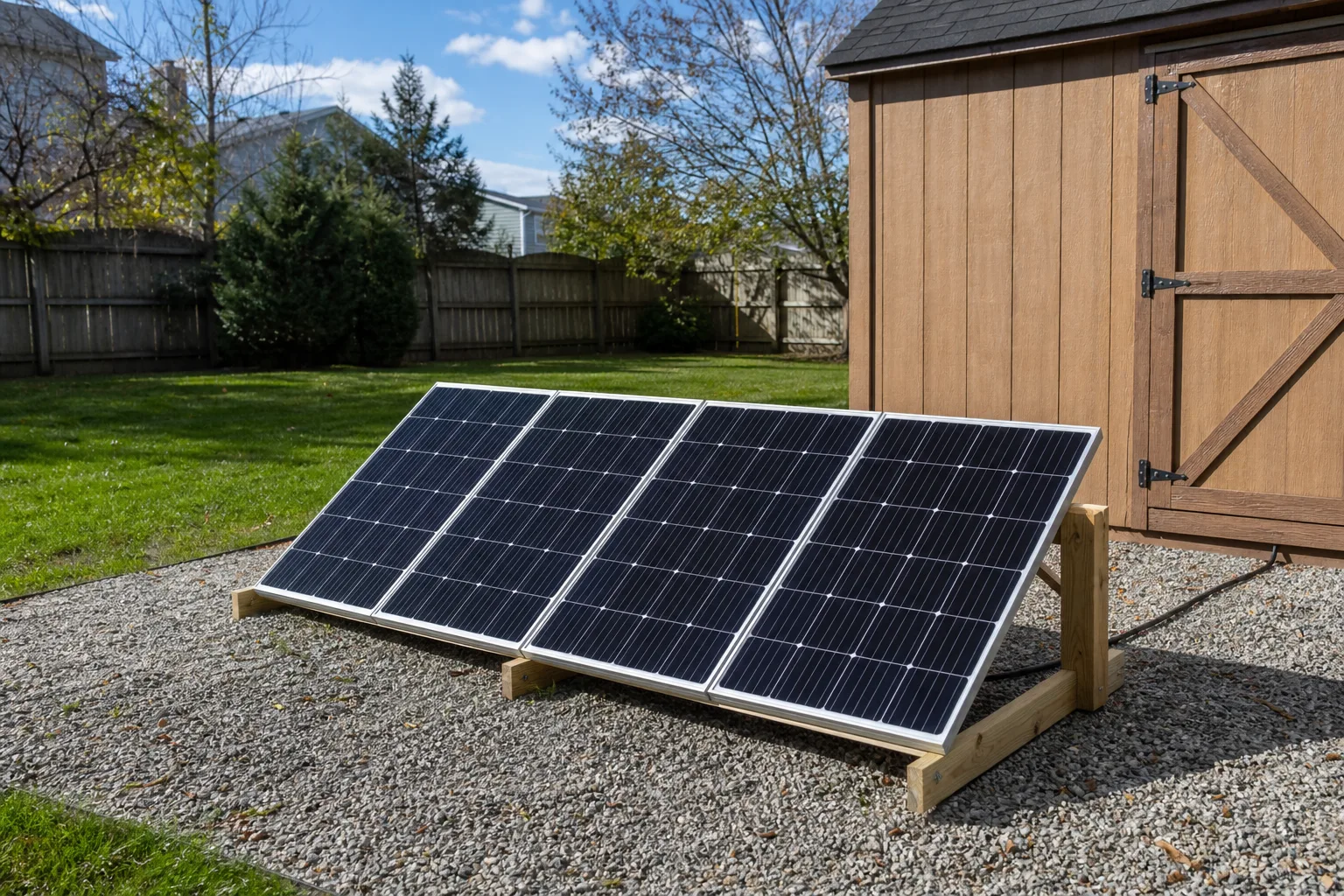
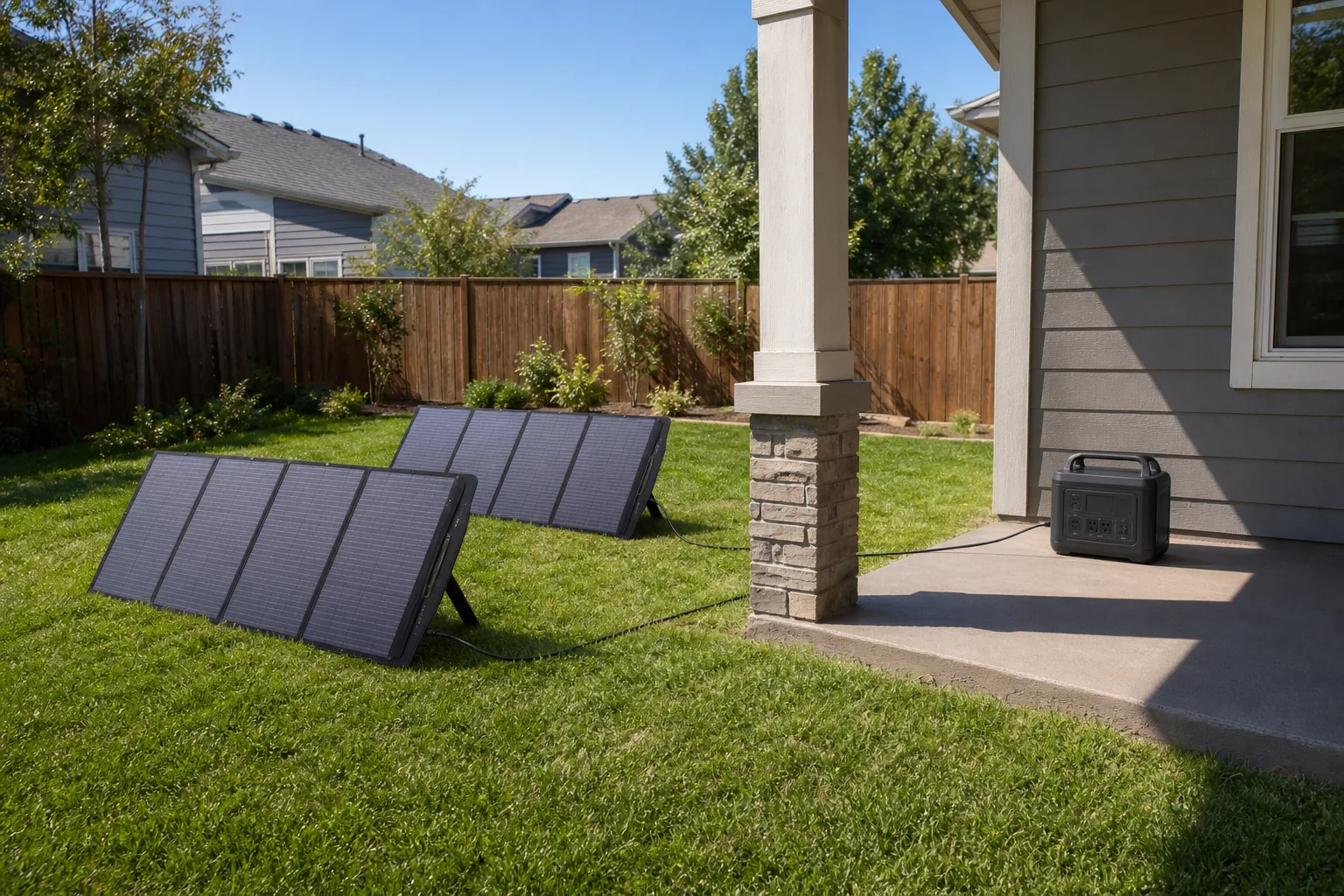
A solar generator is a battery power station sold in one box with folding solar panels. It has no engine and burns no fuel, so it can sit indoors during an outage and refill itself from the yard or a balcony when the grid stays down. The catch is the panel: the wattage printed on it is a laboratory number, and what reaches the battery on a real afternoon is lower, sometimes far lower.
This guide compares three bundles on that one question: how much solar power the included panels deliver, and how long a refill takes. One is Jackery's 1 kWh kit with a single 200 W panel; the other two are small one-hand kits from Anker and Bluetti. For choosing a station by the appliances it has to run, the power station sizing guide covers watts and watt-hours in detail.
Quick verdict
- Largest battery, and the one that runs kitchen appliances: the Jackery Solar Generator 1000 v2 with 200W Panel. Its 1,500 W output ran a microwave, a kettle and a coffee maker. The one 200 W panel in the box read 185 W in a single clear-sky reading, and Jackery lists 7.5 hours for a full solar charge of the 1,070 Wh battery.
- Strongest panel of the small kits: the Anker SOLIX C300 Solar Generator with 60W Panel. Its panel made 46 W and has a stand and a long cable, but the station tops out at 300 W of AC.
- Most ports, weakest panel: the BLUETTI Elite 30 V2 Solar Generator with 60W Panel. A capable 600 W station paired with a floppy panel that delivered about two thirds of its rating.
The bundles side by side
| Bundle | Shop | Battery | AC output | Included panels | Station's solar limit | Measured from the included panels | Full solar refill |
|---|---|---|---|---|---|---|---|
| Jackery Solar Generator 1000 v2 with 200W Panel |  View on Amazon | 1,070 Wh | 1,500 W | One 200 W | 400 W | 185 W in one clear-sky reading | 7.5 hours per Jackery; about 6 hours by arithmetic at 185 W |
| Anker SOLIX C300 Solar Generator with 60W Panel |  View on Amazon | 288 Wh | 300 W | One 60 W | About 100 W | 46 W in full sun | About 6 hours of good sun |
| BLUETTI Elite 30 V2 Solar Generator with 60W Panel |  View on Amazon | 288 Wh | 600 W | One 60 W | 200 W | 39 W in full sun | About 10 to 11 hours of good sun |
Largest battery, runs kitchen appliances
Jackery Solar Generator 1000 v2 with 200W Panel
A 1,070 Wh, 1,500 W station with one 200 W bifacial panel; Jackery lists 7.5 hours for a full solar charge, and the 400 W solar input leaves room for a second panel.
- 1,070 Wh
- 1,500 W AC
- One 200 W bifacial panel
Good for
- Microwave, kettle and coffee maker during an outage
- Adding a second 200 W panel later
Skip it if
- A kit that carries in one hand
- Adding battery capacity later
Rated watts vs. real watts
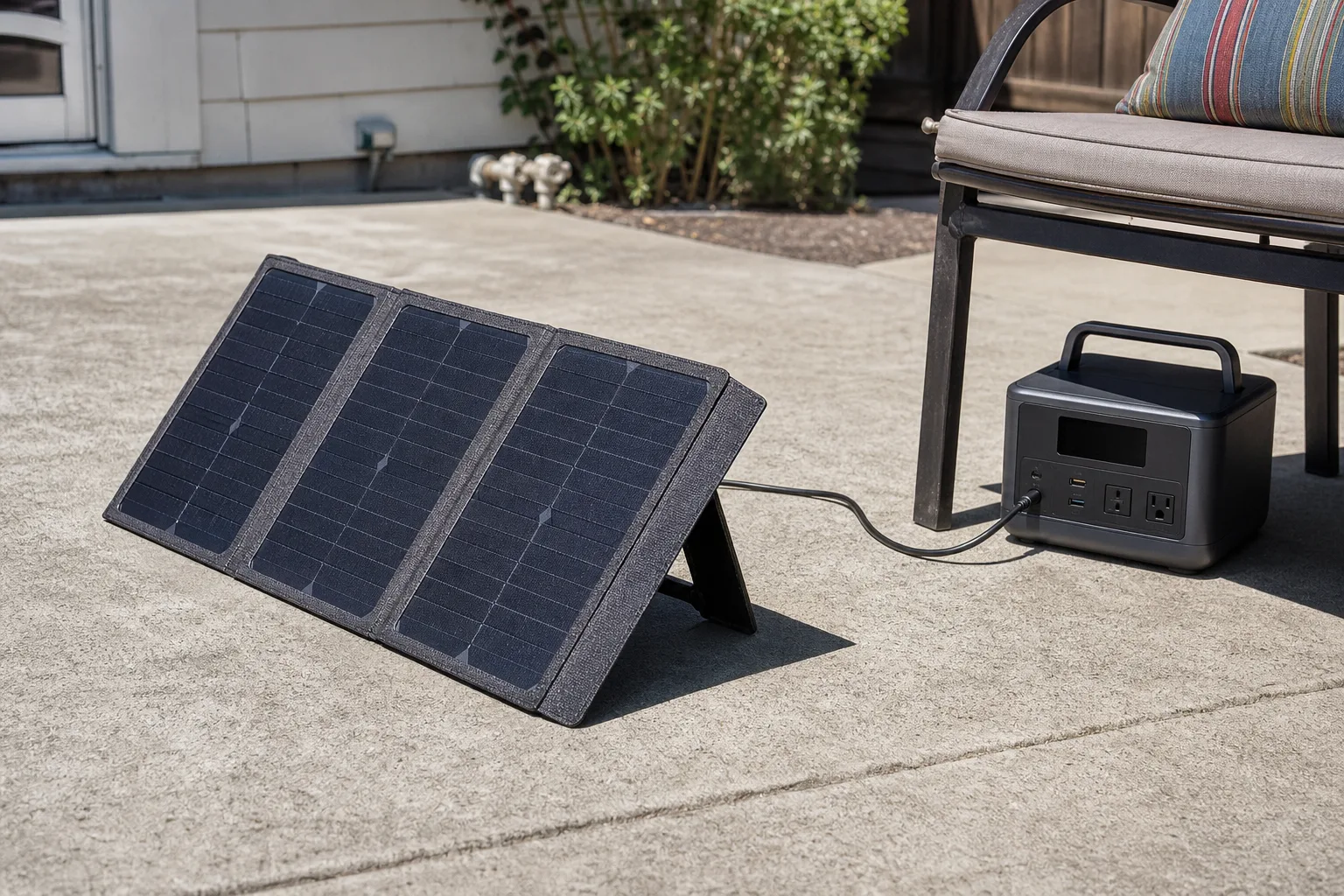
In clear sun, the included panels delivered between 65 and 93 percent of their ratings. Jackery's 200 W SolarSaga panel, a bifacial design that also collects light on its back, read 185 W standing on grass, a single reading on a cloudless day. Anker's 60 W panel made 46 W. Bluetti's 60 W panel made 39 W. A shortfall is not a defect: ratings assume a cool panel aimed squarely at strong sun.
An hour of that sun, with both small stations starting at 20 percent, moved the Anker to 37 percent and the Bluetti to 29 percent. That is the honest pace of a small bundle: most of a clear day, or more. The Jackery kit's one panel puts in about four times the power, but its battery is nearly four times the size, so the refill is no quicker. As an estimate, 1,070 Wh divided by 185 W is a little under six hours of clear sun before charging losses; Jackery's own spec sheet lists 7.5 hours of solar charging.
Weather and shade cut much deeper than panel quality does:
- Sun behind cloud: Jackery's 200 W panel, which read 185 W under a clear sky, read 41 W on another day with the sun hidden, then climbed to about 130 W as the cloud thinned.
- Heavy overcast: EcoFlow's 160 W panel, connected to a RIVER 2 Pro under dark storm cloud, registered zero watts.
Where the panels sit, and what the sky is doing, matter more than which brand made them.
How to choose a solar generator bundle
Do the refill math before buying
Divide the battery's watt-hours by the watts the panels will really deliver, not the watts on the label. A fair planning figure for a small fabric panel is 65 to 80 percent of the rating in clear sun. Then compare the answer with the hours of direct, unshaded sun the panel spot gets, which shrink in winter. A bundle that needs ten hours is at least a two-day refill.
Then compare the refill with the load. A kitchen refrigerator draws around 120 W while its compressor runs. A 60 W panel making 40 W slows the drain but never gets ahead of it, so the battery still empties.
Check the station's solar ceiling
Every station caps how much solar it accepts. That cap decides whether a bigger panel later is worth buying. The Jackery 1000 v2 bundle uses half of its 400 W limit with the one panel in the box, so a second 200 W panel, bought separately, is the upgrade that would shorten its refill. Fed by a 200 W panel, the Bluetti took in about 142 W, more than three times what its bundled panel supplies. The Anker stopped at 94 W. Anker's own guidance is narrower still: the FAQ on its C300 bundle page says to use 11 to 28 V panels with an XT60 connector, recommends its 60 W or 100 W panels, and warns that its larger panels cause a malfunction.
Look at the connector and the cable
Panels and stations do not all share a plug. Jackery uses an 8 mm barrel connector where most third-party panels use MC4 or XT60, so other brands need an adapter. An adapter is no guarantee, either: Jackery's older Explorer 300 kit accepted nothing at all from third-party 100 W and 200 W panels, even with the correct adapter.
Cable length decides where the station can sit. The station belongs in the shade or indoors, and the panel belongs in the sun. Anker's bundle includes the longest cable of the small kits, and the cable on Jackery's 200 W panel is long as well.
Treat the wall outlet as the fast refill
The Anker and Bluetti stations each filled from a wall outlet in about an hour. The Jackery 1000 v2 took an hour and 35 minutes from empty in its default mode and just under an hour in the emergency mode that is switched on in the app and turns itself off after one charge. Before a storm, charge from the wall and use the panels to stretch the battery afterward. Ready.gov's power outage guidance covers the rest of the plan.
Strongest panel of the small bundles
Anker SOLIX C300 Solar Generator with 60W Panel
The panel delivered the most power of the small kits and has a stand and a long cable, paired with a 300 W station.
- 288 Wh
- 300 W AC
- 46 W measured from the 60 W panel
Good for
- Phones, laptops, lights and a router
- Camping and daytime refills
Skip it if
- Running a heater or coffee maker
- Planning to add bigger panels
The picks in detail
Jackery Solar Generator 1000 v2 with 200W Panel
The Solar Generator 1000 v2 pairs a 1,070 Wh, 1,500 W station with one SolarSaga 200W panel. Jackery's spec sheet lists 7.5 hours for a solar charge, 1.58 hours from a wall outlet, and two solar inputs that accept 400 W in total, so the station has room for a second 200 W panel. In one reading on a lawn under a cloudless sky, the panel showed 185 W, and moving it onto pale concrete added only a couple of watts. That is a single reading, not an average: at 185 W the arithmetic gives a little under six hours for a full charge, and Jackery's 7.5 hours is the safer number to plan around.
The panel is easy to live with. It stands on two legs that adjust to a steep angle, magnets hold it shut when folded, and its long cable carries USB-C and USB-A ports that charged an action camera straight from the panel with no station attached. The cable ends in two connector heads; only one fits this station, and the wrong one produces no reading.
The station weighs about 23.8 pounds and has a handle that folds flat. Its 1,500 W output ran a toaster at 680 W, a microwave at about 1,100 W, and a single-cup coffee maker and an electric kettle at just over 1,400 W each, with the fan staying quiet. A few minutes of microwave use took five points off the battery. It held a 1,560 W load for ten minutes and shut off within seconds at 2,200 W. Discharged at loads from 350 W to nearly 1,500 W, it returned 85 to 92 percent of its rated capacity. With a 1,400 W appliance running, pulling the wall plug did not interrupt it, so the backup switchover works under a heavy load.
The limits: the battery cannot be expanded, changing the charge mode or the screen timeout requires the app, and charging input drops sharply while a heavy load is running.
Largest battery, runs kitchen appliances
Jackery Solar Generator 1000 v2 with 200W Panel
A 1,070 Wh, 1,500 W station with one 200 W bifacial panel; Jackery lists 7.5 hours for a full solar charge, and the 400 W solar input leaves room for a second panel.
- 1,070 Wh
- 1,500 W AC
- One 200 W bifacial panel
Good for
- Microwave, kettle and coffee maker during an outage
- Adding a second 200 W panel later
Skip it if
- A kit that carries in one hand
- Adding battery capacity later
Anker SOLIX C300 Solar Generator with 60W Panel
The SOLIX C300 bundle has the strongest panel of the small kits. It made 46 W, took the battery from 20 to 37 percent in an hour, and puts a full solar charge at about six hours of good sun. The panel has a built-in stand, and its cable is long enough to leave the station in the shade.
The station is the limit. Its 300 W output handled a kitchen refrigerator, and a router, light and fan at once across its three AC outlets, but a space heater overloaded it within five seconds and a coffee maker tripped it immediately. Solar input peaks near 100 W, so there is little reason to add a bigger panel.
Strongest panel of the small bundles
Anker SOLIX C300 Solar Generator with 60W Panel
The panel delivered the most power of the small kits and has a stand and a long cable, paired with a 300 W station.
- 288 Wh
- 300 W AC
- 46 W measured from the 60 W panel
Good for
- Phones, laptops, lights and a router
- Camping and daytime refills
Skip it if
- Running a heater or coffee maker
- Planning to add bigger panels
BLUETTI Elite 30 V2 Solar Generator with 60W Panel
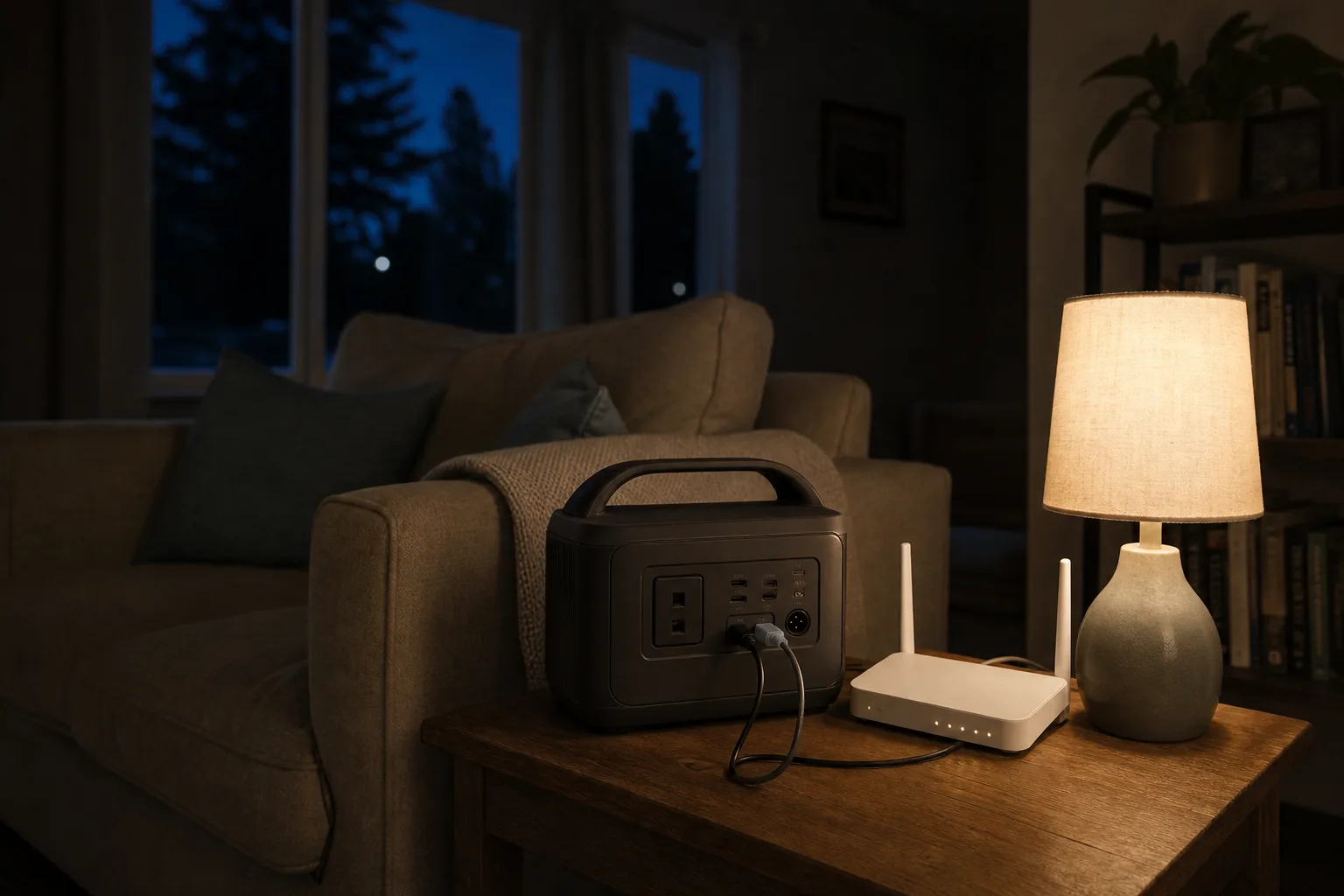
The Elite 30 V2 bundle pairs a strong station with the weakest panel. The station is rated at 600 W, ran a small space heater and brewed a pot of coffee in its Power Lifting mode, and adds two barrel-type DC outputs beside the 12 V car socket, so two or three 12 V devices can run at once with an adapter. It has two AC outlets and weighs about 9.5 pounds. A window air conditioner tripped it, as it did the Anker.
The 60 W panel is floppy enough that it has to be propped against a flat surface. It made 39 W, 65 percent of its rating, and raised the battery nine points in an hour, or ten to eleven hours of good sun for a full charge. Bluetti does not list a solar charging cable in the station's box, so check what the bundle includes before buying a different panel.
Most DC ports, slowest panel
BLUETTI Elite 30 V2 Solar Generator with 60W Panel
A 600 W station with extra 12 V outputs and a 200 W solar limit, held back by a floppy panel that delivered 65 percent of its rating.
- 288 Wh
- 600 W AC
- 39 W measured from the 60 W panel
Good for
- Running several 12 V devices at once
- Buyers who will upgrade the panel
Skip it if
- The included panel has to do the whole job
Other kits worth knowing about
EcoFlow's RIVER 3 Plus kit with a 45 W panel outlasted the Anker and Bluetti stations on a 60 W bulb, at just under four hours against a little over three and a half. Its panel made 36 W, and the station took about 150 W from a 200 W panel. The larger RIVER 2 Pro ran a kitchen refrigerator, tripped on a 10,000 BTU window air conditioner, and lost 13 points of charge over two weeks in storage.
Most DC ports, slowest panel
BLUETTI Elite 30 V2 Solar Generator with 60W Panel
A 600 W station with extra 12 V outputs and a 200 W solar limit, held back by a floppy panel that delivered 65 percent of its rating.
- 288 Wh
- 600 W AC
- 39 W measured from the 60 W panel
Good for
- Running several 12 V devices at once
- Buyers who will upgrade the panel
Skip it if
- The included panel has to do the whole job
Who should buy which
- Cooking and coffee, with a full clear day for the solar refill: the Jackery bundle, set up in open sun.
- Phones, lights and internet through a short outage: the Anker bundle refills fastest of the small kits from its own panel.
- Several 12 V devices, such as a cooler and a CPAP: the Bluetti bundle, with a better panel planned.
Households that need days of power in poor weather are better served by larger equipment. Loose panels sized to a station's input are covered in the guide to solar panels sold on Amazon, bigger stations in the Anker SOLIX comparison, and systems that tie into a breaker panel in the whole-home battery backup guide. Where sun is unreliable, an inverter generator makes far more power per hour, though it has to run outdoors. The home emergency checklist covers water, food, light and the rest.
Posted by Kristopher Larson
Frequently asked questions
What is a solar generator?
A solar generator is a rechargeable battery power station sold together with folding solar panels. The station stores the energy and supplies AC outlets, USB ports and a 12 V socket; the panels refill it in daylight. There is no engine, fuel or exhaust, and the same station also charges from a wall outlet or a car.
How long does a solar generator take to charge from its panels?
Divide the battery's watt-hours by the watts the panels really deliver. Small fabric panels usually make 65 to 80 percent of their rating in clear sun, so a bundle of about 290 Wh with a 60 W panel needs roughly 6 to 11 hours of good sun. A 1,070 Wh station fed by one 200 W panel making about 185 W needs roughly six hours of clear sky by the same arithmetic, and Jackery lists 7.5 hours for that pairing.
Can a solar generator run a refrigerator?
Small 300 W and 600 W stations can start and run a typical kitchen refrigerator, which draws around 120 W once running and surges higher at startup, but a battery under 300 Wh only covers a short stretch. A station of about 1,000 Wh holds between three and four times the energy, and a single small panel will not keep pace with the refrigerator's use.
Can another brand's solar panel be used with a power station?
Often, but check three things first: the connector, the voltage range and the station's maximum solar input. Brands use different plugs (8 mm barrel, XT60, MC4), so an adapter may be needed, and some stations reject panels outside the maker's approved list. The station's manual lists the voltage window and the panels the maker recommends.
Do portable solar panels work on cloudy days?
They work, at a fraction of their rating. A 200 W panel that reads about 185 W under a clear sky can drop to around 40 W when the sun goes behind a cloud, heavy storm cloud can leave nothing at all, and tree or building shade cuts output sharply. Plan refills around clear hours and an unshaded spot, and charge from a wall outlet before a storm when possible.
Is a solar generator safe to use indoors?
The battery station is made for indoor use because it burns no fuel and produces no exhaust, unlike a gas generator, which must always run outdoors. Keep the station dry and ventilated, follow the manufacturer's temperature limits for charging, and set the panels outside with the cable routed where no one will trip on it.
Keep reading
More from the blog
Mobile Office for Real Estate Agents: Canon PIXMA TR160 vs. HP OfficeJet 250 vs. ScanSnap iX1300
Home Theater Room Setup: Best Projectors, Surround Sound, Screens and Lighting
Best Whole-Home Battery Backup: EcoFlow DELTA Pro Ultra vs. Jackery 5000 Plus vs. Anker SOLIX F3800 Plus