Best Pizza Oven: Gozney Arc XL vs. Arc Lite vs. Solo Stove Pi Prime vs. Roccbox
Gozney Arc XL, Arc Lite, Roccbox and Solo Stove Pi Prime compared: 12 vs 16 inch, heat-up, recovery, stone temps, burner layout and weight.
Most gas pizza ovens look alike: an insulated dome, a stone, a burner and a slot in the front. What decides whether pizza night goes well is less obvious: how big a pie the opening really takes, where the flame sits, how fast the stone gets hot again between pies, and how heavy the oven is to move.
Here are those trade-offs and four propane ovens worth buying, with notes on the Ooni models they're often compared against.
As an Amazon Associate, Best Utah Real Estate earns from qualifying purchases.
Quick verdict
- Best overall, and the one to buy for 16-inch pizza: the Gozney Arc XL Propane Pizza Oven. Thick insulation under the stone, a front stone-temperature display, and at 58.5 lb one person can still carry it.
- Best small oven for the best-charred crust: the Gozney Arc Lite Propane Pizza Oven. Light, easy to pack, and it browns the bottom crust far better than the Pi Prime. True 12-inch pies are a squeeze.
- Roomiest small oven: the Solo Stove Pi Prime Propane Pizza Oven. Faster to heat with a wider door, but bottoms come out pale and the shallow stone is easy to overshoot.
- Best value for 12-inch pizza you can move around: the Gozney Roccbox Pizza Oven. Well built, travels well, costs less than the Arc XL.
The ovens side by side
| Oven | Shop | Pizza size | Burner | Heat-up | Weight | Best for |
|---|---|---|---|---|---|---|
| Gozney Arc XL Propane Pizza Oven |  Buy on Amazon | Up to 16 in; stone about 20.5 in deep | Left side, arcing over the roof | Stone at 700°F in about 26 min; 850°F in 33 min | 58.5 lb | Big pies, steady back-to-back cooking |
| Gozney Arc Lite Propane Pizza Oven |  Buy on Amazon | 12 in, tight; stone 12.8 x 15.5 in | Left side, arcing over the roof | 829°F stone at 30 min | 26.4 lb | Charred crust, taking it on the road |
| Solo Stove Pi Prime Propane Pizza Oven |  Buy on Amazon | 12 in; stone about 13 in deep | Rear, 15,000 BTU | 877°F stone at 30 min | 30 lb | Room to turn a 12-inch pie |
| Gozney Roccbox Pizza Oven |  Buy on Amazon | 12 in | Gas or wood | Check the listing | Check the listing | Value, easy moving |
| Ooni Koda 2 Max | Two pies at once; stone about 20.75 x 26.25 in | Both sides, run one or both | Stone at 700°F in about 27 min | 94.5 lb | Crowds, natural gas |
12-inch or 16-inch?
This is mostly about the opening and the stone. Compact ovens like the Arc Lite and Pi Prime have doors under 13.5 inches wide and around 3.5 inches tall. A true 12-inch pie fits, but there's little room left to turn it, and in the Arc Lite the edge nearest the burner needs constant rotating to keep it from burning.
A 16-inch oven solves that for 12-inch pies, which then have plenty of room to move around. Cooking a full 16-inch pie in the Arc XL is a different story: it leaves roughly half an inch on each side, with some room front to back. Beginners should start with smaller pies.
The rule: 12-inch pies and an oven that travels, a compact oven like the Roccbox is enough. Bigger pies ever on the menu, get the Arc XL.
Heat-up and recovery matter more than top temperature
Neapolitan-style pizza wants a stone somewhere around 700°F to 850°F. The gas ovens here took about 19 to 27 minutes to bring the stone to 700°F; the Arc XL took about 26, and its oven reached 850°F in 33 minutes, 950°F in 49 and 1,000°F in 65. The Koda 2 Max matched it to 850°F and beat it to 1,000°F (52 minutes), but heat past 950°F rarely matters for pizza.
Recovery matters on a busy night: a slow oven means a pale bottom on the next pie or a 5 to 10 minute wait. The Arc XL, Koda 2 Max, Everdure Kiln and Alfa all brought a stone in the 700°F range back in under a minute. After a 90-second bake at 850°F, the Arc XL took about three minutes to get back to 850°F, and the Koda 2 Max about 2:45. The Everdure Kiln recovers fastest, thanks to a second burner under its rotating stone.
Stone temperature is not air temperature
The stone browns the bottom of a pizza, and the air inside the oven runs at a different temperature. The Arc XL's display reads under the stone, the right number to watch, though it lags the surface a little.
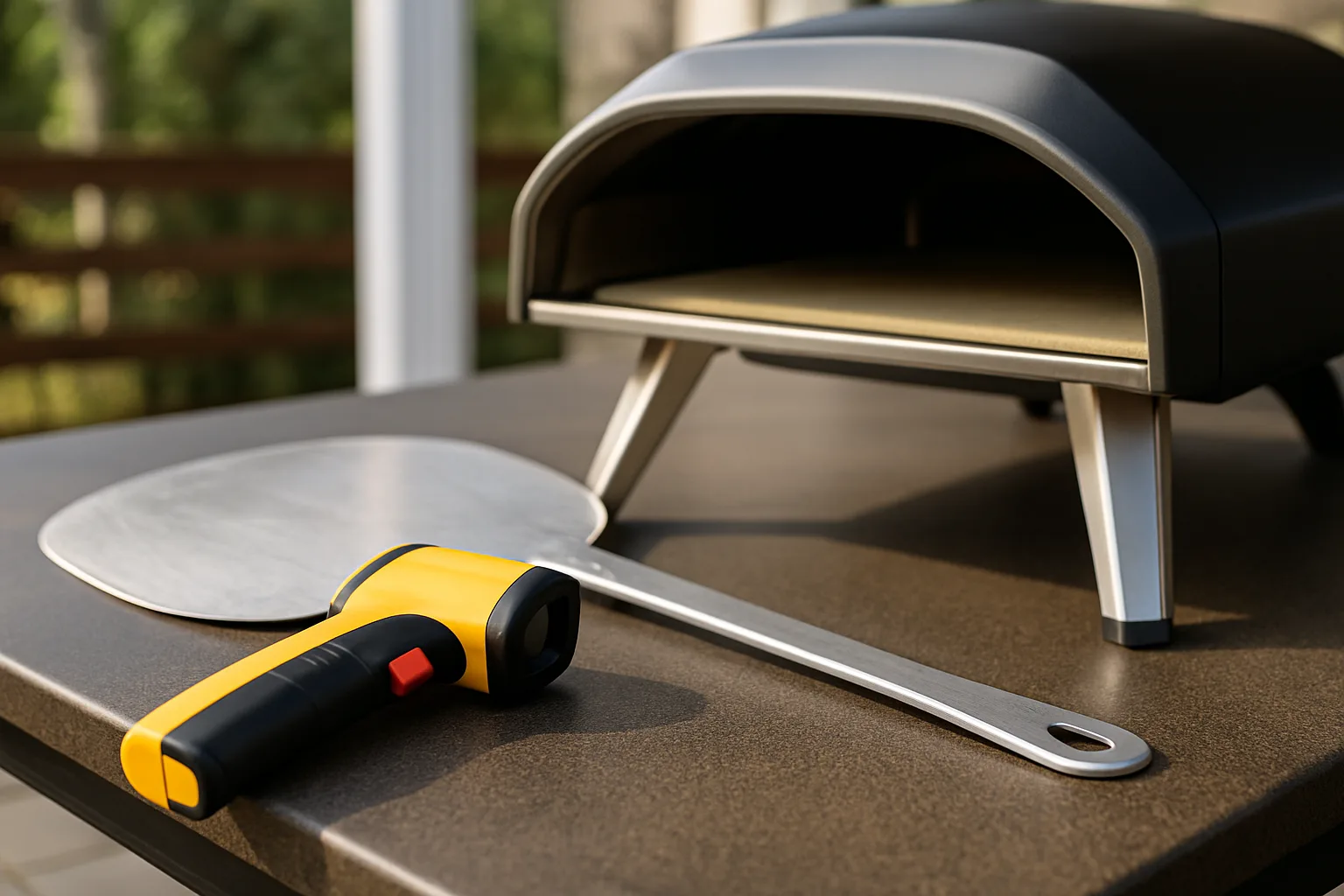
An infrared thermometer is the best accessory for any pizza oven. Aim it at the middle of the stone before every launch. A probe-style thermometer like the ones in the instant-read thermometer guide is the tool for steak and chicken coming out of the oven, not for reading the stone.
Burner layout: side, rear or both
- Side burner that arcs over the roof (Arc XL, Arc Lite): the flame runs up one wall and across the ceiling, so the top of the pizza cooks fast and the crust on both sides browns. The burner side is still the hottest, and the back of the oven holds heat better than the front.
- Rear burner (Pi Prime): the flame sits behind the pizza. It's the more powerful burner of the two compact ovens and heated faster, but its pies came out with blonde, barely charred bottoms.
- Burners on both sides (Koda 2 Max): heat comes from the left, the right or both, and with both lit a pizza needs only one turn.
Control placement matters too. The Arc XL's knob sits at the front right, easy to adjust while watching the flame. The Koda 2 Max's controls sit on the side about halfway back, which makes that awkward.
Launching tips that work in any oven
- Use the depth. A deeper stone leaves room to slide a pizza in without it hitting the back wall. On the shallow Pi Prime, pies can catch on the back wall.
- Alternate back and front. In the Arc XL, launching one pie at the back and the next at the front lets each part of the stone recover. Eight pizzas in a row this way came out with good bottoms.
- Turn the flame down after launch. The Arc Lite charred crusts too much at first. Dropping the burner to low right after launching gave better control with the stone around 790°F.
Weight and portability
The Arc XL weighs 58.5 lb. Side handles and a flat bottom mean one person can move it, so it can still travel on propane. Its footprint is about 22.5 inches deep and 20.5 inches wide. The Koda 2 Max weighs 94.5 lb, stands on legs that are easy to catch and bend, and is better left in one spot. The Arc Lite (26.4 lb) and Pi Prime (30 lb) are the easy travelers; both run on a standard 20 lb propane tank.
Natural gas
The four ovens linked here are sold as propane models. For a home with a gas line, the Ooni Koda 16 is the strongest natural-gas pick, and it can be switched between propane and natural gas. Its stone is thinner than Gozney's. The Koda 2 Max has a natural gas version, but it can't be swapped between fuels. The Ooni Karu 16 disappoints. Gas lines and propane hookups both deserve a leak check before the first cook; the NFPA's grilling safety guidance covers the basics, including keeping cooking appliances away from the house.
The picks in detail
Gozney Arc XL Propane Pizza Oven
The Arc XL is the best all-rounder here. Pull the stone (the listing calls it a removable 20 mm stone) and there's a thick layer of insulation beneath it, which holds heat and keeps back-to-back pies browning well. The arcing flame gives strong top heat. Its door is about 16.75 inches wide and 4 inches tall, and the listing rates it up to 950°F.
The trade-offs: a 16-inch pie is a tight fit and the left side and back run hotter than the front. It cooks one pizza at a time where the Koda 2 Max cooks two, but it's much lighter and costs less.
Gozney Arc XL Propane Pizza OvenCheck today’s price on Amazon

 Buy on Amazon →
Gozney Arc Lite Propane Pizza Oven
On paper the Arc Lite should lose to the Pi Prime: less burner output (11,687 BTU), a smaller opening (12.8 by 3.35 inches) and a slightly thinner stone. Its stone reached 829°F after 30 minutes, about 48°F behind. But its pizzas came out with much more char on the bottom and were the better pies overall. Its single stone is 12.8 inches wide and about 15.5 inches deep, deeper than the Pi Prime's, which makes launching easier.
It's small (11.7 inches tall) and easy to pack in a vehicle. The catch is size: a true 12-inch pie pushes the limits and needs constant turning away from the burner. It comes with a 5-year warranty.
Gozney Arc Lite Propane Pizza OvenCheck today’s price on Amazon

 Buy on Amazon →
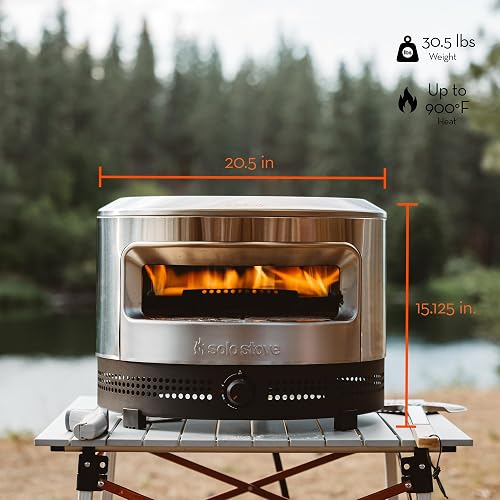
Solo Stove Pi Prime Propane Pizza Oven
The Pi Prime has the stronger burner (15,000 BTU from the back) and heats faster, reaching 877°F on the stone at 30 minutes. It can launch a new pizza about every 5 minutes with the stone between 750°F and 830°F. Its door is wider (13 by 3.5 inches), so turning a pie is easier, and its knob sits front and center. The stone is two half-circles, about 13 inches deep and 17 inches wide.
The weaknesses are what matter on the plate: tops look great but bottoms stay quite blonde, and the shallow stone makes it easy to push a pizza into the back wall. It's round and taller, so the opening sits a couple of inches higher. It carries a lifetime warranty, longer than the Arc Lite's.
Solo Stove Pi Prime Propane Pizza OvenCheck today’s price on Amazon
 Buy on Amazon →
Gozney Roccbox Pizza Oven
The Roccbox ties the Arc XL for best value. It's the one to pick for 12-inch pizzas and an oven that moves around easily, and it feels well built after plenty of transport. It costs less than the Arc XL, and the listing calls it portable and gas or wood fired. Anyone who will ever cook bigger than 12 inches should step up to the Arc XL.
Gozney Roccbox Pizza OvenCheck today’s price on Amazon

 Buy on Amazon →
Others worth knowing about
- Ooni Koda 2 Max: the Gozney vs. Ooni pick for crowds. Room for two pizzas at once, flexible burners and a natural gas option, but it costs more than the Arc XL and weighs 94.5 lb.
- Gozney Dome: the choice if price doesn't matter. It cooks with wood and bakes, but it's very expensive, it wheels rather than carries, and the natural-gas version is slow to heat.
- Everdure Kiln: a rotating stone means no turning, which helps beginners, but more moving parts raise longevity questions.
- Alfa: fastest to heat, helped by very thick stones and a door, but the opening tapers and the knob gets hot after an hour or so.
In high-elevation backyards with a short outdoor season, dough can behave a little differently, so a few early practice bakes pay off. For low-and-slow smoke, the pellet grill guide covers that side of the patio; the smokeless fire pit comparison covers what to sit around after dinner.
Who should buy which
- Pizzas bigger than 12 inches, or lots of pies in a row: the Gozney Arc XL.
- A small, light oven with the best bottom crust: the Gozney Arc Lite.
- A small oven with more room to turn and a lifetime warranty: the Solo Stove Pi Prime.
- 12-inch pizza on a budget, with easy moving: the Gozney Roccbox.
- A natural gas line and no interest in propane tanks: look at the Ooni Koda 16.
Posted by Kristopher Larson
Frequently asked questions
What is the best outdoor pizza oven?
For most backyards, the Gozney Arc XL. It takes pizzas up to 16 inches, has thick insulation under the stone that keeps back-to-back pies browning, shows the stone temperature on a front display and is still light enough for one person to move. If every pizza will be 12 inches or smaller and the oven needs to travel, the Gozney Roccbox is the better value.
Is the Gozney Arc XL worth it?
Yes, if bigger pies or long pizza nights are the plan. Its stone reached 700°F in about 26 minutes, and launching pies alternately at the back and front of the stone keeps the bottoms browning pie after pie. The limits: a full 16-inch pie leaves only about half an inch on each side, and the burner side and back run hotter than the front, so pizzas need turning.
Gozney Arc Lite or Solo Stove Pi Prime: which is better?
The Arc Lite makes the better pizza. The Pi Prime has the stronger burner and a slightly hotter stone after 30 minutes, but its bottom crusts come out pale, while the Arc Lite's side burner chars the bottom well. The Pi Prime has a wider door, more room to turn a pie and a lifetime warranty; the Arc Lite is lighter, has a deeper stone and carries a 5-year warranty.
Gozney vs. Ooni: what's the difference?
Comparing the Arc XL with the Ooni Koda 2 Max, both heat up and recover at nearly the same pace. The Ooni is much heavier at 94.5 lb, fits two pizzas at once, lets you run either or both side burners and comes in a natural gas version. The Gozney is about 36 lb lighter, has its control knob at the front and costs less. For natural gas with the option to switch back to propane, the Ooni Koda 16 is a strong pick.
Should I buy a 12-inch or 16-inch pizza oven?
A 12-inch oven is lighter and easier to carry, but a true 12-inch pie nearly fills it and needs constant turning near the burner. A 16-inch oven gives 12-inch pies plenty of room and makes launching and turning easier, at the cost of weight and size. If larger pies are ever likely, buy the 16-inch oven.
How do I check a pizza stone's temperature?
Use an infrared thermometer and aim it at the middle of the stone just before each launch. The air in the oven, and the flame near the burner, run at different temperatures than the stone, and the stone is what cooks the bottom. A stone around 700°F to 850°F suits Neapolitan-style pizza.
Keep reading
More from the blog
How to Store Rolex and Omega Watches: Watch Winders, Watch Boxes, Safes and the Right Settings
Best Furnace Filter: MERV 8 vs MERV 13, Filtrete vs Honeywell
Man Cave Ideas: Layouts, Must-Haves and How to Build One in a Basement, Garage, Spare Room or Shed