How to Store Rolex and Omega Watches: Watch Winders, Watch Boxes, Safes and the Right Settings
Do you need a watch winder? Rolex and Omega winder settings, what to look for in winders and watch boxes, and how to store watches safely at home and away.
A Rolex, an Omega or any good automatic watch can run for decades, but how you store it between wears decides how often it needs attention. A watch left on a dresser stops after a couple of days, collects scratches from keys and coins, and can pick up magnetism from a phone or laptop. Put the same watch in the wrong winder and it spins far more than it needs to, every day, for years.
This guide covers whether you actually need a watch winder, the right winder settings for Rolex and Omega, what separates a good winder and watch box from a cheap one, and how to store watches safely at home, in a safe and on the road.
As an Amazon Associate, Best Utah Real Estate earns from qualifying purchases. Products marked as example picks are chosen from Amazon listings by specs, stock and customer ratings.
The short version
- One automatic worn every day doesn't need a winder. A winder earns its place when you rotate several automatics, or own a watch with a calendar or moon phase that's a pain to reset.
- Quartz and hand-wound watches gain nothing from a winder.
- Buy a winder that controls turns per day and rests between cycles. Cheap units that spin nonstop add needless wear.
- For most Rolex and Omega watches, about 650 turns per day in both directions is the standard setting. Check your model if you're unsure.
- Store the rest in a box or safe: cool, dry, away from magnets, and wear each watch for a few days every month or so.
Do you need a watch winder?
A watch winder keeps a self-winding mechanical watch running when it's off your wrist by turning it gently, the way your arm would. Whether that's worth it depends on what you own and how you wear it.
- You probably don't need one if you own one automatic and wear it daily, or if your watches are time-only or time-and-date models. Setting the time on a stopped watch takes seconds, and many modern movements now run for days on a full wind. Rolex's current calibers, such as the 3235, run for about 70 hours.
- A winder makes sense if you rotate two or more automatics, if you want a watch ready to grab without setting it, or if you own complications that take real effort to reset: day-date displays, annual or perpetual calendars and moon phases. A Rolex Sky-Dweller kept on a winder, for example, needs its annual calendar set only once a year.
- A winder does nothing for a quartz watch or a manual-wind watch. They don't have a self-winding rotor for the winder to drive.
A winder also works as a display. A watch turning slowly under glass is a pleasure to look at, and you don't have to switch it on to use it as a stand.
Are watch winders bad for your watch?
Watchmakers are split on winders, and the reason is simple: a running watch wears faster than a stopped one. Every part keeps moving, and the mainspring barrel keeps winding. A modern automatic can't be wound too far, because a slipping clutch lets the spring slide once it's full, but that slipping is still metal rubbing on metal. In a winder that never stops, it happens all day, every day, and if the oils are old or dry it wears the barrel and spring faster.
Used sensibly, a good winder adds very little wear. The rules that matter:
- Choose a winder that limits turns per day and pauses between cycles, so the watch rests and partly unwinds, the way it would sitting on a dresser overnight. A unit set to 900 turns per day, for instance, might run for about five minutes each hour and rest for the other 55.
- Look for a shielded motor. An electric motor next to a watch for months can magnetize the movement, which makes it run fast.
- Don't park your whole collection on winders. Keep only the watches in current rotation on them. Store the rest, and every month or so wear each one for a few days to keep things moving.
- Keep vintage watches off winders, especially ones that haven't been serviced in years. Old, dry lubricants are exactly what constant winding wears through.
The old argument that a winder keeps oils from drying out matters less than it used to. Modern synthetic lubricants last much longer, which is one reason service intervals have stretched. Rolex now suggests a service roughly every 10 years for current models. A watch that sits stopped in a drawer for a few weeks is fine.
Watch winder settings for Rolex, Omega and other brands
Two settings matter: the number of turns per day (TPD) and the direction the winder turns. Some movements wind in only one direction, while most modern ones wind in both. Most watches need roughly 600 to 800 turns a day to stay fully wound.
| Watch | Direction | Turns per day |
|---|---|---|
| Rolex (Submariner, Datejust, GMT-Master II, Oyster Perpetual and other current models) | Both directions | About 650 |
| Omega (most Seamaster, Speedmaster automatic and Constellation models) | Both directions | About 650 to 800 |
| Tudor and Breitling in-house chronographs | Check the model | About 800 |
| Panerai automatics | Check the model | About 850 |
| Not sure | Both directions | Start around 800 and watch whether it stays wound |
Settings differ by caliber, so treat the table as a starting point and confirm with the manufacturer's manual or your winder maker's chart for the exact reference. If a watch on a winder slowly stops over several days, nudge the setting up; if it's always fully wound with turns to spare, you can bring it down. Simple winders with a single knob usually run a middle setting of about 800 to 900 turns a day. Better ones offer several preset values or let you program an exact number.
What to look for in a watch winder
- Adjustable turns per day covering at least 650 to 900, plus clockwise, counterclockwise and both-direction modes.
- Rest periods. The winder should run in short bursts and pause, not spin continuously.
- A quiet motor if it lives in a bedroom. Budget units are usually quiet but rarely silent.
- A shielded motor to keep the movement from being magnetized.
- An easy-fit cuff or cushion. A clamp-style cuff that locks the watch in place is far easier to load than a squeeze cushion that needs fingernails to pull the watch back out. Check that the cushion suits your wrist size; many winders include a smaller one.
- Separate settings per watch on a multi-watch winder, so a Rolex and a Panerai can each run their own program.
- Power options: a mains adapter, batteries for placement anywhere, and on some budget units, sockets to daisy-chain several winders from one power supply.
Wolf Cub: the simple premium single winder
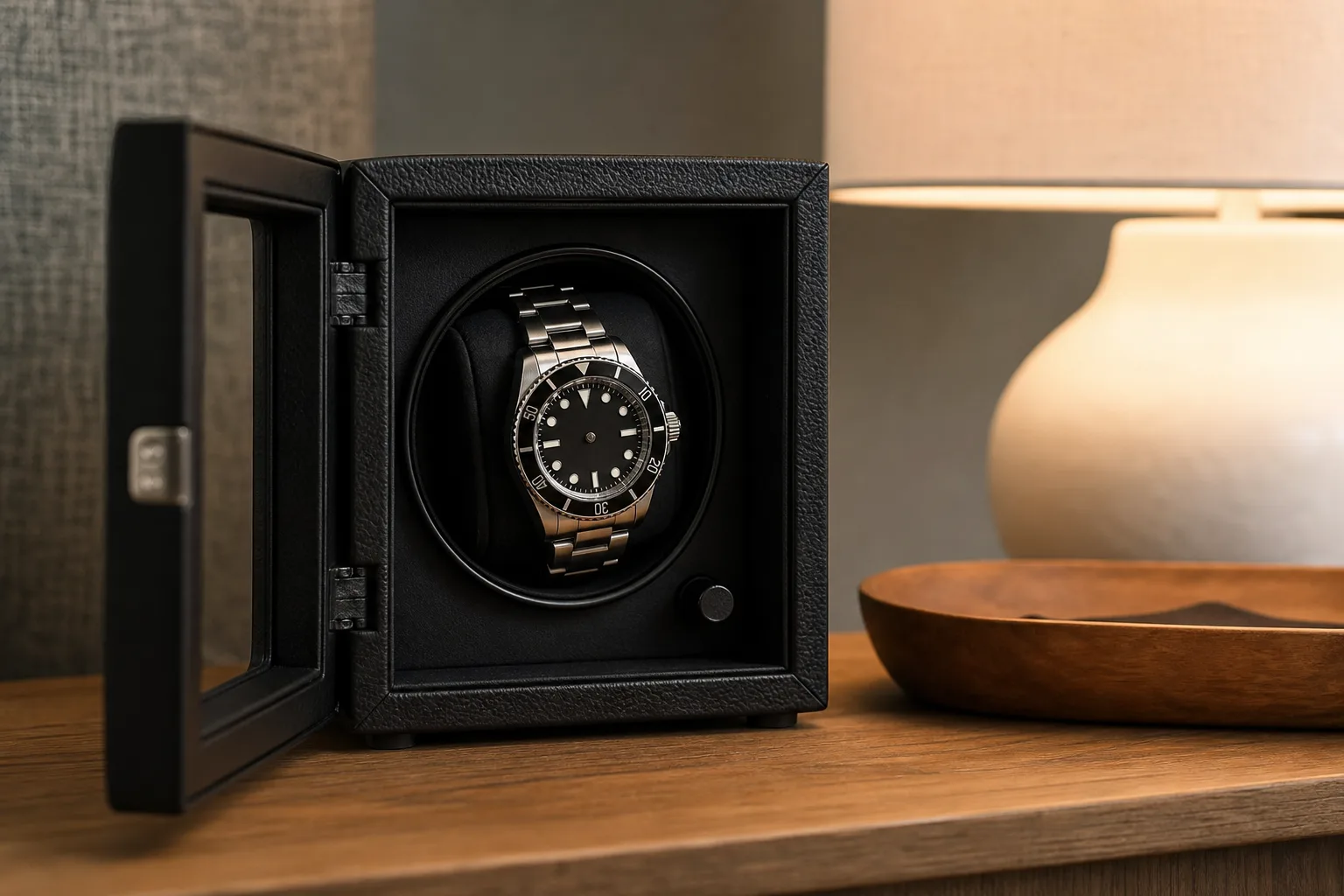
Wolf is the benchmark brand for home winders, and the Cub is its compact single model. It's exceptionally well made and finished, with a vegan-leather-wrapped body and a glass cover. It's bi-directional, so it suits watches that wind either way, and its only control is an on/off switch on the back. Wolf's patented lock-in cuff makes fitting and removing a watch easy, and the motor is close to silent. It runs on the included mains adapter or on batteries. The trade-off is price: it costs several times what budget winders do, and you can't fine-tune turns per day the way you can on Wolf's pricier models.
 Wolf Cub Single Watch WinderCheck today’s price on Amazon


 Buy on Amazon →
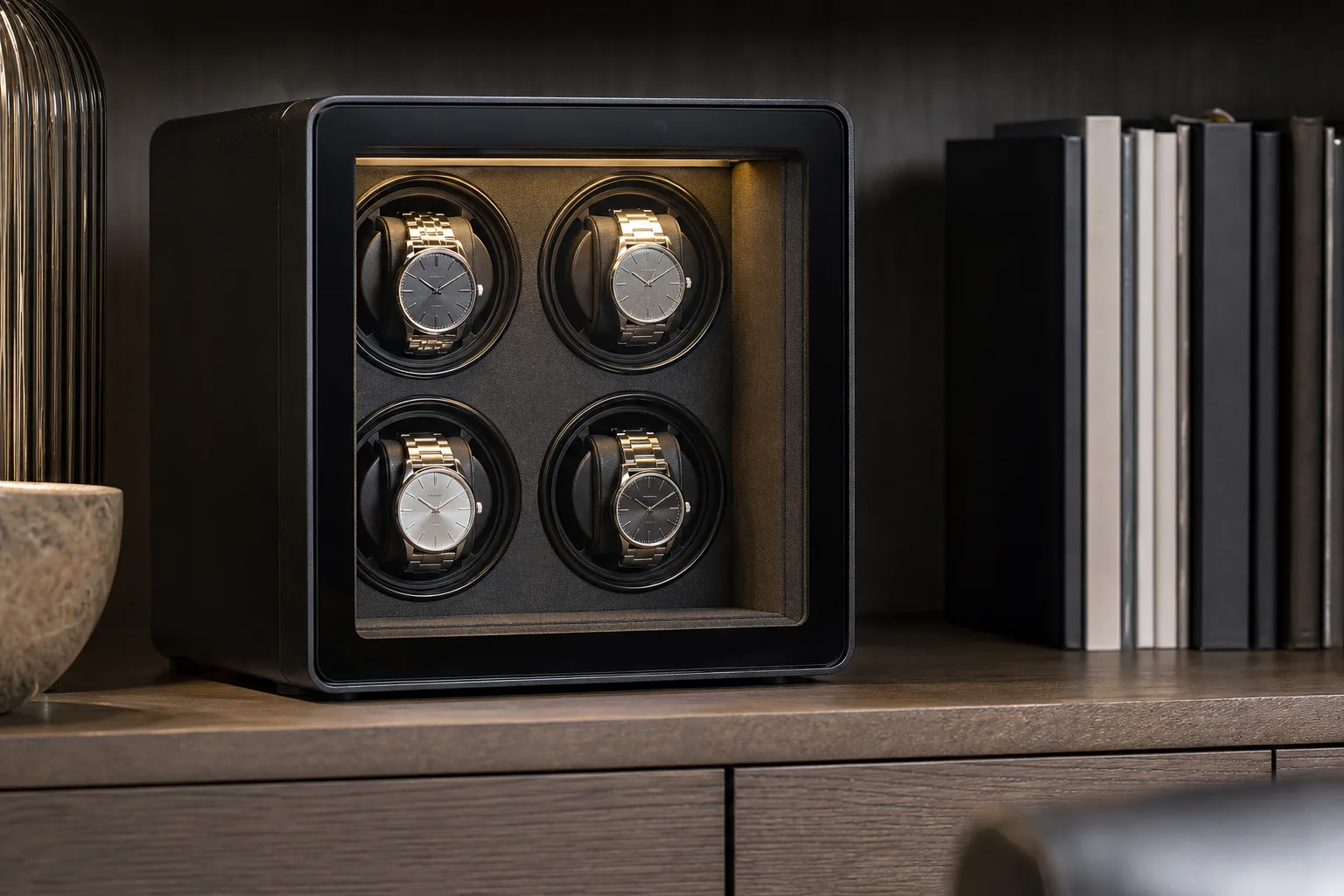
Wolf's larger units add the controls the Cub leaves out. The Viceroy, for example, combines a winder with locked storage for three more watches, lets you pick turns per day from 300 to 1200, choose the direction, and delay the start so the watch winds down before winding back up.
Budget winders: closer than you'd expect
A good budget winder can match much of a premium unit's feature set. A metal-cased Mozsly single winder, for example, offers one- and two-direction winding, turns-per-day settings from 650 to 1500, a shielded motor and the ability to daisy-chain several units together, for a fraction of Wolf's price. Where it falls short is handling: its porthole cover screws off rather than swinging open, and its squeeze-in cushion takes more care to load and unload than Wolf's cuff, with a risk of the watch catching the glass if it isn't pushed fully in. Its motor is quiet, though not as whisper-quiet as the Wolf, and it turns a little faster.
Example pick: a double winder with real settings. This two-watch unit has five turns-per-day speeds (650, 750, 850, 1000 and 1950), three direction modes and two separate motors, so each watch can run its own program. The 650 and 750 settings cover most Rolex and Omega watches.
 ROTHWELL Double Watch WinderCheck today’s price on Amazon


 Buy on Amazon →
Watch boxes: what separates a good one
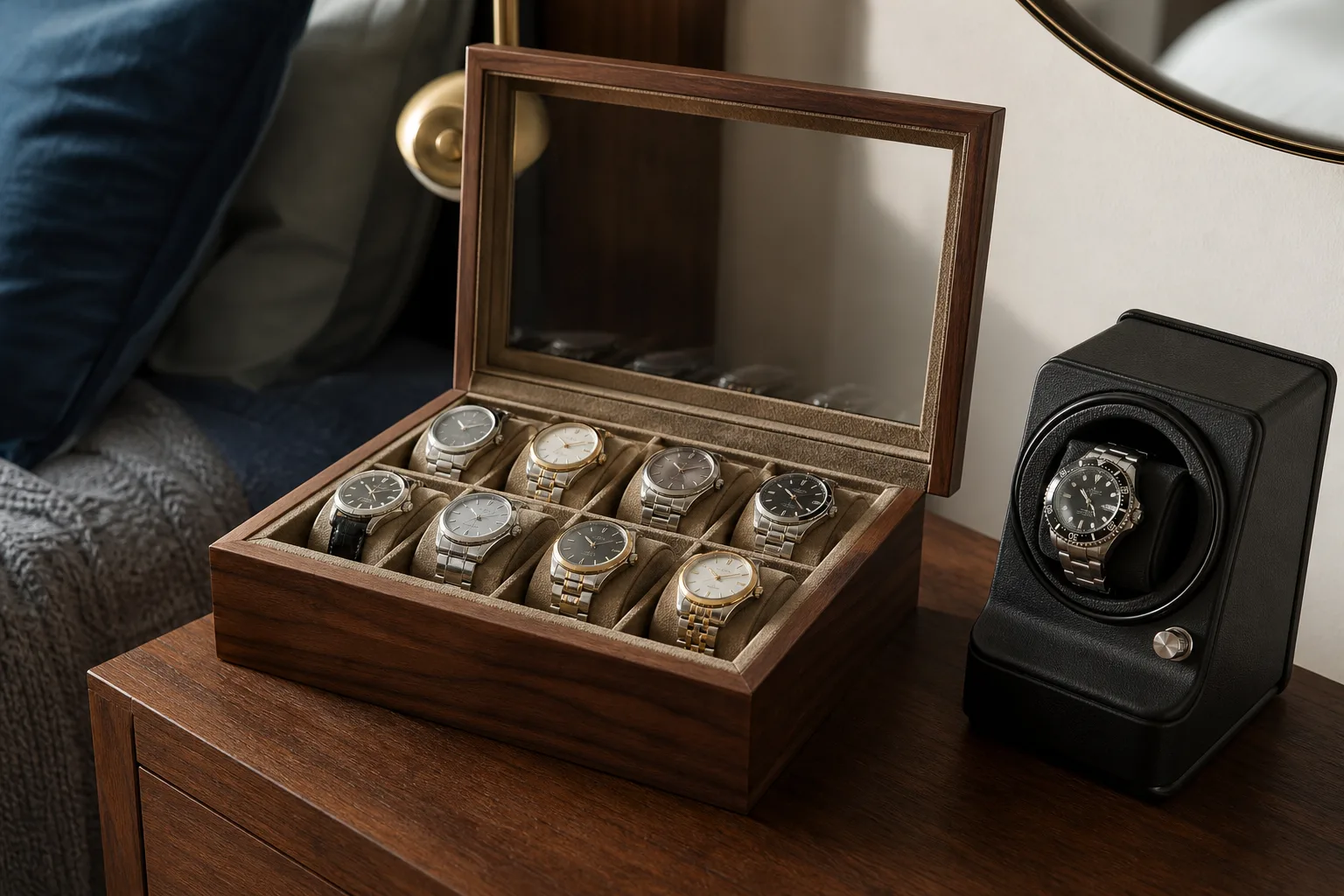
A watch box keeps a collection dust-free and scratch-free, and lets you see everything at a glance when choosing the day's watch. Budget boxes and mid-range boxes look similar in photos but differ in ways that matter:
- The hinges. This is the first thing to check. The cheapest boxes have no hinges at all, only a fabric ribbon that stops the lid falling back; it hangs over the watches and spoils the view. Others use a single metal hinge that folds inside the box, where it can scrape the case of a large watch in the end slot. Better boxes use two small hinges recessed into the frame, well away from the watches.
- Slot depth and pillow size. Deep slots let a watch sit down with protection on both sides. Shallow pillows packed into a 12-slot box leave big watches crowded and touching.
- Materials and build. Most boxes in the low and middle price range are PU (polyurethane) leather over wood. A cheap vinyl-look finish scuffs within a year, and glued drawers can start coming apart; expect two or three good years from the cheapest boxes. Real top-grain leather boxes cost far more.
- A drawer. A lower drawer is the place for straps, tools and spare links. A drawer that pulls all the way out doubles as a tray.
- A glass or clear lid to see the collection, and a lock if the box stays out.
If you're still building a collection, a budget box is fine; put the money into watches and handle the box gently. Once the collection settles at five to eight pieces you really care about, a better box with good hinges and deep slots is worth the upgrade.
Example pick: a 12-slot box with a valet drawer. About 16 by 9.5 inches, with twelve cushioned slots that fit small and large watches and a slide-out drawer for extra watches, straps or a ring.
 ROTHWELL 12-Slot Watch Box with Valet DrawerCheck today’s price on Amazon


 Buy on Amazon →
Example pick: a compact 6-slot box. About 12.8 inches wide, with a glass lid over six slots and a lower drawer for watch bands, a good size for a small dresser or a starter collection.
 ProCase 6-Slot Watch Box with DrawerCheck today’s price on Amazon


 Buy on Amazon →
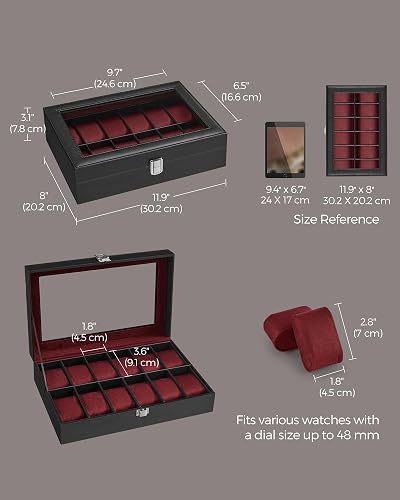
Example pick: a budget 12-slot glass-lid box. A velvet-lined box with a large glass lid. At this price, check how the lid hinges and how deep the slots are before you fill it with large watches.
 SONGMICS 12-Slot Watch Box with Glass LidCheck today’s price on Amazon

 Buy on Amazon →
Traveling with watches
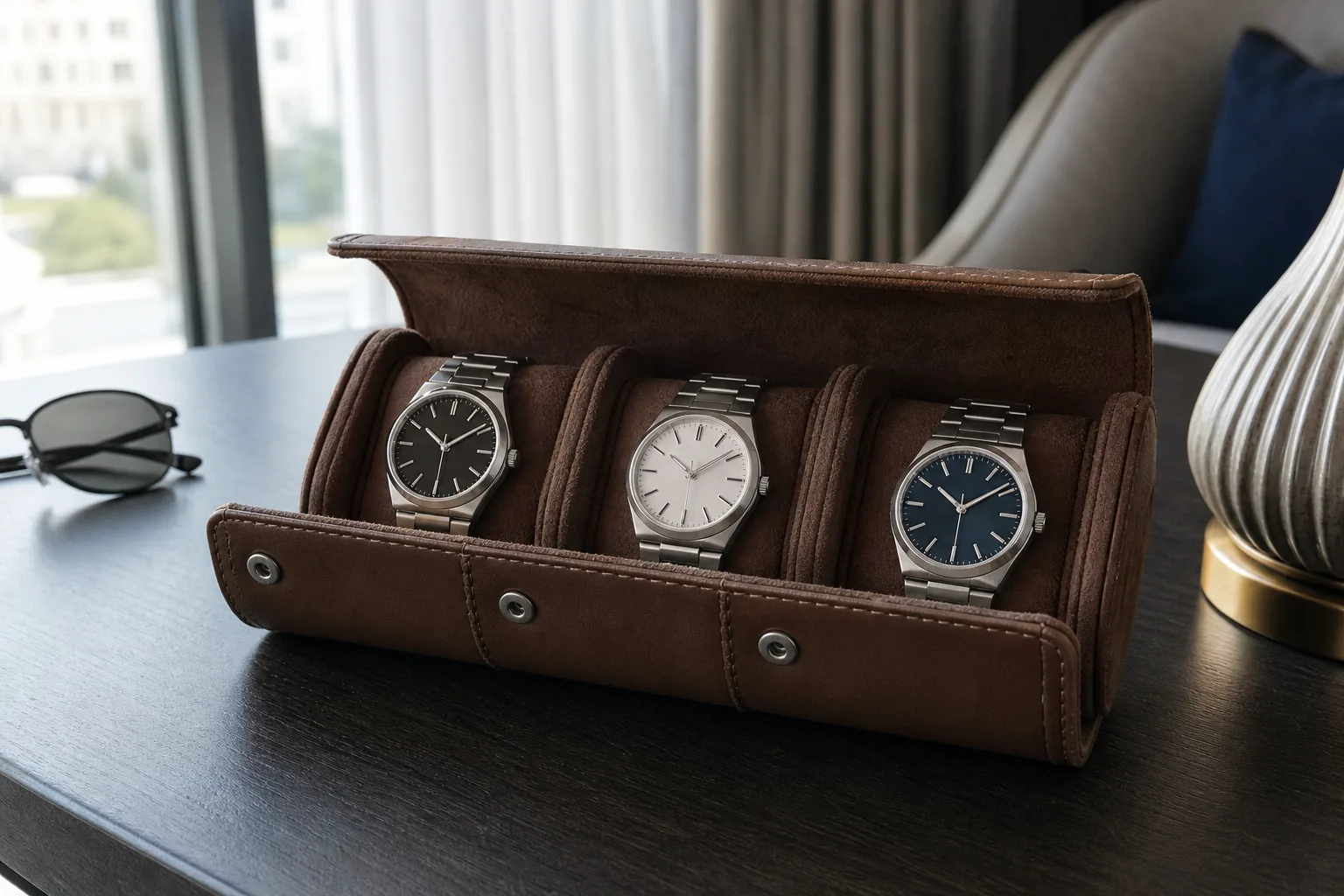
A watch roll or travel case keeps two or three watches from knocking together in a bag. Look for separate padded cushions, a firm shell or a flat base so it doesn't roll around, and a snap or zip closure. Keep it in your carry-on, never in checked luggage.
Example pick: a 3-watch roll. PU leather outside and a suede-like lining inside, with three cushions and dividers that stop the watches sliding into each other.
 ROSELLE 3-Watch Travel RollCheck today’s price on Amazon


 Buy on Amazon →
How to store watches long term, and in a safe
- Keep them cool, dry and stable. Avoid bathrooms, hot cars, sunny windowsills and damp basements. Big swings in temperature and humidity are hard on gaskets and leather straps.
- Keep them away from magnets. Phones, tablets, laptop lids, speakers and magnetic bag clasps can magnetize a movement, and a magnetized watch suddenly runs fast. A watchmaker can demagnetize it in minutes. Omega's Master Chronometer models are certified to resist magnetic fields of 15,000 gauss, but most other watches aren't.
- Control humidity in a safe. Safes seal tightly, and fire-resistant safes hold moisture, which is bad for leather straps and can lead to condensation. Keep a rechargeable desiccant dehumidifier inside and recharge it when the beads change color. Humidity around 40 to 50 percent is the goal; the dehumidifier sizing guide covers keeping a basement or closet in that range.
- Use a soft-lined tray or pouches inside a safe so watches don't touch each other or the steel walls.
- Record and insure. Photograph each watch, note the serial and reference numbers, and keep receipts and papers somewhere separate from the watches. Valuable pieces belong on a jewelry rider or a dedicated collectibles policy, since standard home policies often cap jewelry and watch theft.
- Rarely worn pieces can live in a bank safe deposit box. Bring them home and wear them for a few days now and then.
For more on securing the house itself, see the smart lock security ratings guide.
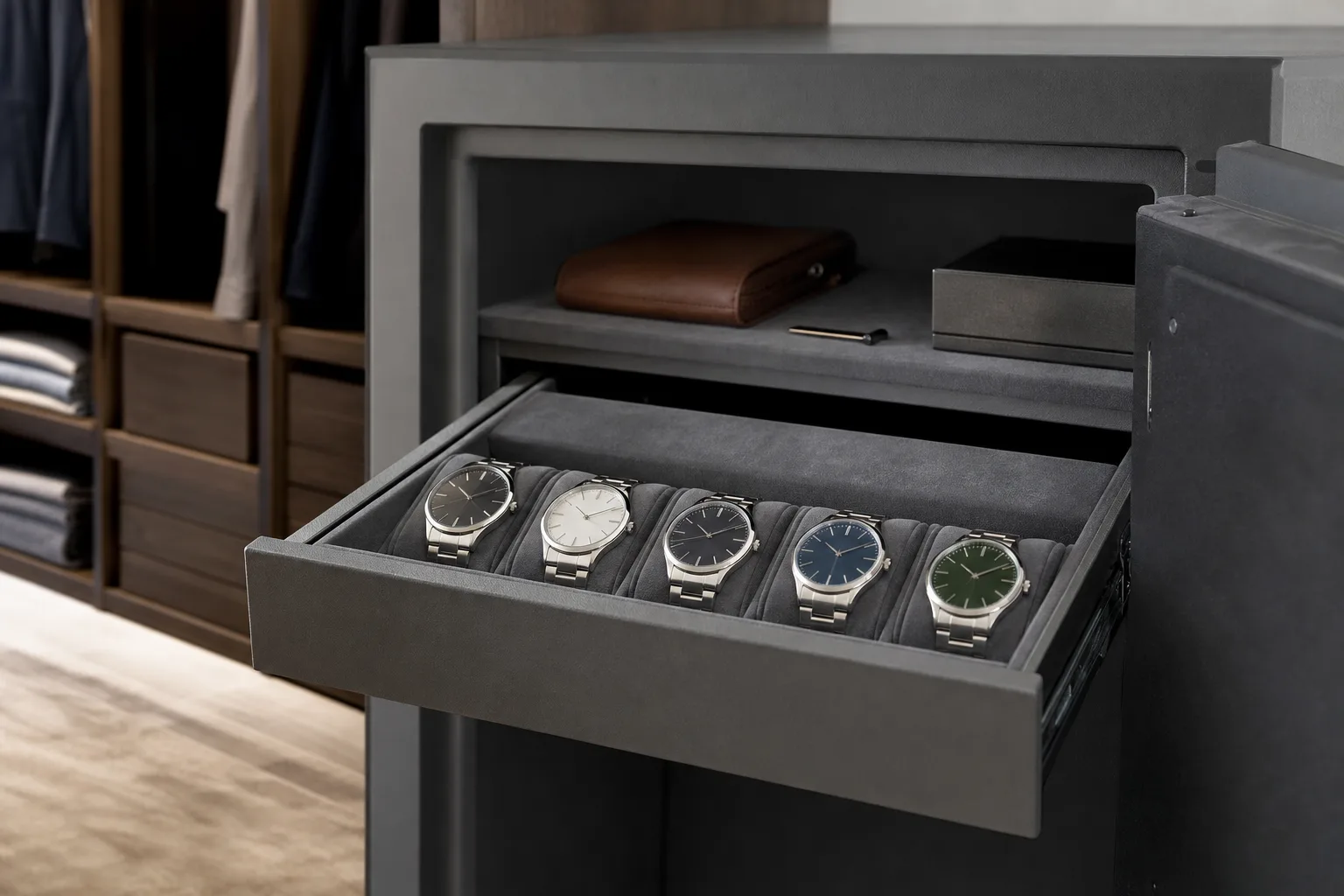
Example pick: a 1-hour fireproof safe. A 1.2 cubic foot safe with a digital keypad, rated for one hour of fire protection and verified waterproof for 24 hours in up to 8 inches of water, big enough for watch boxes, pouches and papers.
 SentrySafe 1-Hour Fireproof Safe STW123GDCCheck today’s price on Amazon


 Buy on Amazon →
Example pick: a larger fire-resistant safe. A 2.13 cubic foot safe with a digital keypad, interior lighting and a removable shelf, for a growing collection plus documents.
 Amazon Basics Fireproof Safe, 2.13 cu ftCheck today’s price on Amazon


 Buy on Amazon →
Example pick: a cordless safe dehumidifier. A rechargeable silica-bead unit with no cord to run through the safe door; the beads change color when it's time to recharge.
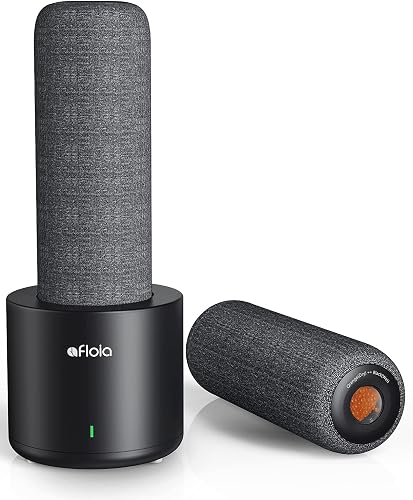 Afloia Rechargeable Safe DehumidifierCheck today’s price on Amazon


 Buy on Amazon →
Starting a stopped automatic watch
- Wind it by hand first. On a Rolex or most Omega dive watches, unscrew the crown first. Then turn it forward about 30 to 40 times to give the movement a good start; the rotor tops it up once it's on your wrist.
- Set the date away from midnight. Many date watches warn against changing the date when the date-change mechanism is engaged, often from late evening to the early morning. Move the hands past 6 o'clock first, set the date, then set the time. Check your manual for your model.
- Screw the crown back down fully on a water-resistant watch before you wear it.
Rolex's own care and servicing page covers day-to-day care and servicing.
How to choose
- One automatic, worn daily: skip the winder. A small box or a valet tray on the dresser is enough.
- Two or three automatics in rotation: a single or double winder for the watches you're wearing this month, plus a 6-slot box for the rest.
- A calendar, moon phase or annual calendar watch: a winder with adjustable turns per day is worth it.
- A growing collection: a 12-slot box with good hinges, and a small fire-resistant safe with a dehumidifier for the most valuable pieces.
- Travel: a padded three-watch roll in your carry-on.
Building a display wall or a hangout room for the collection? The man cave ideas guide covers display shelves, lighting and locked cabinets.
Posted by Kristopher Larson
Frequently asked questions
Do I need a watch winder for my Rolex?
Not if you wear it most days. Current Rolex calibers such as the 3235 run for about 70 hours off the wrist, and resetting the time takes seconds. A winder is worth it if you rotate several automatics, or own a model with a complication that's tedious to reset, like the Sky-Dweller's annual calendar.
What watch winder setting should I use for a Rolex?
About 650 turns per day in both directions suits most current Rolex models, including the Submariner, Datejust and GMT-Master II. Confirm the setting for your exact reference in the manual or your winder maker's chart, and adjust if the watch stops or always has turns to spare.
What TPD should I use for an Omega Seamaster or Speedmaster?
Most automatic Omega models, including the Seamaster and automatic Speedmasters, wind in both directions and run well at about 650 to 800 turns per day. Start at 650 and raise it if the watch slowly runs down over several days.
Are watch winders bad for automatic watches?
A good winder used sensibly adds very little wear. The problems come from cheap winders that spin nonstop, from leaving a whole collection on winders for years, and from putting unserviced vintage watches on them. Choose a winder with adjustable turns per day, rest periods and a shielded motor, and keep only your current rotation on it.
How should I store watches I'm not wearing?
In a lined watch box or a safe, somewhere cool, dry and away from magnets such as phones, tablets, laptops and speakers. Keep humidity around 40 to 50 percent, use a dehumidifier inside a safe, and wear each watch for a few days every month or so.
Can a watch winder magnetize my watch?
A poorly shielded motor sitting next to a movement for months can. Magnetism makes a mechanical watch run fast. Look for a winder with a shielded motor, and if a watch suddenly gains time, a watchmaker can demagnetize it quickly. Omega's Master Chronometer models are certified to resist 15,000 gauss.
Keep reading
More from the blog
Best Furnace Filter: MERV 8 vs MERV 13, Filtrete vs Honeywell
Man Cave Ideas: Layouts, Must-Haves and How to Build One in a Basement, Garage, Spare Room or Shed
Best Inverter Generator: Honda EU2200i vs GENMAX 2200W