Buying an Older Utah Home? Here's Your Roof Replacement Timeline
A first-week inspection checklist, realistic roof lifespans in Utah's freeze-thaw climate, and a two-year budgeting plan for buyers taking on an older home with an aging roof.
A Roof Replacement Service Timeline for Utah Homeowners Buying an Older House
Nobody warns you that your home inspection report will describe the roof in the same tone a doctor uses for a bad blood panel. Mine did. Nine notes on one page, six of them pointing at the same twenty-year-old shingle layer, and a seller who wanted full asking price anyway.
That was my second house purchase in northern Utah. I've since learned that a roof on an older home isn't a yes-or-no question. It's a matter of timing, and the timing almost always collides with the closing calendar. So here's the honest sequence: what to check in the first week, what to budget, when a Utah roof actually needs replacing, and how to keep a closing from blowing up over it. If you're still shopping and want to weigh a fixer-upper against something newer, it helps to run the numbers on preparing your finances before buying a Utah home first.
Why Utah Roofs Age Differently Than Somewhere Greener
Humidity rots roofs. Utah dries them out and then freezes them. That changes everything about how you read an inspection report here. Our summers push 100 degrees on the valley floor and swing about 40 degrees overnight in spring and fall. Shingles expand and contract through that cycle for years. Asphalt gets brittle from it. Nail heads back out. Flashing sealant cracks at the seams, usually on the south and west slopes that take the most afternoon sun.
Then winter arrives. Snow piles up and sits there for weeks, especially on north-facing planes that never see direct light from November through February. Meltwater runs downhill during a warm afternoon, hits a cold eave at dusk, and freezes into an ice dam. Water backs up under the shingles. You don't see it until a ceiling stain shows up in March.
According to the National Weather Service, much of Utah averages well over 50 inches of snowfall per season, with mountain valleys running considerably higher. That's a real load on a structure every year, and older homes built before modern bracing standards deserve a closer look at their framing, not just their shingles. My read: in dry climates people get lazy about roofs. They assume no rain means no problem. The damage here happens in the freeze-thaw gap, not the downpour.
What to Check in Your First Week of Ownership
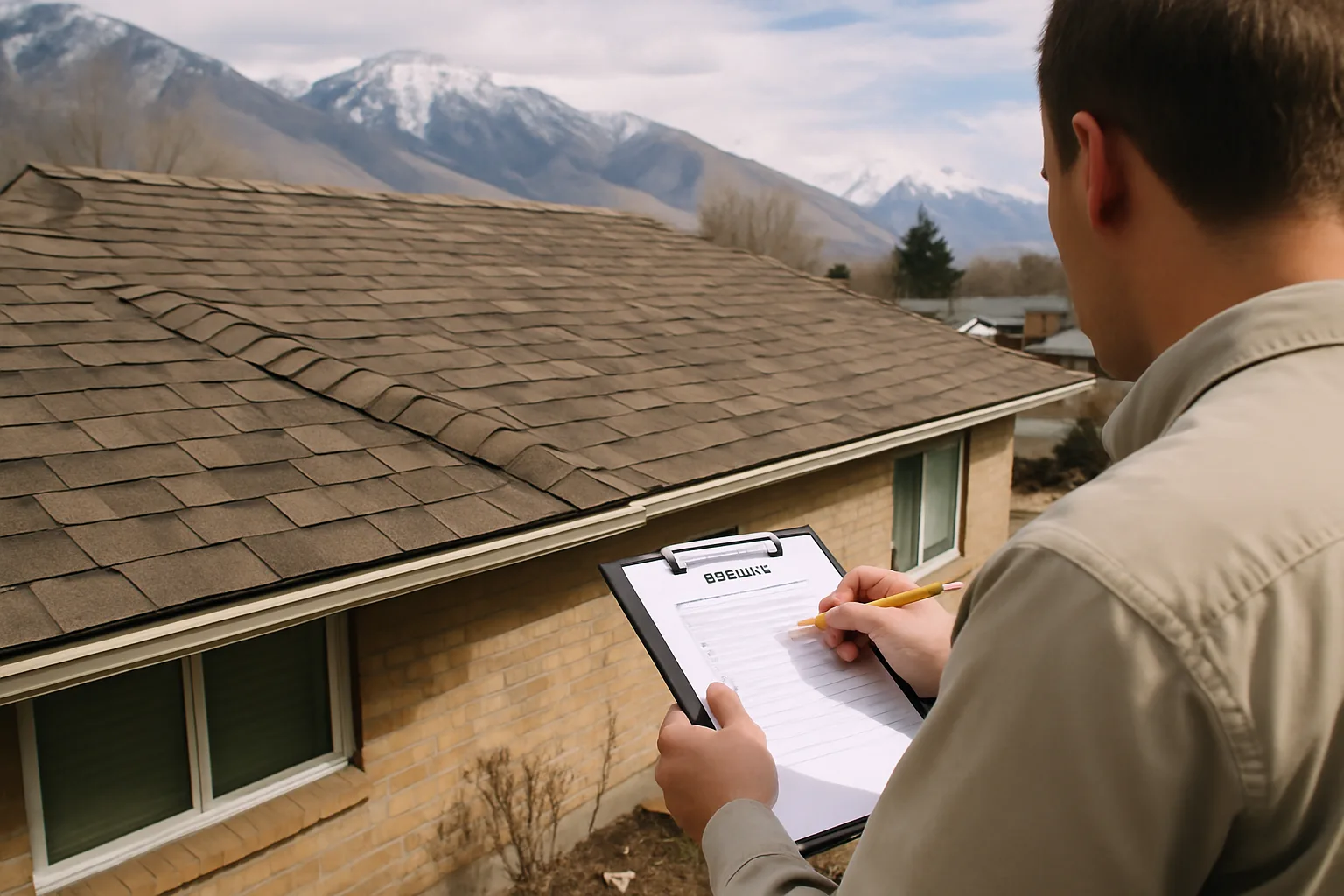
You don't need a ladder. Get a $25 pair of binoculars and walk the property line at a slow pace, twice, once in morning light and once around three in the afternoon.
Curling, cracked, or missing tabs, especially on the sunny side.
Granules piling up at the bottom of downspouts, like black sand.
Sagging ridgelines. A roofline should look like a straightedge, not a smile.
Rust streaks on metal valleys or drip edge.
Daylight in the attic. If you can see it, water can get in.
Then climb into the attic with a flashlight. Look for dark water staining on the underside of the decking, soft spots you could push a screwdriver into, and any light poking through. That twenty-minute crawl tells you more than the outside view does.
Write down what you find with dates. If you start talking to contractors in a year, that little log is worth more than your memory. It's also worth doing a similar walkthrough of the plumbing while you're at it — our pre-purchase plumbing inspection guide covers the same first-week logic.
How Long Does an Older Roof Actually Have Left?
Shingle type sets the baseline. Standard three-tab asphalt often runs 15 to 20 years. Architectural asphalt typically reaches 20 to 30. Metal and standing seam panels can push 40 to 70 depending on coating and installation quality. Cedar shake in a dry climate can hold up a shockingly long time, though it weathers gray and splits.
Those are averages, and averages lie. Two houses on the same street with the same shingles can differ by a decade based on attic ventilation alone. Poor ventilation cooks the underside of the deck and shortens everything upstairs.
Here's the rule I use, and I'd argue for it over any square-foot formula: calculate cost per remaining year, not total cost. A cheap roof with four years left is expensive. A pricier roof with 25 years ahead of it is the bargain, even if the invoice stings on day one. If your attic is under-insulated, that math gets worse. Heat escaping up melts snow from underneath and feeds the ice dam cycle. The Department of Energy treats attic air sealing and insulation as one of the highest-return upgrades a homeowner can make, and on an older Utah house it's usually the cheapest way to extend whatever roof life you have left.
The Utah Roofing Season, and Why It Shrinks Fast
You've got a working window roughly from April through October. Not because crews can't work in cold, but because sealants, adhesives, and certain membrane products need temperatures above a threshold to cure correctly. Install a roof at 28 degrees and you get a bond that fails quietly a couple of winters later.
Spring in Utah is a coin flip on wind. Late June through August is hot enough that crews start at dawn and knock off by early afternoon, which slows the schedule. September and October are the sweet spot, cool and mostly dry. By November you're hoping, not planning.
So if you're buying in January and the roof is marginal, understand that you're not scheduling a project. You're scheduling a two-to-three week weather window that may not open until spring. Plan the budget now, do the interior work in the meantime, and get on a contractor's calendar early. Good crews book out weeks ahead once the season turns.
What a Replacement Actually Costs You in Planning Terms
I won't give you a number per square. Prices move, material availability shifts, and any figure I quote today is fiction by the time you read it. What's stable is the cost structure, and knowing the parts is how you compare bids without getting played.
Line item | What it covers | Where bids hide money |
Tear-off and disposal | Removing old layers, dumpster, landfill fees | Bids that assume one layer when you have three |
Decking repair | Replacing rotted sheathing, usually priced per sheet | Excluded or listed as an "allowance" that always gets used |
Underlayment and ice barrier | Waterproof membrane at eaves and valleys | Cheap felt where a self-adhering membrane belongs |
Ventilation | Ridge vents, intake vents, sometimes a new attic fan | Left out entirely, then your new roof cooks from below |
Flashing and penetrations | Chimney, skylights, vents, wall intersections | Reused old flashing that leaks within two seasons |
Permits | Local jurisdiction fees and inspections | Missing, which becomes your problem at resale |
A detail worth flagging: the Department of Housing and Urban Development notes that a house's condition and insurability affect how a mortgage can be structured, which is exactly why an FHA or VA appraisal can stall a sale over a roof that a conventional loan would wave through. If you're using a government-backed loan, get the roof question answered before the appraisal, not after — and if the appraisal comes back in your favor, here's what to do when a Utah home appraisal comes in higher than your offer.
Get at least three bids. Not to pick the cheapest one. To find out what's actually wrong. When three contractors independently point at the same flashing detail, that's real. When only one does, ask why.
A Step-by-Step Plan for the First Two Years
Month 1: Inspect, photograph, and date-stamp everything. Get one written assessment from a licensed contractor even if you're not replacing anything yet.
Month 2 to 6: Fix the cheap stuff. Reseal flashing, clear debris from valleys, add attic insulation. These buy you time.
Month 6: Budget properly. Set aside the full replacement cost for the year you expect to pull the trigger, not a partial amount you top up later.
Spring or fall of year two: Get three bids, verify licensing and insurance, check that permits are included, and confirm the warranty terms in writing before anyone climbs up.
After install: Photograph the finished roof and keep the paperwork with your closing documents. Future buyers ask, and you'll want the answers.
If you're working with a company that knows the local climate and pulls its own permits, the process is a lot calmer. When I finally scheduled my own roof replacement service, the biggest relief was a written scope that named every line item above, including decking allowances and ventilation, before work started. No surprises at the end of the job, which is rarer than it should be. Storm damage adds its own wrinkles too — see our breakdown of how natural disasters damage your roof for what hail and wind leave behind.
Don't Let a Roof Deadline Run Your Closing
An older Utah home with a tired roof isn't a dealbreaker. It's a negotiation point with a timeline attached, and the timeline is the part that catches people off guard. Inspect early, plan around the season instead of against it, and budget by cost per remaining year rather than the lowest number on a bid sheet. What's your roof situation right now? If you can't answer how old it is, that's your first task this weekend, and it costs you nothing but twenty minutes and a flashlight.
Frequently asked questions
How long do roofs typically last in Utah's climate?
What time of year is best to replace a roof in Utah?
Can a bad roof delay or kill a home sale in Utah?
How much does a roof replacement typically cost in Utah?
What are the warning signs an older Utah roof needs replacing soon?
Does homeowners insurance cover roof damage from Utah's heavy snow and ice dams?
Keep reading
More from the blog
Gas Line Installation: What Homeowners Need to Know First
How to Choose Windows for a Utah Home With a Mountain View

Pre-Purchase Home Plumbing Inspection Guide for Buyers