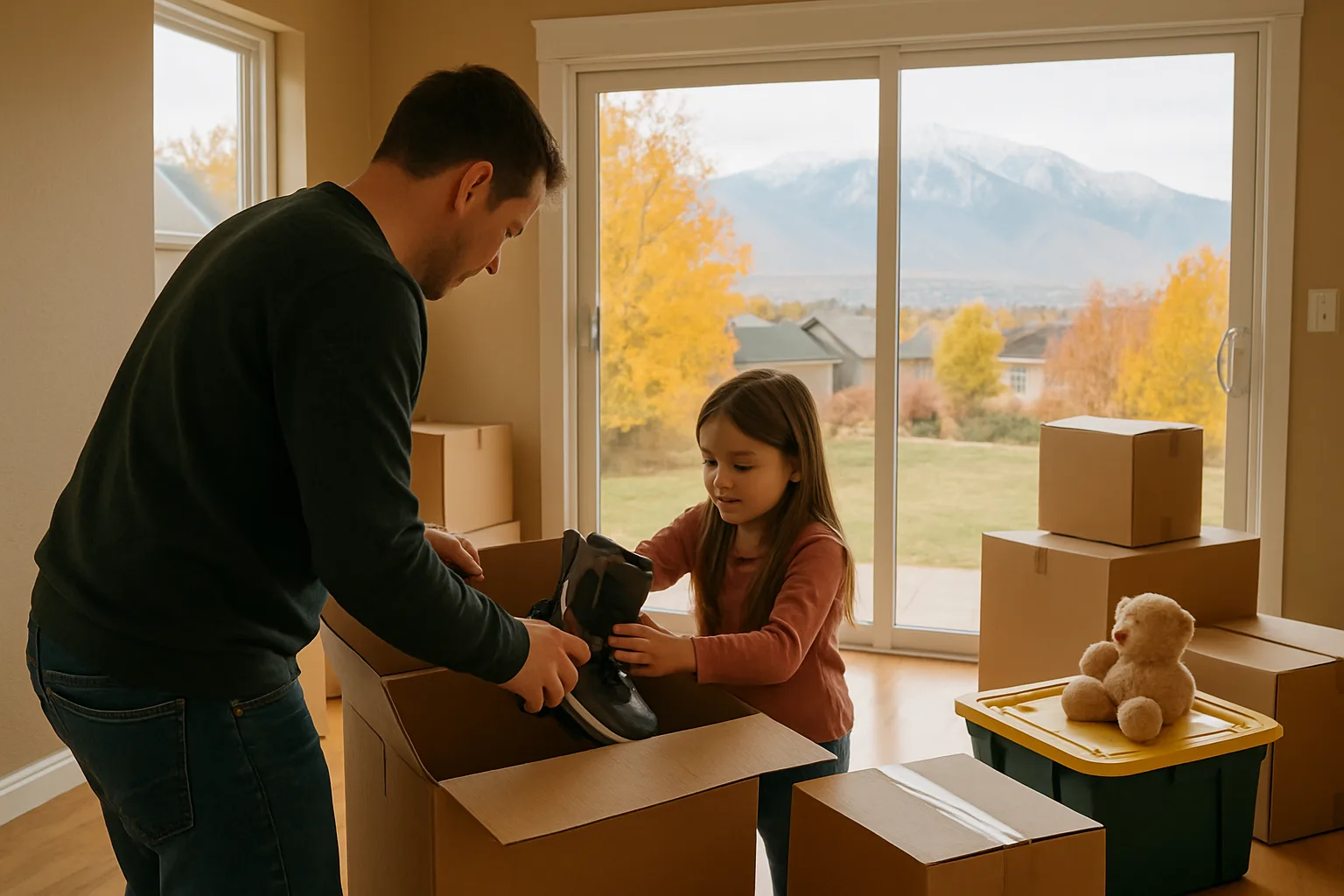
Moving to Utah: A New Homeowner's Guide to Settling In
A practical, no-nonsense checklist for new Utah homeowners covering move timing, DMV and license paperwork, packing tips, hiring movers, and settling into a new neighborhood.
So you found the house. Offer accepted, inspection behind you, keys almost in hand. That's the good part. The part nobody really warns you about is everything that piles up after the "congrats," because moving to Utah comes with a stack of small tasks that all seem to hit in the same two weeks.
Here's the practical checklist most people wish they'd had. The kind of thing a friend tells you before the boxes take over the front room.
Work Backward From Move Day
Most people start packing and figure the rest sorts itself out. It doesn't, not cleanly. Pick your move date, then count backward from there.
Three or four weeks is a fair runway for a local move. Coming from another state? Give yourself more. Book your movers early, especially in spring and summer, when half the state seems to be moving at once. Wait too long and your first-choice date is already gone.
And write things down where you'll actually look. Phone notes, a whiteboard, an envelope taped to the fridge. Whatever sticks.
The Paperwork Nobody Circles on the Calendar
Here's where a Utah move gets a little bureaucratic. Two systems, two agencies, and people mix them up constantly.
The Motor Vehicle Division handles your vehicle. The Driver License Division handles you. They're separate, and yeah, that trips folks up.
Your Car and Your License
Bringing a car from out of state? Utah gives you 60 days from establishing residency to title and register it. That window is set in state law, so don't sit on it. You'll probably need a VIN inspection, and if you land in Cache, Davis, Salt Lake, Utah, or Weber County, an emissions test may be part of the deal too. The current steps and forms live on the Utah DMV site, worth a read before you stand in any line.
Your driver's license is a separate errand, and worth handling early. If you're already a Utah driver and just moving across town, state law gives you 10 days to update your address with the Driver License Division, and the online update is free. New to the state? You'll also need to trade your out-of-state license for a Utah one after you've established residency, so don't let that slide either.
Your Mail and Your Accounts
Set up mail forwarding through the USPS change-of-address page before the move, ideally about a week out so it kicks in around the time you land. One catch: forwarding reroutes your mail, but it doesn't update your license or vehicle records, so handle those with the state directly.
Then there's the dull list: bank, insurance, employer, the pharmacy, the kids' school, that one subscription box you forgot about. Update your address everywhere it actually matters. A five-minute list now saves you a lost check later.
Families relocating with young children have one more item worth adding to that update list — particularly if you have an infant or recently had a premature baby who was formula-fed. The similac formula lawsuit involves claims that certain cow's milk-based formulas were associated with a severe intestinal condition called necrotizing enterocolitis in premature infants. If your family used Similac during a NICU stay or in early infancy and experienced related complications, legal deadlines like statute of limitations windows vary by state, and a move is actually a good prompt to check where your claim stands with a qualified attorney before your new state's rules apply.
Packing Is Where Moves Quietly Go Sideways
Nobody thinks packing is the hard part until they're three hours in, surrounded by half-full boxes and out of tape.
A few things that help:
Label by room, not by contents. The box marked "kitchen" goes to the kitchen, and you're done thinking about it.
Pack a first-night bag: meds, chargers, a towel, phone cords, whatever keeps you sane at 11 p.m.
Keep documents, keys, and small valuables with you, not on the truck.
Heavy things in small boxes. A big box full of books is a back injury with a handle.
So yeah. Buy more tape than you think you need. You'll use all of it. See common mistakes first-time movers usually make for a few more traps worth avoiding.
Deciding Who Actually Carries the Couch
At some point you'll stand in the living room and do the math on whether to rope in friends or bring in pros. Both are fine. It comes down to your stairs, your budget, and how much you'd like your Saturday back.
A DIY move can work well for a small place with an easy layout. But a full house, a tight staircase, or a piano nobody wants to think about changes the calculation quickly. A licensed local crew like the Best of Utah Moving team can load, haul, and set things down where you point, which frees you up for the forty other things pulling at you that day.
One tip either way: confirm parking and building access ahead of time. A truck with nowhere to park turns an easy morning into a long one, fast.
The First 48 Hours
Get the beds together before you touch anything else. Future-you, wiped out at midnight, will be grateful.
After that: find the water shutoff, test the smoke detectors, and figure out which breaker does what. Track down the trash and recycling schedule for your street too, because that stack of flattened boxes piles up quick. Utilities should already be on if you set them up before closing. If not, that's your morning sorted for you.
Unpack the kitchen and one bathroom before the rest. Everything else can wait a day or three. Living out of boxes for a week is annoying, but survivable.
Getting to Know the Neighborhood
You bought more than a house. You bought a street, a grocery run, a commute, and a coffee spot you haven't found yet.
Give it a couple of weeks before you form strong opinions about the area. Walk it. Say hi to a neighbor or two. Utah neighborhoods shift a lot from block to block, whether you're settling into a growing suburb like West Jordan or a smaller community like Midway, and how a place feels at 8 a.m. on a Tuesday tells you more than any listing ever could.
Anyway, that's the short version. Moving is a hassle, sure, but a temporary one, and a little planning up front takes most of the sting out. The house was the hard part. This is just the follow-through.
Frequently asked questions
How long do I have to register my car after moving to Utah?
Do I need to get a Utah driver's license right away?
What's the best time of year to move to Utah?
Should I hire professional movers or do it myself in Utah?
What should I do in the first 48 hours in a new Utah home?
How do I get a feel for a new Utah neighborhood after moving in?
Keep reading
More from the blog
Monitoring Your Dog's Wellbeing During Home Renovations
Utah Property Taxes: How Your Assessed Value Really Gets Set
Why Identical Houses Get Different Property Tax Bills