How to Monitor Your Dog's Comfort During Home Renovations
Home renovations can quietly stress out dogs through noise, new smells, and disrupted routines. This guide covers how to recognize behavior changes, protect feeding habits, and keep pets safe and comfortable during a remodel.
Modifying your house can bring many benefits in terms of comfort and security for all members of the family — including pets. Nevertheless, changes such as renovations, new furniture, flooring updates, room rearrangements, and shifts in daily routine can have an impact on a dog's comfort and behavior. Usually, dogs react to alterations in their environment, and sometimes the reaction is hard to notice at first sight. It is useful to observe a dog during and after these changes to detect possible stress, uneasiness, or adjustment problems. This is especially relevant for Utah homeowners tackling remodels, from window replacement projects to broader home improvement work.
Recognizing Changes in Behavior
Alterations in the surroundings can also affect a dog's behavior. For example, a confident dog that walks around the home can become hesitant if the furniture has been moved or if changes have been introduced. Excessive barking, hiding, pacing, restlessness, or clinging are all signs that the dog may find it difficult to cope with such alterations. These symptoms don't necessarily indicate a problem, but they are a great way to get insight into how the dog feels.
It will be necessary for owners to assess if the problem persists despite a return to usual living conditions. Making a familiar place for the dog with its bed, water, and toys is another way to help the dog feel comfortable during a period of disturbance. Owners should try to keep the dog's feeding and walking routines as stable as possible.
Monitoring Eating and Drinking Habits
Sometimes modifications to a house can influence a dog's feeding and hydration habits. Sounds from construction work, the presence of strangers, strange smells, or even relocating the food and water bowls may make certain dogs unwilling to eat and drink properly. Owners should keep a close eye on meal consumption and water intake. If there are sudden changes in behavior, it might be necessary to consider whether other unusual behavioral traits are present as well.
When looking into a dog's diet because of household changes, it's important to think about where food should be stored. It must be kept in a quiet place away from construction materials, cleaning agents, or other household hazardous substances. Household changes can also be a good opportunity to check whether the dog's diet still meets its needs. The best dog food has to be chosen with respect to the dog's age, size, energy level, and other factors.
Maintaining a Familiar Routine
Routines that a dog is accustomed to help it adapt to new situations. Dogs normally become accustomed to regular feedings, walks, games, sleep, and outside trips. Home reconstruction and other household projects may interrupt existing routines and add more unpredictability. Keeping at least some elements of the daily routine consistent helps a dog cope with a changing environment — something worth planning for during the first month in a new Utah home as well.
Spending time with the dog during repairs is very important. Walking, playing, grooming, and quiet time with the pet allow owners to maintain the relationship and the daily routine the dog is accustomed to. With workers and other guests coming and going, it helps to have a designated space where the dog can escape the bustle.
Identifying Potential Household Hazards
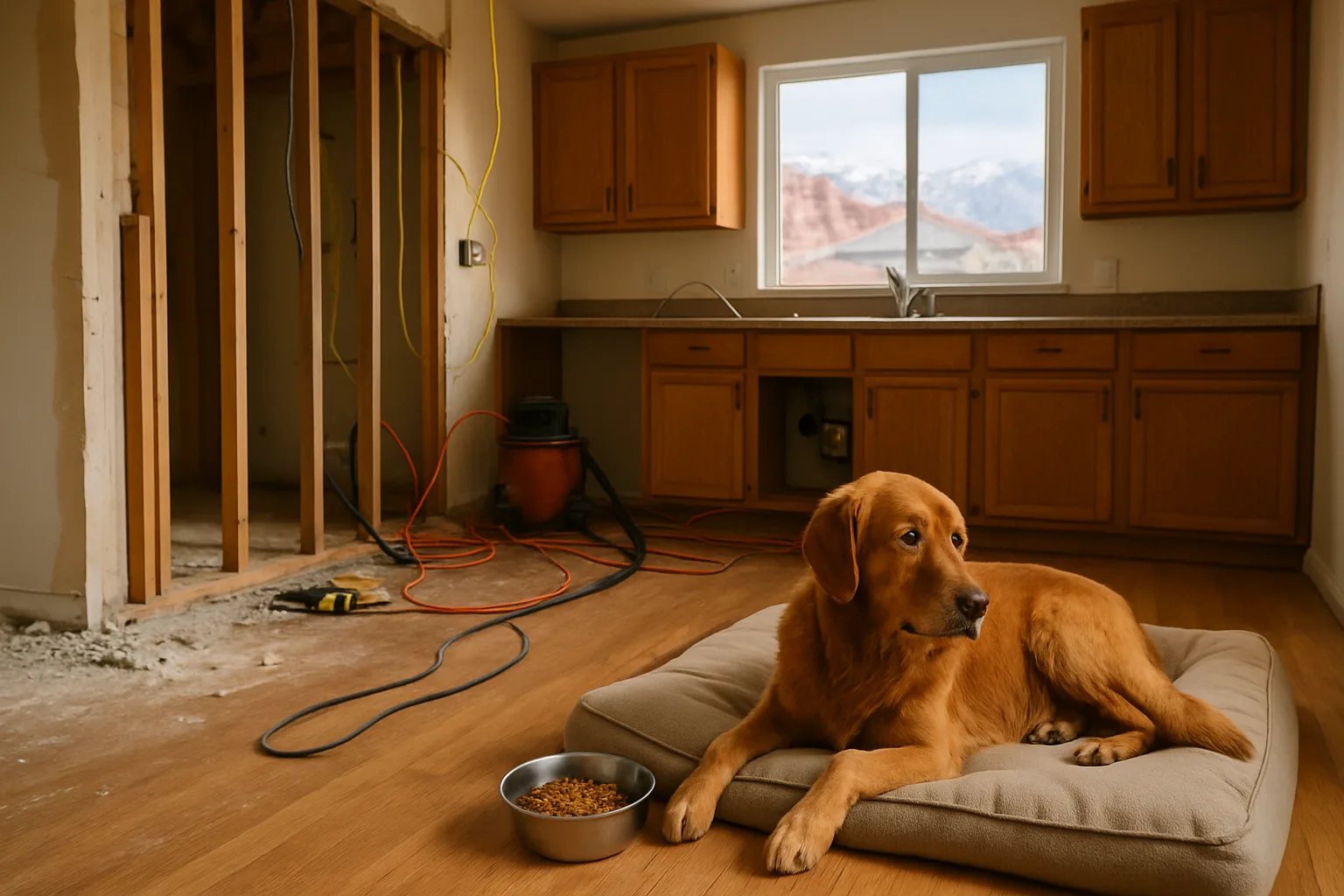
Interior changes can create temporary or permanent risks that weren't present before. Wires, construction equipment, paints, glues, building materials, and unsecured furniture all represent risks for curious dogs. Owners should assess the risks in areas where construction is taking place and keep pets away from those zones. Once work is completed, new items and layout changes should be re-evaluated from a dog-safety perspective — this is a good time to also run through a broader home inspection checklist if the project touched the roof, attic, or exterior.
Monitoring the dog's behavior is another useful method for revealing hazards that might be missed during planning. A dog that avoids certain flooring, can't reach its sleeping place, or tries to chew a newly purchased item may need adjustments made on its behalf. These risks can be minimized by helping the dog get used to the new arrangement gradually. Consistent changes in behavioral or physical state could indicate the need to consult a veterinarian to identify the source of the problem.
Observing your dog's state throughout a home renovation lets owners understand how environmental changes affect a pet's comfort, behavior, nutrition, exercise, and safety. Appropriate observation helps resolve issues before they become complicated, while consistent routines and safe spaces make it easier for dogs to adapt to new surroundings. Whether you're remodeling a current home or settling into a new one after moving to Utah, every change made to the house should account for all who live there, including pets.
Frequently asked questions
How long does it take a dog to adjust to home renovations?
What are signs my dog is stressed during a home remodel?
Where should I keep my dog safe during construction work at home?
Can renovation noise and dust affect my dog's health?
Should I change my dog's food or feeding location during a remodel?
When should I call a vet about my dog's behavior during home changes?
Keep reading
More from the blog
Utah Property Taxes: How Your Assessed Value Really Gets Set
Why Identical Houses Get Different Property Tax Bills
Your First Month in a New Utah Home: A Fall Settling-In Guide