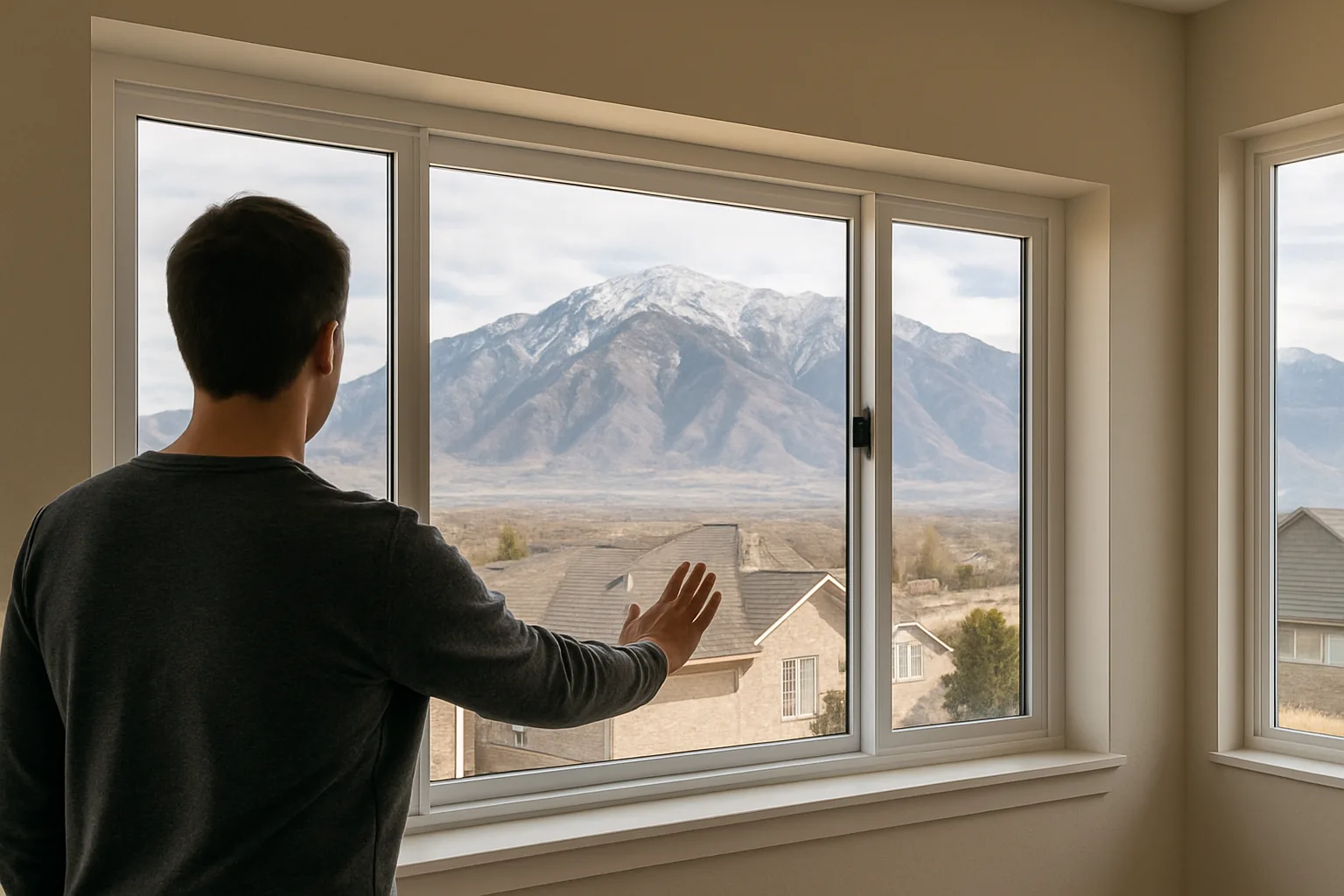
How to Choose Windows for a Utah Home With a Mountain View
Picking windows for a Utah home with a mountain view means weighing glass clarity against winter heat loss and summer solar gain. This guide breaks down the four spec numbers that matter, when to choose fixed versus operable glass, and a five-step plan to run before you get bids.
Two winters ago, a client in Draper spent $14,000 on new windows and then spent the next six months staring at the Wasatch through glass that made the mountains look gray. She had picked the frames by color swatch and never asked what the glass itself would do to the view. That mistake is fixable in about fifteen minutes of planning, and it is the whole reason this guide exists.
The short version: in Utah, a window has three jobs that fight each other. It has to hold heat in January, keep heat out in July, and stay as close to invisible as possible so the view does its job.
You can get all three, but only if you decide which matters most before you order. This piece walks you through the tradeoffs, the numbers that actually matter on a spec sheet, and the spot where you should spend extra.
Why Utah Is a Hard Place to Buy Windows
Salt Lake City swings from single digits in January to triple digits in July, and the sun at 4,500 feet hits glass harder than it does at sea level. Add canyon wind and spring dust, and you have a climate that punishes any window chosen for looks alone. If you're weighing a move to a view-heavy market, it's worth reading about what to know before moving to Utah and how the climate shapes home choices here.
That swings both ways. A wall of west-facing glass can push a living room past 80 degrees at 6 p.m. in July while doing almost nothing for you in winter. A north-facing window barely contributes heat gain at all, so the smart upgrade there is thermal performance, not solar control.
Here is the part I tell every client before we walk a house: map your view walls by compass direction first. Most Utah homes have one great view direction and one that is mostly glare. Treat them as two different projects. This is the same street-level thinking behind our guide on neighborhood filters to use before buying a home in Utah, where orientation and terrain matter as much as square footage.
Glass Area Beats Frame Style
Zoom out for a second. Window performance in the United States is rated through a uniform labeling system run by the National Fenestration Rating Council, and that label tells you more than any brochure. U-factor measures how fast heat escapes. Solar heat gain coefficient measures how much sun heat comes through. Visible transmittance measures how much daylight and view clarity you get.
For a view home, visible transmittance is the number nobody checks and everyone regrets. Higher visible transmittance means the mountains look like mountains instead of a hazy photograph. If you want the view to read clearly, that figure matters more than the frame color you spent three weekends debating.
Two practical rules I would put in writing for any Utah build:
Keep glass area generous on the view wall and let the frame disappear. Thick mullions and busy grids chop a mountain range into postcards.
Match the glass to the direction. West and south walls want more solar control. North and east walls want more insulation value.
I would take a large fixed pane over four smaller awning units every single time on a view wall. Fewer interruptions, less frame to clean, and better sightlines for the same rough opening. If you're replacing existing units rather than building new, our scope-first budget guide to replacement window costs covers what these upgrades run per opening in 2026.
Fixed, Operable, or Both
This is where most people get stuck, because the view wall is usually the wall you also want open in June. Utah evenings are made for it. So you need a mix, and the mix has a logic to it.
A fixed pane gives you the largest uninterrupted glass for the money, the tightest seal, and the fewest moving parts to fail. Operable units give you airflow and egress, but they cost more per square foot, and the frames get thicker as the units get bigger. The honest answer is that a great view wall is usually one large fixed center with a smaller operable unit on each side.
If you want the combination in a single opening rather than three separate units, this is where large picture windows that open earn their place in a plan. Slide one into the center of a view wall and you stop choosing between the panorama and the breeze. It is the option I recommend first for west-facing great rooms, where you want the light but not an August oven.
The Spec Sheet, Translated
You do not need an engineering degree, but you do need to read four numbers. Anything else on the label is marketing dressed as math.
Number | What it controls | What to look for on a Utah view wall |
U-factor | Heat loss in winter | Lower is better. Double pane with a low-e coating and argon fill handles most Utah homes. |
Solar heat gain coefficient | Heat coming in from sun | Lower on west and south glass, higher is fine on north. |
Visible transmittance | How clear the view looks | Higher keeps the mountains crisp. Do not sacrifice this without a reason. |
Air leakage | Drafts around the frame | Lower is better, especially on operable units facing canyon wind. |
The window industry ties much of this vocabulary back to federal efficiency guidance published by the U.S. Department of Energy, which is a good place to sanity check any claim a salesperson makes about energy savings.
A Five-Step Plan You Can Actually Run
Walk your house and take notes before you take bids. This is the exact sequence I hand people.
Photograph each wall in morning, midday, and late afternoon light. You will spot the glare walls fast.
Mark the view walls. Those get the biggest glass and the highest visible transmittance.
Decide where you want airflow, then size operable units to fit, not the other way around.
Write down the four spec numbers before you talk to anyone, so you are comparing products and not personalities.
Confirm the rough opening with your installer before ordering. Custom sizing is where timelines die.
One warning pulled straight from experience: order the operable hardware before the drywall goes up. Retrofitting a crank or a locking mechanism into a finished wall is a small nightmare, and I have watched it cost people a month. If you're buying a home mid-renovation or planning your own build in a mountain-adjacent market like Midway or Pine Valley, this is exactly the stage where a pre-purchase walkthrough pays off — our pre-purchase inspection guide covers the same discipline applied to plumbing.
What This Costs You If You Get It Wrong
Bad glass on a view wall is not a cosmetic problem. It is a monthly bill you pay for a decade and a view you never quite enjoy. I have seen homeowners replace year-old windows purely because a low visible transmittance number turned their ridgeline into a gray smear, and that is a full replacement cost, not a fix.
Get it right and the payoff is quieter than you would expect. Lower summer cooling load, fewer drafts in January, and a room that feels like it was built around the landscape instead of dropped onto it. The interesting part is that the technical standard behind all of this started as federal procurement guidance decades ago, and the U.S. General Services Administration still anchors a lot of the baseline thinking around building performance and whole building design.
If you are shopping in a market where mountain views carry real value, treat glass selection as an investment in the thing you are paying a premium for. The mountains are not going anywhere. Your window choice is the only variable.
Which direction does your best view actually face? Answer that honestly before you sign anything, and the rest of the spec sheet gets much easier.
Frequently asked questions
What is visible transmittance and why does it matter for a view window?
Should I choose fixed or operable windows for a Utah mountain view?
How much do new windows cost for a Utah home with mountain views?
Do west-facing windows need different glass than north-facing windows in Utah?
What elevation and climate factors make Salt Lake City tough on windows?
Is it worth paying more for higher-quality windows in a Utah view home?
Keep reading
More from the blog
Pre-Purchase Home Plumbing Inspection Guide for Buyers

How Natural Disasters Damage Your Roof and How to Protect It
The Field Kit Every Property Manager Should Carry