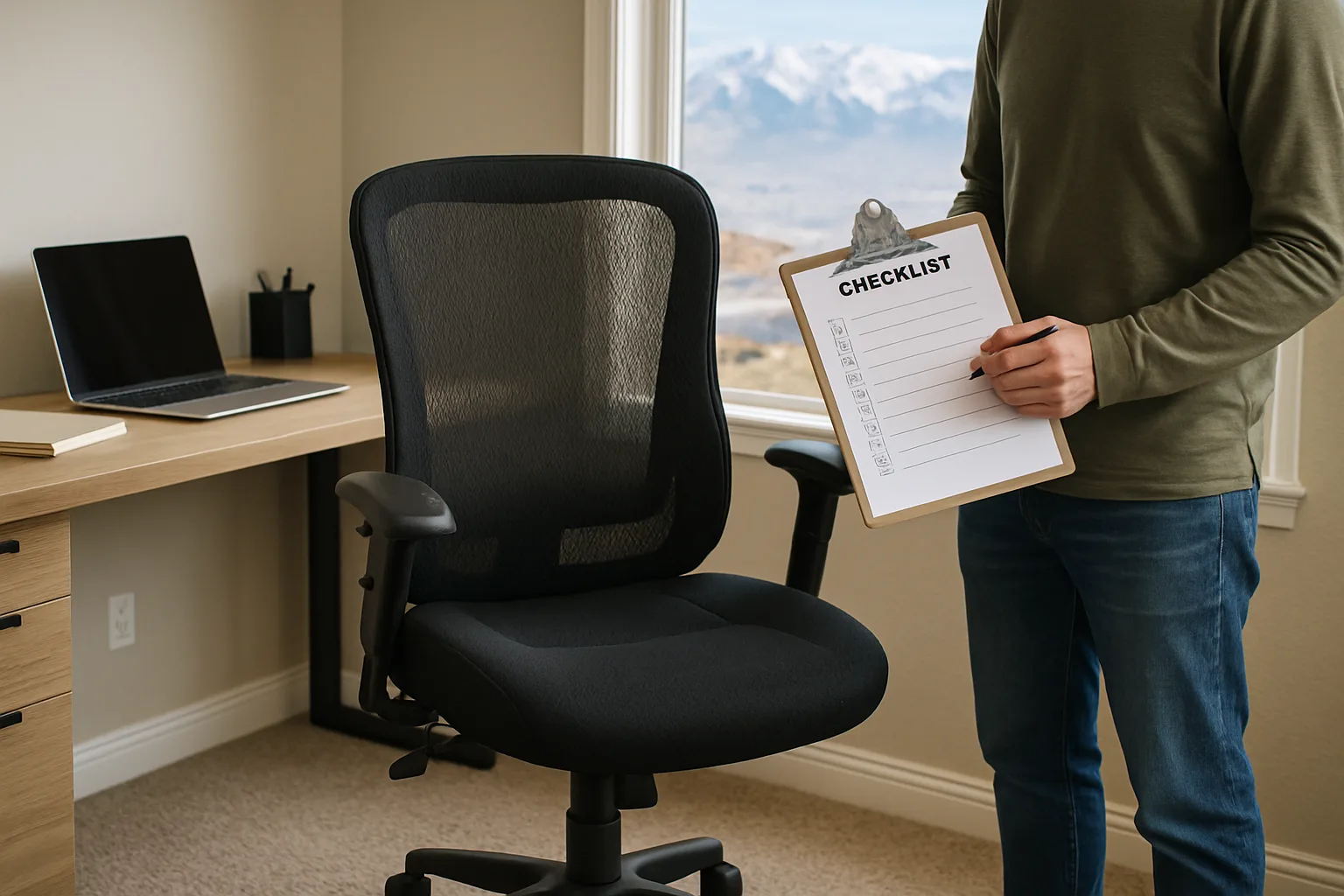
How to Choose a High-Quality Refurbished Office Chair for Your Home
A practical checklist for buyers considering a refurbished office chair for their home office, covering frame condition, cushioning, adjustment mechanisms, gas cylinders, casters, and what should be replaced during professional refurbishment.
Creating a comfortable home office is an important part of making a home more practical and functional. Whether the workspace occupies a separate room, a spare bedroom, or a quiet corner of the living area, the furniture chosen for it can affect both comfort and the overall interior.
For homeowners looking to improve their workspace without completely redesigning the room, refurbished office chairs can be a practical option. They may offer durable construction and useful ergonomic features while allowing buyers to update their home office furniture more affordably.
Resources from OfficeLogixShop can help buyers understand what professional refurbishment should involve. A properly refurbished chair should offer more than a clean appearance. It should be inspected, cleaned, repaired when necessary, and tested so that its important ergonomic and mechanical features work as expected.
Knowing what to check before buying can help prevent disappointment. A chair may look almost new and fit perfectly into a home office while still having worn components underneath. This kind of attention to detail matters just as much when you're preparing a home to feel more appealing or simply upgrading a room you use every day.
What Does High-Quality Refurbishment Actually Involve?
A refurbished office chair has already had a previous life. That is not necessarily a problem. Many premium office chairs are designed with durable frames and mechanical systems, which can allow them to remain useful for many years. The important question is what happened to the chair before it was offered again.
A proper refurbishment may include:
A detailed inspection of the chair
Deep cleaning of visible and hidden areas
Repair of usable components
Replacement of worn parts
Cosmetic restoration
Testing of adjustment mechanisms
A final quality inspection
Simply cleaning a used chair and placing it back on the market is not the same thing as professional refurbishment.
For a home office, this distinction matters. Furniture should not only look appropriate in the room but also remain comfortable and reliable during regular use.
Start With the Overall Condition
Before looking closely at individual components, take a moment to assess the chair as a whole.
Does the frame look solid? Are there obvious cracks or serious damage? Does the chair feel stable when you sit in it?
Normal signs of previous use, such as small scratches or minor cosmetic marks, do not necessarily indicate poor quality. Some surface wear can be expected with refurbished furniture.
What matters more is whether the chair's structure and important functions remain reliable.
Area | What to Check |
Frame | Stability, cracks, and major damage |
Seat | Cushion condition and support |
Backrest | Proper movement and structural condition |
Armrests | Stability and adjustment |
Base | Strength and overall condition |
Casters | Smooth movement |
Mechanisms | Proper adjustment and operation |
A chair that passes these basic checks is worth examining more closely. It is also helpful to consider whether its size works with the home office. A large chair can make a small room feel crowded, while a more compact model may fit better into a bedroom or smaller workspace — a consideration worth pairing with general tips for sizing furniture to a room before you buy.
Inspect the Seat and Cushioning
The seat has a major effect on everyday comfort. Even a premium chair can become uncomfortable if its foam has become compressed after years of use.
Press gently across different areas of the seat. It should feel reasonably even rather than having noticeably weak or flattened sections.
For a professionally refurbished chair, worn seat foam may be replaced. Fresh cushioning can help restore the supportive feel associated with the original chair.
Also pay attention to the seat's surface. Upholstery or mesh should be clean and free from serious damage. Small cosmetic imperfections may be acceptable, but significant tears or weakened material can affect durability.
In a home office, comfort is especially important because a chair that looks good in the interior may still be unsuitable for several hours of daily use.
Check the Backrest and Lumbar Support
A chair's backrest should provide consistent support without feeling unstable. Move it through its normal range of motion and check whether it responds smoothly.
Lumbar support deserves particular attention. Depending on the chair model, this component may be fixed or adjustable. If it is adjustable, make sure it moves correctly and stays in place.
A quality refurbished chair should provide dependable lower back support rather than simply looking clean from the outside.
Important features to examine include:
Backrest stability
Lumbar support position
Adjustment range
Mesh or upholstery condition
Connection between the backrest and frame
These features can make a noticeable difference when designing a home office intended for regular work.
Test Every Adjustment Mechanism
One of the easiest ways to identify a well-refurbished chair is to test its moving parts. Do not just sit down and assume everything works. Try each available adjustment.
Check whether the chair allows you to:
Raise and lower the seat
Adjust the armrests
Change the seat depth, if available
Adjust lumbar support, if available
Recline or tilt
Lock or release the appropriate mechanisms
The controls should work smoothly without excessive resistance, unusual noises, or unexpected movement.
Reliable adjustments can also make it easier to fit the chair into a home workspace. Different desk heights and room layouts may require changes to the seating position, so properly functioning mechanisms are important.
Why the Gas Cylinder Matters
The gas cylinder is responsible for seat height adjustment. If it is worn, the chair may slowly sink or fail to stay at the desired height.
A quality refurbishment may include the installation of a new gas cylinder when the original component is no longer reliable. This can restore smooth height adjustment and improve the chair's long-term performance.
Although it is not one of the most visible parts of the chair, it is important for everyday comfort. A properly adjusted chair can work more effectively with the desk and the overall home office setup.
Don't Ignore the Casters and Base
The chair's base and casters handle a surprising amount of daily stress. Every time someone moves the chair, these components are working.
Roll the chair across the floor and pay attention to how the wheels behave. They should move smoothly without sticking or producing excessive noise.
Worn casters are commonly replaced during professional refurbishment. A fresh set can make the chair easier to move and improve its everyday usability.
The base should also remain stable when the user changes position. Any serious wobbling deserves further investigation.
When choosing a chair for a home office, it is also worth considering the flooring. Casters may perform differently on carpet, hardwood, laminate, or other surfaces.
Look at the Arm Pads
Arm pads may not seem like a major mechanical component, but they are used throughout the working day. Years of use can leave them cracked, worn, or uncomfortable.
Professional refurbishment may involve replacing worn arm pads with new components. This can provide a cleaner appearance and restore comfortable arm support. If the chair has adjustable armrests, test their full range before making a decision. For smaller home offices, armrest size can also affect how easily the chair fits underneath the desk.
Check the Cleaning Quality
A refurbished chair should be thoroughly cleaned rather than simply dusted.
Look closely at areas where dirt commonly collects, including:
Gaps around the back mesh
Seat pan
Tilt mechanism cover
Back frame
Chair base
Casters
Areas underneath the seat
Professional refurbishment may involve deep cleaning to remove built-up dirt from different chair components. Manual cleaning is also important because some narrow spaces and detailed surfaces require hands-on attention.
A clean chair is not automatically a high-quality refurbished chair, but poor cleaning can be a warning sign that the restoration process was limited. For furniture that will become part of a home interior, cleaning is particularly important.
Pay Attention to Cosmetic Restoration
A refurbished chair does not have to look factory-new. Small scratches can remain even after proper restoration, and cosmetic marks do not necessarily affect performance.
However, appearance still matters when the chair becomes part of a home office or interior design project.
Professional refurbishment may include cosmetic improvements to reduce visible scratches and surface wear.
The important distinction is between normal cosmetic wear and structural damage. A small mark on the frame is very different from a crack or damaged support component.
When choosing a chair, consider whether its appearance works with the rest of the room. The materials, shape, and overall design should complement the workspace without making it feel unnecessarily crowded or overly commercial.
Ask About What Was Replaced
When possible, find out which components were replaced during refurbishment. This information can tell you a lot about the chair's current condition.
Component | Reason It May Be Replaced |
Seat foam | Restores cushioning and support |
Lumbar support | Restores lower back support |
Arm pads | Improves comfort and appearance |
Gas cylinder | Restores smooth height adjustment |
Casters | Improves movement and usability |
The exact parts will depend on the chair's condition and model. Not every chair needs every component replaced. The important thing is understanding whether worn parts received appropriate attention during the refurbishment process.
A Final Quality Check Matters
After cleaning, repairs, and replacements, a refurbished chair should receive a final inspection. This is where its overall performance is checked before it reaches another user.
The final review should consider:
Comfort
Stability
Ergonomic support
Adjustment functions
Movement
Appearance
Durability
This final stage can help catch problems that might otherwise be missed during individual repairs. For a home office, this can provide additional confidence that the chair will be suitable for regular use rather than simply looking good in the room.
Common Mistakes Buyers Should Avoid
It is easy to get distracted by a low price or a chair that looks great in photographs. However, appearance alone does not tell the whole story.
Avoid these common mistakes:
Buying without checking the chair's functions
Ignoring the condition of the gas cylinder
Failing to test the casters
Assuming every refurbished chair has received the same level of work
Focusing only on cosmetic appearance
Not asking which components were replaced
Forgetting to consider whether the chair fits the available space
A little research can go a long way. When furnishing a home office, it is important to balance appearance with functionality. A chair should complement the interior, but it should also remain comfortable and reliable — much like getting the details right when staging any room with furniture that needs to feel both functional and inviting.
Final Thoughts
A quality refurbished office chair should be judged by much more than its appearance. The real test is how well its structure, cushioning, support systems, adjustment mechanisms, and moving parts perform.
For a home office, it is also worth considering how the chair fits into the overall space. Its size, appearance, and functionality should work with the desk, room layout, and surrounding interior. If you're setting up a home office as part of a larger move, it's also worth reviewing broader guidance like what to know before relocating to Utah or how to evaluate a Utah neighborhood before settling into a new house.
By checking the seat, backrest, lumbar support, armrests, gas cylinder, base, and casters, buyers can get a clearer picture of the chair's condition. It is also worth asking about the cleaning, repairs, replacement parts, and final testing that were completed.
When refurbishment is done properly, a previously used office chair can remain a comfortable and dependable piece of furniture for years to come. The key is knowing what to look for and understanding that genuine refurbishment is about restoring performance, not simply making an old chair look clean.
Frequently asked questions
How much cheaper is a refurbished office chair than a new one?
How long should a properly refurbished office chair last?
What's the difference between a refurbished and a used office chair?
Can a bad gas cylinder in an office chair be replaced instead of buying a new chair?
Is it worth buying a refurbished ergonomic chair sight unseen online?
What warning signs suggest a refurbished chair wasn't properly serviced?
Keep reading
More from the blog

Cold-Climate Heat Pumps: What Changed and What Still Matters

How to Choose the Right Coffee Table Size for Any Room
How to Maximize Your Heat Pump's Efficiency Year-Round