Common Roofing Problems After Heavy Rain and How to Prevent Them
Heavy rain can expose hidden roof weaknesses like leaks, flashing failure, and clogged gutters. Learn the warning signs, what to do after a storm, and how to prevent damage.
Common Roofing Problems After Heavy Rain and How to Prevent Them
A single storm can turn a roof that looked solid into one hiding a leak nobody notices for weeks. Utah homeowners often assume a roof is fine simply because nothing looks wrong from the driveway, but water intrusion rarely announces itself right away.
Water works into small gaps, follows the path of least resistance, and shows up later as a ceiling stain instead of an obvious drip. That's why a professional check matters after any significant rain event, and calling on experienced roofing services can catch problems long before they turn into a costly repair bill.
How Heavy Rain Affects Your Roof
Roofing materials are built to shed water, not sit under it for hours on end. Prolonged rain saturates shingles and softens underlayment, adding load to a structure already carrying its own. Older roofs feel this first, since asphalt granules wear thin and seals begin to crack.
On metal roofs, wind-driven rain can get behind loosened metal roofing screws, letting water travel under the panels instead of off them. Add a gutter system that can't keep pace with runoff, and water backs up under the roofline instead of draining away, which is often where serious damage starts. If you are weighing materials, see these types of metal roofing.
Common Roofing Problems After Heavy Rain
Prolonged rain can cause a variety of issues, each with different symptoms. Watch for the following signs to keep your roof intact and stable.
Roof Leaks
Leaks tend to occur around chimneys, skylights, and anywhere two roof planes meet in a valley. A cracked seal or a shingle knocked loose by wind gives water a direct route into the attic. A ceiling stain in just one room is usually the first sign something is wrong above it, sometimes accompanied by a faint musty smell.
Damaged or Missing Shingles
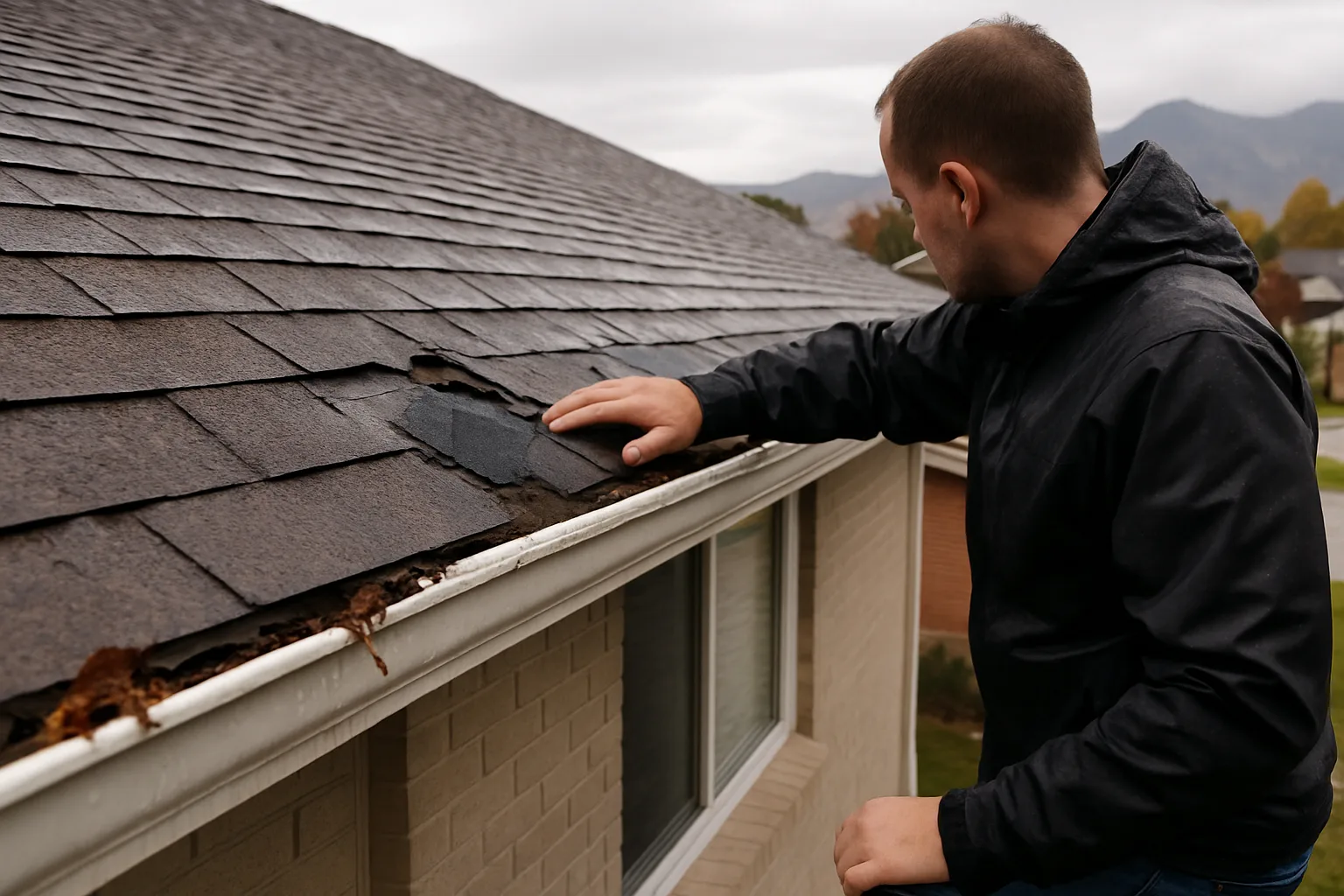
Strong wind with rain does more damage than either one alone. Shingles curl or crack at the edges once a seal breaks, and they don’t usually reseat properly on their own. A missing shingle doesn’t just look bad; it leaves the underlayment exposed to sun and water, so that patch of roof fails faster than the rest.
Clogged Gutters and Downspouts
Gutters packed with leaves or shingle grit can't move water fast enough during a downpour, so it spills over the edge and saturates the fascia board. Downspouts that dump water right next to the foundation create another problem, pushing moisture toward the crawlspace or basement. See our foundation repair and basement waterproofing guide for more.
Damaged Roof Flashing
Flashing seals the vulnerable joints around chimneys, vents, skylights, and valleys, but once it rusts or pulls away, the joints become entry points for water. For this reason, a rusty streak below a chimney is worth a closer look before the next storm.
Ponding Water
Flat and low-slope roofs are more prone to standing water after a downpour, especially when drains are undersized or partially blocked. Water sitting for more than 48 hours puts ongoing pressure on the membrane and speeds up wear in that spot. However, improving slope or adding a secondary drain usually solves it.
Roof Sagging
A visible dip in the roofline usually means moisture has been sitting in the decking for a while. As a result, wood swells and weakens, and it eventually loses its ability to hold shape. Sagging can point to a structural problem, so a professional should inspect it before anyone walks on that section of roof again.
Mold, Mildew, and Moisture Damage
Trapped moisture and warm attic air create an optimal environment for mold to grow. According to the EPA's guidance on mold and moisture control, materials are at risk within a day or two of becoming damp, which is why fixing the water source matters more than scrubbing the surface to get rid of cosmetic damage. Left alone, mold spreads into insulation and roof decking, often before any stain is visible.
Attic and Ceiling Water Damage
A ceiling stain rarely appears the moment a leak starts. By the time a ring shows up on the drywall, water has usually been going through insulation for a while, and a musty attic smell is often the clearest early warning. For what comes next, read what full water restoration covers.
Warning Signs Your Roof Needs Immediate Attention
Several signs point to a roofing problem serious enough to get an expert’s opinion:
● Water dripping inside the home
● Fresh stains on ceilings or walls
● Missing or damaged shingles in more than one spot
● A visible sag anywhere on the roofline
● Exposed roof decking
● Attic moisture that doesn't clear up
● Flashing that's cracked, rusted, or pulled loose
● Gutters overflowing during rainfall
What to Do After Heavy Rain
When it’s raining hard, take the following steps to prevent problems when it’s safe to do so. This will save you a headache and money in the long run, but it requires just a few simple checks.
Inspect From the Ground
Start with a walk around the exterior. Look up at the roofline for missing or out-of-place shingles, and check that gutters and downspouts are clear and draining properly. Climbing onto a wet roof isn't worth the risk; binoculars do the job just as well from the ground. Pairing your walkthrough with this roof inspection checklist keeps the process organized and less likely to miss a problem area.
Check the Attic
Grab a flashlight and look for damp insulation or dark spots on the underside of the decking. A musty smell is often noticeable before stains become visible, and daylight coming through anywhere it shouldn't is a clear red flag.
Document the Damage
Photos and video matter more than most homeowners realize, especially if you need to file an insurance claim. FEMA's guidance on post-storm cleanup recommends photographing both interior and exterior damage before starting repairs, which keeps a clear record for the claims process later. Label images by room or roof section so nothing gets mixed up.
Arrange a Professional Inspection
Some damage hides in places a homeowner can't safely reach or isn't trained to spot. An experienced roofer can catch soft decking or compromised flashing that looks minor from the ground but signals a roof that may need to be replaced. Getting ahead of it usually costs less than waiting for the next storm to decide.
How to Prevent Roofing Problems From Heavy Rain
Whether you live in a rainy climate or one that experiences fewer storms, heavy rain can happen. Take a look at the following handy tips to learn what to do ahead of bad weather.
Maintain Gutters and Downspouts
Clean gutters at least twice a year, and more often if trees overhang the roof. Confirm downspouts extend far enough to carry water away from the foundation instead of pooling against it.
Inspect and Maintain Roofing Materials
Replace shingles as soon as they show curling or cracking rather than waiting for a full section to fail. Flashing and roof penetrations must be inspected too, since a small gap there does more damage than a similar gap in the open shingle field.
Improve Roof Drainage
Always keep valleys and drain points free of leaves and debris year-round. If water repeatedly pools in the same spot, that points to a design issue rather than a maintenance one, and it needs a contractor's help.
Maintain the Attic and Ventilation
Balanced intake and exhaust ventilation keeps warm, moist air from lingering under the roof deck. Check insulation each fall and address any condensation before it becomes a bigger moisture problem.
Trim Nearby Trees
Overhanging branches scrape shingles when it’s windy and drop leaves that end up clogging gutters. A yearly trim, plus a look for storm-damaged tree limbs, protects the roof more than most homeowners expect from such a simple yard task.
When to Repair vs. to Replace Your Roof
The decision usually comes down to how much of the roof is affected and how old it is. Past 20 years, a roof with recurring leaks in different spots is often a better candidate for replacement than another round of patching. Planning ahead for unexpected repair expenses makes that decision easier to manage financially when it comes up, rather than being forced into an emergency expense.
Can Heavy Rain Cause Long-Term Roof Damage?
Yes, especially when minor leaks go unaddressed. Repeated moisture cycles rot roof decking and ruin insulation, and over time they threaten the structure supporting the roof itself. A single missed repair rarely causes a collapse, but a pattern of ignored leaks can compound quickly.
Choosing a Roofing Contractor After Storm Damage
Confirm licensing and insurance before signing a contract, and ask about experience with storm-related repairs rather than general roofing work. A reputable contractor provides a detailed written estimate and explains the scope of work in plain terms rather than focusing only on the total cost. Make sure to be wary of anyone pushing for an immediate decision or a cash deposit before any paperwork is signed.
Common Mistakes Homeowners Should Avoid
Following a storm, be very careful with how you handle the aftermath. Many homeowners come to regret certain actions, such as these:
● Climbing onto a wet or damaged roof, potentially risking your wellbeing
● Ignoring seemingly minor leaks, possibly leading to further problems
● Painting over a stain instead of finding its source, hiding the real damage
● Waiting until the next storm to deal with existing damage, while it compounds
● Cleaning gutters without checking that downspouts still drain, possibly ignoring the real extent of the issue
● Attempting repairs without a licensed professional’s help, making structural trouble worse
Seasonal Roofing Maintenance Checklist
A simple seasonal roof maintenance check keeps most rain-related problems from becoming a worse surprise later.
● Before rainy season: Inspect shingles, flashing, gutters, and drainage points
● During rainy season: Watch for leaks, attic moisture, and gutter overflow
● After major storms: Check for visible damage and signs of water intrusion
● Annually: Schedule a professional inspection, even without visible problems
Conclusion
Heavy rain has a way of revealing weaknesses a roof had all along, whether that's a worn seal or a gutter that can't keep up. Catching those issues early, through a ground-level check, a look at the attic, or a professional inspection, keeps a manageable repair from turning into a major one. When damage goes beyond what a visual check can confirm, working with a qualified roofing expert is the safer call. Buyers of older homes should also review this roof timeline guide for older Utah homes.
Frequently asked questions
Can heavy rain damage a roof?
How do I know if my roof is leaking after heavy rain?
Why is my roof leaking even though the shingles look fine?
How often should gutters be cleaned?
Should I repair or replace a roof after storm damage?
Keep reading
More from the blog

Essential Property Management Maintenance Tools for Landlords
Foundation Repair and Basement Waterproofing Guide

How Pergola Manufacturing Is Growing in the USA