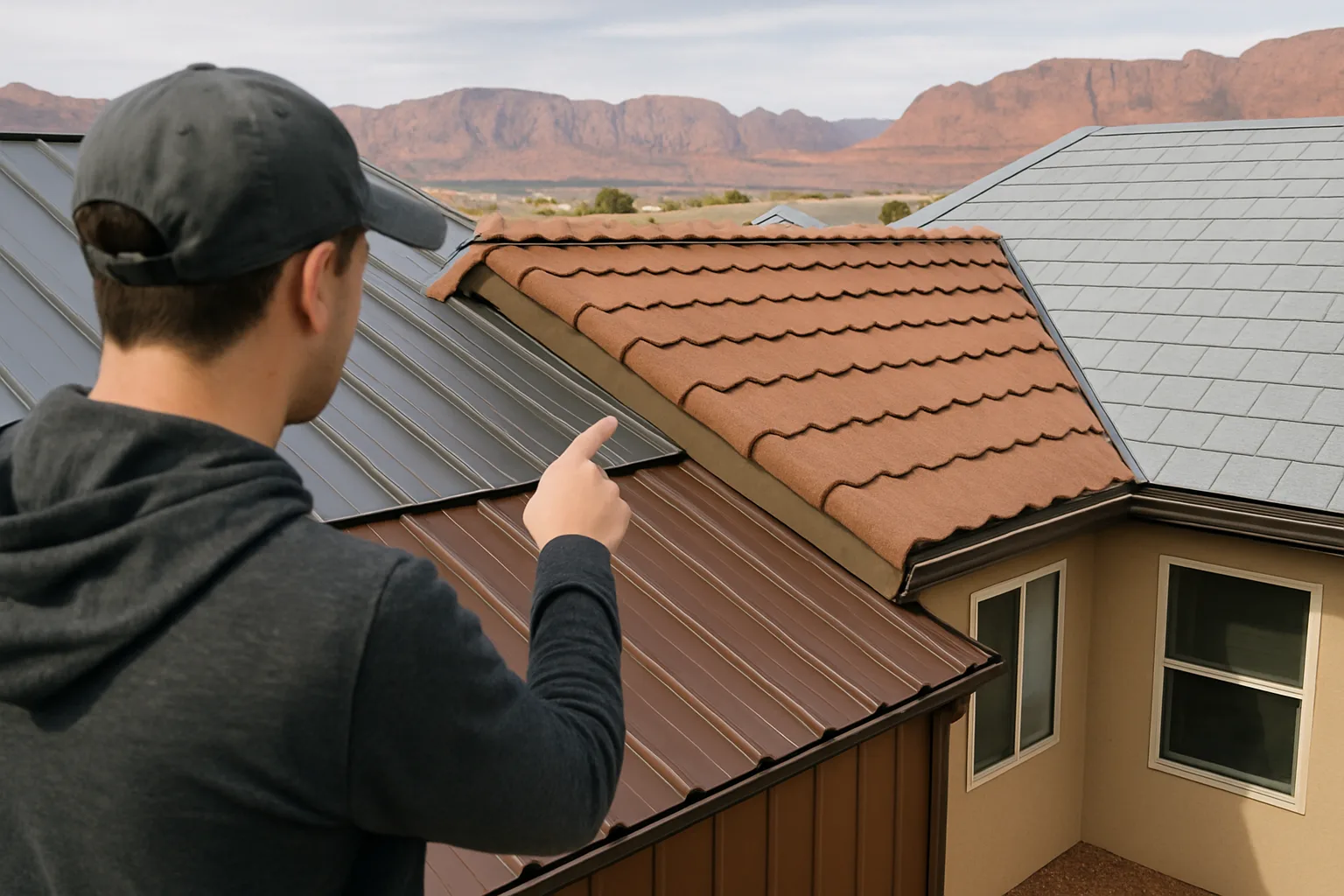
What Homebuyers Should Know About Different Types of Metal Roofing
Not all metal roofs are alike. This guide explains painted modular, standing seam, exposed-fastener, stone-coated, and aluminum roofs, and what buyers should verify before making an offer.
When you tour a home with a metal roof, the material visible from the street tells only part of the story. Two roofs that look alike can use different metals, coatings, panel profiles, and fastening systems. These differences affect appearance, inspection requirements, and maintenance needs.
Homebuyers do not need to become roofing specialists. Still, understanding the main types of residential metal roofing helps you ask better questions, interpret an inspection report, and notice missing documentation before you make an offer. If you are shopping for an older property, our roof timeline guide for buying an older Utah home is a useful companion.
Why the Type of Metal Roof Matters
“Metal roof” describes a broad category rather than a single roofing system. Residential metal roofs may be made from steel, aluminum, or other metals. They can have painted, granular, or natural finishes, and they may be installed as panels, shingles, tiles, or interlocking modules.
It is also important to separate the roofing material from the installation. Even a well-known product can develop problems if flashing, fasteners, underlayment, or drainage details were installed incorrectly. Conversely, an older system can remain functional when it was installed properly and maintained consistently.
When evaluating a home, consider three separate factors:
the roofing product and its materials;
the quality and condition of the installation;
the available maintenance and repair history.
Together, these give a clearer picture than the roof’s appearance alone.
Painted Modular Systems
Some homes use a painted modular metal roofing system, usually built from steel panels or interlocking modules with a factory-applied paint finish. Some modular designs resemble tile or slate, while others have a cleaner, linear profile suited to modern architecture.
When evaluating this type of roof, check color consistency across all planes, especially if the house has had partial repairs. Mismatched sections can indicate that replacement panels were added at different times. Pay close attention to edges, trim, and the points where panels meet walls or penetrations, since these are the locations most often affected by water.
If the seller has product, paint, installation, or warranty documentation, request copies before making an offer. These records can help determine whether later repairs used compatible components and whether any warranty coverage may transfer to the new owner.
Standing Seam and Exposed-Fastener Panels
Beyond tile-look products and modular systems, many homes have straight metal panels. Exposed-fastener panels are attached through the face of the panel, with screws visible on the surface. Standing seam panels have raised seams that interlock and conceal the fasteners. Each approach has trade-offs. Exposed fasteners are common and familiar to many contractors, while standing seam is often chosen for a cleaner appearance and a different maintenance profile.
For buyers, the practical question is maintenance. Exposed fasteners can loosen over time, and their washers or seals may need inspection or replacement. Standing seam roofs require attention at the seams and clips rather than at each screw. Neither type is inherently better. What matters is whether the installation was done correctly and whether the owner has kept up with routine checks.
Stone-Coated Roofing Systems
Owners who want the appearance of tile, shingles, or shakes may choose a stone-coated steel roof. This system typically uses formed steel components with mineral granules bonded to the exposed surface. The textured finish allows metal roofing to complement homes with traditional architectural styles.
From the ground, stone-coated roofing may be difficult to distinguish from conventional roofing. Listing photographs may not provide enough detail, so buyers should ask the seller or listing agent to identify the product and provide installation records when available.
During an inspection, the surface should be checked for uneven wear, damaged sections, exposed metal, and areas where the granular coating appears inconsistent. The inspector should also examine edges, valleys, flashing, and transitions between the roof and other building components.
Any previous repairs deserve attention. Replacement pieces may differ slightly in color or texture from the original installation. This does not automatically indicate a performance issue, but buyers should ask why the repair was needed and whether supporting documentation exists.
Aluminum and Other Metals
Aluminum roofing appears less often on residential listings than steel, but it is found on some homes, particularly in coastal areas and on specialty designs. Aluminum is generally resistant to corrosion, though its surface can still show wear, scratches, and fading.
Some properties may use other roofing metals or a combination of materials. Where different metals meet, compatibility matters. Certain combinations can react when exposed to moisture, potentially causing deterioration at fasteners, flashing, or connection points.
Homebuyers should avoid relying solely on listing descriptions. Terms such as “metal roof” or “premium roof” do not identify the specific metal, coating, fastening system, or installation method. Requesting installation records is the most reliable way to clarify what is actually installed.
What to Check Before Making an Offer
Start with documentation. Ask the seller or listing agent for:
the approximate installation date;
invoices, permits, and contractor information;
the manufacturer and product name;
records of inspections, maintenance, and repairs;
documentation for additions or roof penetrations;
written information about any applicable warranty.
Next, read the roof section of the inspection report carefully. Broad descriptions such as “appears satisfactory” provide limited guidance. Ask the inspector to explain the condition of the flashing, valleys, seams, fasteners, penetrations, gutters, and drainage components.
The attic can provide additional evidence. Ask the inspector to look for staining, moisture, damaged insulation, or signs of past repairs. A roof may look orderly from outside while still having unresolved issues beneath the surface.
Look at gutters and downspouts as well. Water-management problems may appear as overflowing sections, loose components, staining on fascia boards, or erosion near the foundation. These signs can help determine whether the complete roofing and drainage system is working as intended.
Finally, confirm which warranties, if any, transfer to the new owner. Obtain the documents in writing and verify their terms. General marketing claims about a product line do not establish coverage for the roof installed on a specific property. Storm history matters too; see how natural disasters damage your roof, and plan your budget with preparing your finances before buying a Utah home.
How to Use Manufacturer Information
Manufacturer websites can help homebuyers compare roofing materials, finishes, profiles, installation requirements, and warranty documentation. Resources from manufacturers such as Novatik roofing can help buyers understand how stone-coated and painted modular metal roofing systems differ in appearance, construction, and available profiles.
This information can also help buyers identify the roofing system installed on a property and prepare more specific questions for the seller, inspector, or roofing contractor. When available, product specifications, installation records, warranty documents, and maintenance history can be reviewed together to provide a more complete understanding of the roof before purchasing a home.
Conclusion
Metal roofs are not all the same. Knowing whether a property has painted modular roofing, standing-seam or exposed-fastener panels, a stone-coated steel system, or another material gives buyers a useful starting point for further questions.
The product type is only one part of the evaluation. Installation quality, repair history, current condition, and available documentation are equally important. A well-documented roof with a clear maintenance history is easier to assess, while an undocumented system deserves closer inspection before you commit to buying the home.
Frequently asked questions
What are the main types of residential metal roofing?
What is the difference between standing seam and exposed-fastener metal roofs?
What documents should I ask for when buying a home with a metal roof?
What should a home inspector look at on a metal roof?
Can I tell what type of metal roof a house has from listing photos?
Keep reading
More from the blog

Real Estate Agent Recruiting Companies: How to Choose
7 HOA Management Software Options for Self-Managed HOAs
How to Protect Concrete Floors from Damage and Stains