
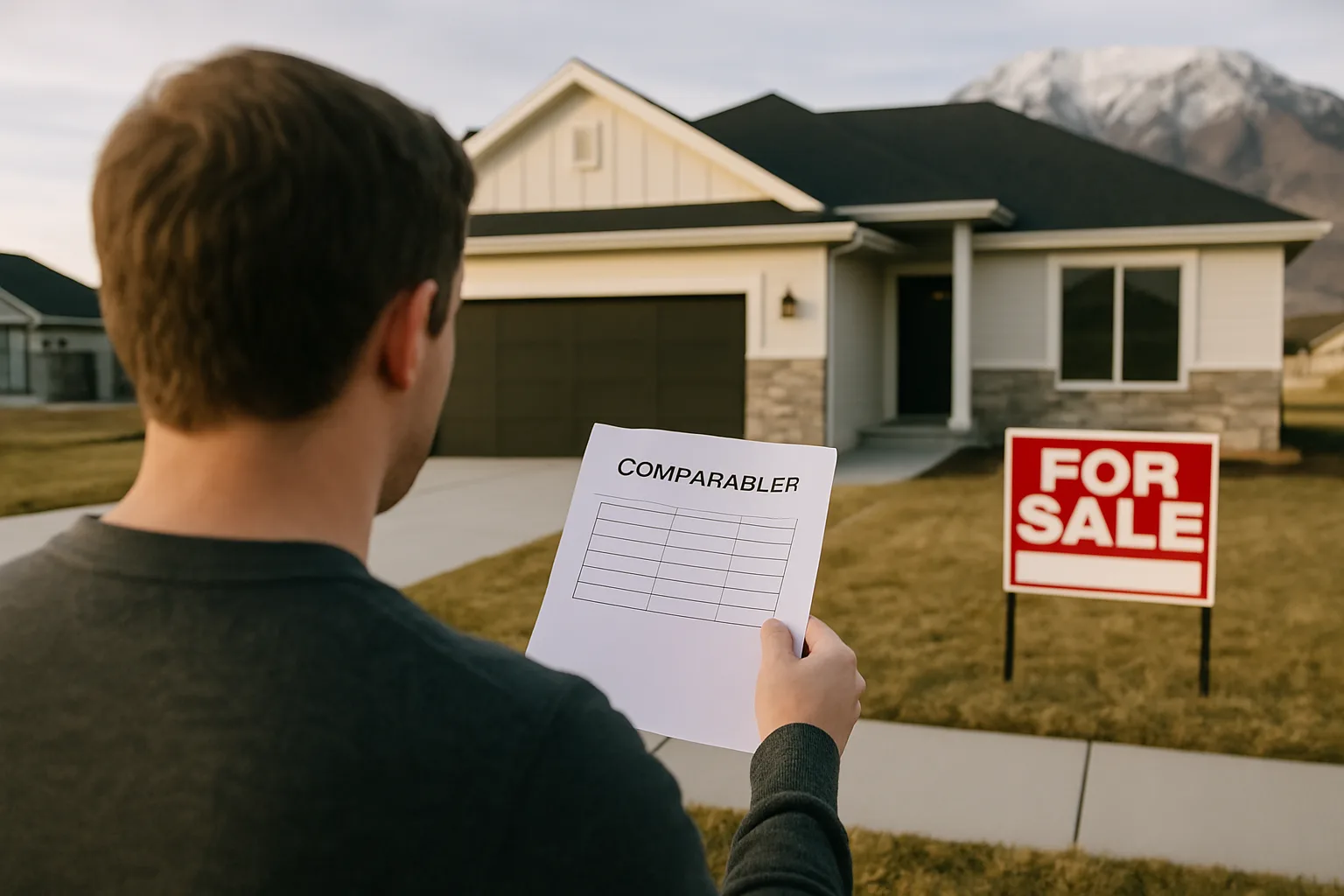
Why Comparable Home Sales Matter When Pricing Your Home to Sell
Setting the right asking price starts with comparable home sales. This guide explains what comps are, why current market data matters more than old expectations, and how they help both buyers and sellers avoid costly pricing mistakes.
Why Comparable Home Sales Matter During Pricing
It is vital to set the right price for a home listed for sale. It should be neither too high to scare off potential buyers nor too low to leave money on the table. Although it can be tempting to simply post the asking price based on personal preferences rather than current market conditions, it is not an easy task to determine the value of a home. A proper assessment should be made which considers evidence from the marketplace. The comparison of similar homes sold serves as an excellent basis for such evidence, for both buyer and seller.
Understanding Comparable Home Sales
Comparable home sales otherwise referred to as “comps” are homes that have been sold recently which possess characteristics similar to the one being appraised. They must be found close by and be approximately the same size, age, and condition. It is important to analyze sold rather than available homes because such data better represent what buyers are likely to pay for a particular house, not what the seller expects to gain from it.
The relevance of comparable sales lies in the fact that they create an understanding of how much something similar to the subject home has cost in a specific area. Each region is unique in terms of its characteristics, and the value of a house listed for sale may greatly vary from one buyer to another. This is why multiple comps are necessary to form a fair comparison, allowing for the consideration of different criteria and an adequate price range for the selected real estate. This is especially true across Utah, where county-level markets like Salt Lake County and Utah County can behave very differently from one another even a few miles apart.
Reflecting Current Market Conditions
Housing markets are constantly changing based on supply and demand, rates, and seasonal tendencies. The method of comparable sales helps to identify a snapshot of the market at a given time and is, therefore, crucial to identifying the value at which a home should be placed on the market. A home sold years ago is only a rough estimate of what the market will bear now. National coverage of mortgage rates and Utah inventory trends can also shift how comps should be weighted from one quarter to the next.
Using current comparables helps to see what the market truly prefers. If homes are selling quicker in a certain price range, that is a good indication that the market is in demand for those types of homes. If they are sitting on the market for long periods of time, it might be wise to reconsider pricing. Instead of working off of old expectations, a seller can use this knowledge to make better choices in pricing.
Supporting Accurate Pricing Decisions
A properly priced home from the get-go typically nets better interest from would-be buyers, including more active showings. Buyers are going to be much more amenable to seeing a place that's priced comparably, so as to get a strong return on their investment.
In addition, knowing why a home has sold for more or less than comparable homes will enable homeowners to know how to adjust accordingly, depending on what renovations have been made to the home, the square footage, the lot size and other relevant factors. Sellers weighing which upgrades are worth tackling before listing can review pre-sale home improvements worth doing before you list to understand which projects actually move comps in their favor.
Building Buyer Confidence
Buyers often compare several houses before making an offer, and many of them conduct their own research on comparable sales. If a buyer finds that the asking price is close to the prices of comparable houses, they will be reassured that they are getting a fair price. This, in turn, can lead to faster sales since fewer buyers are likely to hesitate.
It is common for professionals such as Oakville real estate agents to use comparable sales as a basis for their pricing advice to clients. Instead of working with subjective factors, realtors can help buyers and sellers make decisions based on objective evidence. As the article explains, using comparable sales can lead to more transparent negotiations and help everyone involved have realistic expectations about the final sale price since they will have seen the prices of similar houses.
Reducing Pricing Mistakes
The seller's overpricing of their house may result in losing interested buyers in the first weeks of advertising. After the house is put on the market, the potential buyer will think about why this is the asking price and whether there are any problems with the house. Thus, a number of price reductions of the house will be necessary, followed by the loss of profit for the seller.
A low price for a house can also be a disadvantage in the case of a bad seller's market where buyers will have little competition to choose their real estate. Despite the seemingly attractive price, the number of interested parties can still be small if several houses have become available at a similar price. By researching similar sales, sellers can eliminate the danger of low pricing of their houses.
Comparable home sales are among the best practices in valuing a home. They provide insight into market conditions and buyer behaviors. They also indicate pricing trends within a specific area. By analyzing recent transactions of comparable homes, not only do sellers have realistic expectations, but also buyers understand that the asking price is relevant to the market. Valuing homes using comparable sales is an effective method and should be used when pricing a home for sale.
Frequently asked questions
What exactly counts as a comparable home sale or comp?
How many comparable sales should a seller look at before pricing a home?
Why do home prices vary so much between Utah counties?
Can a home be priced too low even in a slow market?
How often should comparable sales data be updated during a listing period?
Do renovations always show up in comparable sale prices?
Keep reading
More from the blog
Utah Property Taxes: How Your Assessed Value Really Gets Set
Why Identical Houses Get Different Property Tax Bills

Your First Month in a New Utah Home: A Fall Settling-In Guide