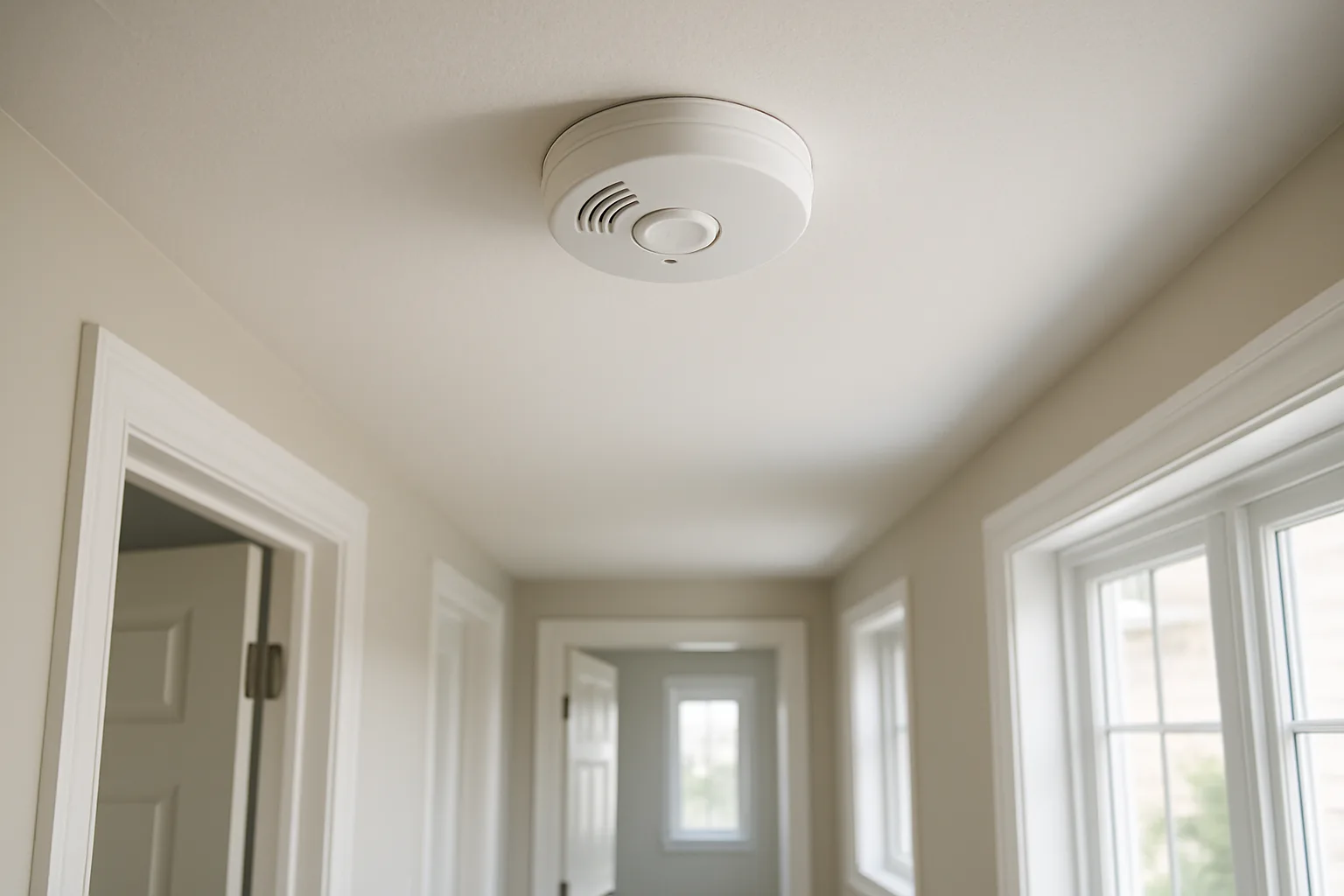
Smoke and CO Alarms: Photoelectric vs. Ionization, Kidde vs. X-Sense
Photoelectric vs. ionization smoke alarms, what a UL-listed CO alarm won't catch, low-level CO monitors, and Kidde vs. X-Sense picks for hardwired homes.
Most homes have smoke alarms. Fewer people know which kind they have, or what their carbon monoxide alarm is actually built to catch. The two common smoke sensors react to different fires. One of them sets off false alarms over toast, which is often why an alarm ends up in a drawer without its battery. A standard CO alarm is designed to stay quiet at low levels that can still make people sick.
This guide covers photoelectric vs. ionization smoke alarms, what the UL listing on a CO alarm really promises, and when a low-level CO monitor is worth adding. It also covers why the test button doesn't prove an alarm works, plus three alarms that suit most homes.
Quick verdict
- Replacing hardwired smoke alarms: the Kidde 20SAR Hardwired Smoke Alarm. A photoelectric alarm that runs on house power with AA backup and can interconnect with other Kidde hardwired alarms.
- Hardwired smoke plus CO in one unit: the Kidde 30CUAR Hardwired Smoke and CO Alarm. Put it in hallways outside bedrooms and on levels with gas appliances.
- No wiring, every alarm sounds together: the X-Sense SC07-W Smoke and CO Alarm 3-Pack. Battery alarms with a 10-year sealed battery, a CO display and wireless interconnection without Wi-Fi.
The alarms side by side
| Alarm | Shop | Detects | Smoke sensor | Power | Interconnect | Display |
|---|---|---|---|---|---|---|
| Kidde 20SAR Hardwired Smoke Alarm |  View on Amazon | Smoke | Photoelectric | 120V hardwired, AA battery backup | Wired, with other Kidde alarms | No, LED status light |
| Kidde 30CUAR Hardwired Smoke and CO Alarm |  View on Amazon | Smoke and carbon monoxide | Photoelectric | 120V hardwired, AA battery backup | Wired, with other Kidde alarms | No, LED status light |
| X-Sense SC07-W Smoke and CO Alarm 3-Pack |  View on Amazon | Smoke and carbon monoxide | Photoelectric, with an electrochemical CO sensor | 10-year sealed lithium battery | Wireless, no Wi-Fi or hub needed | Yes, LCD with CO reading |
For hardwired homes
Kidde 20SAR Hardwired Smoke Alarm
A hardwired photoelectric alarm with AA backup, designed to tell cooking smoke and steam from real smoke, that interconnects with other Kidde alarms.
- Photoelectric
- 120V with AA backup
- UL 217, 10th Edition
Good for
- Replacing hardwired smoke alarms
- Bedrooms
Skip it if
- Levels with gas appliances (it's smoke only)
Photoelectric vs. ionization smoke alarms
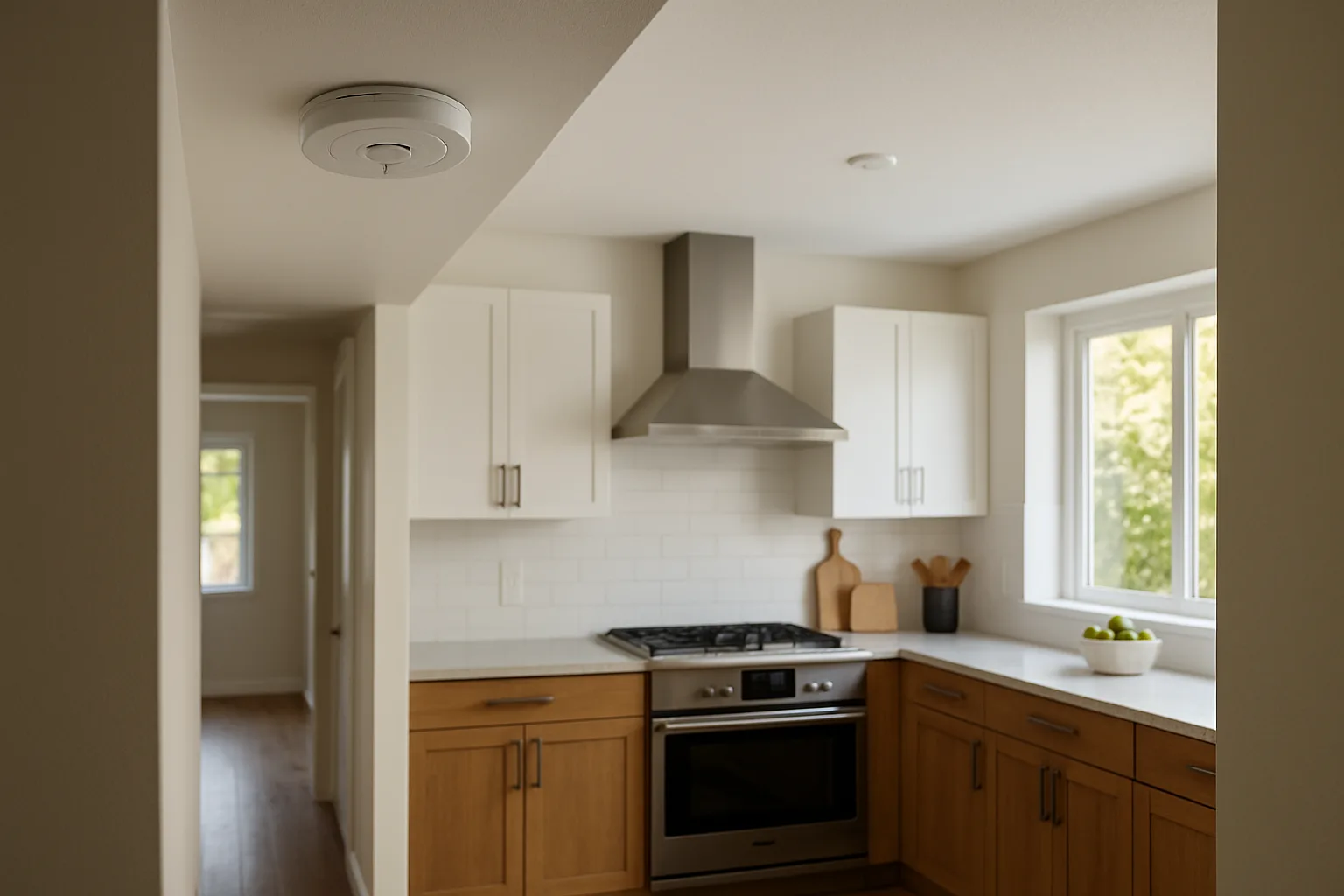
How each one senses smoke
An ionization alarm holds a tiny amount of americium-241 between two charged plates. The radiation lets a small current flow across the air gap. Smoke particles interrupt that current, and the alarm sounds. The radiation can't get through the plastic case, so it isn't a health risk.
A photoelectric alarm has an LED and a light sensor in a dark chamber, arranged so the sensor can't see the LED. When smoke enters, the particles scatter light onto the sensor. Most check a few more times before sounding, so a speck of dust doesn't set them off.
Which fires each one catches first
Ionization sensors are very sensitive to the tiny, often invisible particles from flames. That makes them a little faster on a fast, flaming fire, usually by seconds rather than minutes. They are poor at sensing the large, visible particles of a smoldering fire: a cigarette in a couch cushion or wiring heating inside a wall. In a smoldering fire, a photoelectric alarm can sound far earlier, sometimes long before an ionization alarm reacts at all.
Most house fires start slowly, and smoke inhalation causes many fire deaths. The extra warning a photoelectric alarm gives in a smoldering fire can matter more than the few seconds an ionization alarm saves in a flaming one.
Nuisance alarms are a safety problem
The ionization sensor's sensitivity to fine particles is also why it goes off over toast, a hot oven or a seared steak, especially near a kitchen or an air return. Repeated false alarms lead people to pull the battery or take the alarm down, and a disabled alarm protects no one. Swapping an ionization alarm near a kitchen for a photoelectric one usually ends the false alarms. Newer photoelectric alarms such as the Kidde 20SAR are also designed to tell everyday cooking smoke and steam from a real fire.
What about dual-sensor alarms?
The National Fire Protection Association recommends using both technologies, either as separate alarms or as dual-sensor units, because each is faster for a different kind of fire. The catch with dual-sensor alarms is that manuals rarely say how the two sensors combine. An alarm that waits for both to agree is only as fast as its slower sensor. If you want ionization coverage too, a separate ionization alarm placed away from the kitchen gives you both, without the cooking false alarms.
How to tell which kind you have
Take the alarm off its base and check the label. An ionization alarm sold in the U.S. usually carries a notice about americium-241. Many photoelectric alarms don't say anything on the unit itself, only on the box. Combination units usually say they have both sensors. If the label says the alarm is more than 10 years old, replace it no matter which type it is. The 10-year rule is about aging electronics, not the sensor.
What a UL-listed CO alarm does and doesn't do
It's built to stay quiet at low levels
Household carbon monoxide alarms are listed to the UL 2034 standard, which sets a window for when an alarm must sound. Too early counts as a failure, just like too late. At 400 parts per million (ppm), it must sound within 4 to 15 minutes. At 150 ppm, within 10 to 50 minutes. At 70 ppm, it can wait 60 to 240 minutes. Those delays keep a whiff of car exhaust or a burner lighting from setting off false alarms. They also mean an appliance that cycles on and off can keep a home at a low, steady CO level without the alarm ever sounding.
The manuals say so directly. A standard CO alarm is meant to prevent dangerous, acute exposure. It may not protect people with heart or lung conditions, pregnant people, infants or older adults from lower levels. Low-level CO poisoning feels like the flu: headaches, nausea and fatigue. It shows up in winter, when furnaces, water heaters and fireplaces run the most. Tight, well-sealed homes hold CO in longer.
How listed alarms behaved in a CO-filled bag
With Kidde, First Alert and X-Sense alarms sealed in a bag with carbon monoxide, all three listed alarms eventually sounded. The last one took about 23 minutes, by which point the bag held roughly 300 to 360 ppm. A non-listed low-level monitor was the first to alarm, at about 29 ppm. The X-Sense showed a CO reading on its screen within about three minutes but was the last to sound, exactly as the standard allows. A digital readout is a real advantage: it shows a low reading long before the alarm is allowed to go off.
When to add a low-level CO monitor
Low-level monitors can flag readings as low as about 5 ppm and alarm at much lower levels than a listed alarm. They make sense for homes with an infant, someone pregnant, an older adult, or anyone with heart or lung disease, especially with gas heat. Most aren't UL 2034 listed, and building codes require a listed CO alarm, so a low-level monitor adds to that alarm rather than replacing it.
If any CO alarm sounds, don't pull the battery and assume it's faulty. Get everyone outside into fresh air and call 911 or the fire department from there. CO has no smell, so you can't check for it yourself.
Smoke and CO on house power
Kidde 30CUAR Hardwired Smoke and CO Alarm
The same hardwired photoelectric design with a carbon monoxide sensor added, listed to both UL 217 and UL 2034.
- Smoke and CO
- 85 dB
- Wired interconnect
Good for
- Hallways outside bedrooms
- Levels with gas appliances
Skip it if
- Seeing low CO readings (no display)
The test button only tests the horn
Pressing the test button checks the battery, the circuit and the horn, not whether the sensor can still see smoke. Professionals test commercial systems with canned aerosol smoke made for smoke alarm testing. The same products are sold for home use and are a better monthly or seasonal check. Spray a short burst at the alarm, wait for it to sound, and use the hush button to confirm it works too. Use only aerosol made for testing smoke alarms, not a lit candle or match held under a ceiling.
The picks in detail
Kidde 20SAR Hardwired Smoke Alarm: for hardwired homes
The 20SAR is a hardwired photoelectric smoke alarm on 120V power with two AA batteries for backup. It sounds an 85 dB alarm with a red LED. It's listed to UL 217 (10th Edition) and is designed to tell everyday cooking smoke and steam from real smoke. Kidde claims its front-facing sensor design detects smoke more than 25% faster than its earlier models. With canned smoke, the 20SAR sounded quickly and its hush button worked as it should. It connects by wire to other Kidde interconnect-capable alarms, so one alarm sets off the whole house. Kidde backs it with a 10-year limited warranty.
It's smoke only. Pair it with CO protection on any level with gas appliances or an attached garage.
For hardwired homes
Kidde 20SAR Hardwired Smoke Alarm
A hardwired photoelectric alarm with AA backup, designed to tell cooking smoke and steam from real smoke, that interconnects with other Kidde alarms.
- Photoelectric
- 120V with AA backup
- UL 217, 10th Edition
Good for
- Replacing hardwired smoke alarms
- Bedrooms
Skip it if
- Levels with gas appliances (it's smoke only)
Kidde 30CUAR Hardwired Smoke and CO Alarm: smoke and CO on house power
The 30CUAR adds a carbon monoxide sensor to the same hardwired, photoelectric design. It's listed to both UL 217 and UL 2034, and has the same 85 dB alarm and wired interconnect. Both Kidde alarms sounded when tested with canned smoke. It's a sensible replacement for the hallway alarm outside bedrooms, where both smoke and CO coverage matter most. It has no display, so you won't see a low CO reading before the alarm goes off. Pair it with a low-level monitor if someone in the home is at higher risk.
Smoke and CO on house power
Kidde 30CUAR Hardwired Smoke and CO Alarm
The same hardwired photoelectric design with a carbon monoxide sensor added, listed to both UL 217 and UL 2034.
- Smoke and CO
- 85 dB
- Wired interconnect
Good for
- Hallways outside bedrooms
- Levels with gas appliances
Skip it if
- Seeing low CO readings (no display)
X-Sense SC07-W Smoke and CO Alarm 3-Pack: interconnected without wiring
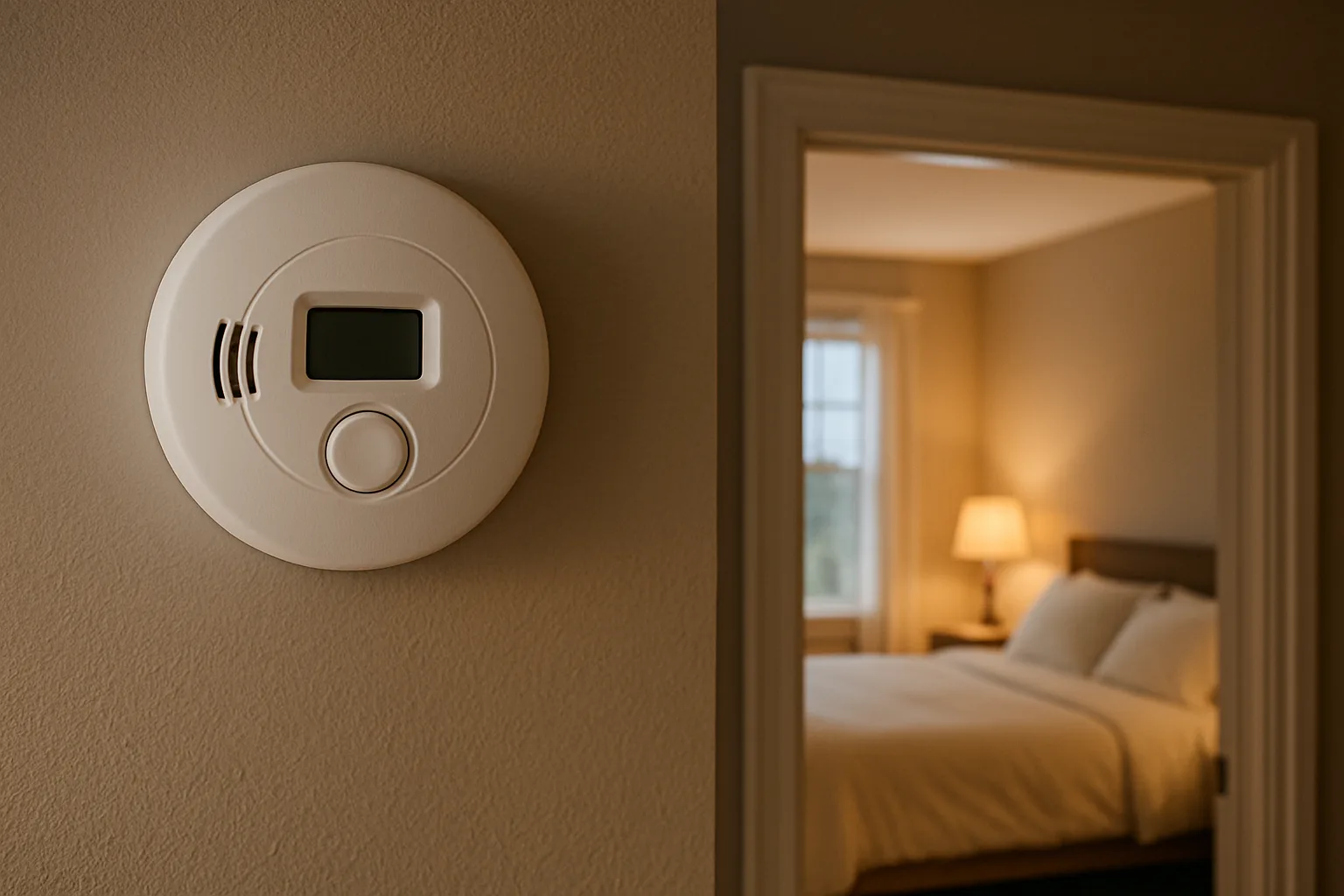
The SC07-W pairs a photoelectric smoke sensor with an electrochemical CO sensor and runs on a sealed lithium battery rated for 10 years. That means no battery swaps and no low-battery chirps at 2 a.m. Its LCD shows whether it's warning about smoke, CO or a low battery, and it displays the current CO reading. The alarms link wirelessly to each other without Wi-Fi, an app or a base station. When one sounds, they all sound, which solves the problem of not hearing a basement alarm from an upstairs bedroom. With the optional remote, you can silence the alarms that are only echoing while the one detecting smoke keeps sounding, so you can find the source.
The SC07-W has no Wi-Fi, so there are no phone alerts. X-Sense sells a Wi-Fi sibling (the SC07-MR with a base station) that adds app notifications and optional monitoring. Before replacing hardwired alarms with battery units, check local code. In many places, code requires a hardwired alarm to be replaced with a hardwired one.
Interconnected without wiring
X-Sense SC07-W Smoke and CO Alarm 3-Pack
Photoelectric smoke and electrochemical CO sensors on a sealed 10-year battery, with a CO display and wireless interconnection without Wi-Fi.
- 3 alarms
- 10-year sealed battery
- LCD with CO reading
Good for
- Older homes without hardwiring
- Renters
Skip it if
- Phone alerts (no Wi-Fi)
Where to put smoke and CO alarms
- Smoke alarms go inside every bedroom, outside each sleeping area and on every level, including the basement. Interconnect them so one alarm sets off all of them.
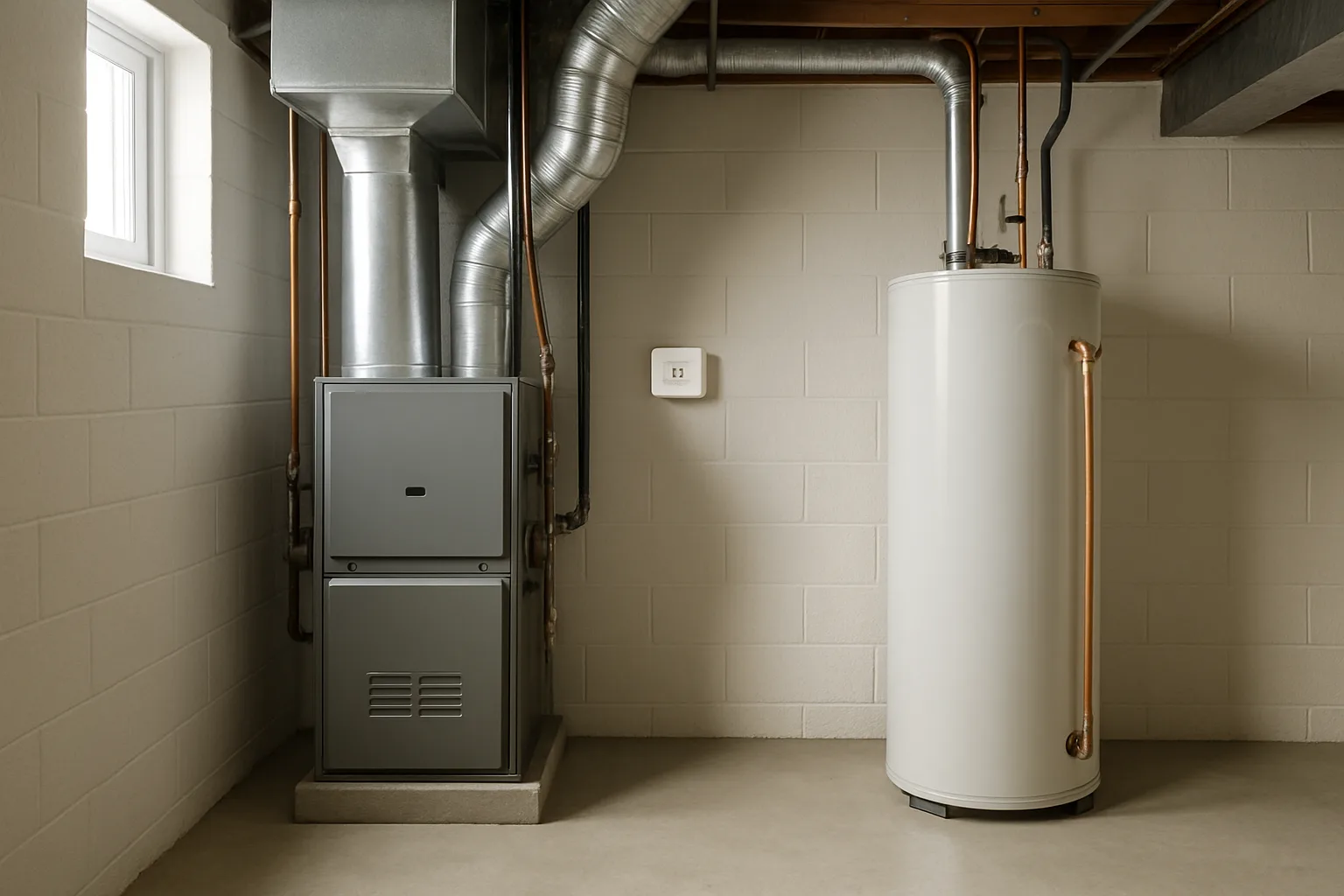
- CO alarms belong outside sleeping areas and on every level, especially levels with a furnace, water heater, fireplace or an attached garage. See the NFPA's carbon monoxide guidance for placement details.
- Keep smoke alarms away from the kitchen and bathrooms where steam and cooking smoke cause false alarms. Avoid spots right next to HVAC vents, which can blow smoke away from the sensor.
- Replace any alarm older than 10 years, and replace CO alarms when the end-of-life warning sounds.
Gas appliances are the usual CO sources. If you're replacing a water heater or running a fuel-burning garage heater, add CO coverage on that level.
Interconnected without wiring
X-Sense SC07-W Smoke and CO Alarm 3-Pack
Photoelectric smoke and electrochemical CO sensors on a sealed 10-year battery, with a CO display and wireless interconnection without Wi-Fi.
- 3 alarms
- 10-year sealed battery
- LCD with CO reading
Good for
- Older homes without hardwiring
- Renters
Skip it if
- Phone alerts (no Wi-Fi)
Who should buy which
- Homes with existing hardwired smoke alarms: Kidde 20SAR in bedrooms, Kidde 30CUAR in hallways and on levels with gas appliances.
- Older homes without hardwiring, or renters: the X-Sense SC07-W pack, so every alarm sounds together without running wire.
- Homes with an infant, someone pregnant, an older adult or a heart or lung condition: any of these, plus a low-level CO monitor near bedrooms.
Replacing a Nest Protect, or want alerts on your phone? See the smart smoke and CO alarm guide.
Posted by Kristopher Larson
Frequently asked questions
Which is better, a photoelectric or an ionization smoke alarm?
Photoelectric alarms respond much sooner to slow, smoldering fires and cause far fewer false alarms from cooking. Ionization alarms are slightly faster to fast, flaming fires. The NFPA recommends having both technologies, either as separate alarms or dual-sensor units. If you only pick one type for areas near the kitchen, photoelectric is the practical choice.
How do I know if my smoke alarm is ionization or photoelectric?
Take it off the ceiling and read the label. Ionization alarms sold in the U.S. usually mention americium-241, the radioactive source inside. Many photoelectric alarms only state their type on the packaging, and combination alarms usually list both sensors.
Why didn't my carbon monoxide alarm go off at a low CO level?
Standard CO alarms are listed to UL 2034, which requires them to wait before sounding: up to 240 minutes at 70 ppm, and 4 to 15 minutes at 400 ppm. The delay prevents false alarms from brief exposures, but it means low, steady levels may never trigger the alarm. A low-level CO monitor or an alarm with a digital readout shows those levels sooner.
Are low-level carbon monoxide monitors worth it?
For homes with an infant, someone pregnant, an older adult or anyone with heart or lung disease, especially with gas appliances, they can be. They alert at much lower levels than a standard alarm. Most aren't UL 2034 listed, though, so keep a listed CO alarm as well to meet code.
How often should smoke alarms be tested and replaced?
Press the test button monthly to check the horn and battery, and use canned smoke made for alarm testing now and then to check that the sensor itself responds. Replace any smoke alarm that is 10 years old or that fails a test. Replace CO alarms when the end-of-life warning sounds.
Can I replace hardwired smoke alarms with wireless battery alarms?
Check your local code first. Many places require a hardwired alarm to be replaced with a hardwired one. Wireless interconnected battery alarms work well in homes without wiring for alarms, or as extra coverage on top of an existing hardwired system.
Keep reading
More from the blog
Best Jump Starter: NOCO vs. Wolfbox vs. Avapow vs. Gooloo

Best Waffle Maker: Presto FlipSide vs. Bella vs. Cuisinart vs. Dash Mini
Best Rowing Machine for Home: Concept2 vs Hydrow vs Aviron