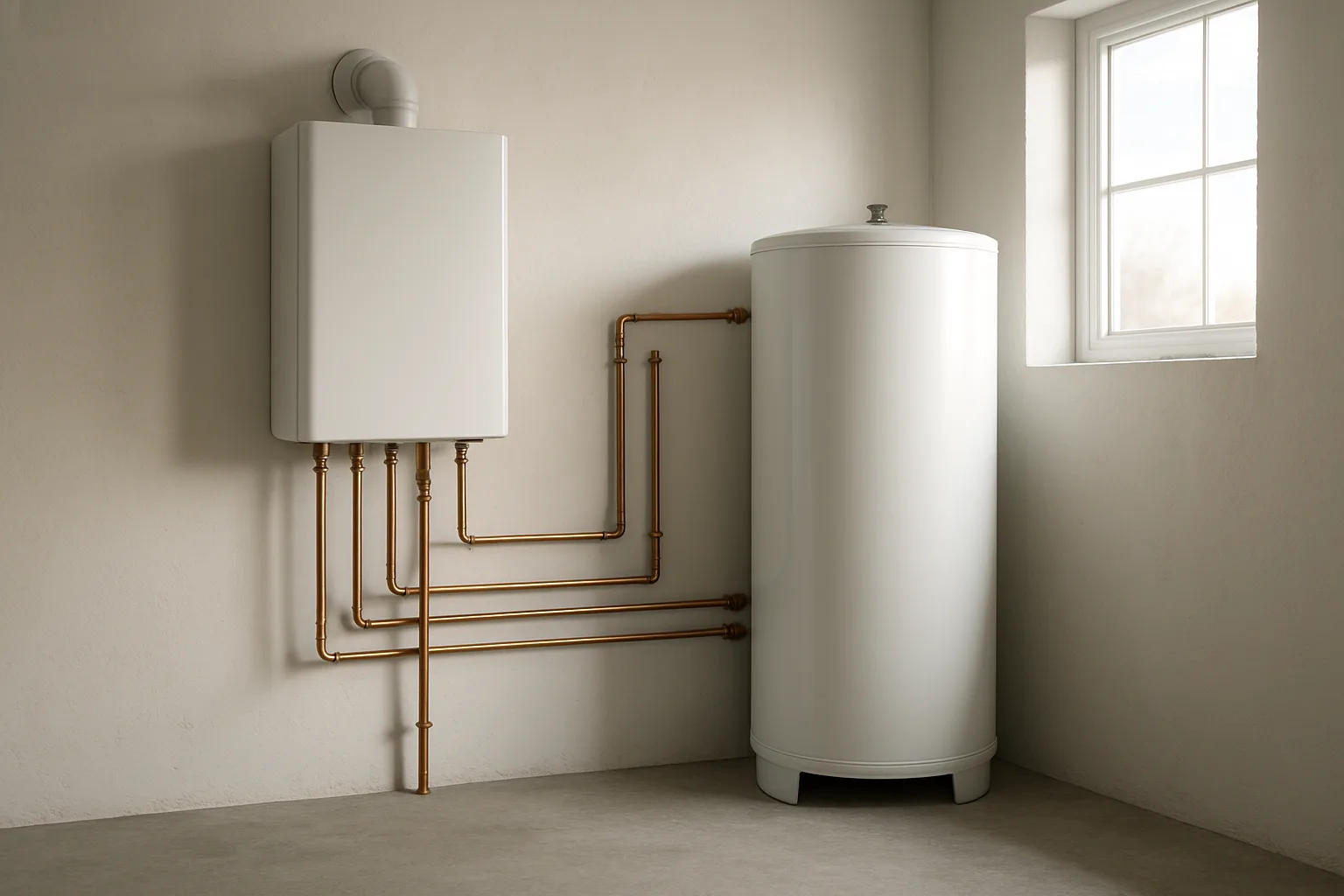
Tankless vs. Tank Water Heater: Real Savings, GPM Sizing, and Rinnai vs. EcoSmart vs. Stiebel Eltron
How much tankless really saves, how to size by GPM and temperature rise, gas vs. electric install needs, and Rinnai, EcoSmart and Stiebel Eltron picks.
When a water heater fails, most households replace it with whatever was there before, often the same day. That is the moment the tank-versus-tankless question actually gets decided, so it helps to know the answer beforehand. A tankless (on-demand) heater can save energy and lasts longer, but it costs more to install, needs the right gas line or electrical service, and only delivers as much hot water per minute as it is sized for.
This guide compares the two on energy use, cost and lifespan, shows how to size a tankless unit by flow and temperature rise, and covers where Rinnai, EcoSmart, Stiebel Eltron and a small Bosch mini-tank fit.
As an Amazon Associate, Best Utah Real Estate earns from qualifying purchases.
Quick verdict: tank or tankless?
- Keep a tank if the budget is tight, the house has an older electrical panel, or several showers and appliances often run at once. A standard tank (or a heat pump tank) is simpler to swap in.
- Go tankless with gas if the house already has natural gas or propane and a line that can carry about 199,000 BTU. A condensing unit such as the Rinnai RX199iN covers most family homes.
- Go tankless with electric only with ample panel capacity and a warmer incoming water supply. The EcoSmart ECOS 27 and Stiebel Eltron Tempra 24 Plus are the common whole-house choices.
- Fix one slow faucet with a point-of-use heater like the Bosch Tronic 3000 T 4-gallon mini-tank under the sink, instead of replacing the main heater.
Tank vs. tankless at a glance
| Storage tank | Gas tankless | Electric tankless | |
|---|---|---|---|
| How it heats | Keeps 40 to 80 gallons hot around the clock | Burner fires when a tap opens | Elements switch on when a tap opens |
| Hot water limit | Runs out when the tank empties | Unlimited, up to its GPM rating | Unlimited, up to its GPM rating, lower in cold climates |
| Standby heat loss | Yes | No | No |
| Typical lifespan | About 10 to 15 years | 20 years or more | 20 years or more |
| Install needs | Usually a direct swap | Larger gas line, new venting, a 120V outlet | Large dedicated circuits, often a 200-amp panel |
| Upfront cost | Lowest | Highest | Medium, plus any electrical upgrade |
Lifespan ranges are planning estimates from Department of Energy and ENERGY STAR materials. Water quality and maintenance move them in either direction.
How much energy does tankless really save?
The savings come from eliminating standby loss, the heat a tank loses keeping water hot that nobody is using. Department of Energy figures put the gain at roughly 24 to 34 percent for homes using 41 gallons of hot water a day or less, falling to about 8 to 14 percent for homes using around 86 gallons a day. The more hot water a household uses, the smaller the share standby loss represents, so a large family sees a smaller percentage benefit than a couple.
In dollar terms, that usually means a payback measured in many years, because the installed cost of a gas tankless system is often well above a tank replacement once venting and gas piping are included. A simple check: divide the extra installed cost by the expected monthly savings. When a household saves a modest amount each month but pays several thousand dollars more up front, break-even can take a decade or longer, close to the life of the unit. Two things improve that math. The first tankless install carries the one-time costs of a larger gas line, new venting and a circuit, so the next replacement is close to a straight swap. And owners who flush the unit themselves avoid an annual service call. The stronger arguments for tankless are still endless showers, a smaller footprint and a longer service life. Buyers chasing the lowest operating cost on electricity should also look at a heat pump water heater, which ENERGY STAR rates far above standard electric tanks; it needs a space that stays between 40 and 90 degrees and plenty of surrounding air.
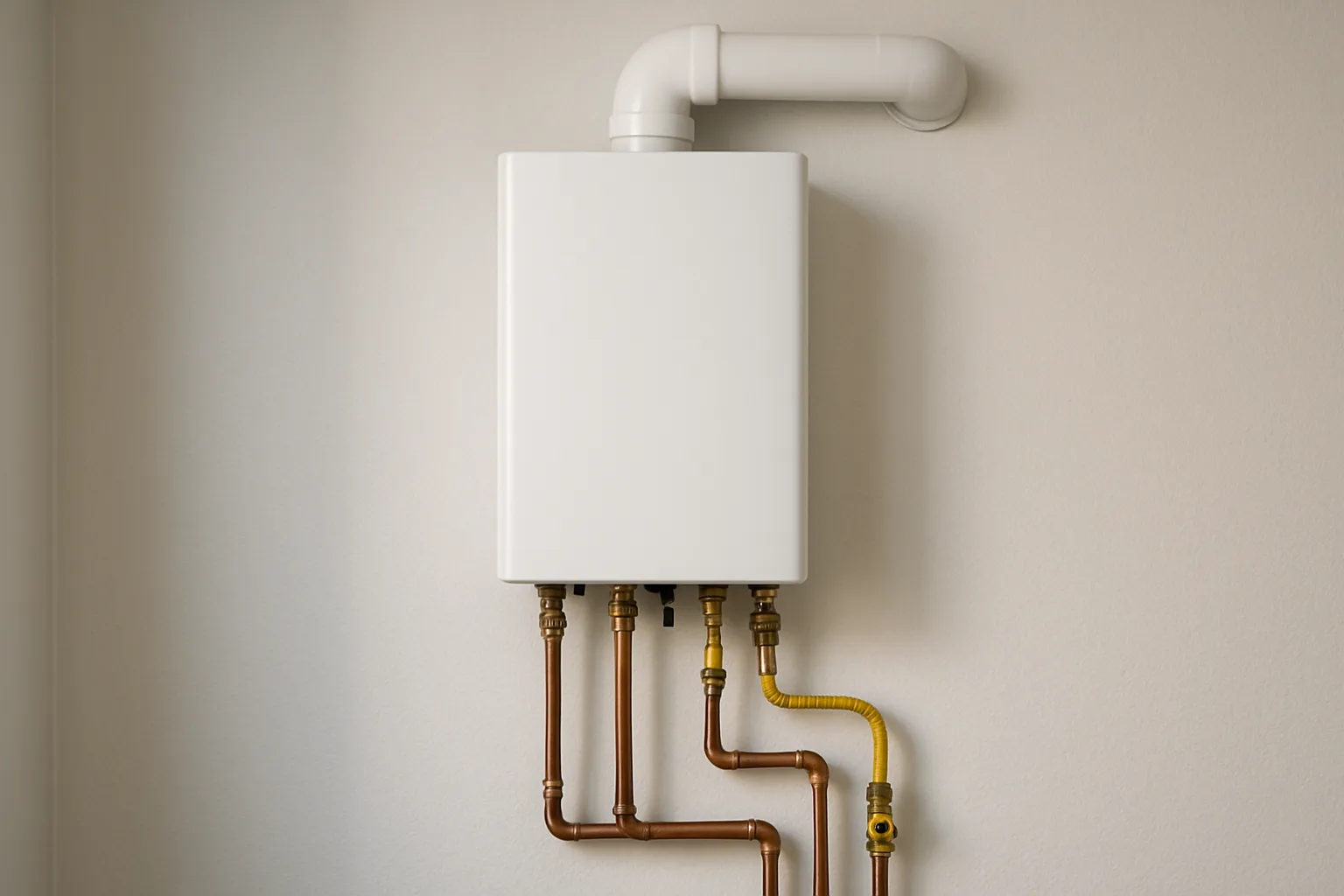
How to size a tankless water heater
Tank heaters are sized by gallons stored. Tankless heaters are sized by gallons per minute (GPM) at a given temperature rise, and both numbers matter.
Step 1: add up the flow that runs at the same time
ENERGY STAR lists average flows of about 2.5 GPM for a shower or tub, 3.3 GPM for a clothes washer, 2.2 GPM for a sink and 1.3 GPM for a dishwasher. Two showers running together need about 5 GPM. Low-flow showerheads cut that number, and many current models flow 2.0 GPM or less.
Step 2: find the temperature rise
The rise is the difference between incoming water temperature and the target, usually about 120 degrees at the tap. Groundwater in northern states can arrive near 40 degrees in winter, an 80-degree rise. In the southern states it may be 60 to 70 degrees, a 50- to 60-degree rise.
Step 3: check the heater's output at that rise
A quick rule: GPM equals the heater's output in BTU per hour divided by 500 times the temperature rise. A 27 kW electric unit produces roughly 92,000 BTU per hour, which works out to about 2.6 GPM at a 70-degree rise but about 4 GPM at a 45-degree rise. A 199,000 BTU condensing gas unit at around 95 percent efficiency delivers about 5.4 GPM at the same 70-degree rise. That gap is why whole-house electric tankless works well in warm climates and struggles in cold ones, and why gas units dominate in colder regions. ENERGY STAR's tankless criteria require at least 2.8 GPM at a 67-degree rise.
The picks in detail
Rinnai RX199iN (gas, condensing)
 Rinnai RX199iN Condensing Tankless Water HeaterCheck today’s price on AmazonBuy on Amazon →
Rinnai rates the RX199iN at 199,000 BTU, a maximum flow of 11.1 GPM at low temperature rise, and a uniform energy factor (UEF) of 0.98, comfortably above ENERGY STAR's 0.95 minimum for gas tankless models. It runs on natural gas or propane, vents through 2-inch PVC or a concentric kit, and can go indoors or outdoors with Rinnai's vent cap. Its very low minimum flow helps with a common tankless complaint: a trickle of hot water at a bathroom sink not being enough to keep the burner lit. Rinnai recommends professional installation, and gas line sizing, venting and permits make that the realistic path.
EcoSmart ECOS 27 (electric)
 EcoSmart ECOS 27 Tankless Electric Water HeaterCheck today’s price on AmazonBuy on Amazon →
The ECOS 27 is a 27 kW, 240-volt unit drawing about 112.5 amps. EcoSmart's 27 kW models call for three 40-amp double-pole breakers with 8 AWG wire, which is more capacity than many older panels can spare. It modulates power to match the flow, so it only draws what the demand needs. Expect about two showers at once in a warm climate and noticeably less in winter where incoming water is cold.
Stiebel Eltron Tempra 24 Plus (electric)
 Stiebel Eltron Tempra 24 PlusCheck today’s price on AmazonBuy on Amazon →
Stiebel Eltron's Tempra 24 Plus is a 24 kW unit that draws about 100 amps on two 50-amp double-pole breakers. Its Advanced Flow Control trims the flow slightly when demand exceeds what the elements can heat, so the shower stays hot instead of turning lukewarm. Stiebel Eltron positions it for up to two bathrooms in warm climates and fewer in cool ones, which matches the math above.
Bosch Tronic 3000 T 4-gallon (point of use)
The ES4 is not tankless at all. It is a 4-gallon mini-tank that plugs into a standard 120-volt outlet under a sink, rated at 1,440 watts. It is the inexpensive fix for a kitchen or bathroom far from the main heater, delivering hot water in seconds while the main line warms up. It is also a practical partner to a tankless system, covering the short draws a tankless unit handles least gracefully.
Installation and maintenance realities
- Gas line. A tankless burner can need several times the gas flow of a tank heater, so the existing line, meter and regulator may need upsizing, and many jurisdictions expect the installer to document gas pipe sizing for the inspection. ENERGY STAR lists gas line capacity, venting and a nearby outlet among the items an installer should confirm.
- Venting. Condensing units vent through plastic pipe and produce acidic condensate that needs a drain, often with a neutralizer. Non-condensing units need stainless steel venting.
- Electrical. Whole-house electric tankless units often push a home toward a 200-amp service. An electrician should run a load calculation first.
- Scale. Hard water coats heat exchangers and elements. Most manufacturers call for periodic flushing with a descaling solution, and isolation valves make that a short job. A softener or scale-reduction system, covered in the whole-house water filter guide, extends the interval.
- Cold-water sandwich. When a tap is turned off and back on quickly, a short slug of cold water can pass through before the burner restarts. It is a known trait, not a defect.
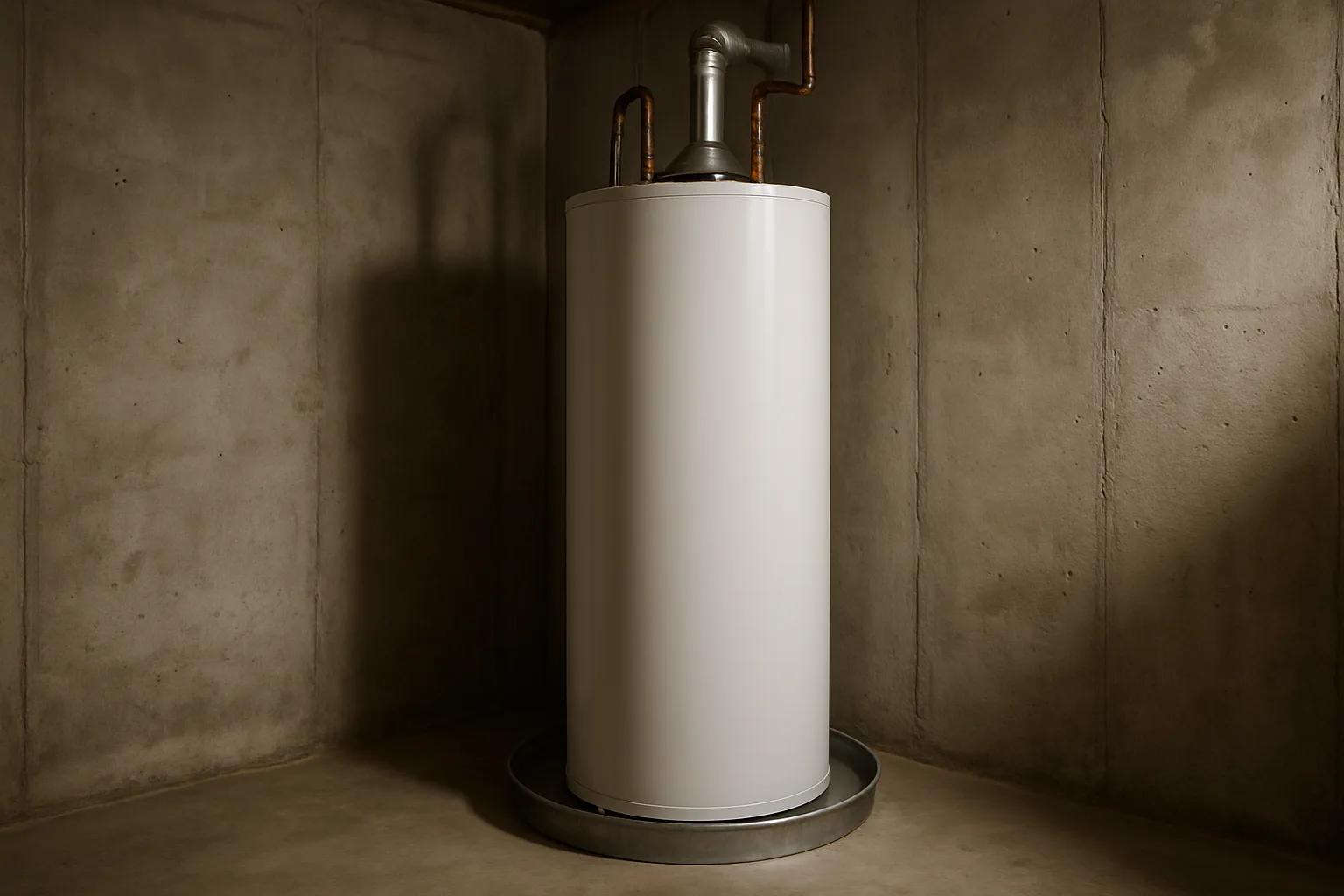
Signs it's time to replace a tank
A tank over 10 years old, rust-colored hot water, rumbling noises from sediment or moisture around the base are all signs to plan a replacement before it fails. Planning ahead is what makes tankless realistic, since a contractor may need to order the unit and the job takes longer than a direct swap, as ENERGY STAR's tankless buying guidance points out. For homeowners weighing an electric tank upgrade instead, the guide to modern electric water heaters covers that path, and the question of what a new unit adds at sale time is covered in whether a water heater increases home value.
Who should choose which
- A family home on natural gas with room in the budget: a condensing gas tankless unit such as the Rinnai RX199iN.
- An all-electric home in a warm climate with a 200-amp panel: the EcoSmart ECOS 27 or Stiebel Eltron Tempra 24 Plus.
- An all-electric home in a cold climate: a heat pump water heater or a standard tank, not whole-house electric tankless.
- A home with one faucet that takes forever to run hot: a Bosch mini-tank under that sink.
- A tight budget or an emergency replacement: a like-for-like tank, then plan the next upgrade with time to spare.
Posted by Kristopher Larson
Frequently asked questions
Is a tankless water heater worth the cost?
It depends on use and fuel. Department of Energy figures show tankless units are roughly 24 to 34 percent more efficient for homes using 41 gallons of hot water a day or less, but only about 8 to 14 percent for heavy users. Because installation costs more, the case usually rests on endless hot water, a smaller footprint and a longer life rather than fast payback.
How long do tankless water heaters last compared with tanks?
Storage tanks typically last about 10 to 15 years, while tankless units are commonly expected to last 20 years or more. Tankless heaters hold no standing water under pressure, so they are less prone to tank corrosion and leaks. Regular descaling in hard-water areas matters for reaching that lifespan.
What size tankless water heater do I need?
Add up the hot water flow that runs at once, about 2.5 GPM per shower and 2.2 GPM per sink, then find the temperature rise from incoming water to about 120 degrees. A heater's output in BTU per hour divided by 500 times the rise gives the GPM it can deliver. A plumber should confirm the result for the home.
Can my electrical panel handle an electric tankless water heater?
Whole-house electric tankless units draw about 100 to 113 amps. The Stiebel Eltron Tempra 24 Plus uses two 50-amp double-pole breakers and the EcoSmart 27 kW models use three 40-amp breakers. Many homes need a 200-amp service, so an electrician should run a load calculation before purchase.
Why does a tankless water heater sometimes run cold?
Two common causes are flow above the unit's rated GPM at the current temperature rise, and the cold-water sandwich, a brief slug of cold water when a tap is turned off and on quickly. Very low flows, like a trickle at a sink, can also fall below the activation point on some models.
Do tankless water heaters need maintenance?
Yes. Most manufacturers call for periodic flushing with a descaling solution, more often with hard water, and cleaning of the inlet screen. Condensing gas models also need their condensate drain kept clear. Isolation valves installed with the unit make flushing a short job.
Keep reading
More from the blog

Best Christmas Tree Stand for a Real Tree: Steel vs. Plastic vs. Ratchet (Cinco, Jack-Post, Krinner)

Costway Christmas Inflatables Reviewed: Snow Globe, Nativity, Santa on a Dinosaur and More

C3 vs. C6 vs. C7 vs. C9 Christmas Lights: Which Bulb Size for Rooflines, Trees and Bushes