How to Make a Room Feel Cozy: Warm Bulbs, Layered Lamps, Textiles and Scent
Warm 2,700K bulbs, lamps at three heights, plug-in dimmers, heavy throws, lined curtains and safe scent: what actually makes a room feel cozy.
Most rooms that feel cold in the evening are not missing decor. They are missing the right light. A single overhead fixture with a cool bulb flattens a room, while three or four low, warm sources at different heights make the same space feel smaller, softer and more inviting. Add textiles that look and feel warm, cut the drafts at the windows and choose a scent strategy that is safe to leave alone, and most rooms can change character in one weekend.
This guide breaks coziness into the parts that can actually be adjusted: bulb color, lamp placement, dimming, fabric, window treatments and scent, with product picks for each.
As an Amazon Associate, Best Utah Real Estate earns from qualifying purchases.
Quick verdict: the four changes that matter most
- Swap bulbs to warm white. Use 2,700K or warmer in living rooms and bedrooms. Dim-to-warm bulbs such as the Philips Warm Glow A19 LED (8-pack) get warmer as they dim, the way incandescent bulbs did.
- Turn off the ceiling light after dark. Light the room with at least three lamps at different heights.
- Add one heavy throw and one textured layer per seat or bed. A thick fleece or knit throw does more than a dozen small accessories.
- Close lined curtains at night to cut the cold-glass feeling and hide the black window.
Start with bulb color
Color temperature, measured in kelvins (K), describes how yellow or blue white light looks. Lower numbers are warmer. The U.S. Department of Energy's guide to purchasing efficient bulbs lists 2,700K as "warm" and typical for homes, 3,000K as "soft," and 4,100K as "cool," the range used in offices and classrooms. The same guide notes that most incandescent bulbs produced light around 2,700K, which is why that number reads as "home" to most people, and that a jump from 2,700K to 4,100K is noticeable.
| Color temperature | How it looks | Best rooms and uses |
|---|---|---|
| 2,200K to 2,400K | Amber, candle-like | Accent lamps, evening dimming, bedside lamps |
| 2,700K | Warm white, similar to incandescent | Living rooms, bedrooms, dining rooms |
| 3,000K | Soft white, slightly crisper | Kitchens, bathrooms, reading lamps |
| 3,500K | Neutral white | Home offices, laundry rooms |
| 4,000K and up | Cool to bluish white | Garages, workshops; usually too stark for living spaces |
Two more numbers on the package matter. Lumens measure brightness, and a typical 60-watt replacement produces about 800 lumens. Color rendering index (CRI) measures how accurately colors look under the light on a 0 to 100 scale. ENERGY STAR certified bulbs must reach at least 80, and bulbs rated 90 or higher make wood, fabric and skin tones look richer, which helps a room feel warm rather than just yellow.
Dim-to-warm bulbs
Standard LEDs stay the same color when dimmed, so a dimmed 2,700K bulb looks gray rather than golden. Dim-to-warm bulbs shift toward amber as they dim. The Philips Warm Glow line is a widely sold example: 800 lumens at full brightness, 2,700K that drops toward 2,200K as it dims, and a standard E26 base. It needs a compatible dimmer to show the effect.
Layer the lamps
Designers usually describe lighting in three layers: ambient (general light), task (reading, cooking) and accent (a lamp on a shelf, a picture light). Coziness comes from relying on the lower two layers after dark. Practical rules:
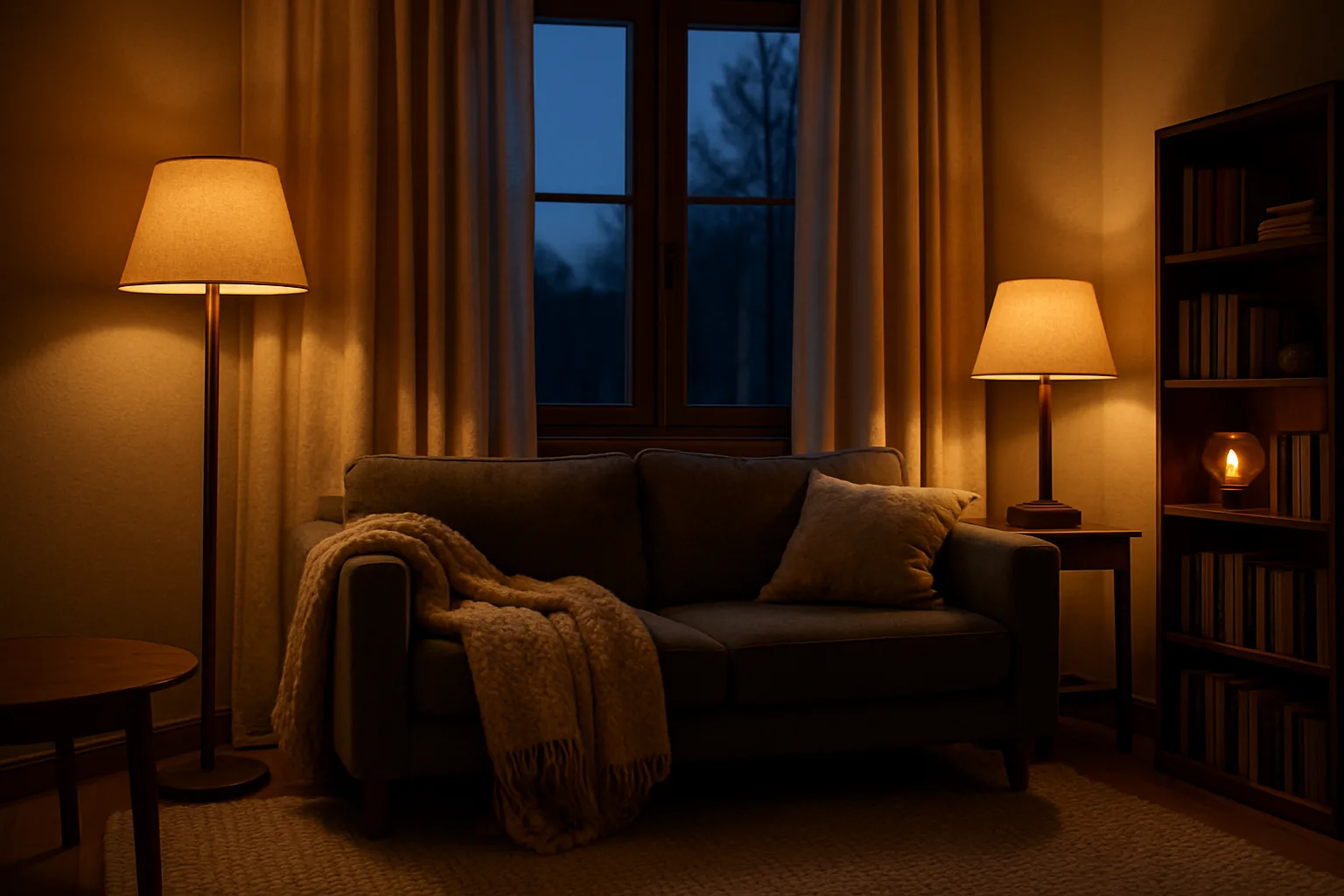
- Three heights. One floor lamp, one table lamp at seated eye level and one low accent source, such as a small lamp on a bookshelf.
- Light the corners. Dark corners make a room feel bigger and colder. A lamp in a corner pulls the walls in.
- Shades, not bare bulbs. Fabric shades in linen, cream or warm white diffuse light and add a glow of their own.
- Put lamps on dimmers. A plug-in dimmer is the easiest upgrade for a floor or table lamp. The Lutron Credenza LED+ plug-in lamp dimmer plugs between the lamp and the outlet, uses a slide control and is rated for up to 100 watts of dimmable LED bulbs. No wiring or hub is involved.
 Lutron Credenza LED+ Plug-In Lamp DimmerCheck today’s price on AmazonBuy on Amazon →

Textiles: weight, texture and warmth
Fabric does two jobs in a cozy room: it physically warms whoever is sitting there, and it softens the look and sound of hard surfaces. Focus on a few heavy pieces rather than many thin ones.
Throws
Every main seat should have a throw within reach. Fleece is warm, light and machine washable; wool and chunky knits add more visual texture but need gentler care. A budget pick with strong review consensus is the Bedsure GentleSoft sherpa fleece throw, a 50-by-60-inch polyester blanket with a flannel face and a sherpa back. Keep throws folded in a basket or over a sofa arm so they look intentional.
Bedding
For winter, flannel sheets are the most noticeable change. Flannel is rated by weight in ounces per square yard rather than thread count. Around 5 ounces is a common middle weight, and 6 ounces or more is heavier and warmer for cold bedrooms. Layering a duvet, a knit or waffle blanket and a folded quilt at the foot of the bed adds warmth people can adjust through the night. More on building a restful bedroom is in this piece on investing in better sleep spaces.
Seasonal linens that sat in a closet all summer often come out smelling musty. Wash them before use, and store off-season bedding fully dry in breathable cotton bags rather than sealed plastic.
Rugs
Bare floors feel cold underfoot and make rooms echo. A thick rug over a felt or rubber pad adds warmth and quiets the room. For homes with pets or kids, see this comparison of machine washable and traditional area rugs.
Windows: close the cold, black glass
At night, uncovered windows read as black rectangles and radiate cold. The Department of Energy's winter advice is to open curtains on sunny, south-facing windows during the day to let in heat and close them at night to reduce the chill from cold glass. Lined, floor-length curtains do this best. The NICETOWN 100% blackout curtains with liners use a separate backing layer, which adds weight and light blocking. For a softer look, hang a sheer panel in front on a double rod. Mount the rod several inches above the window frame and let panels extend past the sides so the glass stays fully covered when closed.
Scent, safely
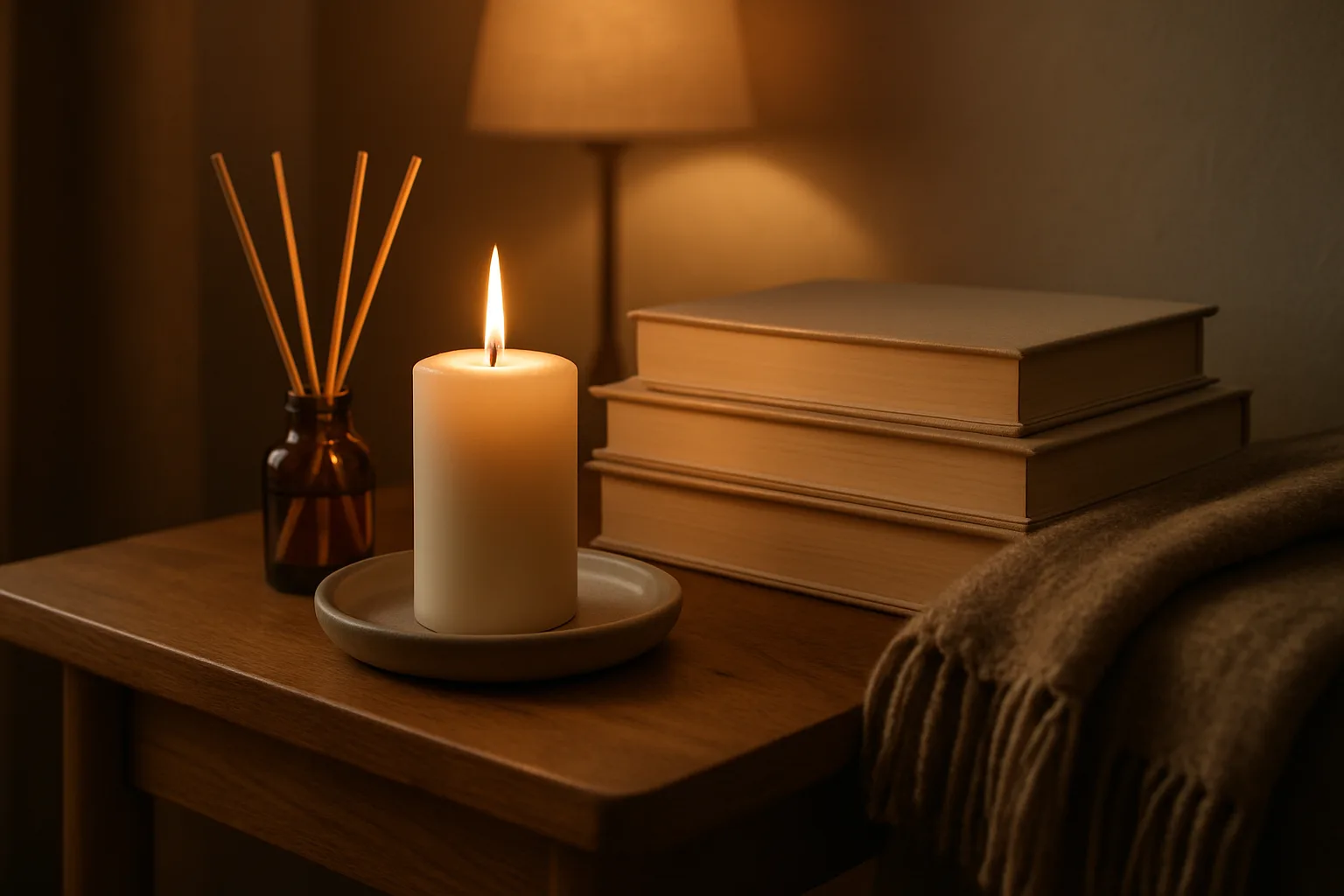
Scent is a strong part of how a room feels, and candles are the classic choice. They are also a real fire risk in the cozy season. The National Fire Protection Association reports that December is the peak month for home candle fires and that three of every five start when something that can burn, such as bedding, curtains or decorations, is too close. Its candle fire research backs the standard advice: keep candles at least 12 inches from anything that can burn, use sturdy holders and blow them out before leaving the room or going to sleep.
Alternatives give the look or the smell without an open flame:
- Flameless candles for the glow. Real-wax LED candles look convincing from a few feet away, and models with a timer turn on each evening on their own. The Furora Lighting LED candle 8-pack with remote and timer is a popular set for mantels and bookshelves where a real flame would sit near books or fabric.
- Reed diffusers for steady, low-level scent with no heat. Keep them out of reach of pets and children.
- Simmering spices on the stove (cinnamon, orange peel, cloves) for short bursts while someone is home.
Whatever the source, one scent per room is plenty. Several competing fragrances make a space feel cluttered rather than warm.
A one-weekend cozy plan
- Friday evening: walk through each room after dark with only the ceiling lights on and note which rooms feel flat.
- Saturday: replace cool bulbs in living spaces with 2,700K or dim-to-warm bulbs, add plug-in dimmers to two lamps and move a lamp into the darkest corner.
- Saturday afternoon: wash stored winter bedding and throws; put flannel sheets on the beds.
- Sunday: hang lined curtains where windows are bare and lay a rug pad under any rug that slides.
- Sunday evening: set flameless candle timers and pick one scent per room.
For the practical side of the cold season, such as furnace filters, weatherstripping and gutters, see these must-do tasks for a first winter in a new home.
The bottom line
A cozy room is mostly a lighting decision. Warm, dimmable bulbs in several lamps at different heights do more than any accessory. Heavy textiles, lined curtains and a safe scent source finish the job. None of it requires paint, tools or a contractor, and most of it moves with the household to the next home.
Posted by Kristopher Larson
Frequently asked questions
What color temperature bulb is best for a cozy room?
Use 2,700K or warmer in living rooms and bedrooms. The U.S. Department of Energy lists 2,700K as warm light typical for homes, and 2,200K to 2,400K looks amber and candle-like for accent lamps. Bulbs at 4,000K and above read as cool and are better suited to garages and workspaces.
How many lamps does a living room need to feel cozy?
At least three light sources at different heights works well for most living rooms: a floor lamp, a table lamp near seating and a small accent lamp on a shelf or console. Lighting the darkest corner makes the room feel warmer than adding more overhead light.
What is a dim-to-warm LED bulb?
A dim-to-warm bulb shifts toward amber as it dims, imitating the way incandescent bulbs looked at low brightness. Standard LEDs keep the same color when dimmed. Dim-to-warm bulbs need a compatible dimmer to show the effect.
Are flannel sheets warmer than cotton percale?
Yes. Flannel is brushed cotton with a raised nap that traps air, so it feels warmer than smooth percale. Flannel is sold by weight in ounces per square yard; about 5 ounces is a common middle weight, and 6 ounces or more is heavier for cold bedrooms.
How far should candles be kept from things that can burn?
Fire safety groups including the NFPA recommend keeping candles at least 12 inches from anything that can burn and blowing them out before leaving the room or going to sleep. December is the peak month for home candle fires, so flameless candles are a safer choice near curtains, books and bedding.
Do curtains help keep a room warm in winter?
They help. The Department of Energy recommends closing curtains and shades at night to reduce the chill from cold windows and opening south-facing ones on sunny days to let heat in. Lined, floor-length curtains that cover the full window work best.
Keep reading
More from the blog
How to Choose an Air Purifier by Room Size and CADR: Coway vs. Levoit vs. Winix

Robot Vacuum and Mop Buying Guide: Mop Types, Docks, Obstacle Avoidance and Top Picks
Electric Pressure Washers: Which PSI and GPM Matter, and Budget vs. Premium Picks