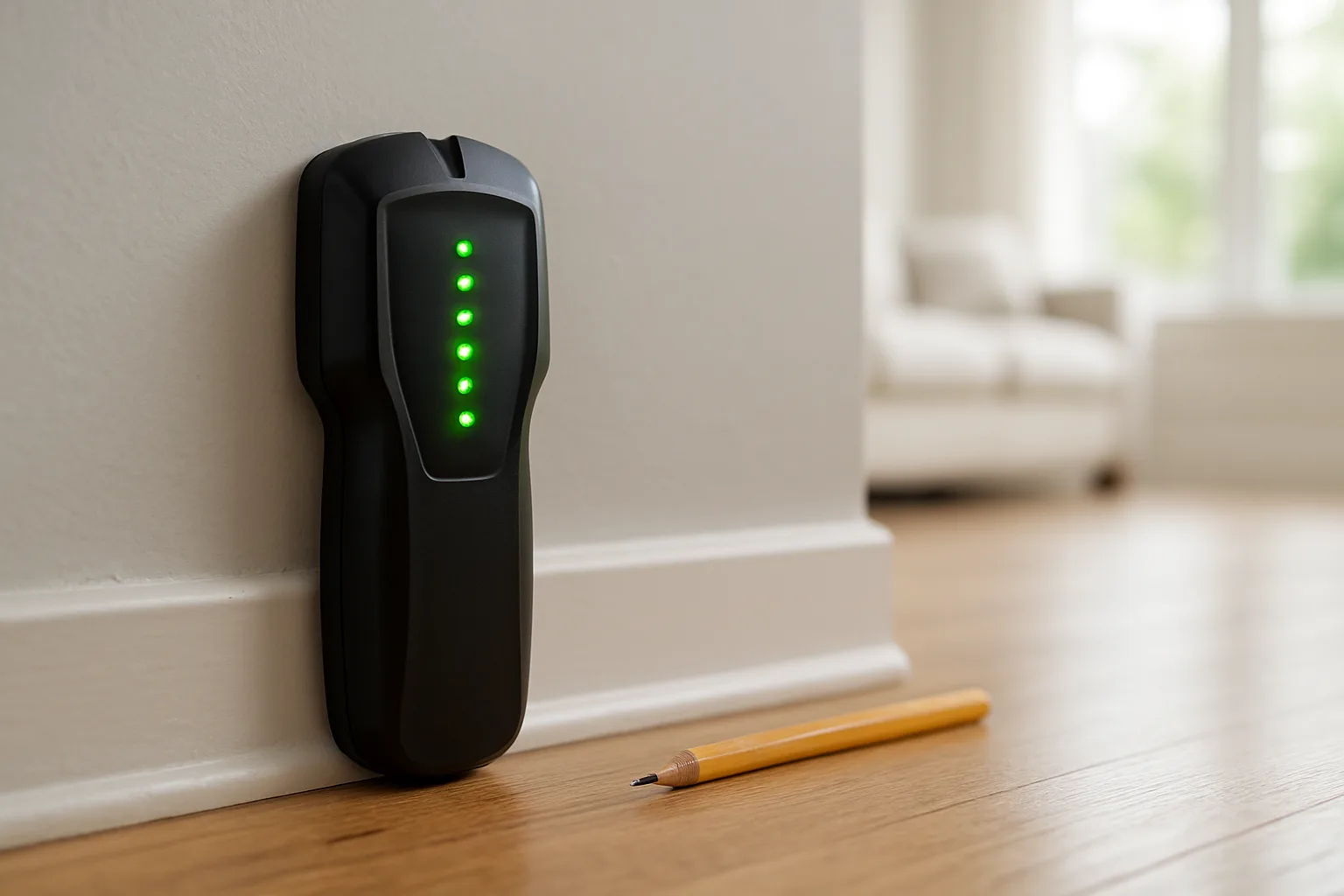
Best Stud Finder: Franklin ProSensor M210 vs. Zircon A150 vs. Bosch GMS120 vs. Magnetic
How multi-sensor, capacitive and magnetic stud finders work, why plaster fools them, and Franklin M210, Zircon A150, Bosch and C.H. Hanson picks.
Hanging a heavy mirror, mounting a TV or putting up a closet rod comes down to one question: where is the framing? Drywall anchors are fine for a picture frame, but anything that carries real weight or gets pulled on every day belongs in a stud. Stud finders range from a pair of magnets in a plastic case to multi-mode scanners that read metal four inches deep, and the cheapest tool is not always the least accurate one.
This guide explains the three kinds of stud finders, why some get confused by plaster or textured walls, and which Franklin, Zircon, Bosch and C.H. Hanson models fit which job.
As an Amazon Associate, Best Utah Real Estate earns from qualifying purchases.
Quick verdict: which stud finder to buy
- Best for most homes: Franklin Sensors ProSensor M210. Thirteen sensors light up the full width of the stud, there is no calibration step, and it adds a live-wire warning.
- Same multi-sensor display, no wire warning: Franklin Sensors ProSensor T13. A step down in features for buyers who already own a non-contact voltage tester.
- Budget electronic pick with center finding: Zircon StudSensor A150. Light and simple, with a deep-scan mode, a pointer that marks the stud center and WireWarning detection.
- Plumbing, rebar and metal: Bosch GMS120-27. A multi-scanner that reads ferrous and non-ferrous metal several inches deep, plus wood and live wires.
- No batteries, no guessing: C.H. Hanson 03040 magnetic stud finder. Rare-earth magnets snap onto drywall screws and nails, which sit in the stud by definition.
Spec comparison
| Model | Shop | Type | Wood stud depth | Shows | Live-wire warning | Power |
|---|---|---|---|---|---|---|
| Franklin ProSensor M210 |  Buy on Amazon Buy on Amazon
| Multi-sensor (13) | Up to 1.7 in | Full stud width and center | Yes | 2 AA |
| Franklin ProSensor T13 |  Buy on Amazon Buy on Amazon
| Multi-sensor (13) | Up to 1.7 in | Full stud width | No | 2 AA (alkaline) |
| Zircon StudSensor A150 |  Buy on Amazon Buy on Amazon
| Single-zone capacitive | 3/4 in, 1-1/2 in in DeepScan | Edges and center | Yes, up to about 2 in | 9V |
| Bosch GMS120-27 |  Buy on Amazon Buy on Amazon
| Multi-mode scanner | About 1-3/16 in (30 mm) | Center | Yes, about 2 in (50 mm) | 2 AA or Bosch 3.7V battery |
| C.H. Hanson 03040 |  Buy on Amazon Buy on Amazon
| Magnetic | Finds metal fasteners, not wood | Screw or nail location | No | None |
Depths and features come from manufacturer spec pages and listings. Several of these models are sold in bundles or color variants under similar names, so check the model number on the current listing.
Three ways to find a stud
Single-sensor (capacitive) stud finders
The classic electronic stud finder measures changes in density through the wall. It reads the wall when the button is pressed, then signals when the reading rises as it slides over solid wood. Two things follow from that design. It has to be started over a hollow spot, since starting on a stud teaches it that the stud is the "empty" wall. Basic models mark only an edge, so finding the center means scanning from both directions and splitting the difference; center-finding models like the Zircon StudSensor A150 do that math for the user and add a deeper scan mode for thicker drywall or double layers.
Multi-sensor stud finders
Franklin's ProSensor line places a row of sensors across a wide pad. Each sensor reports on its own, so the LEDs over the stud light up and show its full width the moment the tool touches the wall. There is no calibration, the tool can start right over a stud, and double studs or a header appear as a wider block of lights. That makes them faster and less error-prone for most people, at the cost of a bulkier, heavier body.
Magnetic stud finders
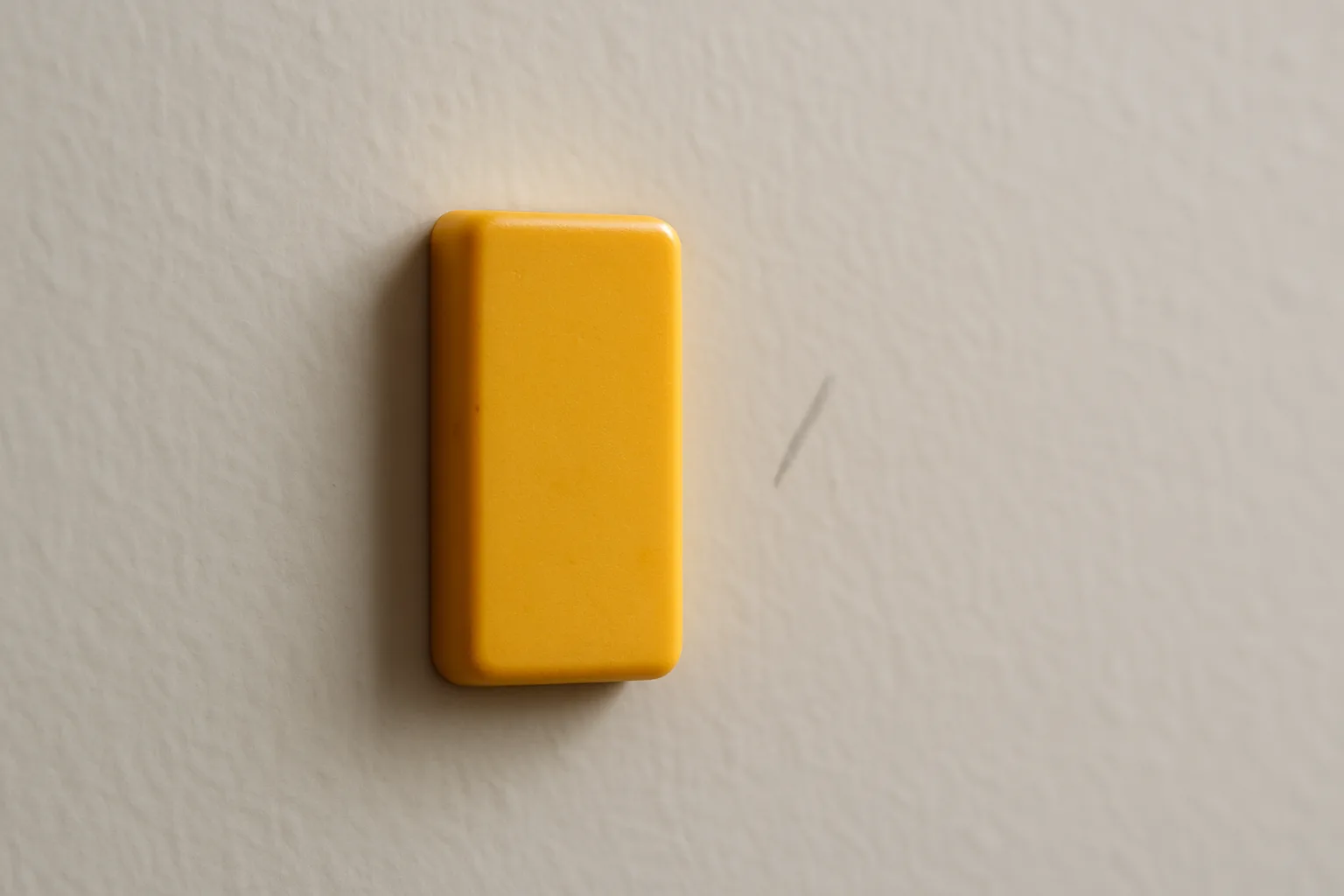
A magnetic finder does not look for wood at all. It looks for the steel screws or nails that hold the drywall to the framing. Slide it slowly across the wall until it grabs, and that spot is a fastener, which is on a stud. Fasteners usually run in a vertical line roughly every foot or so, so finding two or three confirms the stud. Magnets have no false positives from dense patches of mud or texture, never need batteries, and leave both hands free once they stick. The trade-off is speed: on a smooth wall with few screws, sweeping for them takes patience.
The picks in detail
Franklin Sensors ProSensor M210
Franklin Sensors ProSensor M210Check today’s price on AmazonBuy on Amazon →
The M210 uses 13 sensors behind a 21-LED display, reads wood and metal studs up to 1.7 inches deep, and marks the center with a distinct light. A live-wire meter warns when the pad passes over a powered cable. Independent roundups regularly rank it first for accuracy and its wide sensing area; the common complaint is that it is heavier and larger than a pocket-size finder, at roughly 11 to 12 ounces. Franklin sells it alone and in bundles with a case or a light level.
Franklin Sensors ProSensor T13
The T13 shares the 13-sensor design and the 1.7-inch depth but drops the live-wire warning. Franklin's listing notes it is meant for standard alkaline AA batteries rather than rechargeables. For someone who will only hang shelves and art, it delivers the same stud-width display for less.
Zircon StudSensor A150
Zircon StudSensor A150Check today’s price on AmazonBuy on Amazon →
Zircon's A150 is the budget electronic option. Standard StudScan mode reads up to 3/4 inch, DeepScan doubles that to 1-1/2 inches, and WireWarning detection flags live, unshielded AC wiring up to about 2 inches deep. Zircon rates its center finding within about 1/8 inch in StudScan mode and 1/4 inch in DeepScan, shown by a SpotLite pointer on a backlit screen. Zircon is clear that the wire alert is a supplemental warning, not a wire locator or a substitute for turning off the breaker. It runs on a 9V battery; the cheaper A100 is the same idea without center finding.
Bosch GMS120-27
Bosch GMS120-27 Wall ScannerCheck today’s price on AmazonBuy on Amazon →
The GMS120-27 is the tool for walls with more going on than studs. Bosch rates it to roughly 30 mm (about 1-3/16 inches) for wood framing, 100 mm for ferrous metal such as steel pipe or rebar, 120 mm for copper, and 50 mm for live wiring. It has an IP54 dust and splash rating and runs on AA cells or Bosch's 3.7V rechargeable pack. Testers have found it less dependable on old lath-and-plaster walls than on drywall, which is a common weakness of electronic scanners.
C.H. Hanson 03040
C.H. Hanson 03040 Magnetic Stud FinderCheck today’s price on AmazonBuy on Amazon →
The C.H. Hanson is a small block with rare-earth magnets and a two-way bubble level. It sticks to the wall when it finds a fastener, so the hands are free to mark or check level. It is often the most reliable answer in rooms where electronic finders give scattered readings, and it costs little enough to keep one in a kitchen drawer even with an electronic finder in the toolbox.
How stud finders hold up on different walls
Hands-on comparisons by tool reviewers, including builds with studs, pipes and live wiring hidden behind different surfaces, tend to land on the same pattern:
- Single layer of 1/2- or 5/8-inch drywall: nearly every current electronic finder locates both wood and steel studs. The differences show up in how precisely each one marks the center and how often it throws a false live-wire alert.
- Two layers of drywall (about 1-1/4 inches): readings get less consistent. Multi-sensor finders and deep-scan modes do better here, but even good tools may need several passes to settle on a center.
- Lath and plaster: most electronic finders struggle or fail outright. This is where a magnet that finds the lath nails earns its place.
- Pipes and conduit: stud finders rarely identify plastic drain lines, and a water-filled copper pipe can trigger a live-wire warning or read as a stud. A dedicated wall scanner is the better tool when plumbing matters.
Walls that confuse stud finders
- Plaster and lath. Older homes often have plaster over wood strips. The lath reads as solid wood across the whole wall, so electronic finders light up everywhere or nowhere. A magnetic finder that locates the nails holding the lath to the studs is usually the better tool.
- Heavy texture, wallpaper or thick paint. These can lift a capacitive sensor off the surface. Scan slowly with steady pressure, or tape a sheet of paper to the wall to smooth the path.
- Double drywall, tile backer or paneling. Use the deepest mode available and expect more false hits.
- Plumbing walls and outlets. Pipes and metal boxes trip metal-sensitive modes. Electrical boxes are usually fastened to the side of a stud, which helps narrow the search.
Confirm before drilling
No stud finder is right every time, so treat the reading as a strong hint. Slide off the mark, restart the tool over an empty spot and scan back from the other side; a stud that shows up in the same place from both directions is real. Framing in most houses runs at 16 inches on center, and 24 inches is common in some newer construction. Once one stud is marked, measure over to predict the next and scan to confirm. Before driving a lag screw, drill a small pilot hole or tap in a finish nail low on the wall where the hole will be hidden; solid resistance means wood, and a sudden drop means a hollow bay.
Wires and pipes tend to run vertically beside studs and horizontally near outlets and switches, so avoid drilling directly above or below them. Turn off the circuit when working near an outlet, and never rely on a stud finder's wire warning as proof a wall is safe.
What goes into studs, and what doesn't
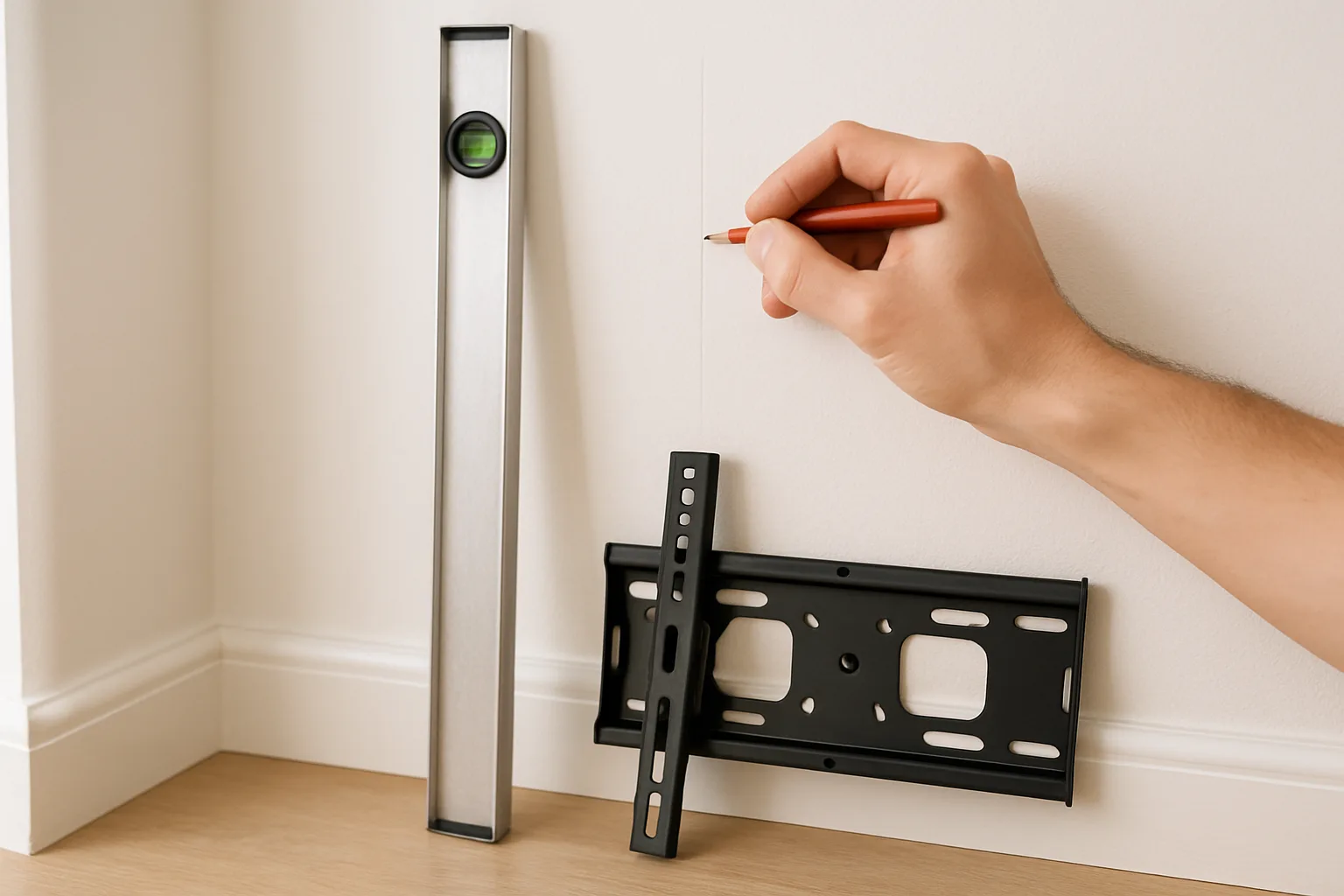
Wall-mounted TVs, floating shelves with heavy loads, grab bars, cabinets and closet rods should land in framing. A rod and shelf system loaded with clothes puts a surprising amount of pull on its brackets, which is why a closet reorganization starts with marking studs. Blind and shade brackets in a window opening often hit the header, though motorized shades on wide windows deserve the same check covered in the smart blinds guide. Under-cabinet lights and most picture frames are light enough for drywall, but hardwired fixtures need a clear path through the framing, as described in the under-cabinet lighting comparison.
Who should buy which
- A homeowner who wants one tool that just works: the Franklin M210, or the T13 to save money without the wire warning.
- Occasional picture and shelf hanging on a tight budget: the Zircon A150, or the magnetic C.H. Hanson.
- Older homes with plaster walls: start with the C.H. Hanson and use an electronic finder only as a second opinion.
- Remodelers drilling near plumbing or into concrete: the Bosch GMS120-27 for its metal and live-wire modes.
Many households end up with two: a multi-sensor finder for speed and a magnet for confirmation. Together they cost less than one bad hole in a finished wall.
Posted by Kristopher Larson
Frequently asked questions
Are magnetic stud finders more accurate than electronic ones?
A magnetic stud finder rarely gives a false reading, because it only reacts to the steel screws and nails that fasten drywall or lath to the framing. It is slower, since it has to be swept across the wall until it finds a fastener. Electronic finders are faster but can be fooled by plaster, texture or dense patches of joint compound.
Why does a stud finder show studs everywhere?
Single-sensor stud finders calibrate when the button is pressed, so starting the scan over a stud makes the rest of the wall read wrong. Plaster and lath walls also read as solid across the whole surface. Restart the scan over a hollow spot, try the deep-scan mode, or switch to a magnetic finder.
How far apart are wall studs?
Most interior walls are framed 16 inches on center, measured from the center of one stud to the next. Some newer homes and many exterior walls use 24-inch spacing. Extra studs appear around windows, doors and corners, so always confirm with a scan rather than measuring alone.
Can a stud finder detect electrical wires?
Many electronic models, including the Franklin M210, Zircon A150 and Bosch GMS120-27, include a live-wire warning for powered AC cables within about 2 inches of the surface. Manufacturers describe this as a supplemental alert. It will not detect wires that are switched off or shielded, so turn off the circuit before drilling near outlets and switches.
Do stud finders work on plaster walls?
Electronic stud finders struggle on lath-and-plaster walls, because the wood lath behind the plaster reads like a stud across the whole wall. A strong magnetic finder that locates the nails in the lath is usually more reliable. Confirm with a small test hole in a spot that will be covered.
What is the difference between a stud finder and a wall scanner?
A stud finder is built mainly to find wood or metal framing behind drywall. A wall scanner such as the Bosch GMS120-27 adds modes for ferrous and non-ferrous metal several inches deep, which helps locate pipes, rebar and conduit before drilling. Scanners cost more and are aimed at remodeling and trade work.
Keep reading
More from the blog

Best Christmas Tree Stand for a Real Tree: Steel vs. Plastic vs. Ratchet (Cinco, Jack-Post, Krinner)

Costway Christmas Inflatables Reviewed: Snow Globe, Nativity, Santa on a Dinosaur and More

C3 vs. C6 vs. C7 vs. C9 Christmas Lights: Which Bulb Size for Rooflines, Trees and Bushes