Breville Bambino Plus vs. Barista Express vs. Gaggia Classic: Best Beginner Espresso Machine
Which beginner espresso machine fits: Breville Bambino Plus, Barista Express, Gaggia Classic E24 or De'Longhi Dedica Arte. Specs, grinders and trade-offs.
A first espresso machine is really a choice about how much of the process the owner wants to handle. Some machines heat in seconds and steam milk on their own. Others use heavier commercial-size parts that reward practice and last for years with basic service. And one important part of the setup is not a machine at all: the grinder.
This guide compares four popular starting points, the Breville Bambino Plus, the Breville Barista Express, the Gaggia Classic E24 and the De'Longhi Dedica Arte, and explains the specs that actually change what ends up in the cup.
As an Amazon Associate, Best Utah Real Estate earns from qualifying purchases.
Quick verdict: which beginner espresso machine fits which buyer
- Best for lattes with the least learning curve: Breville Bambino Plus. Ready in about 3 seconds, PID temperature control, and an automatic steam wand with three milk temperatures and three texture levels.
- Best all-in-one for someone without a grinder: Breville Barista Express. A built-in conical burr grinder feeds the portafilter directly, so beans go to espresso in under a minute.
- Best for learning real espresso skills and keeping a machine for a decade: Gaggia Classic E24. Steel housing, a 58mm commercial portafilter, a three-way solenoid valve, a manual commercial steam wand and parts that owners can service themselves.
- Best for a narrow counter and a lower budget: De'Longhi Dedica Arte. Just 6 inches wide, with a manual steam wand and three temperature settings.
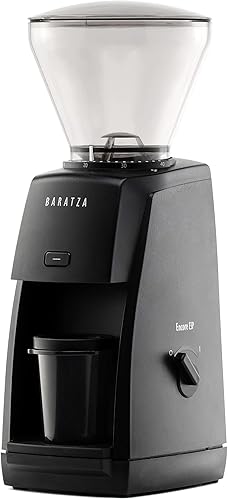
- The grinder to pair with any machine that lacks one: Baratza Encore ESP, an espresso-focused burr grinder with fine steps at the espresso end of its range.
Spec comparison
| Machine | Shop | Heating | Portafilter | Temperature control | Steam wand | Water tank | Built-in grinder |
|---|---|---|---|---|---|---|---|
| Breville Bambino Plus |  Buy on Amazon Buy on Amazon
| ThermoJet, about 3-second heat-up | 54mm | PID | Automatic (3 temps, 3 textures) or manual | 64 oz (1.9 L) | No |
| Breville Barista Express |  Buy on Amazon Buy on Amazon
| Thermocoil | 54mm | PID | Manual | 67 oz | Yes, conical burr, 1/2 lb hopper |
| Gaggia Classic E24 | 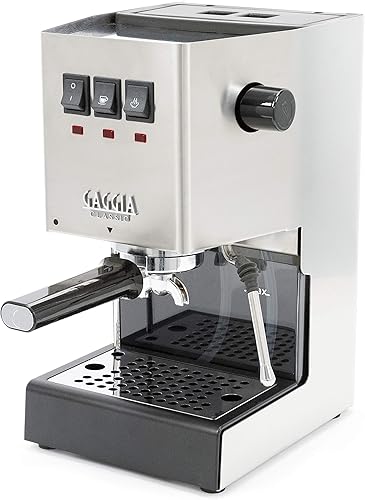 Buy on Amazon Buy on Amazon
| Single brass boiler | 58mm commercial | Thermostat (no PID) | Manual commercial wand | 2.1 L | No |
| De'Longhi Dedica Arte |  Buy on Amazon Buy on Amazon
| Thermoblock | Smaller De'Longhi size, up to 18g basket | 3 preset temperatures | Manual "My LatteArt" wand | 35 oz | No |
Figures come from each manufacturer's product page and listing. Colors and bundles carry different model numbers, so it is worth matching the exact model on the current listing before buying.
The grinder matters more than the machine
Espresso pushes hot water through a tightly packed bed of coffee in roughly half a minute. That only works when the grounds are fine and consistent, and when the owner can adjust them in small steps as beans age. Blade grinders and most drip-oriented grinders cannot do this well, which is why so many beginners blame the machine for sour or watery shots.
Manufacturers work around the problem with pressurized (dual-wall) baskets. These have a single tiny exit hole that builds pressure even with coarse or pre-ground coffee. Breville ships both single-wall and dual-wall baskets with its machines, and Gaggia includes a pressurized basket next to its commercial ones. Pressurized baskets make a drinkable shot from supermarket coffee, but the crema is partly manufactured by the basket, and flavor tops out quickly.
A buyer planning to use unpressurized baskets and fresh beans has two routes: a machine with a built-in grinder (the Barista Express) or a separate espresso-capable grinder. The Baratza Encore ESP was designed for that second route. It uses 40mm steel conical burrs and splits its 40 settings into fine micro-steps from 1 to 20 for espresso and larger steps from 21 to 40 for drip and pour-over, and its dosing cup fits both 54mm and 58mm portafilters.
 Baratza Encore ESPCheck today’s price on AmazonBuy on Amazon →
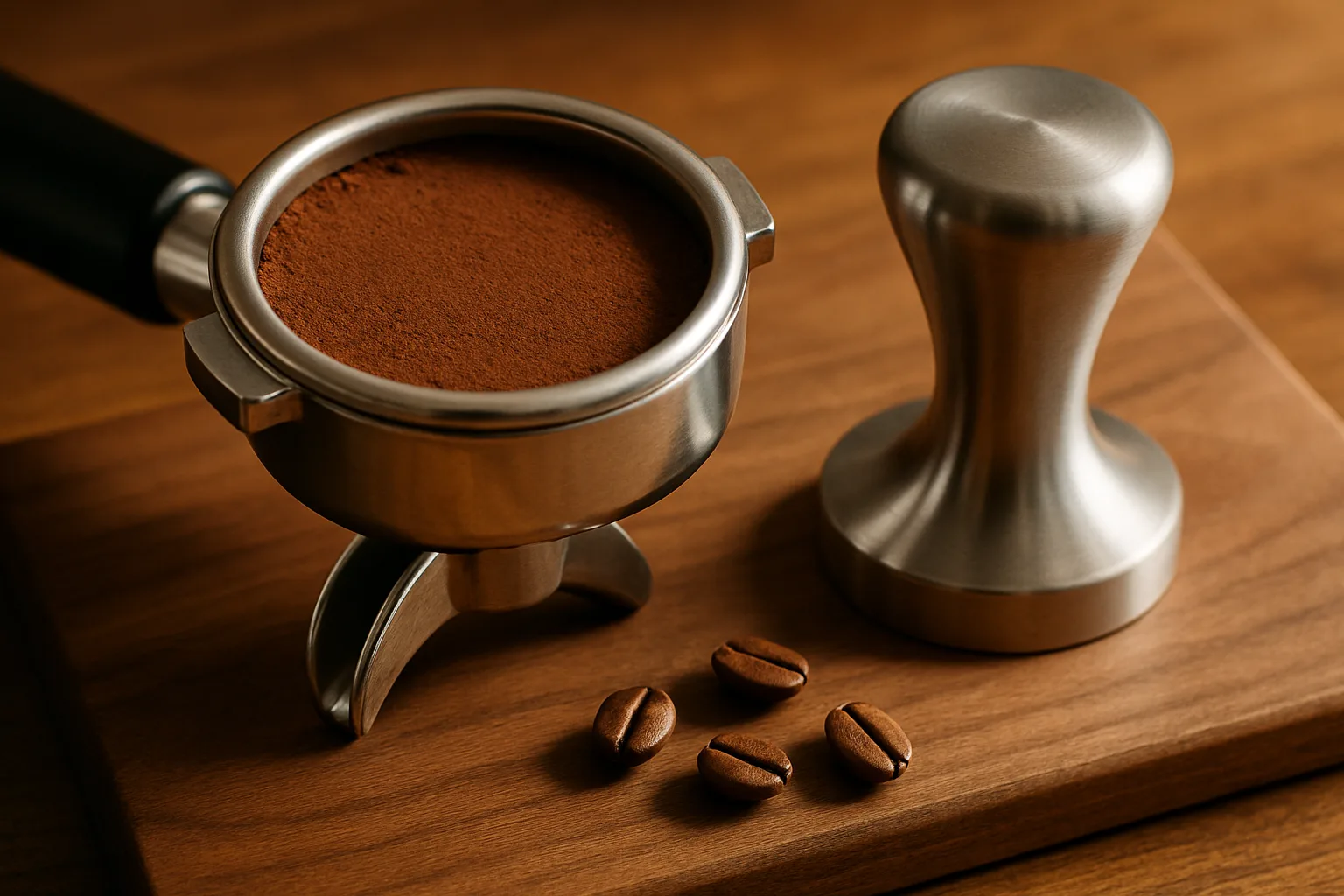
Breville Bambino Plus: fastest from switch-on to latte
The Bambino Plus solves the two things that frustrate new owners most: waiting for a machine to heat and learning to steam milk. Breville's ThermoJet system heats only the water needed for the next shot or steam cycle, and the company rates it ready in about 3 seconds. A PID controller holds brew temperature, and low-pressure pre-infusion wets the puck before the 15-bar pump settles into extraction at about 9 bar.
The automatic steam wand is the real draw. The owner sets one of three milk temperatures and three texture levels, sets the pitcher on the drip tray and walks away; the wand stops when the milk is done and purges itself so the next shot starts at the right temperature. Manual steaming is still available for anyone who wants to learn latte art. Breville's own page lists an 18g dose for the 54mm portafilter and includes single-wall and dual-wall baskets in both sizes.
Trade-offs: no grinder, a smaller 54mm basket than commercial machines, and a mostly plastic-and-steel build that is less owner-serviceable than the Gaggia. It is a strong fit for milk-drink households that want a quick morning routine.
Breville Bambino PlusCheck today’s price on AmazonBuy on Amazon →
Breville Barista Express: grinder included
The Barista Express has been one of the best-selling home espresso machines for years because it removes the separate-grinder purchase. A conical burr grinder with a grind-size dial sits above the group, a half-pound hopper feeds it, and a cradle lets the owner grind straight into the portafilter. Breville pairs it with PID temperature control, low-pressure pre-infusion, a 67 oz tank and a manual steam wand.
The appeal is convenience and counter simplicity: one plug, one footprint, and an integrated tamper. The compromise is that the built-in grinder is a mid-level burr set rather than a dedicated espresso grinder, and a grinder failure takes the whole machine out of service. Owners who get deep into light-roast espresso often add a separate grinder later. For a buyer starting from zero who wants fresh-ground espresso without researching grinders, it remains the simplest complete package.
Breville Barista ExpressCheck today’s price on AmazonBuy on Amazon →
Gaggia Classic E24: the long-term learner's machine
The Gaggia Classic line has been made in Italy for decades, and the E24 is the latest version. Compared with the earlier Classic Evo Pro, its main change is a boiler made of brass instead of aluminum, which adds thermal mass for steadier temperature and stronger steam. It keeps the line's signature parts: a solid steel housing, a 58mm stainless commercial portafilter, a commercial three-way solenoid valve that relieves pressure after the shot for a drier puck, 9-bar extraction and a manual commercial steam wand.
That 58mm size matters over time. It is the commercial standard, so baskets, tampers, shower screens and bottomless portafilters from many makers fit. The machine is also easy to open and service, and replacement parts are widely sold, which is why older Classics are often still running.
Trade-offs: no PID, so temperature is managed with a thermostat and a little technique (such as running a short flush before a shot). Steaming is manual, and the machine needs several minutes to warm fully. It suits a buyer willing to learn, and it pairs best with a separate grinder like the Encore ESP. Gaggia's Classic product page covers the line's components.
Gaggia Classic E24Check today’s price on AmazonBuy on Amazon →
De'Longhi Dedica Arte: the space saver
At 6 inches wide, the Dedica Arte fits where nothing else on this list will, such as a corner next to a range or a small apartment counter. It uses a thermoblock heater, a 15-bar pump, three temperature settings and an automatic flow stop that ends the shot at a set volume. Its "My LatteArt" steam wand is manual but designed to make microfoam easier to achieve than a basic panarello frother. The basket holds up to 18g of coffee, the 35 oz tank lifts out from the back, and a double drip tray adjusts for taller glasses.
The trade-off is the ceiling. The smaller, non-standard portafilter limits accessory choices, and the machine is aimed at convenience rather than fine control. For occasional lattes and cappuccinos in a tight kitchen, it is the most space-efficient choice in the group, and its listing spells out what ships in the box.
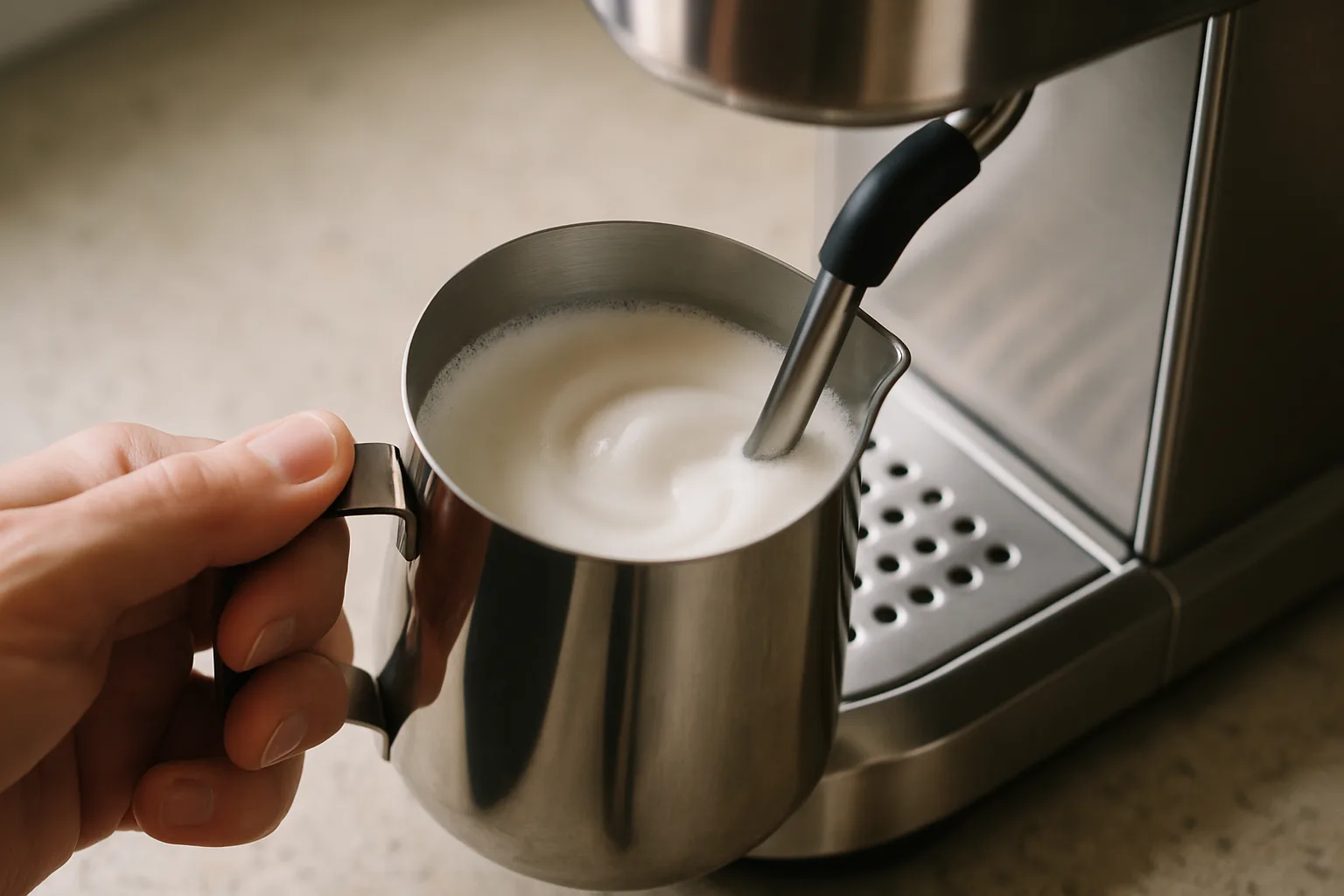
Single boiler, thermoblock, thermojet: what the heating system changes
- Thermoblock and thermojet/thermocoil (De'Longhi and Breville) heat water as it passes through a metal block or coil. They warm up fast and use little energy at idle. Breville's PID control keeps shot temperature consistent on its models.
- Single boiler (Gaggia) heats a small tank of water. Brass or other dense metal holds heat well, so the boiler steadies shot temperature and produces strong steam. The trade-off is warm-up time and a short wait when switching from brewing to steaming, since one boiler handles both jobs.
- Heat exchanger and dual boiler machines, a step above this group in price, can brew and steam at the same time. Households that make several milk drinks back to back are the ones who usually justify them.
Water, scale and upkeep
Scale from hard water is the most common reason home espresso machines fail early, and thin thermoblock passages are especially sensitive to it. Breville includes a water filter with the Barista Express, De'Longhi includes a hardness test strip with the Dedica Arte, and every manufacturer publishes a descaling schedule. Homes with very hard water can use filtered water in the tank or look at treatment for the whole house; the whole-house water filter guide explains the difference between softeners and conditioners.
Daily habits matter too: purge and wipe the steam wand after every use, knock out the puck promptly, and backflush machines with a three-way valve (the Gaggia, and Breville's models with a cleaning disc) on the schedule the manual gives. Breville's Bambino Plus page lists the cleaning tools included with that model.
Counter space and kitchen fit
An espresso setup usually needs room for a machine, a grinder, a knock box and a pitcher, plus clearance above for filling the tank and the bean hopper. Measure the depth under upper cabinets before buying a machine with a top-filling reservoir or a tall grinder. Owners who end up rearranging a kitchen around a coffee station often pair it with a few cabinet organizers for beans, cups and cleaning supplies, and with under-cabinet lighting so the workspace is easy to see early in the morning.
Who should buy which
- Latte and cappuccino drinkers who want speed: Bambino Plus, plus a grinder when ready to move past pre-ground coffee.
- A first-time buyer who wants one box and fresh grinding: Barista Express.
- Hobbyists who want to learn manual technique and keep upgrading parts: Gaggia Classic E24 with an Encore ESP.
- Small kitchens and occasional espresso: Dedica Arte.
Posted by Kristopher Larson
Frequently asked questions
What is the easiest espresso machine for a beginner to use?
The Breville Bambino Plus is the simplest of the popular starter machines. It heats in about 3 seconds, holds brew temperature with a PID controller and has an automatic steam wand with three milk temperatures and three texture levels, so it can make a latte with very little technique.
Do beginners need a separate grinder for espresso?
Only if the machine lacks one and the goal is better than pre-ground coffee. Pressurized (dual-wall) baskets make a drinkable shot from pre-ground coffee, but fresh beans ground on an espresso-capable burr grinder give far more control. The Breville Barista Express has a grinder built in; for other machines, a grinder such as the Baratza Encore ESP fills that gap.
Is a 58mm portafilter better than 54mm?
Not automatically, but 58mm is the commercial standard, so far more baskets, tampers, screens and bottomless portafilters fit it. A 54mm machine like the Bambino Plus or Barista Express can still pull excellent shots; the difference shows up mostly in accessory choice and upgrade paths.
Does the Gaggia Classic have a PID?
The Gaggia Classic E24 uses a thermostat rather than a PID controller. Its brass boiler adds thermal mass for steadier temperature than the earlier aluminum boiler, and many owners run a short water flush before each shot to start at a consistent temperature.
How often should a home espresso machine be descaled?
It depends on water hardness and how much the machine is used, so the manufacturer's manual is the guide. Harder water means more frequent descaling. Using filtered water, a tank filter where one is supplied, and the included hardness test strip where one is provided helps set the right schedule.
What is the best espresso machine for a small kitchen?
The De'Longhi Dedica Arte is 6 inches wide, which makes it the narrowest of the common starter machines. The Breville Bambino Plus is also compact. Remember to leave space for a grinder and clearance above the machine for refilling the water tank.
Keep reading
More from the blog

Best Christmas Tree Stand for a Real Tree: Steel vs. Plastic vs. Ratchet (Cinco, Jack-Post, Krinner)

Costway Christmas Inflatables Reviewed: Snow Globe, Nativity, Santa on a Dinosaur and More

C3 vs. C6 vs. C7 vs. C9 Christmas Lights: Which Bulb Size for Rooflines, Trees and Bushes