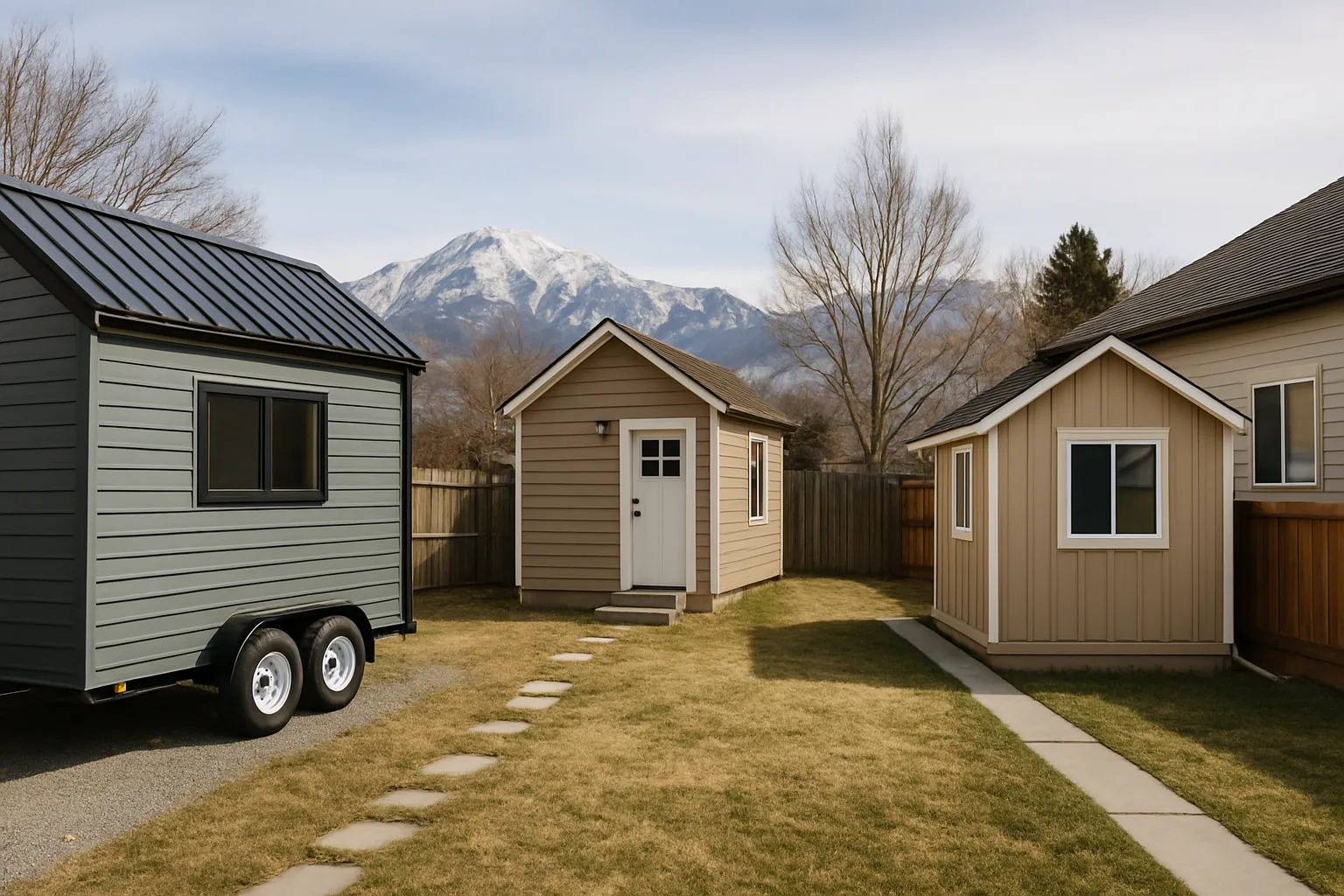
Two Utah Properties, Same Price, $70,000 Difference in Year-One Deduction
Two Utah investment properties bought at the same $1.4 million price can generate a $70,000 gap in year-one depreciation depending on how much of the price is allocated to land. This piece walks through the 2026 bonus depreciation rules, cost segregation, and recapture risk using a Park City condo vs. Ogden fourplex example.
Imagine comparing two Utah investment properties at the same purchase price. The listings may look similar, but the tax picture changes once you examine how much of the purchase price represents land versus depreciable improvements. That distinction can materially change the amount of depreciation available in the first year.
The Current Federal Rules
The current bonus depreciation rates deserve attention if you are purchasing qualifying property in 2026. The One Big Beautiful Bill Act (OBBBA), signed 4 July 2025, made a permanent 100% additional first-year depreciation deduction available for eligible depreciable property acquired and placed in service after January 19, 2025. Property acquired before 20 January 2025 remains on the phase-down schedule of 80% in 2023, 60% in 2024, 40% in 2025, 20% in 2026 and 0% from 2027. IRS Notice 2026-11, released 14 January 2026 (IR 2026-06), addresses the amended rules.
That 100% rate does not mean the entire purchase price of a building is deductible. Land remains nondepreciable, so the land allocation reduces the amount available for depreciation. Residential rental property generally uses a 27.5-year recovery period, while nonresidential real property generally uses 39 years.
The Factors Behind the Calculation
Today, the five levers that drive your deduction are land allocation, reclassification percentage by property type, leverage, marginal tax rate and placed-in-service timing. Together, these factors determine how much basis is available and how quickly that basis produces deductions.
Two properties, both bought for $1,400,000, both reclassified at 25% by the same methodology. Park City condo. Land in a constrained resort market is allocated at 35% - $490,000 - leaving a depreciable basis of $910,000. Reclassifying 25% gives $227,500 of first-year bonus depreciation.
Ogden fourplex. Land is allocated at 15% - $210,000 - leaving a depreciable basis of $1,190,000. The same 25% reclassification gives $297,500. Same price, same study, $70,000 more in year-one deduction - worth $24,500 at a 35% federal marginal rate. Nothing changed except how much of the purchase price sat under the building instead of in it.
Why Land Allocation Matters
A Park City investment property can carry substantial land value because of its location, lot characteristics, views, access and surrounding development. That can produce a different balance between land and improvements than a property in another Utah market.
Treat land allocation as a supportable valuation issue rather than simply a tax-planning number. An appraisal, the county assessor's ratio, or the cost segregation study's own analysis should support the allocation, giving your CPA documentation for the depreciation calculation. This kind of due diligence matters just as much for a rural acreage purchase, such as land near Pine Valley or New Harmony, where land value can make up a much larger share of the purchase price than it would for a fourplex along the Wasatch Front.
How Cost Segregation Changes the Timing
Cost segregation examines the components within a building and associated improvements to determine whether certain assets qualify for shorter recovery periods. Eligible property can include assets that fall into five-, seven- or fifteen-year categories under the applicable depreciation rules. Those classifications create faster deductions than the standard building schedule.
For an investor, the timing matters because qualifying property acquired and placed in service after January 19, 2025, falls under the permanent 100% federal bonus depreciation framework. A cost segregation study connects the physical characteristics of the property to the depreciation rules and helps identify the assets receiving accelerated treatment. Investors weighing this strategy against other ways to protect returns from inflation may also want to review these inflation hedges for Utah property investors.
What the Deduction Means
The $70,000 difference in the example is a difference in first-year depreciation. At the stated 35% federal marginal rate, that additional deduction is worth $24,500 in federal tax savings. Whether you can use the deduction in the current year still depends on your tax position.
One caveat matters more than the arithmetic. A large first-year deduction does not automatically offset W-2 or business income. Under IRC Section 469, rental losses are passive unless the owner qualifies as a real estate professional under Section 469(c)(7) or the short-term rental exception applies, and the owner materially participates. If neither is met, the loss is suspended and carried forward until there is passive income to absorb it or the property is sold. Investors holding title through an entity should also confirm their paperwork is current; see this guide on setting up an LLC for a rental property in Utah for the formation and compliance basics.
The broader investment decision should therefore account for both the immediate deduction and its effect on future years. Leverage and marginal tax rate also belong in the same strategy. A larger first-year deduction improves the timing of tax savings, but it does not eliminate the need to consider later tax consequences. Financing structure matters too, so it's worth reviewing how to move quickly from an accepted offer to a closed deal before locking in a purchase timeline.
Recapture Still Matters
Accelerated depreciation is a timing and rate decision, not free money. Components reclassified into 5-, 7- and 15-year property are Section 1245 property. When the property sells, prior depreciation on those components is recaptured as ordinary income rather than at the 25% Section 1250 rate. This matters particularly along the Wasatch Front, where investors are often short-hold: the recapture arithmetic at a three-year exit is not the same as at fifteen years.
For investors comparing Utah properties, the takeaway is straightforward: purchase price alone does not determine the first-year deduction. In the example, the same $1.4 million purchase price and the same 25% reclassification methodology produce a $70,000 difference because the land allocations differ.
This is general information, not tax advice, and readers should consult their own CPA.
Frequently asked questions
What is bonus depreciation and how does it work for Utah rentals in 2026?
Why does land allocation matter so much for depreciation deductions?
How does depreciation recapture affect a short-term Utah property hold?
Can rental property losses from bonus depreciation offset my W-2 income?
Is a cost segregation study worth it for a smaller Utah rental property?
What's the difference between residential and commercial depreciation periods in Utah?
Keep reading
More from the blog

How Utah Decides Where Homeless Shelters Go: Siting Rules and Public Records in 2026

Sign PDF Online: Fastest Way to Manage Digital Documents

When a Utah HOA Stops Working: Who Pays for Roads, Walls and Common Areas