
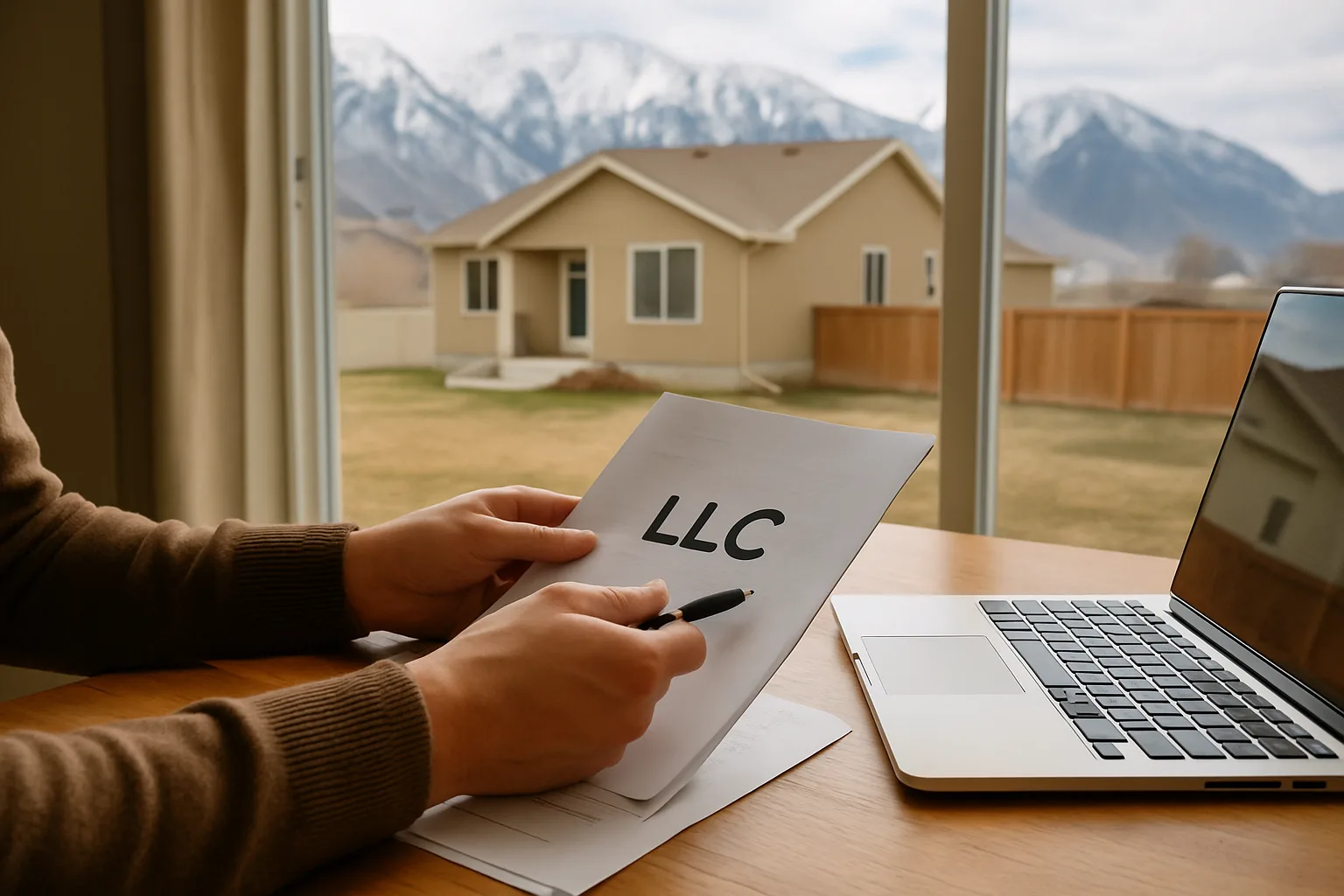
How to Set Up an LLC for Your Rental Property in Utah
Setting up an LLC protects Utah landlords from personal liability and costs less than in most states. This guide walks through formation steps, fees, timelines, and ongoing compliance requirements.
If you own rental property in Utah, or you're planning to buy your first investment property, one of the most important decisions you'll make has nothing to do with the property itself. It's how you structure the business around it.
The legal side of things is easy to put off when you're focused on finding the right property, securing financing, and getting tenants in the door. But a tenant injury, a contract dispute, or a liability claim that insurance doesn't fully cover can expose your personal savings, your primary home, and everything else in your name if your rental isn't properly protected.
An LLC changes that. Here's what it does, what it costs in Utah, and how to get one set up.
What an LLC Protects You From as a Landlord
An LLC, or Limited Liability Company, creates a legal wall between you personally and your rental business. Without one, you're a sole proprietor by default, which means there's no separation between your personal finances and your investment property. A lawsuit against your rental is effectively a lawsuit against you.
With an LLC, your personal assets sit on the other side of that wall. If a tenant slips and falls on your property, if a contractor takes you to court over a payment dispute, if a claim comes in that exceeds your landlord insurance policy, the liability stays with the business, not with you personally.
It's worth being clear about what an LLC doesn't do. It won't protect you from your own negligence or illegal acts. It doesn't replace landlord insurance, which covers property damage, loss of rental income, and claims your LLC's assets couldn't absorb. Most serious Utah landlords carry both. The LLC is the legal structure. Insurance is the financial safety net. You need them working together.
Why Utah Is a Good Place to Form an LLC for Rental Property
Utah is one of the more landlord-friendly states in the country, and its business formation costs reflect that. The filing fee for Articles of Organization is $59. The annual report to keep your LLC in good standing costs just $18 per year. There are no minimum franchise taxes of the kind that make states like California significantly more expensive to operate in.
Utah's effective property tax rate is 0.48%, among the lowest in the country, according to the Tax Foundation. For a landlord building a rental portfolio here, the fundamentals are strong, and the cost of protecting that portfolio through a proper legal structure is minimal by comparison. Whether you're weighing rental income potential in a growing suburb like Washington, Utah or an established market like West Jordan, the legal groundwork is the same.
How to Set Up an LLC for Your Utah Rental Property
1. Choose a Name
Your LLC name needs to be unique in Utah and include "Limited Liability Company," "LLC," or "L.L.C." Check availability through the Utah Secretary of State's business search portal before settling on anything. If you're planning to hold multiple properties, think about whether you want a name that works across your portfolio or one tied to a specific property or address.
2. Appoint a Registered Agent
Utah requires every LLC to have a registered agent with a physical Utah street address who is available to receive legal documents during business hours. It's important to note that P.O. boxes are not permitted. You can be your own registered agent if you have a Utah address, or you can use a professional service. Many landlords use a professional service for privacy reasons, since the registered agent's address becomes part of the public record.
3. File Articles of Organization
This is the document that formally creates your LLC. You file it through Utah's OneStop Business Registration portal and pay the $59 fee. Online filings typically process within one to three business days. Once approved, your LLC legally exists.
4. Create an Operating Agreement
Utah doesn't require an operating agreement to be filed publicly, but having one is strongly recommended. It documents how the business is run, how decisions are made, how profits are divided, and what happens if an owner exits. If you're investing with a partner, this document is what prevents a disagreement from becoming a legal dispute. Even solo landlords benefit from having one, it reinforces that the LLC is a genuine separate entity, which matters if liability protection is ever challenged in court.
5. Get an EIN
An Employer Identification Number is your LLC's federal tax ID. You need it to open a business bank account, file taxes, and keep your personal and rental income cleanly separated. It's free to obtain directly through the IRS website and takes minutes to complete online.
6. Open a Dedicated Business Bank Account
This step is technically separate from the formation process, but it's just as important. All rental income should flow into the LLC's account, and all property expenses should come out of it. Mixing personal and business money is one of the most common ways landlords accidentally undermine their LLC's liability protection, a court can "pierce the corporate veil" and hold you personally responsible if the LLC isn't being treated as a genuinely separate entity.
Each of these steps is manageable on its own, but between researching portals, filing documents, tracking deadlines, and managing actual tenants and properties, it adds up fast. A formation service like Tailor Brands handles the filing, registered agent, and ongoing compliance for you, so you're not splitting your attention between the admin and the properties you're actually trying to run. If you're ready to get started, you can form an LLC in Utah through their platform in a few straightforward steps.
What Does It Cost to Set Up an LLC in Utah?
Here's a straightforward breakdown of what to expect:
Articles of Organization filing fee: $59
Annual report (to stay in good standing): $18 per year
Registered agent service: typically $100 to $300 per year if you use a professional service
EIN: free through the IRS
Operating agreement: free if you draft it yourself, varies if you use an attorney
Compared to most states, Utah's formation and ongoing compliance costs are low. It's one of the reasons property investors who operate across multiple states often choose to form their entity here.
How Long Does It Take to Form a Utah LLC?
If you file online through Utah's OneStop portal, processing typically takes one to three business days. Paper filings take longer, usually five to seven business days. Once you receive your approval, your LLC is active and you can proceed with opening a business bank account and transferring the property into the LLC's name if applicable.
Ongoing Compliance: What Utah Requires After LLC Formation
Forming the LLC is not a one-time task. Utah requires LLCs to file an annual report each year to remain in good standing. Missing this filing can result in your LLC being administratively dissolved, which means the liability protection lapses until you reinstate it.
Set a calendar reminder for your annual filing date from day one. The $18 fee and a few minutes of admin each year is a straightforward trade for keeping your protection intact.
If you want to get the formation done without managing each step separately, you can use a Utah LLC formation service through Tailor Brands, which handles the filing, registered agent requirements, and ongoing compliance reminders so nothing slips while you're focused on managing your properties.
Do You Need a Separate LLC for Each Property?
This is one of the most common questions Utah landlords ask, and the honest answer is: it depends.
Holding multiple properties under one LLC is simpler and cheaper to maintain. But it also means a liability issue with one property could potentially affect all of them, all the assets in the LLC are exposed to any claim against the LLC.
Separating each property into its own LLC provides cleaner protection, but adds filing and compliance costs for each entity. For landlords with one or two properties, a single LLC is usually sufficient. For those building larger portfolios, the series LLC structure, which Utah recognizes, allows multiple properties to be held under one parent LLC with separate protected series for each asset.
This is worth discussing with a tax or legal advisor based on the size and structure of your portfolio, and if you're weighing inflation protection alongside legal structure, it's worth reading up on inflation hedges for Utah property investors.
The Bottom Line
Utah's rental market is strong. Salt Lake City earned recognition as a 2026 NAR Housing Hot Spot, Park City remains one of the premier vacation rental markets in the Mountain West, and the Silicon Slopes corridor continues drawing high-income tenants from Adobe, Qualtrics, and other major employers.
Protecting that investment with the right legal structure costs less in Utah than almost anywhere else in the country. The formation process is straightforward, the annual compliance requirements are minimal, and the liability protection is real. If you're still sourcing your next rental, it's worth comparing off-market homes in Utah to see how investors find deals before they hit the MLS.
Frequently asked questions
How much does it cost to form an LLC for a rental property in Utah?
Do I need an LLC before I buy my first Utah rental property?
Can I be my own registered agent for a Utah rental LLC?
Is one LLC enough if I own multiple rental properties in Utah?
What happens if I miss Utah's annual LLC report filing?
Does an LLC replace the need for landlord insurance in Utah?
Keep reading
More from the blog

Why Utah Homes Aren't Selling in Fall 2026: What 18,000 Active Listings Show

Fall Color Drives by Home Base: Which Wasatch Front Canyon Is Closest in 2026

Wasatch Front Halloween 2026: Haunts, Corn Mazes and Witch Displays by Scare Level