How to Rent Out Your Utah Vacation Home When You're Not Using It
Empty weeks in a Utah vacation home still cost money. This guide covers who should manage guests, HOA and local rules, preparing the home, and planning a calendar that protects your own trips.
A vacation home in Park City, St. George or Bear Lake can sit empty for weeks between owner visits. Those empty weeks still come with HOA dues, utility bills and upkeep. Renting the home out only when you're away puts that time to work without giving up your own trips.
It does take more planning than a full-time rental. You'll need someone to look after guests, local rules that allow nightly stays, a home that works for both guests and you, and a calendar that protects the weeks you want for yourself. This guide walks through each piece in the order most owners find easiest to handle.
Why part-time renting suits Utah vacation homes
Utah's vacation markets don't run on one calendar, and that works in a part-time owner's favor. Ski towns fill up in winter, red-rock towns peak in spring and fall, and lake communities get busiest in summer. Most owners use their home during a handful of favorite weeks, which leaves plenty of open weeks when travelers are still looking for somewhere to stay.
The demand is real. Research from the University of Utah's Kem C. Gardner Policy Institute found that average monthly short-term rental listings in Utah grew from 16,803 in 2021 to 23,428 in 2023, a 39.4% increase. More than 60% of those listings sit in just three counties: Summit, Salt Lake and Washington. In 2023, 83.1% were within 10 miles of a state park, national park or national monument, which says a lot about what brings guests here.
When guests tend to book
Seasons vary by area, so it helps to know your market's rhythm before you plan your own weeks:
Park City: Busiest in ski season and summer. Spring (April to May) and late October are the shoulder weeks, when demand dips and owner stays make the most sense.
St. George: Spring and fall bring steady traffic, and winter draws visitors escaping colder weather. Peak summer heat is usually quieter.
Moab: Spring and fall are the busy seasons. Winter and the hottest summer weeks tend to be slower.
Bear Lake: Summer is the main season, and early August raspberry weekends fill early. Winter brings a smaller bump from skiers heading to nearby slopes.
Patterns shift by neighborhood and property type, so look at how homes like yours book before you lock in your plans.
What renting your open weeks can do
Help cover the cost of owning. Rental income can go toward HOA dues, utilities, internet and routine upkeep.
Keep the home in use. Regular cleanings and guest stays mean small problems, like a dripping faucet or a dead smoke detector battery, get caught sooner.
Give you flexibility. Rent more in years you travel less, and pull back when you want the home for yourself.
The trade-offs to weigh
Guests add wear to furniture, linens and appliances. Your own trips need more planning, because a booked week is no longer yours. And most of the time you won't be there when guests arrive, so someone else has to answer their questions and handle problems. That last point is the one to settle first.
Decide who will look after guests first
Before you buy new linens or open a calendar, decide who will actually run the stays. That choice shapes almost everything else: who answers a guest message at 11 p.m., who makes sure the cleaner shows up, who deals with a lockout, and how much say you keep over your own dates.
Most owners land on one of three setups, plus a local crew that every option needs.
Hosting it yourself from home
Self-hosting gives you full control and keeps all of the revenue. The catch is availability. Guests message at all hours, often right before arrival or in the middle of a problem, and they expect a fast reply. If you live in another time zone or have a demanding job, that load adds up quickly.
It tends to work for owners who:
Can answer their phone most of the day and evening
Enjoy the hospitality side of renting
Already have a cleaner and handyman they trust near the home
An Airbnb co-host
A co-host sits between doing everything yourself and handing everything over. Airbnb built a marketplace around this idea in 2024, after more than 40% of the hosts it surveyed said they would host more if they had more help.
Here's how it works. You stay the listing owner and invite a co-host to your listing, then choose what they can access, from calendar and messaging only to full access. Payouts can be split through the platform, so there are no separate invoices to chase.
Because the listing stays in your account, you keep control of the calendar and can block your own weeks whenever you need them. The co-host handles the daily work:
Replying to guest questions before and during the stay
Sending check-in details and sorting out arrival issues
Responding to reviews
Coordinating with your cleaner after each checkout
Some owners find a local co-host, while others work with a remote team such as STR Assistance, whose Airbnb co-host services handle guest messages around the clock while the owner keeps full control of the calendar and their own dates. A remote co-host still relies on people on the ground, which is why the local crew below matters.
A full-service manager
A full-service property manager takes on nearly everything: the listing, pricing, guests, cleaning and maintenance. It's the most hands-off choice, and it usually costs the most. In St. George, for example, onsite management at one resort community runs roughly 18% to 22% of rental revenue, while approved providers at another charge about 25% to 35%, according to this comparison of two St. George vacation rental communities.
The bigger trade-off for part-time owners is control. Many management agreements set rules on owner stays, such as how far ahead you must block dates or how many peak weeks you can keep. Read those terms before signing, especially if using the home yourself is the main reason you bought it.
Your local crew
Whichever setup you pick, someone has to be close to the home. That usually means:
A reliable cleaner who can turn the home over between stays
A handyman for small repairs
Snow removal in mountain areas, or pool and yard care in Southern Utah
A backup contact for lockouts and urgent problems
A quick way to choose
You live nearby and enjoy hosting: self-hosting can work well.
You want control of your calendar but not the daily messages: a co-host is usually the better fit.
You want to be completely hands-off and don't mind sharing control of your dates: a full-service manager makes sense.
Check your HOA and local rules before listing
Nightly rentals aren't allowed everywhere in Utah, and the rules can change from one city, or even one neighborhood, to the next. An HOA can also add its own limits on top of what the city allows. For a deeper look at shared-community issues, see what happens when a Utah HOA stops working.
A couple of examples show how much this varies. Inside Moab city limits, renting a home for 30 days or less is banned in most residential zones, as this guide to Moab's nightly rental rules explains. In Park City, nightly rental rights depend on the zone, and an HOA can still require 30-day minimum stays where the city allows shorter ones, according to these notes on Park City vacation rentals.
Taxes come into it too. In Utah, stays shorter than 30 days carry transient room tax, and in Park City guests typically pay roughly 12% to 13% in combined taxes on top of the nightly rate.
Before you list, call your city or county planning office and read through your HOA documents. These questions cover the basics:
Are nightly rentals (stays under 30 days) allowed at my address?
Is there a minimum stay?
Do I need a business license or rental permit?
Does the HOA have its own rental rules, guest limits or registration steps?
Which taxes do I need to register for, and does the booking platform collect any of them for me?
Getting these answers in writing takes a little time, but it can save you from fines or a shut-down listing later.
Getting the home ready for guests
A part-time rental has to work for two kinds of stays: yours and your guests'. Setting it up with both in mind makes the switch between them quick, instead of a weekend of packing and unpacking every time.
Separating your personal belongings
Set aside a lockable owner's closet or small storage room. That's where your clothes, toiletries, sports gear, paperwork and anything sentimental live while guests are in the home. Guests get a clean, uncluttered space, and you don't have to box everything up before each rental season.
A few owners go a step further and keep a labeled bin for each family member. When you arrive, you unlock the closet, pull out your bins and the house feels like yours again in minutes.
Guest essentials
Stock what guests expect to find ready on arrival:
Fresh linens and towels, with a spare set for each bed
A working kitchen with basic cookware, knives, dishes and coffee supplies
Toiletries such as soap, shampoo and toilet paper
Reliable Wi-Fi, with the network name and password posted where guests can see them
If you'd rather not share bedding, keep a separate set of linens for your own visits in the owner's closet.
Self check-in and safety
A smart lock lets guests arrive on their own schedule and lets you change the code between stays, so you never have to hand off keys. While you're at it:
Test the smoke and carbon monoxide detectors
Keep a fire extinguisher and first aid kit where guests can find them
Leave a short house manual covering Wi-Fi, appliances, trash days, parking and who to call in an emergency
Listing photos and house rules
Use photos that show the home the way guests will find it, without your family pictures or personal items on display. Keep house rules short and clear, covering quiet hours, parking, pets and the maximum number of guests. For more on presentation, this guide on making an Airbnb listing more competitive covers photos, descriptions and reviews in more detail.
Planning the calendar around your own trips
The calendar is where part-time renting either runs smoothly or turns into a headache. A little planning up front protects both your vacations and your guests' bookings.
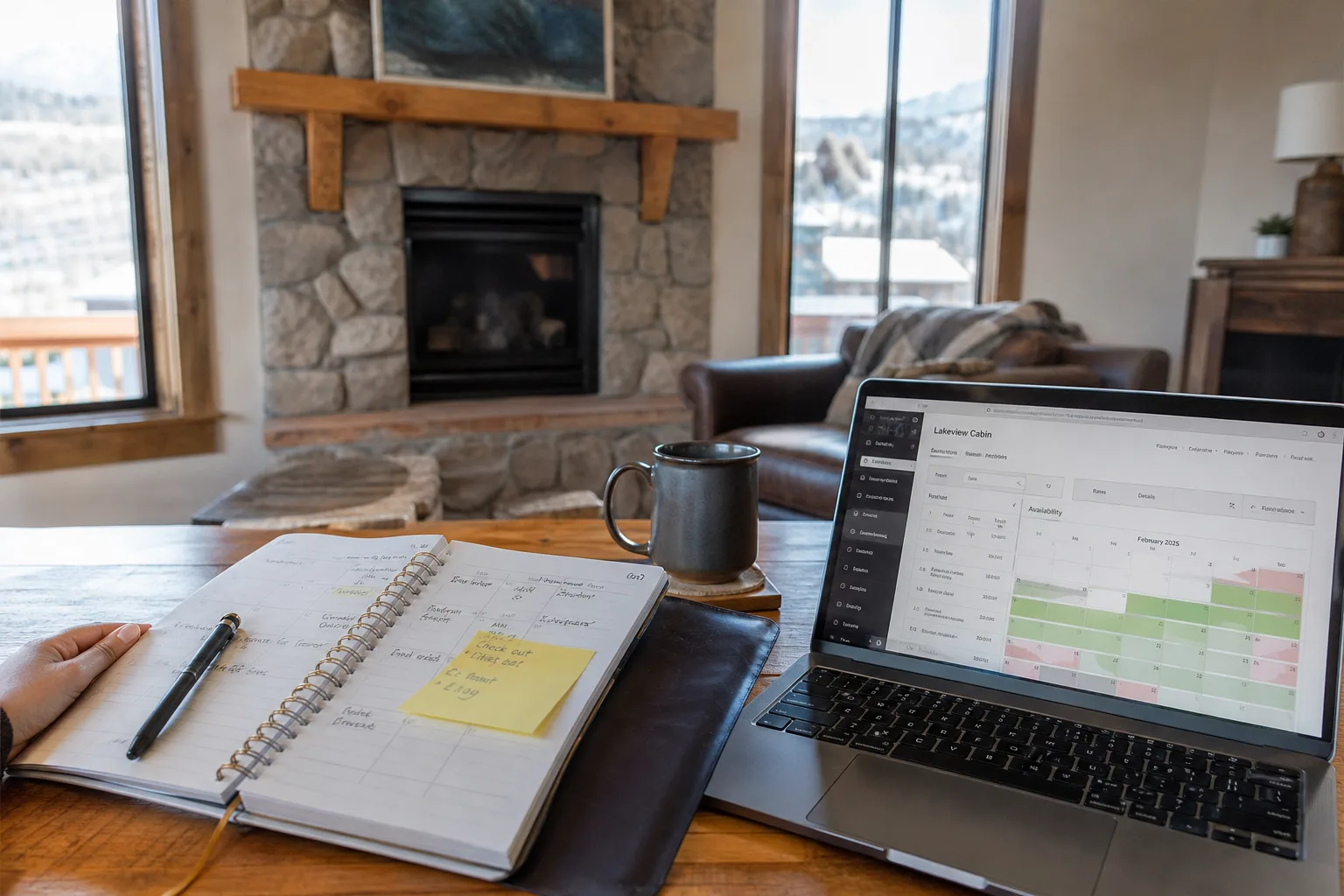
It also helps to keep expectations realistic. Not every open week will book. In Grand County, home to Moab, short-term rental occupancy averaged 56.4% between 2022 and 2024, down from 64.3% in 2017 to 2019, as more rentals came onto the market, according to a Kem C. Gardner Policy Institute study for the county. Plan your own weeks first, then treat the bookings you get as a bonus on top.
Blocking your own dates first
Before you open the calendar, decide which weeks you want for yourself over the coming year. Think through holidays, school breaks, family events and the season you bought the home for. Block those dates first, then open everything else.
It's far easier to release a blocked week later than to take back one a guest has already booked.
Buffer days before your visits
Leave a day or two open before each of your own stays. That gives your cleaner time to turn the home around, restock supplies and catch anything the last guest left behind, so you walk into a home that's ready for you.
Last-minute owner trips
Spontaneous trips get harder once the home is rented. Cancelling a confirmed guest to make room for yourself can bring fees and penalties on most booking platforms, and it can hurt how your listing shows up in search afterwards. If you like keeping things flexible, hold back a few unbooked weeks each season instead.
Calendar settings worth deciding early
Owner weeks: Block them a full year ahead, or season by season. Earlier blocks protect your trips, and weeks you release later can still fill if demand is strong.
Minimum stay: Longer minimums mean fewer turnovers and less wear on the home.
Booking window: Limiting how far ahead guests can book leaves more room for your own plans.
Buffer days: One or two days before each owner stay gives time for cleaning and small fixes.
Keeping the home ready for your own visits
The goal is simple: when you arrive, the home should feel like your vacation home, not a rental someone just checked out of. A quick check after each guest stay stops small problems from piling up until your next visit.
Ask your cleaner or co-host to report damage, missing items and anything that needs repair after each checkout. A short photo update is often enough. It also helps to keep a simple inventory of furniture, linens and kitchenware, so gaps are easy to spot.
Before each of your own stays, run through this checklist:
Deep clean, including bedding and bathrooms
Restock essentials such as toilet paper, soap and coffee
Check for damage or missing items from recent guests
Set the thermostat so the home is comfortable when you arrive
Confirm the owner's closet is locked and untouched
Some owners later add their own booking website for repeat guests, once their routine is set.
Conclusion
Renting your Utah vacation home only when you're away can help cover its costs without giving up the trips that made you buy it. Start by deciding who will look after guests, then confirm your city and HOA rules, prepare the home for both kinds of stays and plan the calendar around your own weeks first.
If you're still shopping and want a home that can do both, it's worth browsing short-term rentals for sale in areas where nightly stays are already allowed. Buyers weighing the Wasatch Back can also compare Park City, Heber City and Midway budgets, and those eyeing a backyard guest unit can read about Utah ADU rules. With the right setup in place, the home can earn its keep between your visits.
Frequently asked questions
How do I protect my personal belongings from guests in a rental?
Can I rent my Utah vacation home only during ski season or summer?
Should I list my vacation home on Airbnb, Vrbo or both?
Do I need different insurance to rent out my vacation home?
Are nightly rentals allowed everywhere in Utah?
Keep reading
More from the blog
Seasonal Storm Cycles and Long-Term Home Improvement Budgeting
How Utah Decides Where Homeless Shelters Go: Siting Rules and Public Records in 2026

Sign PDF Online: Fastest Way to Manage Digital Documents