When a Utah HOA Stops Working: Who Pays for Roads, Walls and Common Areas
A dormant or dissolved HOA does not make shared roads, retaining walls and drainage basins disappear. Here is who is responsible under Utah law in 2026, how owners can restart an association, and what buyers should check before closing.
Most homeowners association problems involve an association that does too much: too many rules, too many fines, dues that climb every year. A quieter and often more expensive problem is an association that stops doing anything at all. When a Utah HOA lapses, loses its corporate status or simply has no one willing to serve on the board, the private road, the retaining wall and the detention pond behind the houses do not go away. Someone still owns them, and eventually someone has to pay to fix them.
This explainer covers what it means when a Utah HOA stops functioning, who is responsible for shared infrastructure afterward, what state law offers to restart an association, what the state's HOA ombudsman can and cannot do, and how buyers can spot the warning signs before closing in 2026.
What "Dissolved" Can Mean
An HOA can fail in more than one way, and the distinction matters:
- The corporation lapses. Many associations are organized as nonprofit corporations. If the corporation is terminated or dissolved, the recorded declaration of covenants that created the community generally remains on the land records, but the legal entity that was supposed to enforce it and manage the common areas may no longer be in good standing.
- The association goes dormant. The corporation may technically exist, but no board is elected, no budget is adopted and no dues are collected.
- The association loses its registration. Utah requires community associations to register with the Department of Commerce within 90 days after their declaration is recorded and to renew every year. An association out of compliance cannot place a new assessment lien or enforce an existing one until it registers again.
- Owners vote to sell common areas. Unless the governing documents say otherwise, a Utah association can sell or transfer common areas with an affirmative vote of at least 67 percent of the voting interests, subject to certain city and county requirements.
Each scenario leaves a different set of loose ends, but all of them raise the same question for owners: who now takes care of the things the HOA used to maintain?
Who Is Responsible for the Common Areas?
Utah's Community Association Act sets a default rule. Under Utah Code 57-8a-224, unless the declaration says otherwise, the association is responsible for maintaining, repairing and replacing the common areas, and each lot owner is responsible for their own lot. The law assumes there is a functioning association to carry out that duty. Nothing in that section hands the job to the city or county when the association stops working, so in practice the work stops until owners organize to pay for it.
The infrastructure most likely to cause trouble includes:
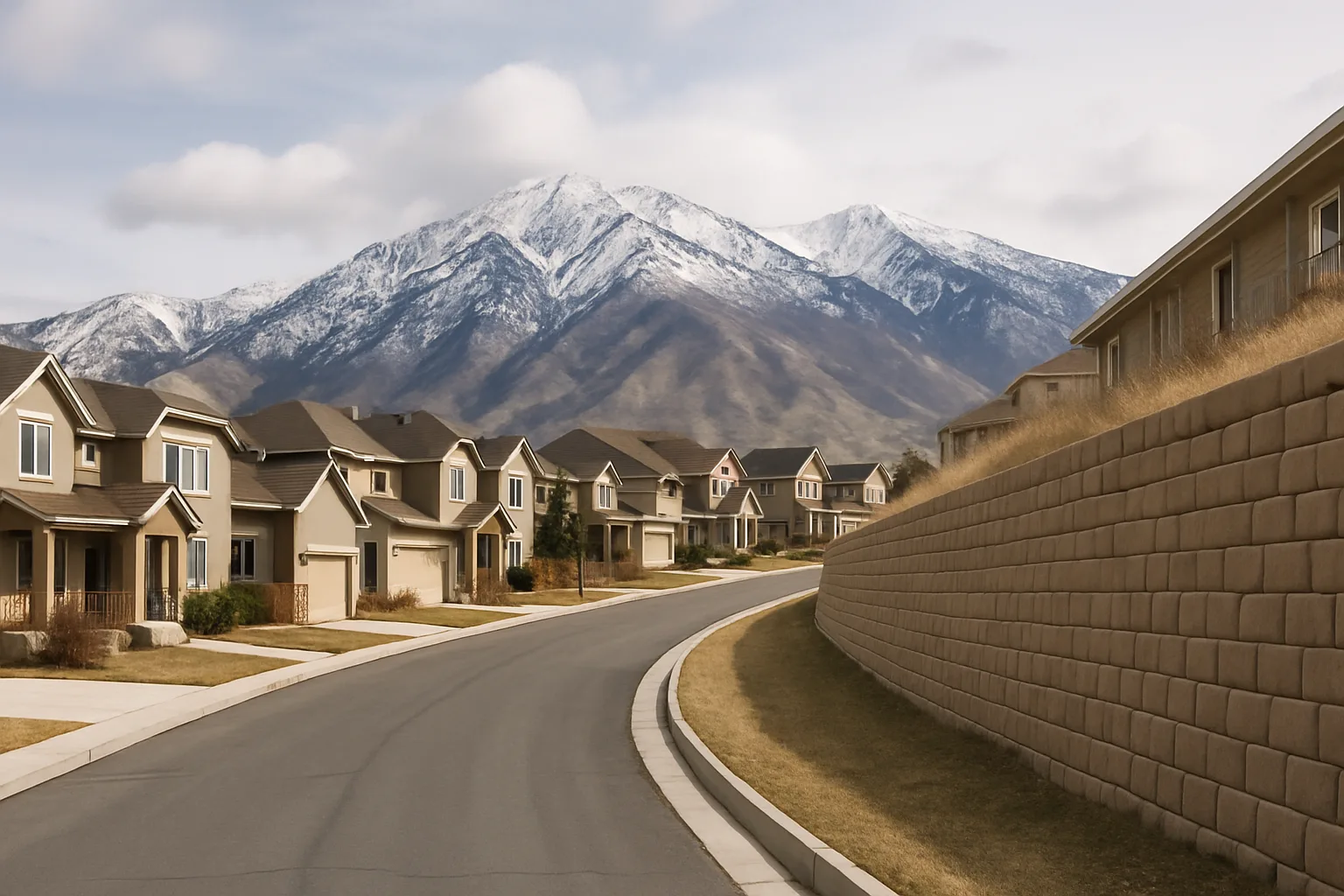
- Private streets. Some subdivisions, particularly gated or townhome projects, have streets that were never dedicated to the city. Plowing, patching and eventual repaving fall to the owners. Buyers comparing gated communities in St. George or anywhere else should confirm who maintains the roads.
- Retaining walls. Walls that hold up common areas or support several lots can be costly to repair, and responsibility depends on whether the wall sits on common area, on individual lots or on a shared easement.
- Stormwater facilities. Detention basins, swales and private storm drains need periodic cleaning and repair. When they sit on common area, they belong to the association.
- Shared utilities and amenities. Private water or sewer lines, irrigation systems, fences, landscaping strips, pools and clubhouses all need upkeep.
How the bills reach individual owners
When a dormant association finally faces a failing wall or a collapsing road, the cost does not shrink with time. Unless the governing documents provide otherwise, Utah requires an association's board to conduct a reserve analysis at least every six years and to review it at least every three years, so that major repairs are funded gradually. A dormant association has likely done neither. The result is a large special assessment once a board is reformed, or a lawsuit between neighbors over who should pay. An unclear association status can also cause friction at closing, since the state registry is where closing agents find the contact who provides dues payoff information for a sale or refinance.
A fictional example
Picture a hypothetical 24-home townhome community where the volunteer board stopped meeting after the last developer-era members moved away. Dues collection lapsed, and the reserve account was spent on landscaping. Six years later, a section of the private road begins to fail and a retaining wall along the common area starts to lean. With no budget and no reserve, the owners face a choice between reorganizing the association and levying a large one-time assessment, or splitting the cost through a private agreement that every owner must sign. Either path costs far more than modest annual reserve contributions would have.
Bringing an Association Back
Utah law gives owners several tools to repair a failed HOA:
- Reincorporation. An association that was terminated or dissolved without the possibility of reinstatement can be reincorporated by its acting directors refiling articles of incorporation substantially similar to the originals. The board then readopts the prior bylaws, and all lot owners in the project become members of the reincorporated association.
- Re-registration. An association that fell out of compliance with the state registry can end the period of noncompliance by registering again, which restores its ability to place and enforce assessment liens going forward. Liens tied to a lot that sold to an independent buyer during the lapse are a special case and can be extinguished.
- Consolidation. Two or more associations can merge into one. Unless their documents provide otherwise, each association's owners must approve at the voting threshold required to amend its governing documents. For small, struggling associations next to a larger one, consolidation can spread costs over more owners.
Each of these steps typically requires legal help and owner participation, which is often the hardest part.
What the HOA Ombudsman Can and Cannot Do
Utah created the Office of the Homeowners' Association Ombudsman within the Department of Commerce in the 2025 legislative session, and the law took effect May 7, 2025. Its attorneys analyze complaints and issue written advisory opinions, and the office runs the state HOA registry, publishes educational materials and offers training. State law also directs the office to publish instructions on how associations can be organized and dismantled.
The limits are important for owners dealing with a failed association:
- Advisory opinions address only possible violations of state statutes, not disputes over what the governing documents mean.
- A request costs a $150 nonrefundable filing fee, must generally be filed within a year of when the issue was discovered, and usually requires first using the association's own dispute procedures.
- The office cannot represent owners or associations in court, and its opinions are generally not admissible as evidence.
For an owner trying to figure out whether a dormant association is breaking state law, for example by failing to provide a reserve analysis summary, an advisory opinion may help. For deciding who pays for a specific retaining wall, a real estate attorney is usually the better first call. More background on the office is in this overview of Utah's new HOA ombudsman.
A Buyer's Checklist for HOA Health
The Department of Commerce's HOA homebuyer's guide recommends requesting the association's documents early, since the HOA has up to 14 days to respond to a seller's request. Beyond the standard documents, buyers can look for signs of a struggling association:
- Search the state registry. Confirm the association is registered and current. An unregistered association cannot enforce liens, which often signals bigger problems.
- Ask for the reserve analysis. Compare the reserve balance with the age and condition of roads, walls and amenities.
- Read recent minutes and budgets. Missing minutes, no annual budget, or a board with empty seats are warning signs.
- Check the plat. The recorded subdivision plat at the county recorder shows which parcels are common area and whether streets were dedicated to the public.
- Look for maintenance agreements. Stormwater and shared-access agreements are often recorded against the property and spell out who maintains what.
- Walk the common areas. Cracked retaining walls, standing water in detention basins and failing pavement are visible clues to deferred maintenance.
- Ask about pending or past litigation. Lawsuits, construction defect claims and special assessments all affect future costs.
Some buyers decide the simplest answer is to avoid shared infrastructure altogether. In markets like St. George, browsing St. George homes with no HOA narrows the search to properties without association dues, though owners of those homes take on full responsibility for their own lots. Buyers in Lehi and other cities with large planned communities will want to apply the same checklist, including checking for both a master association and a sub-association.
Bottom Line
A healthy HOA is mostly invisible: dues are paid, reserves grow and roads get repaved on schedule. A failed one becomes visible all at once, usually when a large repair can no longer wait. Utah law offers ways to restart an association and a state office that can answer statutory questions, but the costs of deferred maintenance stay with the owners. Buyers who check the registry, reserve analysis, plat and common areas before closing can avoid inheriting a problem. Listings across the state are available at Best Utah Real Estate.
Frequently asked questions
What happens to common areas when a Utah HOA dissolves?
The common areas still have to be maintained. Utah's Community Association Act makes the association responsible for common areas unless the declaration says otherwise, and it does not hand that job to the city or county. Until owners revive the association or reach another agreement, repairs to shared roads, walls and drainage facilities tend to go undone.
Can a dissolved HOA be restarted in Utah?
Yes. Utah Code 57-8a-221 allows the acting directors of a terminated or dissolved association to reincorporate by refiling articles of incorporation substantially similar to the originals. The board readopts the prior bylaws, and all lot owners in the project become members again.
Can an unregistered Utah HOA collect dues through a lien?
Not while it is out of compliance. Associations must register with the Utah Department of Commerce and renew annually. During a period of noncompliance, a new assessment lien cannot arise and an existing one cannot be enforced, though the association can restore that ability by registering again.
Does Utah have an HOA ombudsman?
Yes. The Office of the Homeowners' Association Ombudsman was created in the Department of Commerce by 2025 legislation that took effect May 7, 2025. It issues advisory opinions on possible violations of state statutes for a $150 filing fee, but it cannot interpret governing documents or represent owners in court.
Who pays to fix a private road in a Utah subdivision?
If the road is common area, the association is responsible under state law unless the declaration assigns it elsewhere, and the association funds repairs through dues, reserves or special assessments. The recorded plat at the county recorder shows whether a street was dedicated to the public or kept private.
How can buyers tell whether a Utah HOA is in trouble?
Check that the association is current on the state HOA registry, request the reserve analysis, and review recent budgets and meeting minutes. Empty board seats, missing budgets, a low reserve balance compared with aging roads or walls, and visible deferred maintenance are common warning signs.
Keep reading
More from the blog
Tiny Homes in Utah: Zoning, Building Code and the 2026 Backyard ADU Law
Planning a Backyard Shed for a Utah Home: What to Check
Does a New Water Heater Increase Home Value?