Planning a Backyard Shed for a Utah Home: What to Check Before You Buy
A backyard shed works best when the building, site and your storage needs fit together. Here is what Utah homeowners should check on rules, drainage, delivery and total cost before ordering.
A backyard shed can make a home easier to live in without turning it into a major renovation project. Bikes move out of the garage, gardening tools get a proper home, and seasonal equipment stops taking over the space meant for a car. The useful question is not simply how big a shed you can fit. It is whether the building, the site and the way you plan to use it work together.
For homeowners comparing Utah properties or improving a place they already own, a little planning before ordering can prevent an awkward location, inaccessible doors or unexpected site-preparation costs. If you are still deciding on a project, a practical guide to planning a home renovation covers budgeting and sequencing.
Start with the things you actually need to store
Make a quick inventory rather than choosing a building from its exterior dimensions alone. A lawn mower, two bicycles and a workbench need different access from stacked storage bins. Measure the largest item and allow room to move it through the doorway without lifting it over everything else.
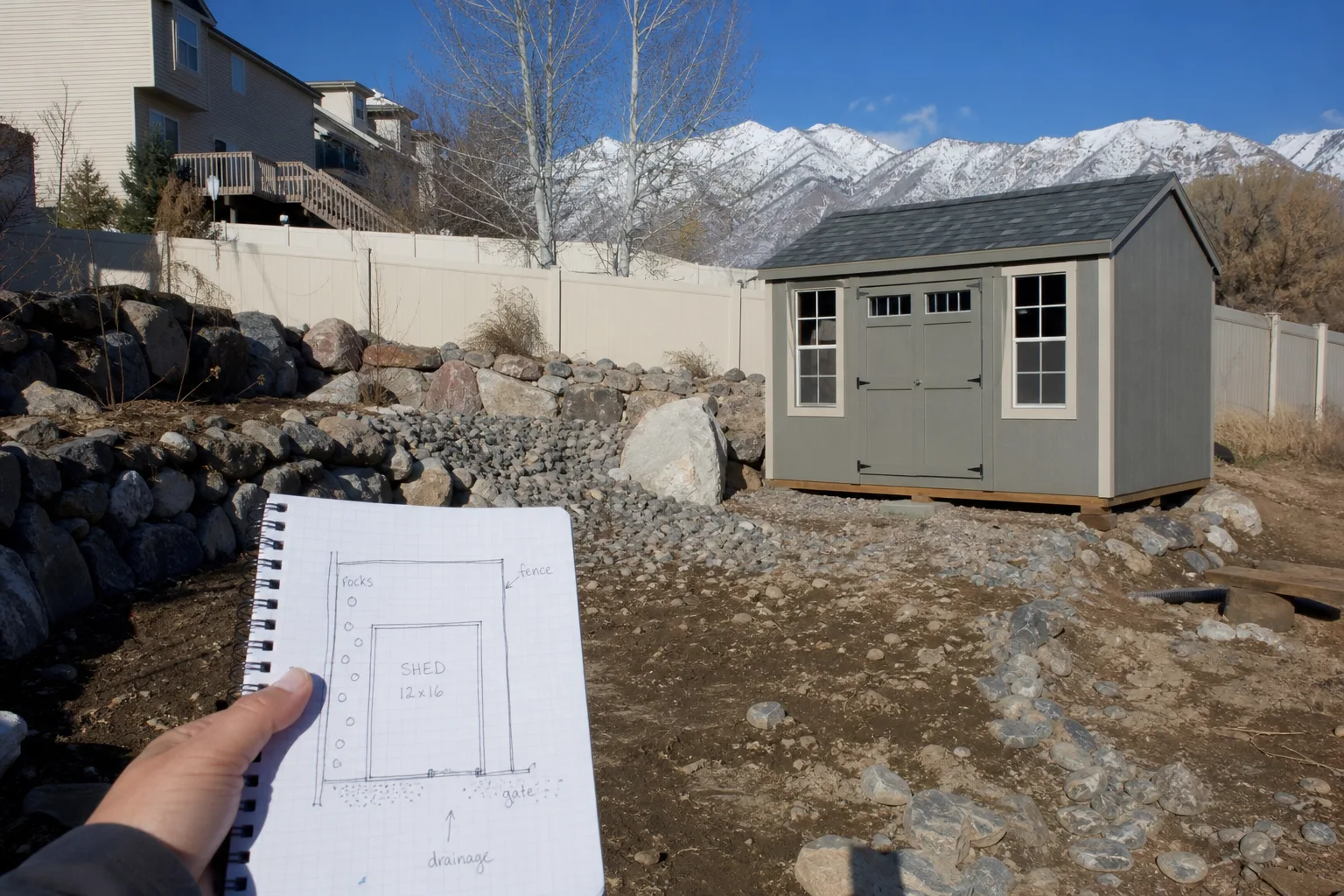
Then sketch the interior. Put frequently used items near the entrance, reserve a clear aisle and think about where shelves would go. Check internal dimensions as well as the advertised footprint: walls, door openings and fixed fittings can affect usable space. A slightly larger building is not always better if it uses up the practical walking route across the garden.
Check the property's rules before committing to a location
Contact the local building or planning department about the proposed structure and its intended use. Ask which permissions, placement restrictions and other requirements apply to that specific address. If the home is in a homeowners association, review its rules as a separate step. A supplier's description of a building is not confirmation that it is allowed on your lot.
It is also worth checking property boundaries and any recorded easements before choosing the final position. See these property boundary upgrades that boost curb appeal for ideas on defining your yard. If electricity, water or another service is part of the plan, discuss it with the appropriate licensed professional instead of treating it as an afterthought. A simple storage building and an occupied workspace can raise different questions.
Walk the site after rain or snowmelt
A flat-looking corner is not necessarily the most suitable place for a building. Notice where water collects, how runoff moves through the yard and whether the proposed shed would obstruct an existing drainage route. Keep access to utilities, inspection points and other service areas in mind.
Ask the supplier or installer what foundation and site preparation the chosen building requires. Do not assume that placing it directly on soil or adding an improvised base will meet the installation requirements. Compare the cost of preparing two possible locations before deciding that the more hidden corner is the cheaper option.
Match the building to the actual conditions
Ask about the specifications for the exact model, not just a general claim that it is suitable for outdoor use. The relevant questions include roof and structural requirements for the site, anchoring, weather protection and the maintenance expected for the material. Local conditions vary, so the installer and local officials are better placed to confirm requirements than a generic buying guide.
When comparing storage sheds, look beyond the product photograph. Check the supplied dimensions, door configuration, included components and installation information, then ask about anything that is unclear before ordering. A clear list of what is included also makes competing quotes easier to compare.
Make sure delivery can reach the chosen spot
Measure gates, narrow side yards and changes in level between the street and the intended site. Overhanging branches, utility lines and tight turns can matter as much as the final footprint. Ask how the building or kit will arrive and what space the delivery team needs.
Clarify who handles unloading, assembly, foundation preparation and removal of packaging. If access is limited, discuss alternatives with the supplier before paying a deposit. A building that fits the garden still has to get there.
Think about how the shed affects the rest of the yard
Leave practical room around the building for the maintenance its design requires. Consider door swing, the route used to carry equipment, nearby planting and the view from the house. Keep outdoor seating and children's play areas usable rather than squeezing them into the space left over.
If a property sale is part of the longer-term plan, keep records of permissions, specifications and installation work. A tidy, well-maintained shed can be a useful feature, but there is no universal promise that a particular building will increase a home's value or recover its purchase cost. Related reading: does a new water heater increase home value?
Compare the total project, not just the shed price
Write down the building cost alongside delivery, preparation, assembly, any required professional work and ongoing maintenance. Check the warranty, cancellation terms and any model-specific exclusions. It is easier to decide between two options when both figures describe the finished, usable project.
The best choice is the shed that solves a real storage problem, fits the property and comes with a workable installation plan. Settle those basics first, and the decisions about color, trim and shelving become much simpler.
Frequently asked questions
Do I need a permit to build a backyard shed in Utah?
How far should a shed be from the property line in Utah?
What kind of foundation does a backyard shed need?
Does a storage shed increase home value?
Where is the best place to put a shed in my yard?
Keep reading
More from the blog
Tiny Homes in Utah: Zoning, Building Code and the 2026 Backyard ADU Law
Does a New Water Heater Increase Home Value?
Property Boundary Upgrades That Boost Curb Appeal