Utah and Florida Real Estate Markets in 2026: Trends, Inventory, and Buyer Activity
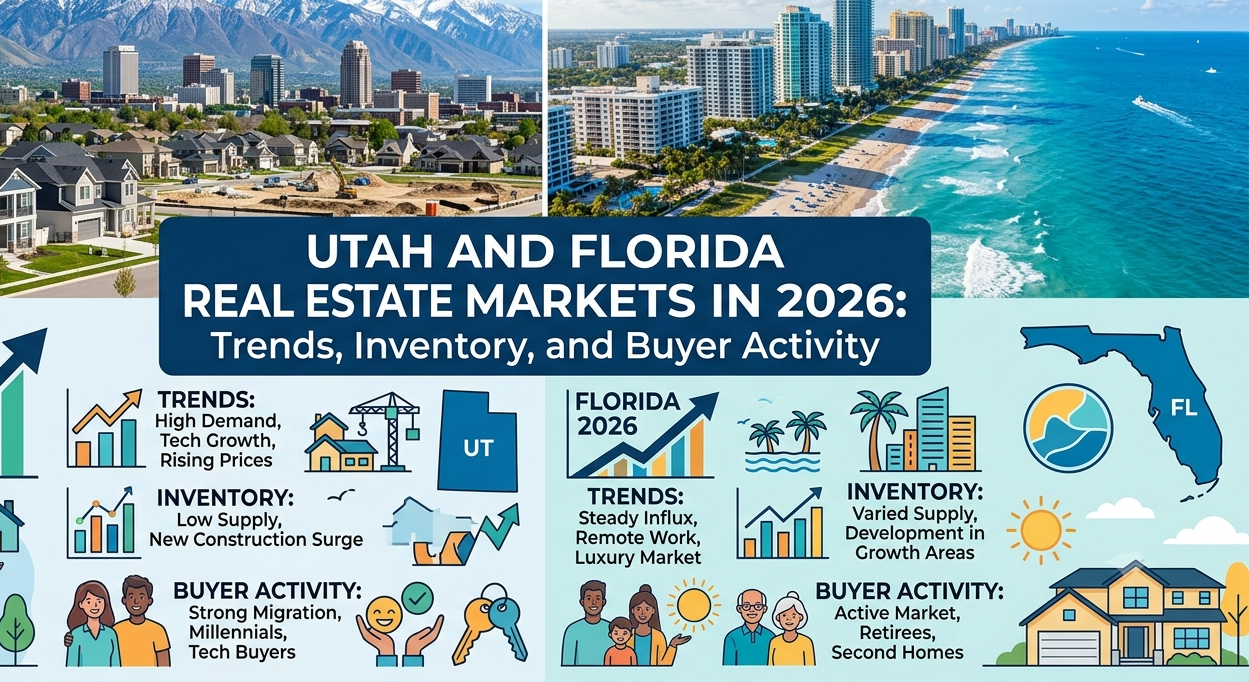
Utah and Florida remain two of the most closely watched real estate markets in the country. In 2026, both states show elevated home prices and strong population growth, but diverge sharply on inventory levels, affordability pressures, and buyer activity.
The real estate markets in Utah and Florida continue to attract national attention in 2026. Both states have experienced significant population growth during the past decade, driving demand for housing and contributing to substantial home price appreciation. However, recent market conditions show notable differences in inventory levels, affordability, buyer activity, and pricing trends.
For Utah homeowners, buyers, and investors, comparing these two high-growth markets offers valuable insight into how housing conditions are evolving across different regions of the country. For a broader look at where the national market is heading, see our analysis of the 2026 housing market shift in rates and affordability.
Population Growth Continues to Influence Housing Demand
Population growth remains one of the strongest drivers of real estate activity in both states.
Utah has maintained steady growth thanks to a combination of job creation, a relatively young population, and continued expansion along the Wasatch Front. Areas including Salt Lake County, Utah County, and Davis County continue to attract new residents seeking employment opportunities and access to outdoor recreation.
Florida's growth has been fueled by a broader mix of retirees, remote workers, international buyers, and individuals relocating from higher-tax states. Metropolitan areas such as Tampa, Orlando, Jacksonville, and Miami continue to rank among the nation's most popular relocation destinations.
While both states are adding residents, Florida's larger population base and continued migration trends have created substantial housing demand across many regions.
Home Prices Remain Elevated Compared to Historical Levels
Although the rapid appreciation seen between 2020 and 2023 has slowed, home values in both states remain well above pre-pandemic levels.
Utah's housing market has generally shifted into a period of moderation. Home prices in many communities have stabilized as buyers adjust to higher mortgage rates. While some neighborhoods continue to post modest gains, the dramatic year-over-year increases of previous years have largely subsided.
Florida has experienced a wider range of pricing trends. Some markets continue to see appreciation, while others have recorded modest declines as inventory levels increase. Coastal communities that experienced particularly strong growth during the housing boom have generally seen the most noticeable cooling.
Despite these adjustments, homeowners in both states have retained significant equity gains accumulated during the past several years.
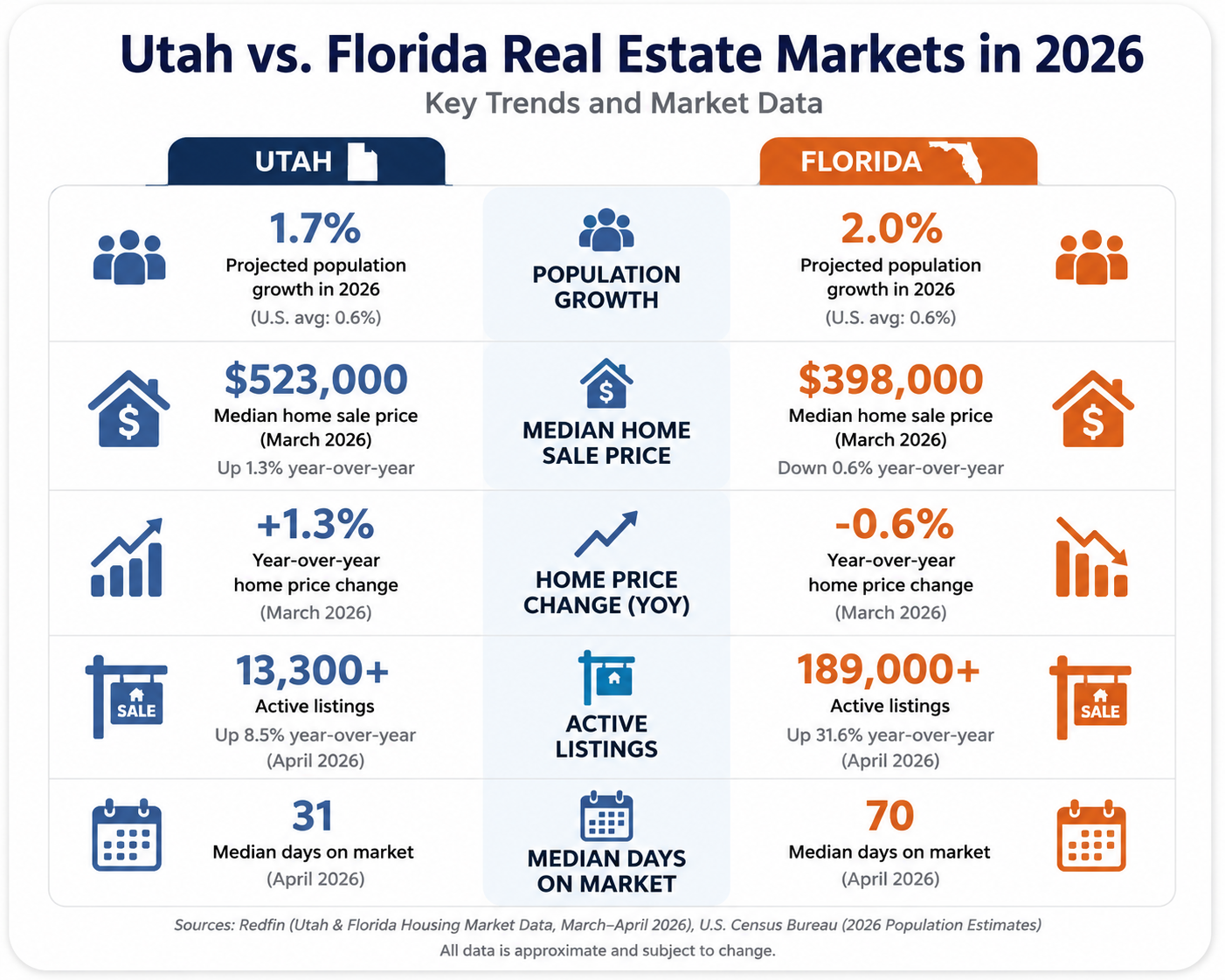
According to Redfin data, Utah's median home sale price reached approximately $523,000 in early 2026, representing a modest year-over-year increase and reflecting the market's transition from rapid pandemic-era appreciation to more sustainable growth patterns.
Inventory Levels Show One of the Largest Differences
Housing inventory is one of the clearest distinctions between Utah and Florida in 2026.
Utah inventory has improved compared to the exceptionally tight market conditions experienced during 2021 and 2022. Buyers now have more options, and multiple-offer situations have become less common. However, inventory in many Utah communities remains below long-term historical averages.
Florida has seen a more significant increase in available listings. In many markets, buyers have substantially more homes to choose from than they did just a few years ago. Properties are spending more time on the market, and price reductions have become increasingly common.
This inventory growth has altered conditions across portions of the florida real estate market, particularly in areas that experienced some of the fastest appreciation during the pandemic-era housing boom.
Affordability Challenges Continue in Both States
Affordability remains a major topic for buyers throughout both markets.
In Utah, housing costs continue to present challenges for many first-time buyers. Although wage growth has remained relatively strong, elevated home prices combined with higher mortgage rates have reduced purchasing power compared to previous years.
Florida buyers face many of the same concerns, but additional ownership expenses often play a larger role in affordability calculations. Insurance premiums, homeowners association fees, and maintenance costs can significantly increase monthly housing expenses in certain areas of the state.
As a result, buyers in both markets are placing greater emphasis on total ownership costs rather than focusing solely on purchase price. Understanding how to measure long-term real estate appreciation can help buyers and investors evaluate whether today's prices represent lasting value.
New Construction Activity Remains Important
Builders continue to play a major role in addressing housing demand in both states.
Utah has seen continued residential development throughout many growing communities. New subdivisions, townhome developments, and multifamily projects have helped increase housing supply, particularly in rapidly growing areas south of Salt Lake City.
Florida has also experienced significant construction activity, especially in suburban communities surrounding major metropolitan areas. Builders have responded to years of population growth by increasing production, contributing to the higher inventory levels now visible in many markets.
The pace of new construction will remain an important factor influencing future inventory levels and pricing trends in both states.
Investor Activity Has Become More Selective
Investor demand remains present across both markets, although investment strategies have evolved compared to previous years.
In Utah, investors continue to focus on long-term appreciation potential and stable rental demand. Strong employment growth and population gains continue to support interest in residential properties. Learn more about how cash buyers are changing the Utah real estate game and what that means for sellers and investors.
Florida remains attractive to investors seeking vacation rentals, second homes, and income-producing properties. However, rising operating costs and insurance expenses have led many investors to scrutinize cash flow projections more carefully than they did during the market's most competitive years.
This shift has encouraged more disciplined investment decisions in both states.
Market Conditions Continue to Evolve
The housing markets in Utah and Florida remain shaped by many of the same national factors, including mortgage rates, inflation, construction activity, and migration patterns. However, local conditions continue to create meaningful differences between the two states.
Utah's market remains influenced by strong job growth, a younger population, and relatively constrained housing supply. Florida's market continues to reflect ongoing migration trends, increasing inventory levels, and higher ownership costs associated with insurance and property maintenance.
As 2026 progresses, both states will continue serving as important indicators of broader housing market trends across the United States. For buyers, sellers, investors, and industry professionals, monitoring changes in these two high-profile markets provides valuable insight into the evolving real estate landscape.
Frequently asked questions
How do Utah and Florida home prices compare in 2026?
Which state has more housing inventory available for buyers in 2026?
What affordability challenges do Utah buyers face compared to Florida buyers?
Is Utah or Florida a better market for real estate investors in 2026?
How is new construction affecting housing supply in Utah and Florida?
Keep reading
More from the blog

Gas Line Installation: What Homeowners Need to Know First
Roof Timeline Guide for Buying an Older Utah Home

How to Choose Windows for a Utah Home With a Mountain View