How to Turn a Spare Bedroom Into a Home Hair Salon in Utah
Turn a spare bedroom into a home hair salon: shampoo bowl plumbing or portable, lighting, flooring, layout, Utah licensing, city permits and resale.
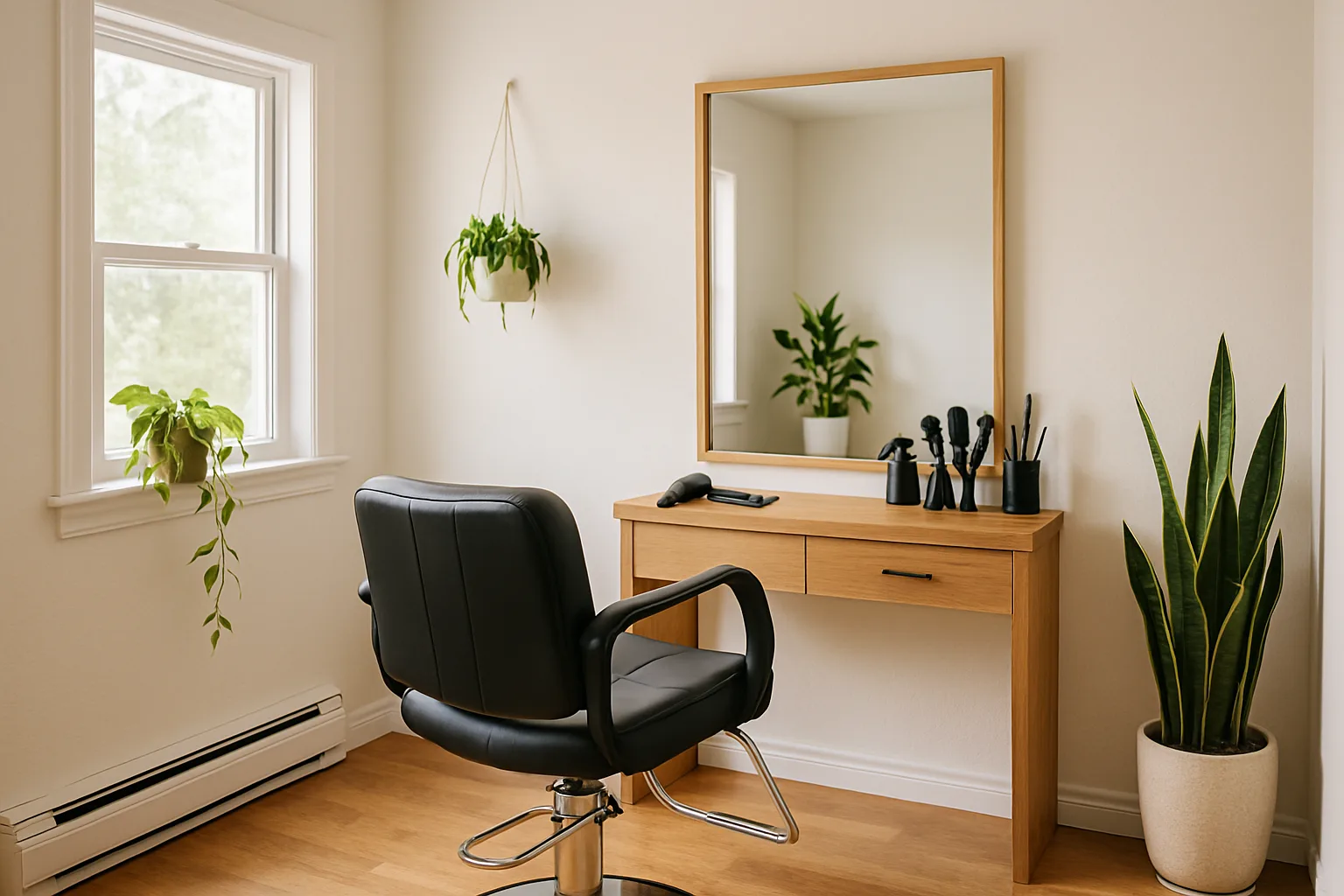
A spare bedroom can make a good one-chair salon. It gives a stylist a short commute and no suite rent, and the schedule works around the rest of the household. The rooms that work, though, are usually picked for their plumbing and where they sit in the house, not for how they look. The wrong room is the costliest mistake.
This guide follows the order stylists who have done this recommend: room, water, light, floor, layout and gear, then Utah licensing, city permits and resale.
As an Amazon Associate, Best Utah Real Estate earns from qualifying purchases.
Pick the room before anything else
A room of about 12 by 12 feet holds a styling chair, a shampoo bowl, a station and a small entry corner without feeling cramped. Size matters less than these four things:
- A bathroom on the other side of the wall. Running supply and drain lines a few feet through a shared wall is a far smaller job than crossing the house.
- What is under the floor. A crawl space lets a plumber run a drain almost anywhere. On a concrete slab, a new drain usually means cutting and trenching the slab. Plumbing in the wrong spot can run into five figures.
- Distance from the bedrooms. Blow dryers are loud. A front room on the main floor keeps work noise away from anyone sleeping upstairs and keeps clients out of the private part of the house.
- Natural light. A window helps with color work and with photos of finished hair.
French doors make a room feel like a separate studio. A soft-close barn door in place of a bedroom door saves swing space.
The shampoo bowl: plumb it or go portable
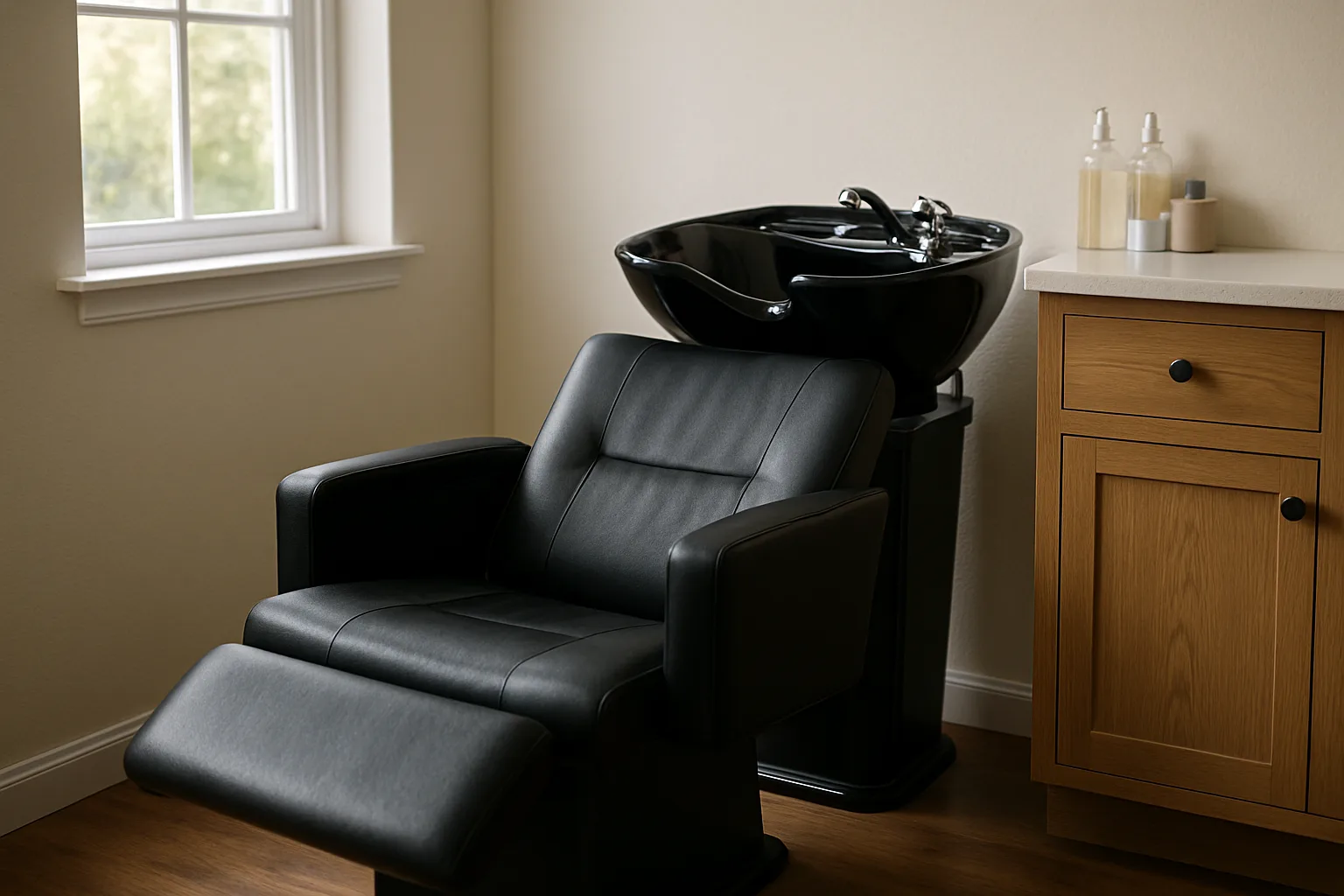
Plumbing a backwash bowl
A full backwash unit is heavy. One stylist's bowl arrived on a freight pallet weighing more than 160 pounds. Freight carriers usually need someone home to sign, then leave the pallet; line up help to carry it in. Check the delivered total, freight included, before ordering. Flat-pack sink kits can fail too: one kit's holes never lined up, and it went back.
Installers who have set these bowls point to a few steps:
- Anchor the base. Many bases bolt down. On concrete, drill for anchor bolts so the unit can't shift when a client leans back.
- Keep the flexible drain. The bowl tilts for client comfort, which is why it ships with a flex drain hose. A rigid pipe would lock the bowl in one position.
- Go easy on the wrench. Bowls are porcelain and bases are often fiberglass. Snug bolts and fittings by hand, then stop with the wrench once it resists. Use thread tape on threaded joints, and don't cross-thread them.
- Plan the supply lines. One install used 1/2-inch hot and cold connections plus brass adapters to meet the house lines.
- Fill slowly. Open the valves a little at a time, check every fitting for drips, and hold the sprayer while air bleeds out so it doesn't whip around.
- Hide it. A back bar behind the bowl covers the plumbing and holds product and towels.
Add a hair strainer at the drain whatever the code says; hair is what clogs salon drains.
Going portable
When the plumbing doesn't work out, a self-contained portable bowl is the usual answer. The better units put a clean-water tank, a waste tank, a small water heater and a pump in a cabinet on wheels. One stylist got through two to three services per fresh tank and emptied the waste tank after every client. A small trolley helps move the tanks. Look for counter space beside the bowl and pressure strong enough for thick hair. An all-in-one chair that reclines back to the bowl saves buying a second chair in a small room.
Shopping links: browse shampoo bowl and chair units or browse portable shampoo bowls with heaters. Check shipping weight and tank size on each listing.
Electrical and lighting
Hot tools draw a lot of power, and a bedroom circuit may not handle a blow dryer and two irons at once. Have an electrician check the load and add outlets at the station. Outlets near the shampoo bowl generally need GFCI protection. Confirm with the electrician and the city building department.
For light, layer it. Wall sconces at face height light the client from the front, while ceiling fixtures alone cast shadows down the face. Low ceilings need a flush-mount fixture. In one converted room under 8 feet tall, painting the walls and ceiling the same white made the room feel taller. A tall leaning LED mirror also moves easily from wall to wall: browse LED floor mirrors.
Bare walls echo; shelves, art and robes on hooks cut it down.
Flooring that sweeps clean
Pull up bedroom carpet. Hair and color ruin it. Stylists have used hard flooring that's soft underfoot, peel-and-stick tiles and even paint: one room got three base coats and one matte topcoat over the old floor, and it still wiped clean easily. Keep any rug at the entry, away from where hair falls. A cushioned mat at the chair saves the stylist's back and legs over a long day: browse anti-fatigue salon mats.
A stationary sweep vacuum near the floor in a corner lets hair go straight in with a broom, with no bending over a dustpan: browse stationary sweep vacuums.
Layout and client flow
Square rooms have no entry, so make one: a corner by the door with hooks for coats and bags, a small table for water or tea, and a mirror. Clients can check their hair coming and going. Add a seat for a companion.
If the walk to the restroom passes the kitchen, a screen helps; one stylist used wallpaper on foam board. In the restroom, a touch-free soap dispenser and an electric hand dryer save trouble: in an older house, hand towels flushed by clients brought the plumber out twice in one month.
Keep the chair, bowl and station a few steps apart, with the wet zone on the plumbing wall and cords on the opposite side.
Storage and gear
- Turn the closet into a color room. A bedroom closet makes a neat mixing room with shelves for color tubes, bowls, brushes, foils, gloves and disinfectant, behind a door clients don't see.
- Use kitchen cabinets. Stock kitchen cabinets come with drawers and pull-outs that furniture lacks. A pull-out trash and recycling drawer is worth having in any salon.
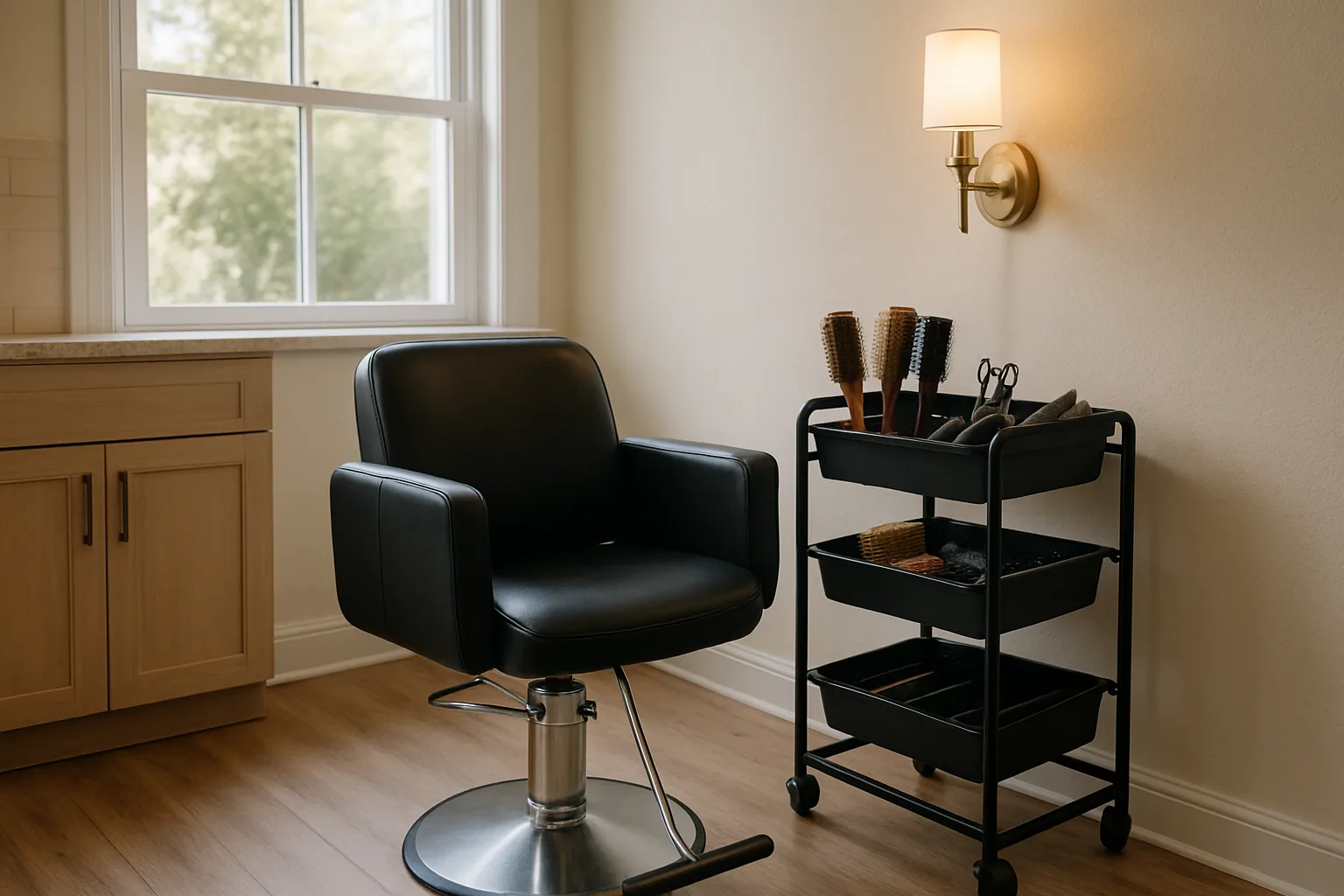
- Keep the station mobile. A rolling trolley or cart moves to wherever the work is: browse rolling salon trolleys.
- Get hot tools off the counter. A clamp-on holster holds a dryer, flat iron and curling irons on almost any table edge: browse hot tool holders.
- Buy a chair that pumps up and down. A hydraulic chair lets the stylist work at the right height for every client: browse hydraulic styling chairs.
For a backsplash behind a utility sink, the peel-and-stick backsplash guide covers how these panels hold up near water.
Utah licensing
Utah requires a license to do cosmetology or barbering for pay unless an exemption applies (Utah Code 58-11a-301). As of this writing, the exemptions include unpaid work, threading and hair braiding. Blow-drying, styling, shampooing and conditioning with no cutting, color or chemical services are also exempt, but that work needs a hair safety permit (a two-hour DOPL-approved course and exam) and a posted sign saying the person isn't licensed. Licensed stylists must display the license where they work. DOPL's cosmetology page handles applications online. Ask DOPL whether a home salon needs anything beyond the individual license.
Utah's facility sanitation rule, in the text available as of this writing, exempts home salons from some shop requirements, but hand washing, disinfecting tools and clearing hair after every client still apply, and health officers can inspect. Ask the county health department which rules are current.
City home-occupation permits
Most Utah cities regulate businesses run from a house, and the rules vary a lot. State law limits when a city can charge a home-business license fee: generally only when the business's impact on the neighborhood is materially greater than the home's own (Utah Code 10-1-203). A fee waiver doesn't mean a permit isn't required.
Here's how two cities handle it. In a South Salt Lake staff report, a hair salon was a home occupation that needed a conditional use permit in a single-family zone. Its limits were no more than 20% of the floor area, two customers and two customer vehicles at a time, hours from 7 a.m. to 8 p.m., no non-resident employees, one small sign on the house, and no exterior changes. South Jordan requires a home-occupation license when clients come to the home, with a floor plan and a signed agreement. Call the city before building anything.
Utah checklist
| Item | Who handles it | Status |
|---|---|---|
| Cosmetology or barber license (or hair safety permit for styling-only work) | Utah DOPL | Required for paid services unless exempt; confirm current rules with DOPL |
| Home-occupation license or permit | City planning / business licensing | Confirm locally; limits on clients, parking, hours and signs vary by city |
| Plumbing permit for a shampoo bowl | City or county building department | Confirm locally before work starts |
| Electrical work (new outlets, circuits) | Licensed electrician + building department | Confirm locally |
| HOA approval | HOA board / CC&Rs | Confirm; many CC&Rs limit home businesses and client traffic |
| Insurance | Homeowners insurance agent | Confirm; a standard homeowners policy may not cover business use or client injuries |
| Sanitation | County health department | Applies to home salons; confirm which rules apply |
In an HOA neighborhood, read the CC&Rs before buying a bowl. The guide to Utah HOA rules covers what state law does and doesn't let an association restrict.
What a salon room means at resale
A salon room can go either way. A buyer who wants to run a business from home may see a plumbed, well-lit room as a real plus. Many other buyers want the bedroom back, and a shampoo bowl in a bedroom can narrow the field. Some steps keep the options open:
- Keep the paperwork. Save permits and final inspections for the plumbing and electrical work. Unpermitted plumbing can get flagged at inspection.
- Make the room easy to reverse. Freestanding stations, rolling carts and a portable bowl leave with the seller. A plumbed bowl can be removed and the lines capped. Neat plumbing makes keeping it an easier sell. Ask the city whether capped lines need a permit or inspection.
- Keep it counted as a bedroom. A closet that became a color room can go back to a closet. Bedroom count drives how a home is listed and compared.
- Disclose the use. Tell the listing agent about the business use, the plumbing changes and any permits. Disclosure forms ask about work done on the house.
Anyone shopping for a home with a business in mind can look for a main-floor room next to a bathroom over a crawl space. The guide to moving to Utah covers the bigger picture of buying here.
Posted by Kristopher Larson
Frequently asked questions
Can I run a hair salon out of my home in Utah?
Often, yes, but it takes two separate approvals. The stylist needs a Utah cosmetology or barber license from DOPL for paid cutting, color or chemical work, and most cities require a home-occupation license or permit when clients come to the house. City rules commonly limit clients at a time, parking, hours and signs. Check with DOPL and the city planning office before building anything.
Do I need a license to do hair from home in Utah?
For paid services, generally yes. As of this writing, Utah exempts unpaid work, threading and hair braiding. Blow-drying, styling, shampooing and conditioning without cutting, color or chemicals is also exempt, but only with a DOPL-approved hair safety permit and a posted sign saying the person isn't licensed. Confirm current rules with DOPL.
Can I put a shampoo bowl in a bedroom without plumbing?
Yes. A portable shampoo bowl uses a clean-water tank, a waste tank, a small heater and a pump, so it needs only an outlet. One fresh tank can cover a couple of services, and the waste tank should be emptied after every client. It also leaves with the seller, which keeps the bedroom easy to sell.
How much does it cost to plumb a shampoo bowl at home?
It depends mostly on the room. A room next to a bathroom over a crawl space can be a modest job. On a concrete slab far from existing lines, cutting in a new drain can run into five figures. Get a plumber's quote before picking the room, and ask the city whether the work needs a permit.
Does a home salon hurt resale value?
It can narrow the pool of buyers, since many want the bedroom back, but it can be a plus for a buyer who wants a home business. Keep permits and final inspections on file, make the room easy to return to a bedroom, and tell the listing agent about the business use and plumbing changes so they are disclosed.
Can an HOA stop me from running a home salon?
It may. Many CC&Rs limit home businesses, client traffic, parking or signs, and those rules apply on top of city permits. Read the CC&Rs and ask the HOA board before buying equipment or hiring a plumber.
Keep reading
More from the blog

Best Glass Food Storage Containers: OXO vs Rubbermaid Brilliance vs Pyrex Snapware
Best Water Filter Pitcher: Clearly Filtered vs ZeroWater vs Brita

Best Cutting Board for Knives: Teakhaus vs Epicurean vs Larch Wood