Peel and Stick Backsplash: How It Really Holds Up (Smart Tiles, STICKGOO, InHome)
Peel-and-stick backsplash after months and years: heat curling, wall damage, renter limits, plus Smart Tiles, STICKGOO and InHome picks and install tips.
Peel-and-stick backsplash tile looks great on day one. It's low cost, it goes up quickly with a utility knife, and from a few feet away a good subway sheet passes for the real thing. The real question is what it looks like months and years later, and what the wall looks like once it comes down.
The short answer: it depends almost entirely on where it goes. On a cool bathroom wall, a quality sheet can look as good after a year and a half as it did when it went up. Over a cooktop, a thick subway sheet started curling apart within about seven months. Below are the honest downsides, what removal really does to drywall, whether it's truly renter friendly, and the picks and supplies that give it the best chance of lasting.
As an Amazon Associate, Best Utah Real Estate earns from qualifying purchases.
Quick verdict
- Thick subway look for a kitchen wall away from the range: the STICKGOO Thicker Subway Peel and Stick Tile. Large 12 x 12 in sheets and a thicker build, but it didn't survive the heat over a cooktop.
- Best brand for a bathroom vanity: Smart Tiles Peel and Stick Backsplash (Stacked White Grey). Smart Tiles held up for a year and a half in a steamy bathroom with no major peeling.
- Small mosaic accent in a dry spot: the InHome Hexagon Marble Peel and Stick Tiles. A high-shine hexagon look for a coffee bar or pantry wall, with no water protection.
- Gray caulk for the edges: DAP Dynaflex Ultra Sealant (Light Gray). It's a window and door sealant, so 100% silicone is the better choice where water hits often.
The picks side by side
| Product | Shop | Look | Size | Build | Water and heat notes | Best spot |
|---|---|---|---|---|---|---|
| STICKGOO Thicker Subway Peel and Stick Tile |  Buy on Amazon | White subway | 10 sheets, 12 x 12 in each | 2 to 2.5 mm thick | Separated and curled over a cooktop and under hot cabinet lights | Laundry rooms, cool kitchen walls |
| Smart Tiles Peel and Stick Backsplash (Stacked White Grey) |  Buy on Amazon | Stacked white and gray tile | See listing | Made in North America | Smart Tiles held up to steam and splashes at a vanity; not for tub or shower walls | Bathroom vanities, kitchen walls |
| InHome Hexagon Marble Peel and Stick Tiles |  Buy on Amazon | Hexagon marble mosaic, high shine | 4 sheets, 10 x 10 in each (about 2.6 sq ft) | 1 x 1 in tiles | No water protection; needs 15 in or more above a stove without a backing | Coffee bars, pantries, accent walls |
| DAP Dynaflex Ultra Sealant (Light Gray) |  Buy on Amazon | Light gray caulk | One tube | Exterior sealant | Waterproof seal; tack-free in 30 minutes | Sealing tile edges at counters and corners |
How it holds up over time
Seven months in a kitchen: fine where it's cool, curling where it's hot
The STICKGOO subway tile behind a kitchen cooktop is the cautionary case. Wherever the wall stayed cool, it still looked exactly as installed after about seven months. Right above the cooktop and along the underside of the cabinets, where under-cabinet lights add heat, it failed in an odd way. The tile didn't fall off the wall. Instead, the sheet came apart in its own layers: the silver adhesive backing stayed stuck to the drywall while the tile face peeled away from it, curled and rippled. Nearly the whole run above the cooktop showed bends and lifted strips. A curled face looks as bad as a fallen tile, and the only fix was tearing it all down for real tile.
Peel-and-stick tile is often sold as heat resistant, but the wall over a cooktop is far harsher than the box suggests. The same tile would likely do well in a laundry room or any other space that never gets hot.
A year and a half in a bathroom: no major peeling
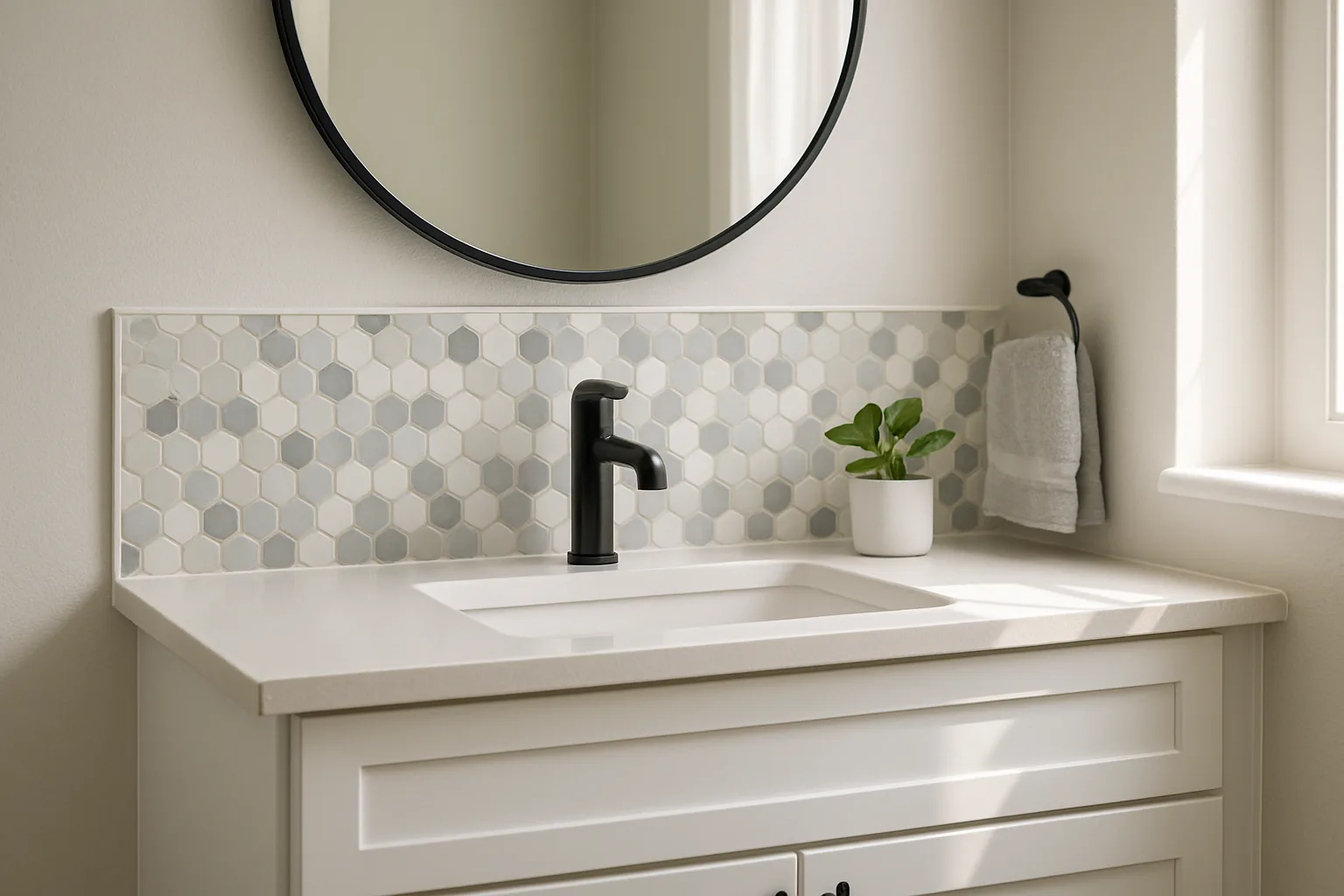
A Smart Tiles backsplash behind a bathroom sink tells a far better story. After a year and a half of frequent hot showers, with an exhaust fan but still plenty of steam, there were no major areas peeling off the wall, even along the top edge normally hidden behind a mirror. Splashes and toothpaste spatter wipe off with a wet rag. It will never match ceramic tile, but on a vanity wall it has done its job.
The honest downsides
Not all peel-and-stick is the same
Peel-and-stick comes in two very different forms. Floor tile is rigid and heavy, with an aggressive adhesive meant to stay put once it's rolled down. Wall and backsplash tile is much thinner, closer to wallpaper, and its adhesive is weaker on purpose so the sheets can be repositioned. That makes thin wall tile prone to peeling and "lipping," where an edge folds up and away from the wall. As a rule, the thicker the tile, the stronger its adhesive.
Putting floor tile on a wall to get that stronger hold usually backfires. The adhesive is designed for a flat, horizontal install, so gravity pulls at it on a wall. Doing so can void the warranty, and the tile needs extra adhesive to stay up. At that point the tile is effectively permanent, and taking it down means a heat gun and a lot of scraping.
Water gets to it eventually
Peel-and-stick tile is not 100% waterproof, and water does affect it. A bathroom sink wall with ordinary splashes is fine. A tub surround or shower wall that gets soaked every day is a different job, and real tile belongs there. Some products, like the InHome hexagon sheets, list no water protection at all.
Thicker doesn't fix heat
Thick tile grips harder and resists lipping. But the thick STICKGOO sheet is the one that came apart over the cooktop, so thickness alone doesn't make a tile safe behind a range.
Removal, wall damage and the renter question
Pulling the failed STICKGOO tile off painted drywall took some paint with it in places and tore away a bit of the drywall's top paper layer in others. The damage was light but visible. To put real tile on that wall:
- Sand it down. Knock off any high spots and anything still loose so the surface is level.
- Prime it. A tinted primer, rolled on the open areas and brushed at the edges, hardens any exposed drywall paper and fills its pores, giving new tile a better surface.
- Skim coat only if painting. When undamaged drywall is going under new tile, a skim coat isn't necessary. If the wall will only be painted, skim coat it first, or every scar and uneven spot will show through the paint.
Smart Tiles describes its tiles as easy to remove with little to no damage: warm the adhesive with a blow dryer, start in one corner, pull slowly, then wash leftover glue off the wall with a cleaning product. Even then, expect to lose a little paint that needs touching up.
So is it renter friendly? Not in the way the "removable" label suggests. Thin removable products can pull paint when they come off and may even fall down on their own over time. Stronger tile is harder to remove cleanly. Either way, the wall needs patching and painting before move-out, or the repair can come out of the deposit. Workarounds like sticking tile to a board instead of the wall take more product and more money, which defeats the point. A renter can still use it, but should budget time for wall repair at the end of the lease.
Install tips that make it last
- Start with a smooth surface. Peel-and-stick can go right over existing ceramic tile as long as that tile is smooth, not textured.
- Cut clean. Use a sharp utility knife on a self-healing cutting mat, with a framing square to keep cuts straight and cut-resistant gloves to protect the hand holding the sheet.
- Plan around heat. Keep the tile out of the zone right behind a cooktop and away from hot under-cabinet lights, or use real tile in that strip.
- Seal the edges where water hits. Run a thin bead of caulk where the tile meets the counter or sink. In a bathroom or anywhere that gets regular water, 100% silicone is the best choice.
The picks in detail
STICKGOO Thicker Subway Peel and Stick Tile
This is a classic white subway sheet, sold 10 to a pack in 12 x 12 in sheets, so each pack covers more wall than the common 10 x 10 in size. At 2 to 2.5 mm, the listing calls it two to three times thicker than ordinary peel-and-stick and claims a stronger adhesive than standard vinyl tile. It goes up easily and looks convincing, and on cool walls it held its look, but over a cooktop it curled within about seven months. Choose it for a laundry room, a mudroom or a kitchen wall well away from the range, not for the stretch behind the stove.
STICKGOO Thicker Subway Peel and Stick TileCheck today’s price on Amazon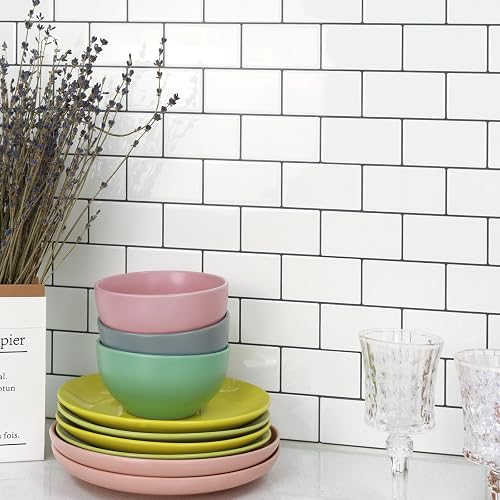

 Buy on Amazon →
Smart Tiles Peel and Stick Backsplash (Stacked White Grey)
Smart Tiles has the strongest long-term record here: a year and a half on a steamy bathroom wall with no major peeling and easy cleanup. The Stacked White Grey style is a clean, neutral pick from that line, made in North America and designed for kitchen and bathroom backsplashes. Seal the counter edge with silicone and keep it off tub and shower walls.


InHome Hexagon Marble Peel and Stick Tiles
For a small mosaic accent, the InHome sheets carry a high-shine hexagon marble look made of 1 x 1 in tiles. A pack holds four 10 x 10 in sheets, about 2.6 sq ft, so measure carefully and buy enough packs for the full wall. It wipes clean with a damp cloth. Two limits matter: the listing gives it no water protection, and a stove without a backing needs 15 in or more of space above the range to keep the tile out of the heat. That makes it a better fit for a coffee bar, pantry or accent wall than for a sink or cooktop wall.
InHome Hexagon Marble Peel and Stick TilesCheck today’s price on Amazon

 Buy on Amazon →
DAP Dynaflex Ultra Sealant (Light Gray)
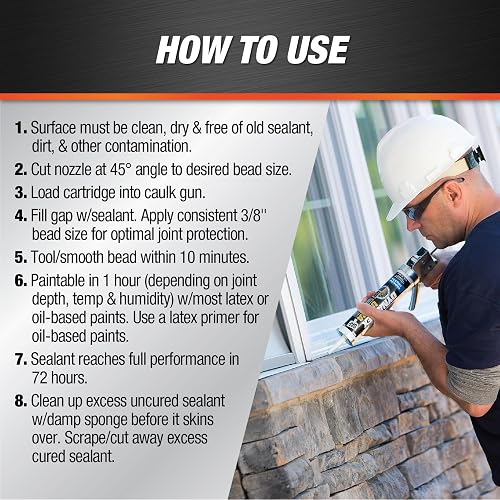
A light gray bead along the counter gives a peel-and-stick backsplash a finished, grout-like edge, and Dynaflex Ultra is the caulk on the Smart Tiles bathroom above. It's an exterior sealant made for windows, doors, siding and trim, tack-free in 30 minutes and paint- and rain-ready in an hour, with a waterproof seal. Using a window and door caulk in a bathroom isn't what's typically recommended, though. It was chosen only because 100% silicone couldn't be found in gray, and if mold or mildew shows up, the fix is to cut it out and switch to silicone. It has held up so far, but for a first install in a bathroom or any spot with a lot of water, 100% silicone is the best option.
DAP Dynaflex Ultra Sealant (Light Gray)Check today’s price on Amazon
 Buy on Amazon →
A kitchen refresh before the holidays
A new backsplash is a common project before hosting season. Once it's up, the rest of the room is easy to dress: artificial garland works well along open shelves or a window, and smart plugs can put the tree and window lights on a schedule. Keep holiday lights and anything warm off the new tile itself.
Who should use peel-and-stick, and who should tile
- Good fit: bathroom vanity walls, laundry rooms, closets, pantries, foyers, coffee bars and kitchen walls away from the range. It's one of the most affordable ways to change a room's look.
- Get real tile instead: the wall behind a cooktop, any spot under hot cabinet lights, and tub or shower surrounds that get soaked every day.
- Renters: it can work, but plan on repairing and painting the wall before moving out.
- Anyone planning to remove it later: expect some paint loss at minimum, and a sand-and-prime job before anything new goes on the wall.
Posted by Kristopher Larson
Frequently asked questions
Does peel and stick backsplash damage walls?
It can. Taking it off painted drywall often pulls off some paint, and stronger tile can tear away bits of the drywall's top paper layer. The damage is usually light: sand the wall smooth, then prime it before new tile, or skim coat it before painting so the scars don't show.
How long does peel and stick backsplash last?
It depends on where it goes. A Smart Tiles backsplash on a steamy bathroom vanity wall showed no major peeling after a year and a half. A thick subway sheet over a kitchen cooktop started separating and curling within about seven months, while the cool parts of the same wall still looked new.
Can peel and stick tile go behind a stove?
It's a poor spot for it. Heat from a cooktop and from under-cabinet lights made a thick subway sheet come apart in its layers and curl. The InHome hexagon listing calls for 15 inches or more of space above a stove without a backing. Real tile is the safer choice right behind the range.
Is peel and stick backsplash waterproof?
No, not fully. It handles splashes at a bathroom or kitchen sink and wipes clean with a wet rag, but water does affect it over time, and some products list no water protection at all. Seal the counter edge with 100% silicone, and use real tile around a tub or shower.
Can you put peel and stick tile over existing tile?
Yes, as long as the existing ceramic tile is smooth. Textured tile won't give the sheets a flat surface to grip.
Is peel and stick backsplash renter friendly?
Not really. Removal tends to take paint with it, thin removable sheets can fall down over time, and stronger tile is harder to remove cleanly. A renter can use it, but should plan to repair and paint the wall before moving out to protect the deposit.
Keep reading
More from the blog
Best Pre-Lit Christmas Wreaths: Plug-In vs. Battery, and Which Size Fits Your Door
Christmas Tree Storage Bags: BALEINE vs. Santa's Bags vs. Holiday Spirit vs. Hadisi
How to Make a House Smell Good Without Candles: Pura vs. Aera vs. JCloud