How to Make Beer at Home: Beer Making Kits, Fermenters and Machines
How to make beer at home: the four steps, a 1-gallon beer making kit, the BrewDemon fermenter, and the iGulu F1 and BeerDroid home beer brewing machines.
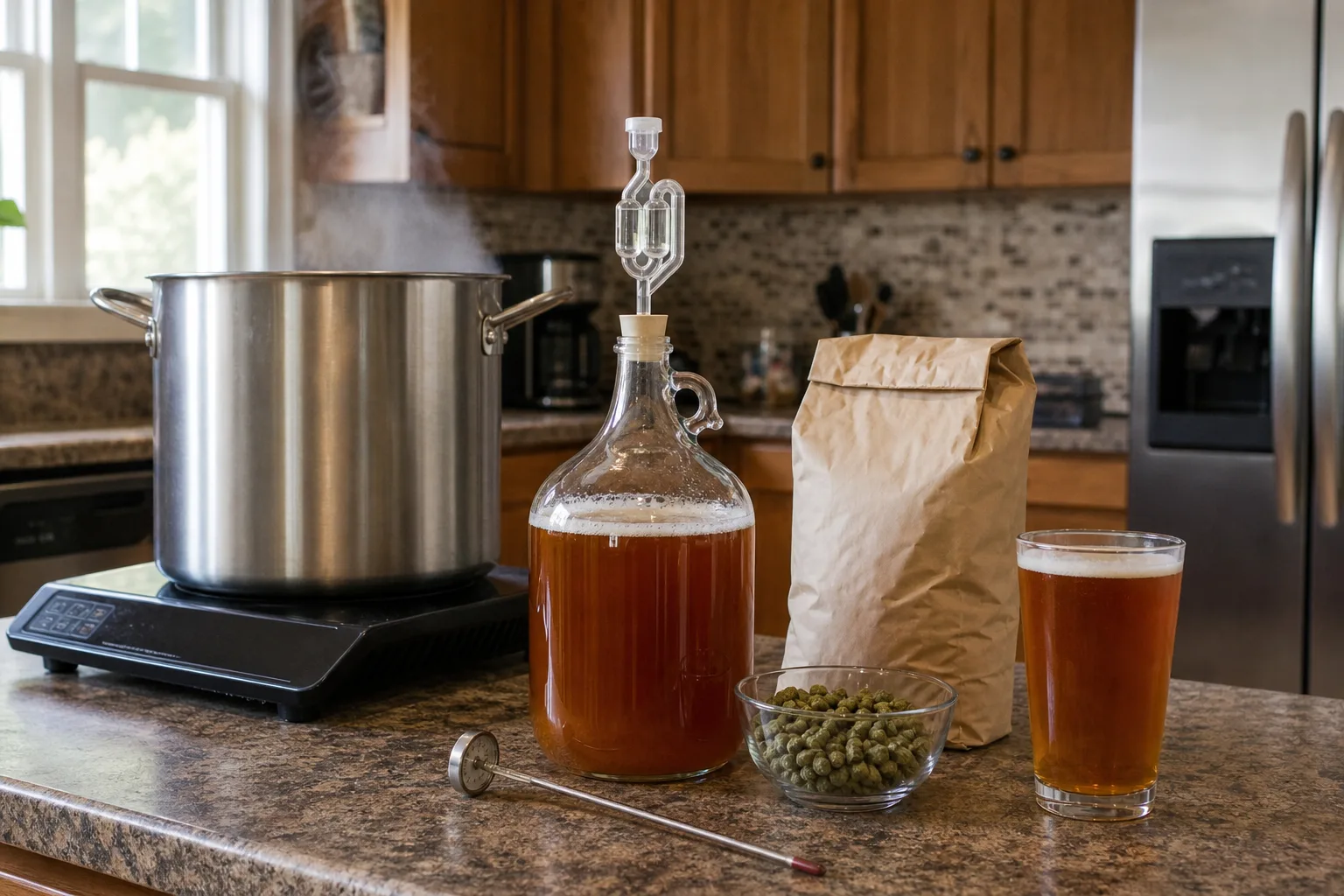
Making beer at home is easier than most people expect, and it's legal: federal rules let an adult 21 or older brew up to 100 gallons a year for personal or family use, or 200 gallons for a household with two or more adults, and Utah's law uses the same limits. Homebrewing is legal in every state, though some local rules differ. The hard part isn't the recipe. It's keeping everything clean and holding the right temperature while the yeast works.
There are three common ways to start, and they suit different people: a simple kit with a glass jug or plastic fermenter, a countertop beer machine that runs the fermentation for you, or a temperature-controlled fermenter appliance that sits on the counter like a mini fridge. This guide walks through how each one works and which to pick.
The short version
- Simplest way to learn real brewing: the Craft A Brew 1-gallon kit includes a glass jug, airlock, siphon, thermometer, sanitizer and a full recipe.
- Best fermenter to grow into: the BrewDemon conical fermenter has a wide mouth, a screw-down lid, a built-in spigot and plenty of headspace.
- Easiest beer machine: the iGulu F1 reads a tag on each kit and sets the temperature, pressure and timing itself.
- Best for small spaces and lagers: the BeerDroid is a 10-liter fermenter with its own cooling system that holds lager temperatures in a warm room.
| Option | Shop | Batch size | Temperature control | Best for |
|---|---|---|---|---|
| Craft A Brew 1-gallon kit |  View on Amazon | 1 gallon | None (room temperature) | Learning the process |
| BrewDemon conical fermenter |  View on Amazon | 2 to 2.5 gallons (3-gallon vessel) | None (room temperature) | Bigger batches, easy cleaning |
| iGulu F1 |  View on Amazon | About 1 gallon | Yes, plus pressure | Push-button brewing |
| BeerDroid | 10 liters (about 2.6 gallons) | Yes, heats and cools | Lagers, apartments |
How beer gets made, in four steps
- Clean and sanitize. Anything that touches the beer after it cools gets sanitized first. Most kits include a no-rinse sanitizer. This is the step that decides whether a first batch tastes like beer or like a science experiment.
- Make the wort. Beginner kits use malt extract, a concentrated syrup or powder, so there's no grain mashing. You dissolve it in hot water (some kits steep a small bag of grains first), boil it, and add hops at set times. Beer machines skip this step entirely with pre-made concentrates.
- Ferment. Once the wort cools to the temperature on the recipe, you add yeast and seal the vessel with an airlock so gas can escape and air can't get in. Ales take about one to two weeks; lagers need cooler temperatures and several weeks.
- Carbonate and serve. Most kits add a little sugar and bottle the beer to carbonate for another week or two. Machines and kegs carbonate under pressure instead.
Temperature is the second thing that ruins beers. Ale yeast is happiest around the low 70s or below. A house kept at 80 degrees can give a rougher-tasting beer, and a 40-degree basement may stall fermentation altogether.
Best first kit
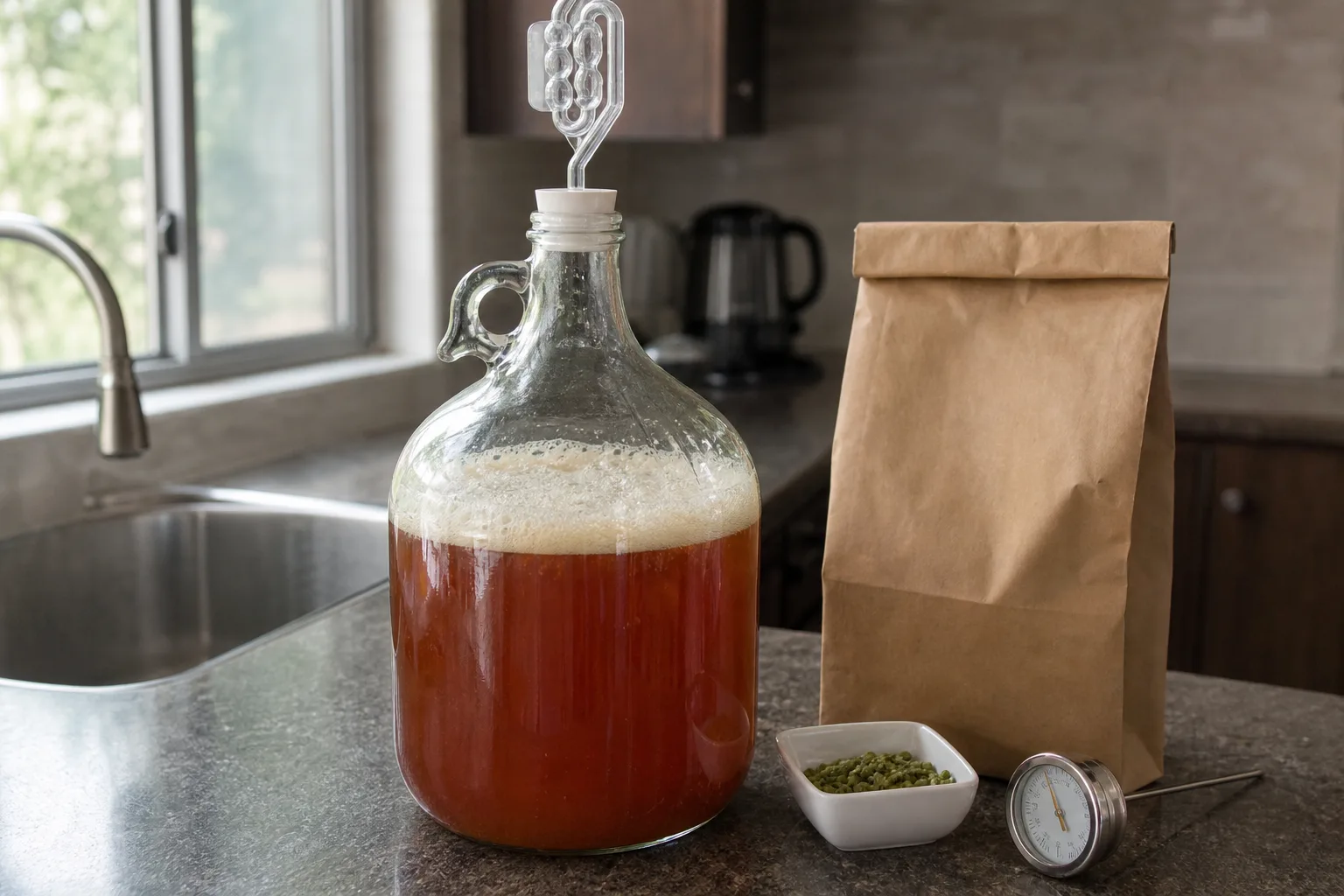
Craft A Brew 1-gallon starter kit
A complete small-batch kit with a glass jug, airlock, siphon, thermometer, sanitizer and a real extract recipe with grains and hops.
- 1 gallon
- Glass jug + airlock
- Extract recipe
Good for
- First-time brewers
- Small kitchens
- Learning every step
Skip it if
- You want bottles included
- You want more than a gallon per batch
Option 1: a starter kit and a fermenter
Craft A Brew 1-gallon kit
The Craft A Brew American Pale Ale kit is a full small-batch setup: a 1-gallon glass jug with a stopper and airlock, a racking cane and tubing with a clamp for siphoning, a thermometer, a funnel, no-rinse sanitizer, a printed guide, and the ingredients (dry malt extract, a small bag of specialty grains, bittering and aroma hops, and yeast). Refill ingredient kits are sold separately, and bottles, caps and a capper come in a separate bottling kit.
A gallon is a small batch, about ten bottles, which is exactly why it's a good first step: you go through every real brewing step with ingredients you can name, at low risk.
Best first kit
Craft A Brew 1-gallon starter kit
A complete small-batch kit with a glass jug, airlock, siphon, thermometer, sanitizer and a real extract recipe with grains and hops.
- 1 gallon
- Glass jug + airlock
- Extract recipe
Good for
- First-time brewers
- Small kitchens
- Learning every step
Skip it if
- You want bottles included
- You want more than a gallon per batch
BrewDemon conical fermenter
Any food-grade container that seals with an airlock can be a fermenter, and a plain bucket is the simplest option. What matters most is a wide mouth you can reach into and scrub, which is why narrow glass jugs are better left for aging. The BrewDemon conical fermenter is a step up from a bucket in several ways:
- A screw-down lid with thick threads and a foam seal, so it closes airtight; buckets with press-on lids often don't.
- A separate bung in the lid, so you can swap the airlock or take a reading without opening the whole thing.
- Frosted, BPA-free plastic you can see through to check for problems, while cutting the light that skunks beer.
- Extra headspace (it holds a little over 3 gallons) above the batch, so foam during fermentation doesn't blow out the airlock.
- A spigot mounted on a flat pad, which seals reliably, with on and off marked on the handle.
The cone shape is mostly styling; it doesn't work like a true conical fermenter. Two tips: use a bung and airlock instead of the venting plug it comes with, and tilt it back in its detached stand so the spigot points slightly up, away from the sediment, while the beer ferments.
Best fermenter
BrewDemon conical fermenter
A wide-mouth plastic fermenter with an airtight screw lid, separate bung, frosted body and a reliable spigot.
- Screw-top lid
- Built-in spigot
- BPA-free
Good for
- Easy cleaning
- 2 to 2.5 gallon batches
- Bottling from a spigot
Skip it if
- You want temperature control
What about Mr. Beer?
Mr. Beer is the kit most people have seen in stores. It's simple and makes clean, drinkable beer, but the basic recipe comes out sweet and malty, the ingredients aren't labeled in detail, and the fermenter vents through notches in the lid rather than sealing with an airlock, so it leaks if you turn it upside down while cleaning it, and its 2-gallon batches are small. Adding extra hops and a different yeast makes a noticeably better beer. It's a fine gift, but a kit with a real recipe and reusable gear teaches more.
Option 2: countertop beer machines
Beer machines skip the boil. You add water and a concentrate kit, and the machine ferments, carbonates and serves. They trade flexibility for ease: you're mostly tied to the maker's own kits.
iGulu F1
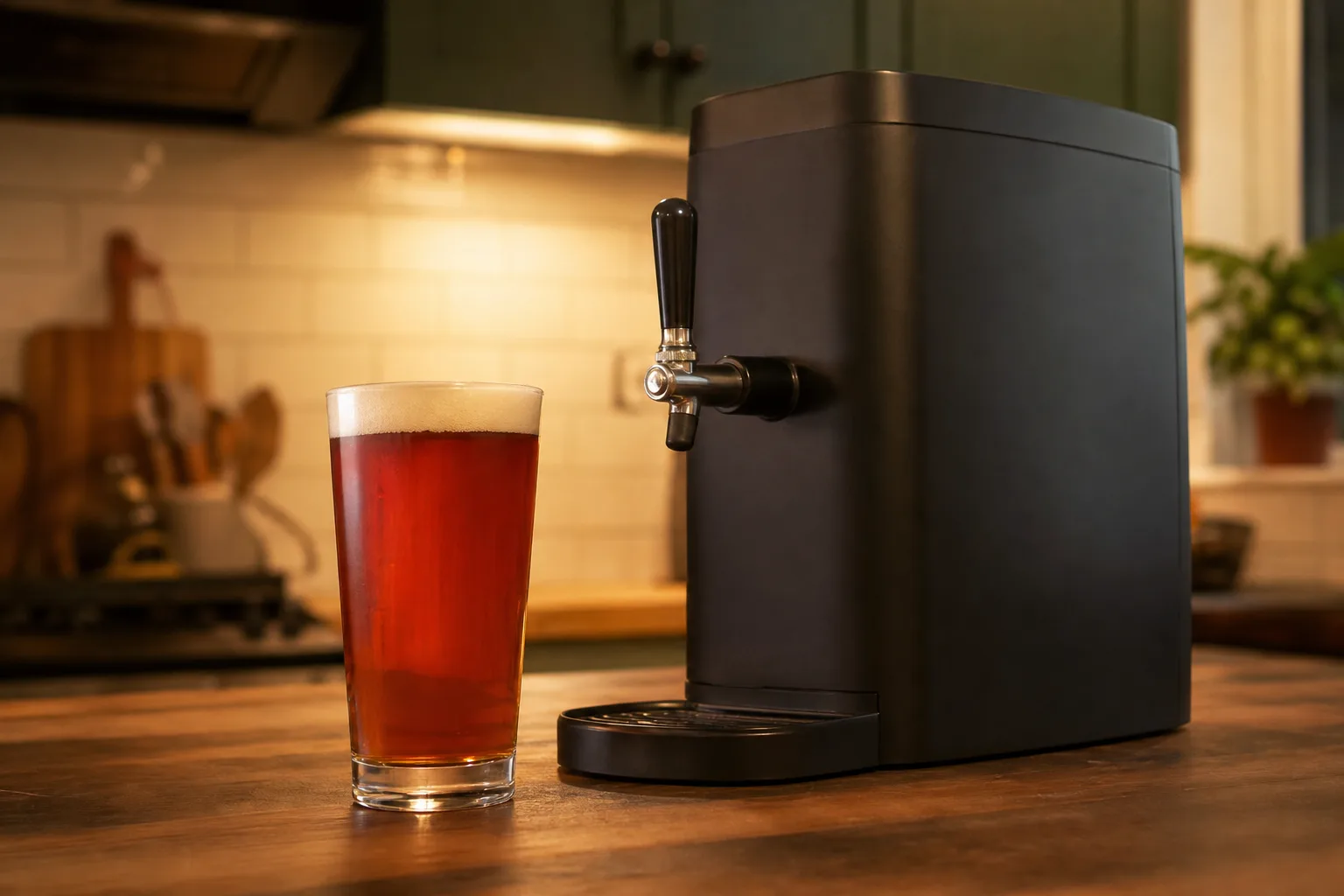
The iGulu F1 comes with a drip tray, a keg handle and pump, and the brewer itself with an internal jug. Setup is short: pour in a gallon of distilled water to the fill line, add the kit's extracts and malt, stir, then sprinkle the yeast on top without stirring. Seal the jug, slide it in, attach the dispenser and pressure hose, close the lid and scan the kit's tag. The machine sets the temperature, fermentation time and pressure itself.
The beer is good, the kind you'd pay for at a taproom, but it isn't fast: a hefeweizen took a few days, and an amber lager took a few weeks. A gallon pours only about 10 to 12 glasses, so this is for trying styles and having fun, not for stocking the fridge. Make sure the lid is fully secured, or it won't hold pressure. A master mode lets you enter your own recipes, and it also makes cider, wine, mead and kombucha.
Easiest beer machine
iGulu F1
Scan a kit's tag and it controls temperature, pressure and timing; makes taproom-quality beer a gallon at a time.
- RFID kits
- Pressure + temp control
- Master mode
Good for
- Total beginners
- Trying new styles
- Cider and kombucha too
Skip it if
- You want beer by the case
Pinter
The Pinter, sold direct rather than on Amazon, is a ferment-and-serve keg that yields about a gallon and a half of drinkable beer after the sediment settles out. Its app walks through every step, and its kits, from a light British bitter to a raspberry sour to an IPA, come out well. Two cautions: cleaning takes care, because trub hides in its spring-loaded valves, and the last pour tends to taste of sediment. It needs a spot around 70 degrees, since it has no temperature control, and it's about 18 to 20 inches tall on its base, so measure the fridge if you want to cold-crash it.
Option 3: a temperature-controlled fermenter
BeerDroid
The BeerDroid is essentially a 10-liter fermenter with its own compressor, so it can both warm and chill the beer. That lets it brew a clean lager without a separate fermentation fridge. It connects to Wi-Fi with a push of the router's WPS button, and the app sends a notification when fermentation starts. It ramps through each stage by itself, holding lager temperature, raising it for a cleanup rest, then cold-crashing before kegging. It tells when fermentation is done by comparing a lower and an upper temperature sensor: active yeast make heat that rises, and when both read the same, the work is finished.
It held its temperatures in an 84-degree room, ran quietly and made a clean, crisp lager. Practical notes: never lift it by the lid handle, which isn't built for the weight; use the molded side handles, and keep it upright (if it's tipped, let it stand 24 hours before switching on, like a fridge). Leave space around the sides for its radiators. The tap isn't insulated, so it drips condensation in humid weather. Its own recipe kits are easy to follow and can be bought as separate components, and it also works as a hands-off fermenter for your own recipes.

Best for lagers and small spaces
BeerDroid
A 10-liter fermenter with built-in cooling, Wi-Fi alerts and automatic temperature stages, so lagers come out clean.
- Built-in cooling
- Wi-Fi app
- 10 liters
Good for
- Apartments
- Lagers
- Set-and-forget brewing
Skip it if
- You want to brew big batches
Which way to start
- You want to learn brewing: start with the Craft A Brew kit, then move up to a fermenter like the BrewDemon and larger extract kits.
- You want beer without the process: the iGulu F1 or the Pinter.
- You want lagers, or your house runs warm: the BeerDroid, since temperature is what most first batches get wrong.
- You're ready to brew from grain: an electric all-in-one system that mashes and boils in one pot is the next step.
Best fermenter
BrewDemon conical fermenter
A wide-mouth plastic fermenter with an airtight screw lid, separate bung, frosted body and a reliable spigot.
- Screw-top lid
- Built-in spigot
- BPA-free
Good for
- Easy cleaning
- 2 to 2.5 gallon batches
- Bottling from a spigot
Skip it if
- You want temperature control
Tips for a good first batch
- Sanitize everything that touches the cooled wort, and keep a small bowl of sanitizer handy for spoons and tools.
- Cool the wort before adding yeast, and pour cold water into the fermenter before the hot wort so it doesn't warp plastic.
- Put a paper towel under a new spigot to catch slow leaks early.
- Be patient. Follow the recipe's timing; rushing fermentation leaves beer sweet and green-tasting.
- Clean right away with warm water before residue dries.
Homemade beer fits naturally into a man cave or basement bar, and a countertop ice maker keeps a cooler full for a tasting with friends. For movie nights, pair it with a home theater room.
Ready to brew from grain? See the best all-in-one electric brewing systems: BrewZilla vs Grainfather vs VEVOR.
Posted by Kristopher Larson
Frequently asked questions
Is it legal to make beer at home?
Yes. Federal rules let an adult 21 or older brew up to 100 gallons a year for personal or family use, or 200 gallons for a household with two or more adults, and homebrewing is legal in every state. Homebrewed beer can't be sold. Utah's law uses the same 100 and 200 gallon limits.
How long does it take to make beer at home?
Brew day itself takes an hour or two with an extract kit. Ales then ferment for about one to two weeks and need another week or two to carbonate in bottles. Lagers need cooler temperatures and several weeks of fermentation.
What is the easiest way to brew beer at home?
A countertop beer machine such as the iGulu F1 is the easiest: you add water and a kit, scan its tag, and the machine controls temperature, pressure and timing. A 1-gallon extract kit is the easiest way to learn the real process.
Do I need temperature control to brew beer?
Not for most ales, as long as the room stays around the low 70s or below. Lagers need cooler, steady temperatures for weeks, which is where a fermenter with built-in cooling, like the BeerDroid, or a fermentation fridge helps.
Is Mr. Beer a good kit for beginners?
It makes clean, drinkable beer and is simple to use, but the basic recipe is sweet and malty, the ingredients aren't labeled in detail, and the fermenter vents through notches instead of an airlock. A kit with a real recipe and reusable gear teaches more.
What equipment do I need to start homebrewing?
A fermenter with an airlock, sanitizer, a pot for boiling, a thermometer, a siphon or spigot for transferring, and bottles with caps and a capper (or a keg). Starter kits bundle most of this; bottles are often sold separately.
Keep reading
More from the blog
Mr. Heater Portable Buddy vs. Big Buddy for a Winter Power Outage: What Each Heats and What the Manuals Require
Best Under-Sink Reverse Osmosis System: Waterdrop vs. APEC vs. iSpring vs. Frizzlife
Cooking When the Power Is Out: Iwatani 35FW vs. Coleman Classic vs. GasOne Mini Butane Stoves