Best Under-Sink Reverse Osmosis System: Waterdrop vs. APEC vs. iSpring vs. Frizzlife
Tank vs. tankless RO systems from Waterdrop, APEC, iSpring and Frizzlife compared on waste water, flow, remineralization, certifications and installation.
An under-sink reverse osmosis (RO) system pushes tap water through a membrane fine enough to strip out most dissolved solids, then sends what it rejects down the drain. It's the most thorough drinking-water filter most homes can install, with its own small faucet on the counter.
The systems on Amazon look alike in photos but behave very differently once plumbed in. Some waste ten times more water than they make on short draws, some spike in dissolved solids after sitting overnight, and some carry certifications that cover far less than the listing implies. This guide compares five tank and tankless models on what actually separates them.
Quick verdict
- Best tankless system: the Waterdrop G3P800. The fastest flow of the group, the best efficiency, very little quality drop after sitting overnight, and certifications to NSF/ANSI 42, 53 and 58. Remineralization is an add-on.
- Best tank system with minerals added back: the APEC ROES-PH75. It removed everything that showed up above health guidelines, runs nearly silently with no power, and holds steady water quality. It wastes a lot of water, especially at low pressure.
- Best plain tank system: the APEC ROES-50. Cleaner lab results than the iSpring, with nothing leaching back into the water.
- Most install extras: the iSpring RCC7AK. A heavy faucet, a clear sediment housing and an alkaline stage, with a few lab results worth knowing first.
- Tankless with built-in remineralization: the Frizzlife PD600-TAM3. Strong reduction and fast flow, but the first glass of the morning needs to be run off.
The RO systems side by side
| RO system | Shop | Type | Rated output | Rated pure-to-drain | Remineralization | Needs power | Performance certification |
|---|---|---|---|---|---|---|---|
| Waterdrop G3P800 | 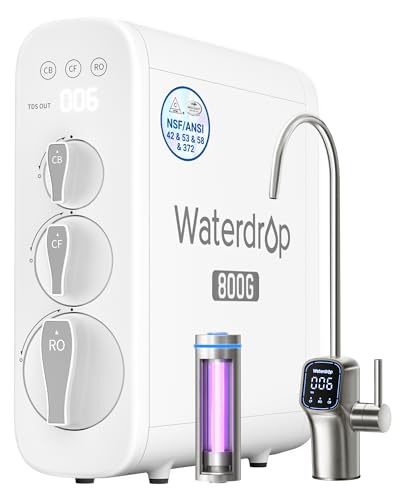 View on Amazon | Tankless, built-in pump | 800 gal/day | 3:1 | Optional inline filter | Yes | NSF/ANSI 42, 53, 58 (IAPMO) |
| APEC ROES-PH75 | 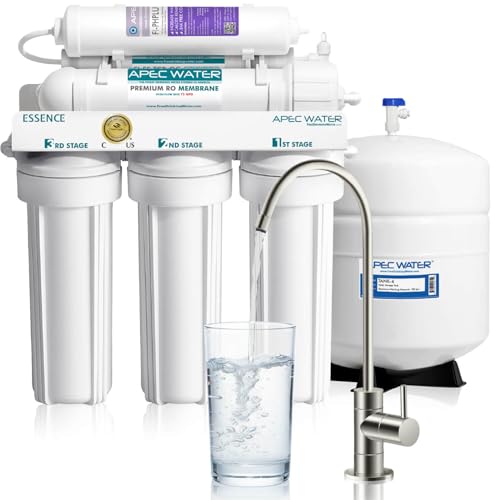 View on Amazon | Tank (4 gal), 6 stages | 75 gal/day at 60 psi | Not published | Included calcium stage | No | NSF/ANSI 58 for TDS (WQA) |
| APEC ROES-50 |  View on Amazon | Tank (4 gal), 5 stages | 50 gal/day at 60 psi | Not published | None | No | NSF/ANSI 58 for TDS (WQA) |
| iSpring RCC7AK |  View on Amazon | Tank, 6 stages | 75 gal/day | Not published | Included alkaline stage | No | NSF/ANSI 58 |
| Frizzlife PD600-TAM3 |  View on Amazon | Tankless, built-in pump | 600 gal/day | 2:1 | Included (TAM3) | Yes | Lead-free (NSF/ANSI 372); maker cites SGS testing to 42, 53 and 58 |
Best tankless system
Waterdrop G3P800
30% offBlack Friday Dealoff list price · as of 9:20 pm MT · details
The fastest and most efficient system here, with low TDS creep, a TDS-reading faucet and the broadest certifications of the group.
- 800 gal/day
- 3:1 rated
- NSF/ANSI 42, 53, 58
Good for
- Fast pours for kettles and pots
- Owners who want certified contaminant claims
- Tight cabinets with an outlet
Skip it if
- You want minerals added back without buying an add-on
- Your sink cabinet has no outlet
What separates these systems
All of them clean the water well
On contaminant removal the differences are smaller than the marketing suggests. Every system here removed all the chlorine, disinfection byproducts and uranium in its lab samples and cut total dissolved solids (TDS) by roughly 87 to 95 percent. Where fluoride was above health guidelines, the Waterdrop, Frizzlife and ROES-PH75 removed it; the ROES-50 and RCC7AK cut fluoride by 67 and 78 percent. Two weak spots are shared by every home RO unit: boron slips through the membrane (reductions ran from about 27 to 49 percent), and nitrate removal drops when the water is cold or the pressure is low.
Waste water is where they split
Every RO system flushes part of the incoming water to the drain, and the rated ratio is a best case. Short draws, like a single glass, waste the most because the membrane hasn't stabilized yet. The Waterdrop G3P800 was the most efficient of the five, at about 1.5:1 pure to drain on a 12-ounce draw and 2.2:1 on a half gallon. The APEC ROES-PH75 was at the other extreme: about 10.6 gallons to the drain per gallon purified on a short draw and about 5 on a longer one, at 48 psi and 60°F water.
Tankless units also run automatic flush cycles the ratio doesn't count: the Waterdrop flushes after every two hours of use, after power outages, a few minutes after each use and after 12 hours idle. The Frizzlife's idle flushes add about 1.2 gallons a day even if nobody uses it.
Low pressure slows everything down
A tank system's output depends on your home's water pressure and temperature. At 48 psi the ROES-PH75 made about 43 gallons a day, not 75. Adding an upstream booster pump raised it to about 73 gallons a day and improved the waste ratio to about 1:3.8. APEC lists its feed range as 40 to 85 psi. If your pressure sits under 50 psi, plan on a pump or pick a tankless unit, which has one built in.
TDS creep: the first glass of the morning
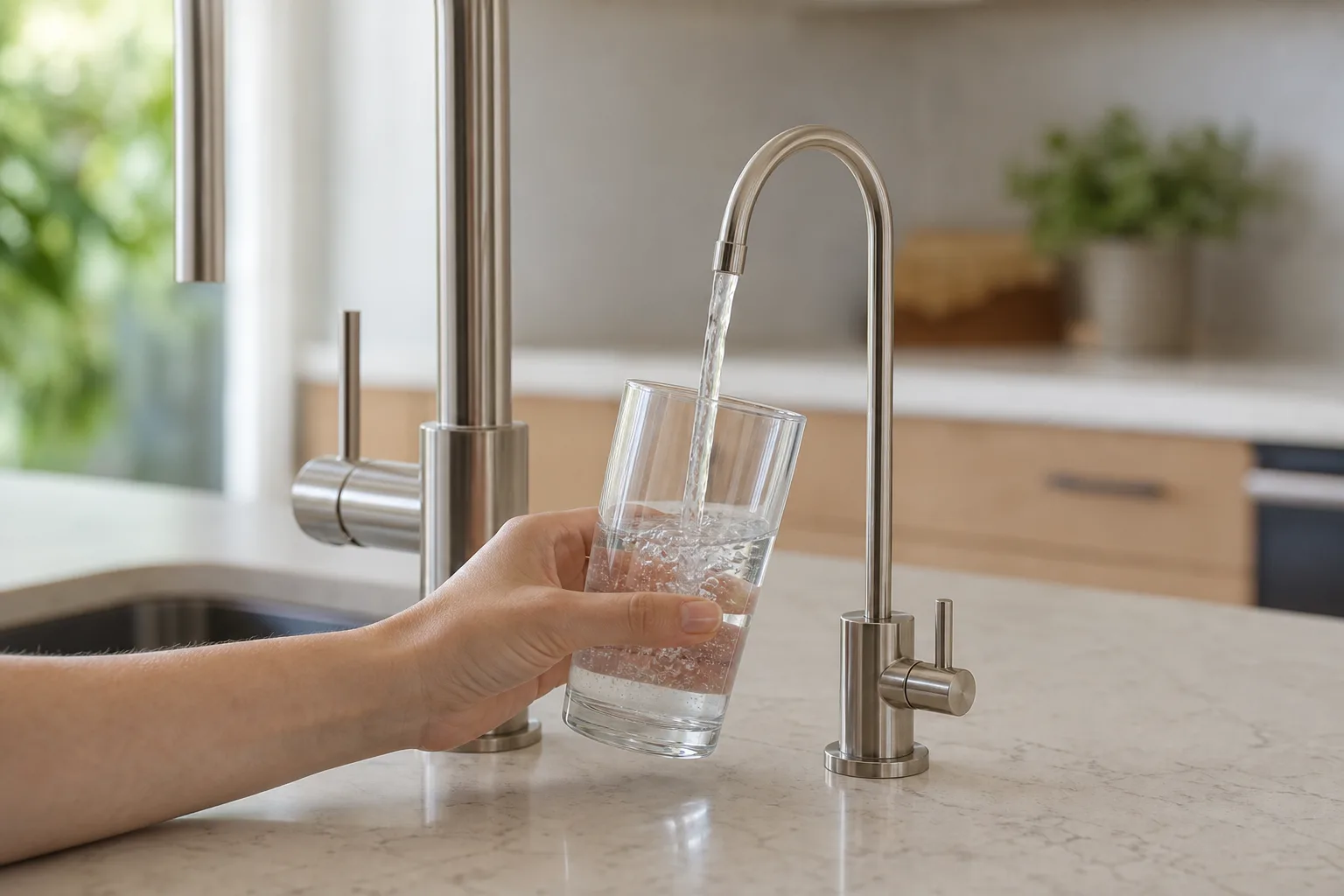
When an RO system sits idle, dissolved solids slowly cross the membrane, so the first water out can be worse than normal. Tanks buffer this: the ROES-PH75 read only 5 ppm higher on its first morning draw. Tankless units are more exposed. The G3P800 kept it to 33 ppm, the lowest of any tankless model in the group, but the Frizzlife PD600-TAM3 jumped 434 ppm. With that one, run the faucet for 10 to 15 seconds before filling a glass.
Remineralization changes pH more than minerals
RO water is very low in minerals, which some people find flat or slightly sour. A remineralization stage raises the pH (the ROES-PH75 went from about 7.6 to 8.8; the iSpring hit 9.7), but it doesn't put back what the membrane took out. Calcium and magnesium in the ROES-PH75's water were still 90 and 97 percent lower than the tap water. A high pH number on its own says little about mineral content. Choose one for taste, not nutrition.
Certifications: read the claim, not the logo
NSF/ANSI 58 is the standard for RO systems, and most certifications under it cover TDS reduction only. Lead-free design (NSF/ANSI 372) is a materials standard, not a filtration one. Look up the exact model in the certifier's directory (NSF, IAPMO or WQA) and compare its certified list with the listing's claims. The EPA's home drinking water filtration fact sheet explains what each certification does and doesn't cover. Your utility's yearly Consumer Confidence Report shows what's in your water before you buy anything.
Installation: what you're signing up for
- A faucet hole. Use a spare sprayer or soap-dispenser hole for the RO faucet, or drill one.
- A drain connection. The waste line clamps onto the sink drain with a drain saddle, which means drilling a small hole in the pipe. If you have a garbage disposal with a dishwasher inlet, a disposal drain adapter lets you skip the drilling.
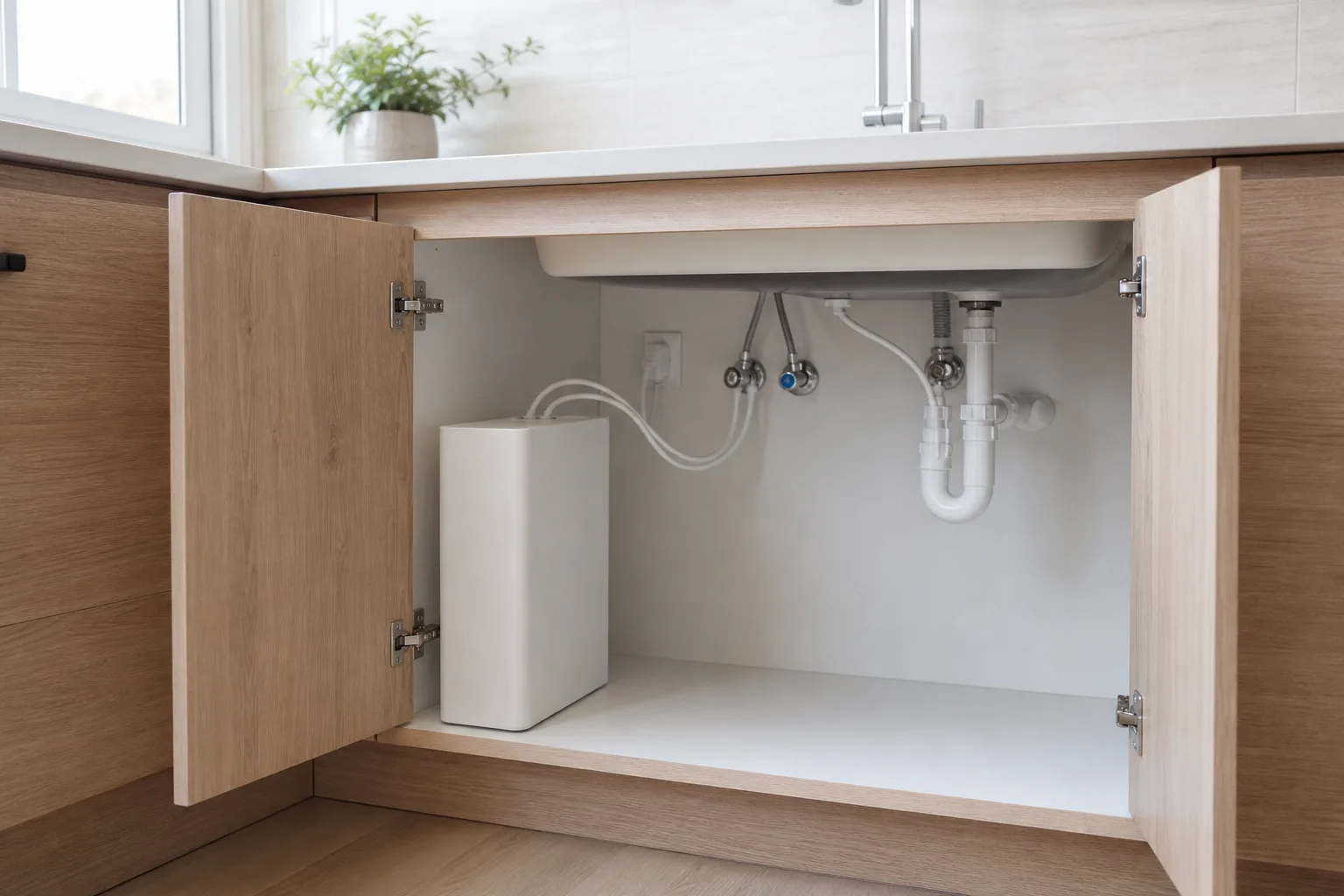
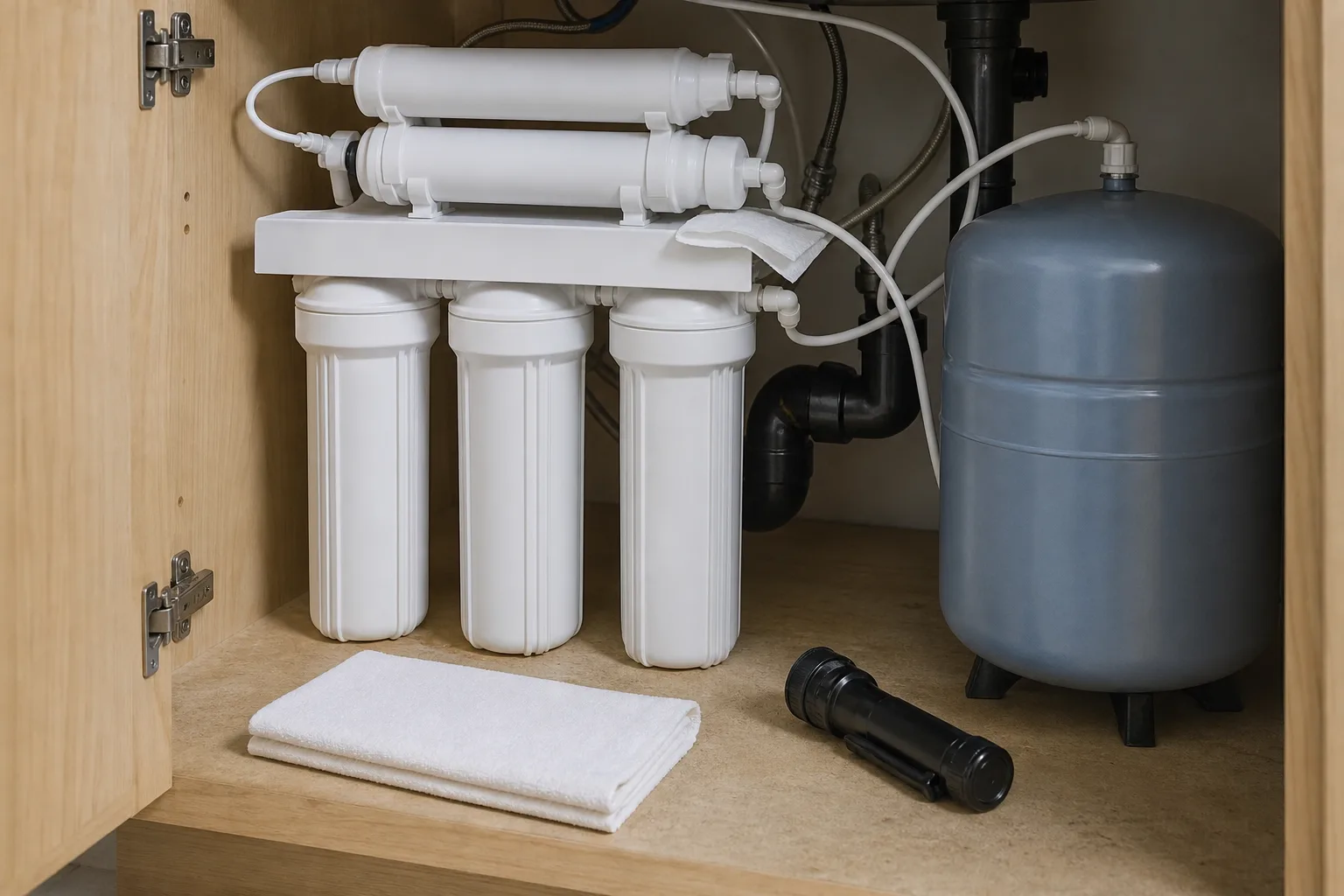
- Space. Tankless units are a single box 16 to 18 inches tall that needs an outlet. Tank systems need room for the filter rack plus a tank about 11 by 11 by 15 inches, but no power.
- Time. Plan on 90 minutes to two hours for a first install, whatever the box says. The PD600-TAM3 took three times its under-30-minute claim, and the ROES-PH75 half again its one-hour claim.
- Leak checks. Count on 9 to 19 fittings that could drip. Push tubing fully in, add the locking clips, and wipe each joint with a dry paper towel on day one and a week later. A water leak sensor or automatic shutoff valve under the sink is worth adding.
- Break-in. Tankless units were ready after 20 to 35 minutes of flushing. Tank systems need hours to fill, drain and refill before first use.
Best tank system with remineralization
APEC ROES-PH75
39% offBlack Friday Dealoff list price · as of 9:20 pm MT · details
Broad reduction, steady water quality and a calcium stage, from a quiet system that needs no outlet.
- 75 gal/day at 60 psi
- 4-gal tank
- NSF/ANSI 58
Good for
- Homes with 60 psi or more
- Cabinets without power
- Anyone who wants alkaline RO water
Skip it if
- Saving water is a priority
- Your pressure is under 50 psi and you won't add a pump
The picks in detail
Waterdrop G3P800: best tankless system
The Waterdrop G3P800 filled a 12-ounce glass in about nine seconds, about 0.62 gallons per minute, the fastest RO flow in the group and slightly above its 800-gallon-a-day rating. It's IAPMO-certified to NSF/ANSI 42, 53 and 58 for the claims on its performance data sheet, including TDS, fluoride, PFOA and PFOS, and chlorine, plus NSF/ANSI 372. Its faucet shows a live TDS reading. All three filters sit inside the unit, the tubing is marked with insertion depth, and a pipe cutter comes in the box. The pump is audible at about 46 dB from a foot away, quieter than a dishwasher. Filters are rated for 6, 12 and 24 months.
Best tankless system
Waterdrop G3P800
30% offBlack Friday Dealoff list price · as of 9:20 pm MT · details
The fastest and most efficient system here, with low TDS creep, a TDS-reading faucet and the broadest certifications of the group.
- 800 gal/day
- 3:1 rated
- NSF/ANSI 42, 53, 58
Good for
- Fast pours for kettles and pots
- Owners who want certified contaminant claims
- Tight cabinets with an outlet
Skip it if
- You want minerals added back without buying an add-on
- Your sink cabinet has no outlet
APEC ROES-PH75: best tank system with minerals added back
The APEC ROES-PH75 is a conventional six-stage system with a calcium stage that keeps the water alkaline. It removed every contaminant above health guidelines and cut barium by 98 percent. With no pump it's nearly silent, and the tank keeps morning water steady. It's WQA-certified to NSF/ANSI 58 for TDS and material safety and to NSF/ANSI 372. The downsides are waste water (the worst in the group), slow production at low pressure, and a fussy install: the housings aren't color-coded, the faucet lacks a quick-mount nut, and the factory membrane drain fitting can leak until a locking clip is added. There's no filter reminder, and opening the housings means unhooking the tubing.
Best tank system with remineralization
APEC ROES-PH75
39% offBlack Friday Dealoff list price · as of 9:20 pm MT · details
Broad reduction, steady water quality and a calcium stage, from a quiet system that needs no outlet.
- 75 gal/day at 60 psi
- 4-gal tank
- NSF/ANSI 58
Good for
- Homes with 60 psi or more
- Cabinets without power
- Anyone who wants alkaline RO water
Skip it if
- Saving water is a priority
- Your pressure is under 50 psi and you won't add a pump
APEC ROES-50: best plain tank system
The APEC ROES-50 is the five-stage version without remineralization, and its lab results were cleaner than the iSpring's: a 94 percent TDS reduction, full removal of chlorine, disinfection byproducts, copper, barium, nitrate, uranium and aluminum, and no sign of anything leaching into the water. Priming is quick: fill and drain the tank once. A full tank fills a cup in about four and a half seconds and gives about three gallons before slowing. Its feed valve can leak if a gasket is missing, so check every part in the box before you start. It wasted about 2.3 gallons per gallon with the tank shut off, and more in normal use. The one-year warranty extends to two with registration.
Best plain tank system
APEC ROES-50
37% offBlack Friday Dealoff list price · as of 9:20 pm MT · details
A classic five-stage RO with strong, clean lab results and standard-size filters.
- 50 gal/day at 60 psi
- 5 stages
- NSF/ANSI 58
Good for
- Buyers who don't need added minerals
- Simple, proven tank setups
Skip it if
- You want alkaline water
- You want filter-change reminders
iSpring RCC7AK: most install extras
The iSpring RCC7AK has one of the heaviest, sturdiest RO faucets around, a clear sediment housing that shows when the first filter is dirty, and an alkaline stage. iSpring also makes a leak detector that shuts off the feed water if the disc under the unit gets wet; check whether your kit includes it. It was the more water-efficient of the two classic tank systems, at about 1.25 gallons of waste per gallon with the tank shut off. The feed valve feels flimsy, and an oversized O-ring can make a filter housing leak; spares come in the box. The bigger concern is the water itself. Boron roughly tripled after filtration, and trace vanadium and aluminum appeared, all below health guidelines but likely from the alkaline stage.
Most install extras
iSpring RCC7AK
19% offBlack Friday Dealoff recent price · as of 9:20 pm MT · details
A well-built tank system with a solid faucet and a see-through sediment housing; its alkaline stage has added trace elements in lab results.
- 75 gal/day
- 6 stages
- NSF/ANSI 58
Good for
- DIYers who like seeing filter condition
- Less waste than the APEC tank systems
Skip it if
- You want the cleanest lab results
- You'd rather skip a remineralization stage
Frizzlife PD600-TAM3: tankless with built-in remineralization
The Frizzlife PD600-TAM3 removed every contaminant above health guidelines and cut most metals by at least 90 percent, though nitrate only fell by half. It poured about 0.44 gallons per minute, matching its 600-gallon rating, and its display shows TDS and filter life. The trade-offs are real: the highest TDS creep of the group, a loud pump (about 48 dB at a foot), flimsy quick-connect fittings, and tubing you have to measure and cut yourself. Frizzlife's listing cites SGS lab testing to NSF/ANSI 42, 53 and 58 and lists a lead-free certification (NSF/ANSI 372). Lab testing isn't the same as a certifier's listing, so look the model up in the NSF, IAPMO or WQA directory before relying on the filtration claims. If certified claims matter to you, buy the Waterdrop.
Tankless with remineralization
Frizzlife PD600-TAM3
23% offBlack Friday Dealoff list price · as of 9:20 pm MT · details
Fast tankless flow and strong reduction with remineralization built in; run the faucet before the first glass of the day.
- 600 gal/day
- 2:1 rated
- TDS display
Good for
- Remineralized water without add-ons
- A display that tracks filter life
Skip it if
- You need certified contaminant claims
- The cabinet sits near a quiet living area
Another system worth knowing
- Cloud RO. A tank system with a permeate pump, a battery pack instead of an outlet, an app and remineralization included. It ran close to a 1:1 waste ratio and installed in about 45 minutes. It's sold directly by the maker, not on Amazon, and is certified to NSF/ANSI 58 for TDS.
Not sure RO is the right fit? A water filter pitcher needs no install, and if the problem is hardness, sediment or chlorine at every tap, see the whole-house water filter guide.
Best plain tank system
APEC ROES-50
37% offBlack Friday Dealoff list price · as of 9:20 pm MT · details
A classic five-stage RO with strong, clean lab results and standard-size filters.
- 50 gal/day at 60 psi
- 5 stages
- NSF/ANSI 58
Good for
- Buyers who don't need added minerals
- Simple, proven tank setups
Skip it if
- You want alkaline water
- You want filter-change reminders
Who should buy which
- Want the fastest water and certified claims? The Waterdrop G3P800.
- Want alkaline water from a system that needs no outlet? The APEC ROES-PH75, ideally with a booster pump if your pressure is low.
- Want the simplest proven RO with the cleanest results? The APEC ROES-50.
- Want a sturdy faucet and a see-through sediment filter? The iSpring RCC7AK, knowing its alkaline stage has added trace elements.
- Want tankless with minerals built in? The Frizzlife PD600-TAM3, and get in the habit of running it off first.
- Renting or can't drill? Skip under-sink RO and look at a countertop unit or a pitcher.
Posted by Kristopher Larson
Deal badges come from Amazon. Product prices and availability are accurate as of the date/time indicated and are subject to change.
Frequently asked questions
Is a tankless or tank reverse osmosis system better?
Tankless systems pour faster, waste less water and take less cabinet space, but they need an outlet and the first draw after sitting idle can be higher in dissolved solids. Tank systems need no power, run nearly silently and give steadier water in the morning, but they fill slowly and waste more water, especially when home water pressure is under about 50 psi.
How much water does a reverse osmosis system waste?
It depends on the design and your water pressure. Tankless units with built-in pumps can come close to 2:1 or better on longer draws. Conventional tank systems without a pump often send three to seven gallons or more to the drain for each gallon of drinking water, and short draws like a single glass waste the most. A booster pump improves a tank system's ratio.
Does a reverse osmosis system need a remineralization filter?
It is optional. A remineralization stage mainly raises pH and changes the taste, which some people prefer. It adds back only a small share of the calcium and magnesium the membrane removes, so choose it for flavor rather than nutrition.
How often do you change filters on an under-sink RO system?
Pre-filters usually last about 6 to 12 months and the RO membrane about two years or more, depending on water quality and use. Some tankless systems show filter life on a display or the faucet; most classic tank systems don't, so set a calendar reminder.
Can you install an under-sink reverse osmosis system yourself?
Most handy homeowners can. You'll connect a feed valve to the cold line, attach a drain saddle or disposal drain adapter, mount a dedicated faucet in a spare or newly drilled hole, and run tubing. Plan on 90 minutes to two hours, then check every fitting for drips over the first week. If you aren't comfortable drilling a countertop or working on drain pipes, hire a plumber.
What does NSF/ANSI 58 certification mean on a reverse osmosis system?
NSF/ANSI 58 is the standard for reverse osmosis drinking water systems. Many systems are certified under it only for total dissolved solids reduction, so check the certifier's listing for the exact model to see which contaminants are covered. NSF/ANSI 372 covers lead-free materials, not filtration.
Keep reading
More from the blog
Mr. Heater Portable Buddy vs. Big Buddy for a Winter Power Outage: What Each Heats and What the Manuals Require
How to Make Beer at Home: Beer Making Kits, Fermenters and Machines
Cooking When the Power Is Out: Iwatani 35FW vs. Coleman Classic vs. GasOne Mini Butane Stoves