Best All-in-One Electric Brewing System: BrewZilla vs Grainfather vs VEVOR
BrewZilla Gen 4.1 vs Grainfather G30 vs VEVOR 35L electric all-in-one brewing systems: drainage, pumps, sight glasses, apps and all-grain setup tips.
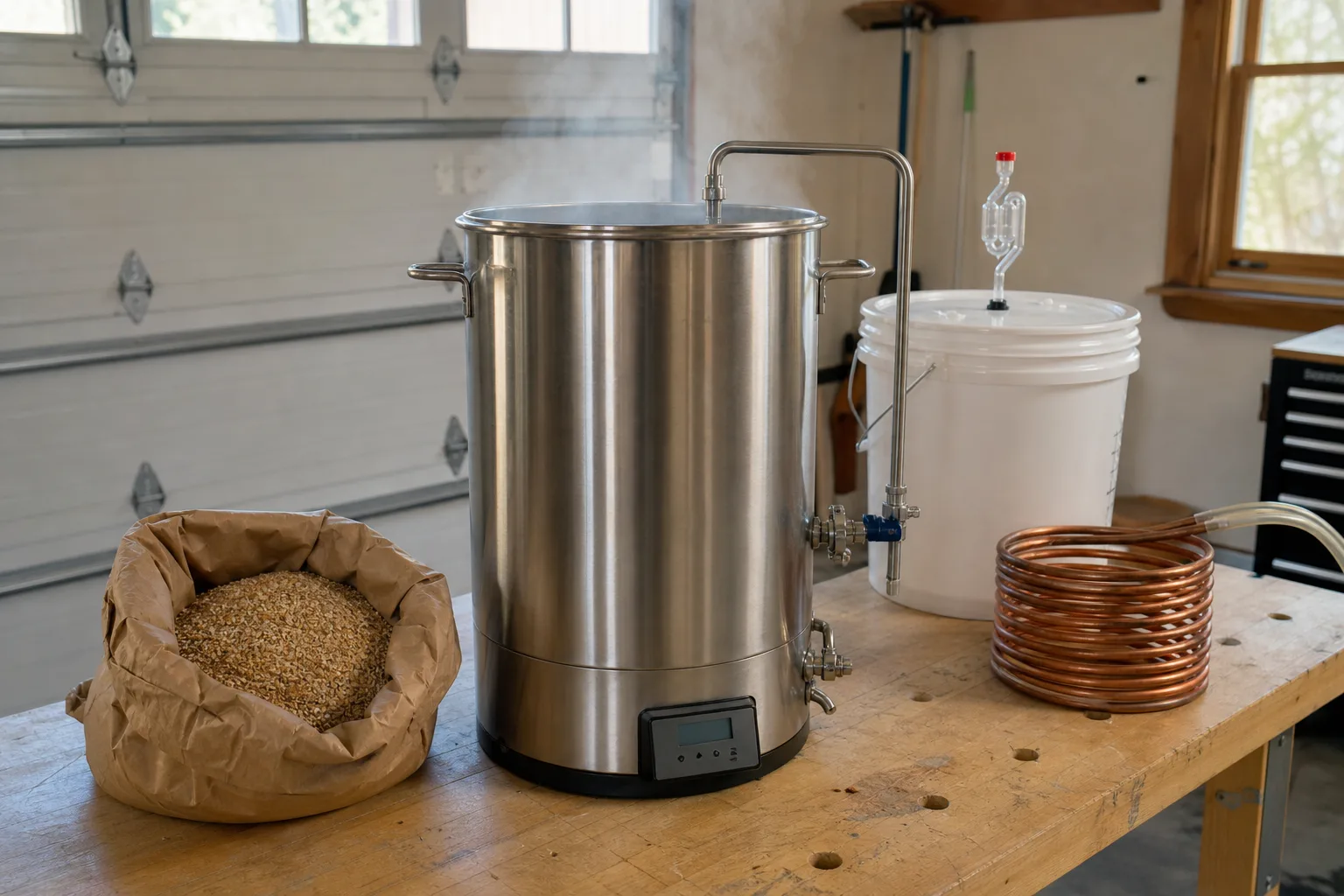
An all-in-one electric brewing system heats the water, mashes the grain, boils the wort and pumps it through a chiller, all in one stainless pot that plugs into the wall. It's the usual step up for homebrewers who have outgrown extract kits and want to brew from grain without a garage full of burners, kettles and hoses. One Grainfather owner's brew day went from about eight hours on a two-vessel setup to about six, with far less to clean.
The popular systems look much alike, but they differ in the details that decide how a brew day goes: how well the basket drains, whether you can see how much wort is in the pot, how strong the pump is, and how accurate the temperature reading is. This guide compares the BrewZilla Gen 4, the Grainfather G30 and the VEVOR 35-liter system, and covers the setup steps that matter most.
The short version
- Best overall: the BrewZilla Gen 4.1 drains completely from its domed bottom, has a stronger pump than the old Gen 3, a built-in sight glass and app control.
- Simplest brew day: the Grainfather G30 slots together with no fiddly seals, gets about 80% efficiency out of the box and keeps running a stored recipe even if your phone disconnects.
- Most included gear: the VEVOR 35-liter system comes with a pump, chiller and hop spider, with a few rough edges.
| System | Shop | Drains fully | Volume visible from outside | App control | Watch out for |
|---|---|---|---|---|---|
| BrewZilla Gen 4.1 |  View on Amazon | Yes, domed bottom | Yes, built-in sight glass | Bluetooth and Wi-Fi | Calibrate the temperature probe |
| Grainfather G30 |  View on Amazon | Filtered outlet | No (marks inside) | Bluetooth | Hand sparging, grain in the transfer |
| VEVOR 35-liter system |  View on Amazon | Some dead space | No (marks inside) | No | Glass lid, lower efficiency without sparging |
How an all-in-one brew day works
- Heat the strike water to mash temperature, using the volume marks inside the kettle. Add the water before the grain basket goes in, since the basket covers the marks.
- Mash. Drop in the basket (with its false bottom installed first), stir the crushed grain in slowly to avoid dry clumps, and let the pump recirculate the wort over the grain bed for an hour or so to keep the temperature even.
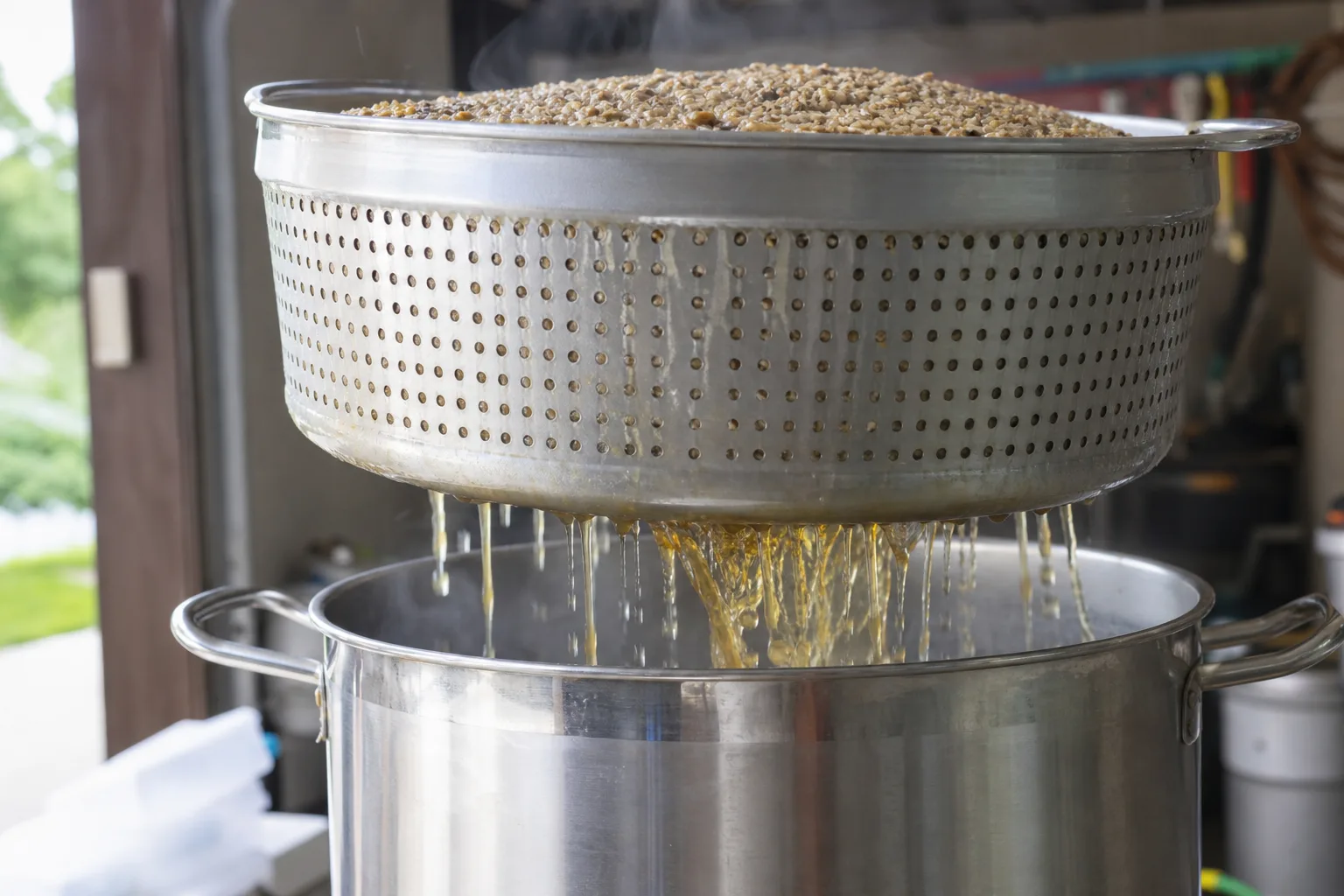
- Lift and sparge. Raise the basket, let it drain back into the kettle and rinse the grain with hot water to collect the remaining sugar.
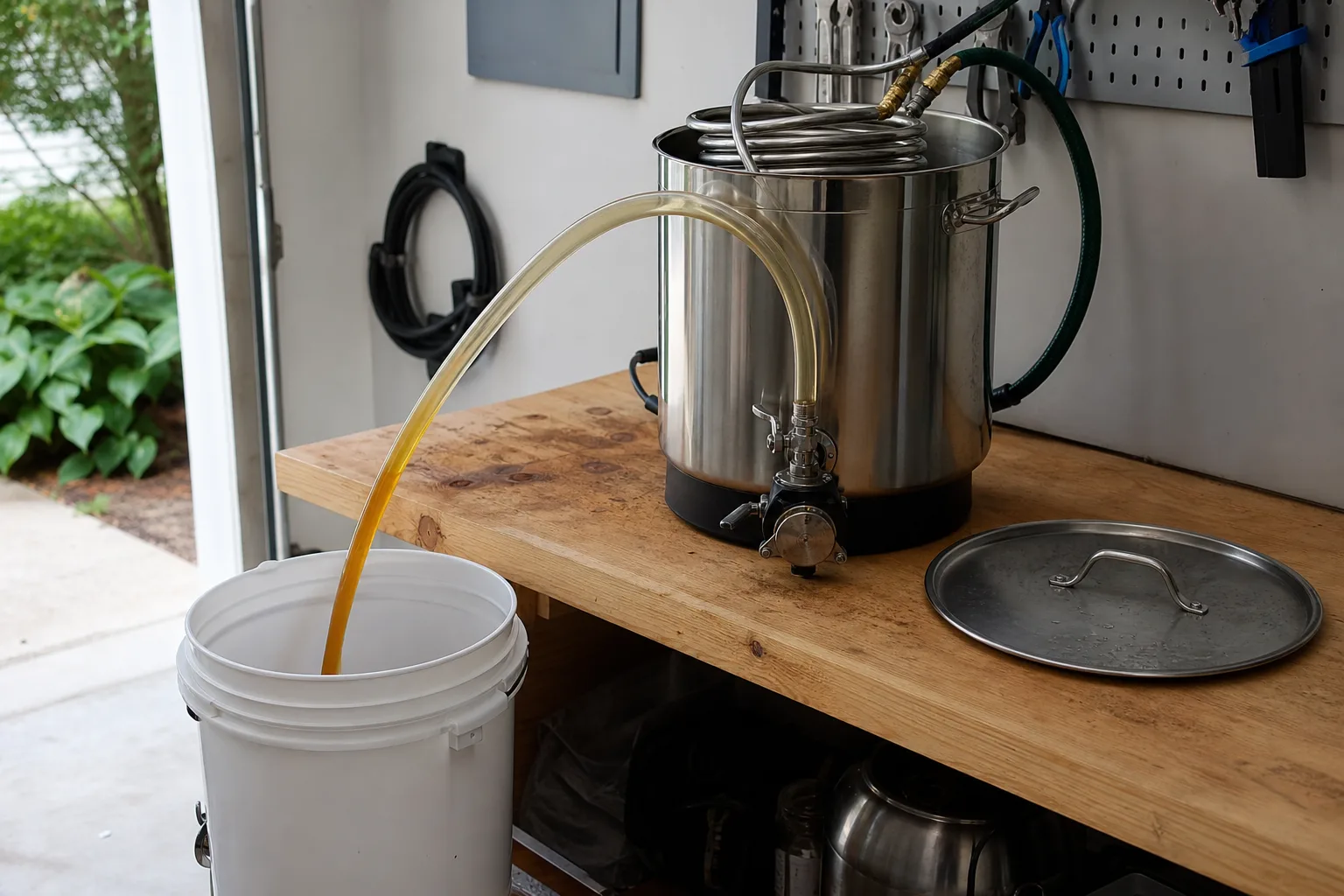
- Boil and chill. Boil with hops for about an hour, then run the wort through the chiller and into the fermenter with the pump.
A few habits prevent most problems. Run a water-only trial first to learn your system's volumes. Add rice hulls to sticky mashes, and on wheat beers use the sparge screen on top of the grain bed, so the wort keeps flowing. Use an anti-foam drop or watch closely as the boil starts, because a boil-over can short out the controller. And plug into a GFCI-protected outlet, keeping any extension cord short, 6 feet or less. Check your system's wattage: the 1,800-watt VEVOR needs a 20-amp circuit at full power and should stay at 1,500 watts or less on a standard 15-amp circuit.
Best overall
BrewZilla Gen 4.1 (35 L, 110 V)
A domed-bottom system that drains completely, with a stronger pump, built-in sight glass and app control through RAPT.
- Domed bottom
- Sight glass
- Wi-Fi + Bluetooth
Good for
- 5-gallon all-grain batches
- Brewers who want app control
- Fast chilling and transfers
Skip it if
- You want a touchscreen panel
BrewZilla Gen 4: the best overall
The BrewZilla Gen 4 is a big step up from the older Gen 3. The bottom is domed with the drain in the center, so every drop of wort flows out: there's essentially no dead space, and cleaning is easier. The grain basket sits lower, so it holds more grain, and perforations around its base drain better during the sparge. The Gen 4.1's pump is far stronger than the Gen 3's, which moves wort through a chiller much faster, and the heating elements are spread wider, which helps prevent scorching. The base also opens for repairs, unlike the bolted-shut older model.
The control panel sits on top and can be detached and mounted elsewhere. Bluetooth and Wi-Fi connect it to the RAPT app, where you save a profile for each beer, keep a history of every brew day, and pair a wireless thermometer that reads the mash itself rather than the liquid at the bottom. Without the app, the buttons are less friendly: you press and hold to change the temperature, and the pump and heater controls sit on opposite sides of the display.
The Gen 4.1 adds a built-in sight glass with laser-etched marks, so you can see the volume with the lid and basket on; earlier Gen 4 units have the marks stamped only inside the kettle, which are hard to read through dark wort.
Best overall
BrewZilla Gen 4.1 (35 L, 110 V)
A domed-bottom system that drains completely, with a stronger pump, built-in sight glass and app control through RAPT.
- Domed bottom
- Sight glass
- Wi-Fi + Bluetooth
Good for
- 5-gallon all-grain batches
- Brewers who want app control
- Fast chilling and transfers
Skip it if
- You want a touchscreen panel
Calibrate the temperature probe before the first brew. Being off by 2 or 3 degrees is common, and a new unit can be off by as much as 30 degrees. A probe that far off would ruin the mash, leaving beer thin or heavy and far from its target gravity. Check it against a digital instant-read thermometer and correct it in the controller settings.
Other tips:
- Lift the basket to the halfway stop first and let it drain there; lifting all the way at once spills wort.
- Check the lifting-ring nut, which can loosen and drop the false bottom or the nut into the drain.
- Use a hop spider or bag, since hop and grain debris can clog the center drain; a short blast of CO2 or air back through the recirculation arm clears it.
- Pinch the tip of the whirlpool arm slightly for a stronger whirlpool.
- Tape over the control panel seams if yours isn't sealed well against splashes.
KegLand also sells the earlier BrewZilla Gen 4 (35 L, 110 V) on its own. It has the domed bottom, pump and Wi-Fi, but no built-in sight glass: the volume marks are inside the kettle.

BrewZilla without the extras
BrewZilla Gen 4 (35 L, 110 V)
The 35-liter, 110-volt BrewZilla Gen 4 with pump and Wi-Fi, without the Gen 4.1's sight glass.
- 35 L
- 110 V
- Wi-Fi + pump
Good for
- Brewers who have their own accessories
- 5-gallon batches
- App control
Skip it if
- You want a sight glass
Grainfather G30: the simplest brew day
The Grainfather G30 works like brew-in-a-bag with a stainless malt pipe instead of a bag. The third version dropped the silicone seals that made the old false bottom and top plate fiddly; now you fill the water, start heating, drop in the malt pipe and false bottom, and everything slots into place. A pump recirculates the mash for clearer wort and pushes it through the included counterflow chiller into the fermenter, and the outlet filter keeps hop and grain bits out.
The control box connects to the Grainfather app over Bluetooth. Once you start a recipe, it's stored in the box, so the brew carries on even if your phone wanders out of range or dies. The app can crash when the phone drops in and out of range, and there's no desktop version.
Out of the box it reaches about 80% efficiency on average-strength beers of roughly 6 gallons, and a brew day that took eight hours on a two-vessel setup takes about six. Very strong beers push its limits; brew a smaller batch or split the mash in two. The weak points are the sparge and the volume: the separate sparge heater's tap is only on or off, so you pour the sparge water by hand, and it's hard to see how much wort you've collected with the basket on top (a flashlight helps). Grain in the transfer can slow things down, so rice hulls and a filter help, and blowing water out of the counterflow chiller after cleaning keeps it from sitting inside.
Simplest brew day
Grainfather G30
A malt-pipe system that slots together with no seals, includes a counterflow chiller and gets about 80% efficiency.
- Counterflow chiller
- Bluetooth recipes
- About 80% efficiency
Good for
- Brewers who want less fuss
- 6-gallon batches
- Recipe automation
Skip it if
- You want automated sparging
VEVOR 35-liter system: the most included gear
The VEVOR 35-liter (9.2-gallon) system includes a pump, a recirculation arm, a malt pipe, a hop spider and an immersion chiller. Watch the listing: the smaller 8-gallon VEVOR has none of those extras and is essentially an electric mash kettle.
It holds mash temperature consistently and makes clear wort. Run the element at reduced power during the mash to avoid overshooting or scorching, and keep the pump speed moderate: too fast drains the liquid out from under the basket and can dry-fire the element, while too slow leaves hot and cold spots. At full power it holds a steady boil on a 20-amp circuit.
Three drawbacks stand out. The glass lid can shatter on its own, even before it's used, so replace it with a metal lid. Efficiency is low without a separate sparge, landing well below target and short on volume, so plan a sparge into every batch. The pump and controller are built in, so a failure means replacing the whole unit, and the controls are clumsy, with press-and-hold buttons. The included chiller also needs 3/8-inch silicone tubing bought separately, and the basket rim and hop spider have sharp edges, so handle them with care when cleaning.
Most included gear
VEVOR 35-liter system
A 9.2-gallon all-in-one with pump, malt pipe, hop spider and chiller included, and steady mash temperatures.
- Pump + chiller
- Hop spider
- 9.2 gallons
Good for
- First all-grain system
- Brewers who want it all in the box
- 5-gallon batches
Skip it if
- You don't want to swap the glass lid
Which system fits which brewer
- You want the best drainage, app control and fast transfers: the BrewZilla Gen 4.1.
- You want the least fiddling and a proven recipe workflow: the Grainfather G30.
- You want everything in one box and don't mind a few upgrades: the VEVOR 35-liter system.
- You're still deciding whether to brew at all: start with a starter kit or a countertop beer machine first.
An all-in-one fits neatly on a garage workbench, with heavy-duty shelving for grain and fermenters, and a garage fan to clear the steam. The finished beer belongs in a man cave bar.
New to brewing? Start with how to make beer at home, from 1-gallon kits to countertop beer machines.
Posted by Kristopher Larson
Frequently asked questions
What is an all-in-one electric brewing system?
A single stainless kettle with a built-in heating element, grain basket, pump and controller that heats the water, mashes the grain, boils the wort and pumps it through a chiller. It replaces separate kettles, burners and hoses for brewing beer from grain.
Is the BrewZilla or the Grainfather better?
The BrewZilla Gen 4 drains completely from its domed bottom and connects to the RAPT app over Wi-Fi and Bluetooth; the Gen 4.1 adds a built-in sight glass. The Grainfather G30 is simpler to assemble, reaches about 80% efficiency out of the box and includes a counterflow chiller. Pick the BrewZilla for drainage and visibility, the Grainfather for the least fuss.
Can an all-in-one brewing system run on a regular outlet?
Yes. The 110- and 120-volt versions plug into a household outlet, but always use a GFCI-protected outlet and a short cord (6 feet or less). Check the wattage: a 1,800-watt system like the VEVOR needs a 20-amp circuit at full power and should be turned down to about 1,500 watts on a 15-amp circuit.
Why is my all-in-one brewing efficiency low?
The usual causes are skipping the sparge, a temperature probe that reads wrong, and stuck or uneven flow through the grain. Rinse the grain after the mash, calibrate the probe against a digital thermometer, and add rice hulls to sticky mashes.
How long does an all-grain brew day take on an all-in-one system?
Plan on most of a day: typically an hour-long mash and an hour-long boil plus heating, chilling and cleanup. On the Grainfather G30, a brew day that took eight hours on a two-vessel setup takes about six. A water-only trial run first helps you learn the system's volumes and timing.
Is the smaller 8-gallon VEVOR the same as the 35-liter system?
No. The 8-gallon model lacks the pump, recirculation arm, malt pipe, hop spider and chiller that come with the 35-liter (9.2-gallon) system, so it works more like an electric mash kettle.
Keep reading
More from the blog
Mr. Heater Portable Buddy vs. Big Buddy for a Winter Power Outage: What Each Heats and What the Manuals Require
Best Under-Sink Reverse Osmosis System: Waterdrop vs. APEC vs. iSpring vs. Frizzlife
How to Make Beer at Home: Beer Making Kits, Fermenters and Machines