Do You Need a Box Spring? Platform Beds vs. Foundations vs. Box Springs, and How to Choose a Bed Frame
When a box spring is needed, how foundations and platform beds differ, slat spacing and center-support rules warranties require, and bed frame picks.
Most new mattresses arrive compressed in a box with a note that says no box spring is needed, yet bed frames, foundations and box springs are still sold side by side, and the wrong pairing can sag, squeak or quietly void a mattress warranty. The short answer: a box spring is only needed for a traditional innerspring mattress on a basic metal rail frame. Foam and hybrid mattresses need a firm, flat base, which a platform bed or a slatted foundation provides.
This guide explains how box springs, foundations, platform beds and adjustable bases differ, the slat and support rules that warranties actually spell out, how to choose a frame height and style, and which widely sold frames fit common needs.
As an Amazon Associate, Best Utah Real Estate earns from qualifying purchases.
Quick verdict: which base for which bed
- Foam or hybrid mattress, simple setup, storage underneath: a tall metal platform foundation such as the Zinus SmartBase Tool-Free Mattress Foundation (14 inch).
- A finished look in wood: a wood platform bed with a headboard, such as the Zinus Alexia Solid Wood Platform Bed Frame with Headboard.
- A soft, upholstered headboard for reading in bed: an upholstered platform frame such as the Zinus Shalini Upholstered Platform Bed Frame.
- Existing frame with slats spaced too far apart: add a bunkie board rather than replacing the frame.
- Traditional innerspring on a metal rail frame: keep a box spring. That is the setup it was designed for.
- Reading, TV in bed, snoring or reflux concerns: an adjustable base, after confirming the mattress is rated for one.
Bed bases compared
| Base type | What it is | Best with | Needs a separate frame? | Main trade-off |
|---|---|---|---|---|
| Box spring | Wood frame with springs or a flexing metal grid, fabric covered | Traditional innerspring mattresses | Yes, a metal rail frame or bed with side rails | Adds flex that foam mattresses don't want; can wear and squeak |
| Foundation | Rigid box with closely spaced slats, no springs | Foam, hybrid and most innerspring | Usually yes | Another piece to buy and move |
| Platform bed | Frame with built-in slats or a solid deck | Foam, hybrid, most modern mattresses | No | Lower profile; slat spacing varies by model |
| Metal platform foundation | Steel frame with slats and legs, often tall | Foam and hybrid | No (can go inside a decorative frame) | Utilitarian look unless paired with a headboard |
| Bunkie board | Thin flat panel, usually 1 to 2 inches | Frames with wide slat gaps, daybeds, bunk beds | Sits on an existing frame | Adds little height |
| Adjustable base | Motorized base that raises head and foot | Flexible foam and many hybrid mattresses | Can sit alone or inside some frames | Cost, weight, and mattress compatibility |
Do you need a box spring?
A box spring was designed to work with a traditional innerspring mattress: it absorbs some shock, adds height, and lifts the mattress onto a metal rail frame that has no slats of its own. Many products still sold as "box springs" are really foundations with a rigid metal or wood grid inside, which is fine.
Foam and hybrid mattresses are different. They depend on a flat, firm surface to keep their support layers even, so most of their makers specify a foundation, a slatted platform or a solid surface rather than a base with springs. Putting a heavy foam mattress on an old box spring that dips in the middle is one of the fastest ways to create a sag that looks like a mattress defect but is really a support problem. Mattress shoppers still deciding between foam and hybrid can compare the two in this guide to choosing a mattress.
The support rules that matter: slats, center support and legs
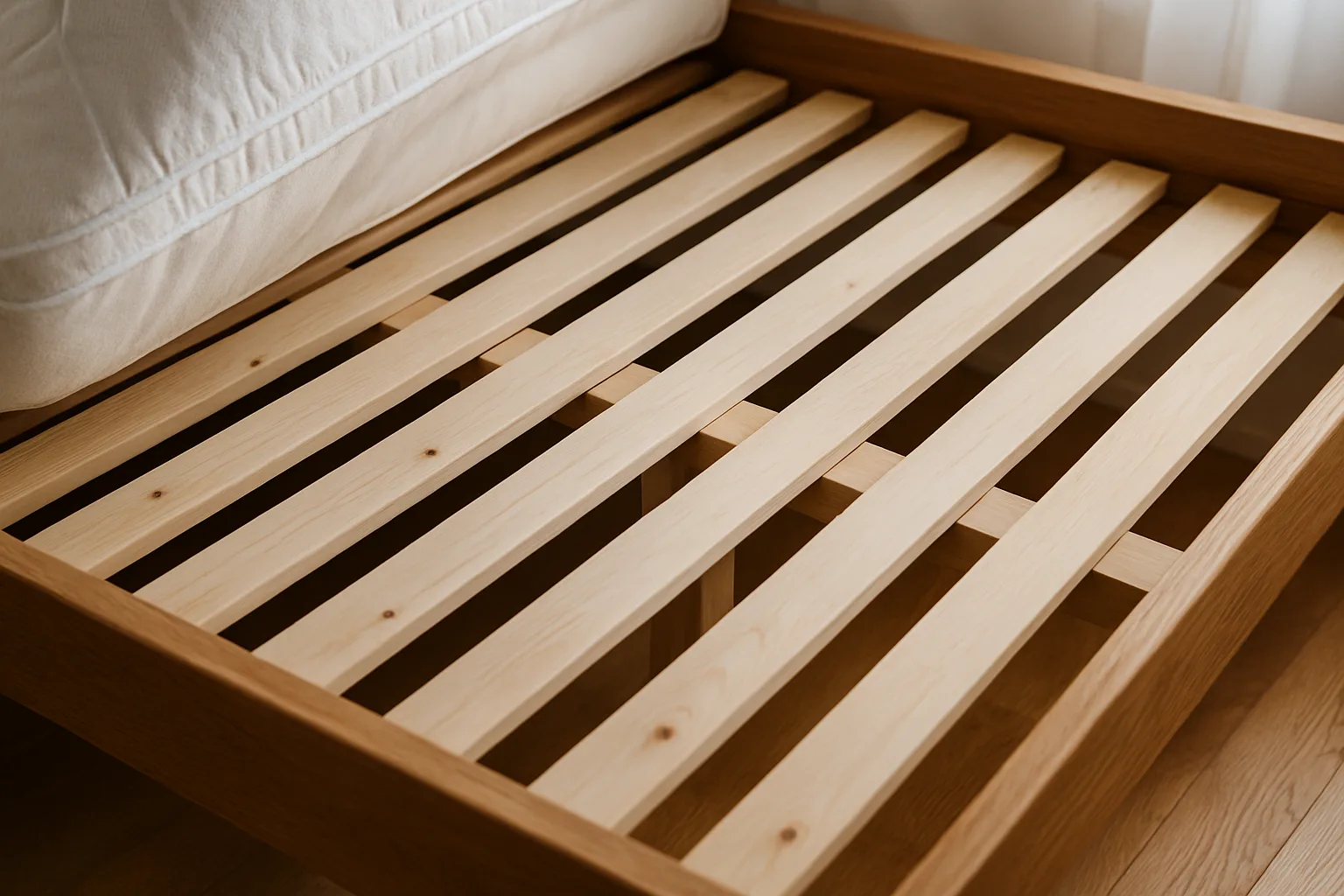
Mattress warranties commonly require proper support, and the details are more specific than many shoppers expect. Sealy and Stearns & Foster, for example, list approved support systems that include a platform frame with slats at least 3 inches wide, spaced no more than 4 inches apart, a center support, and five to six legs for queen, king and California king sizes (Tempur Sealy approved support systems). Other brands set their own limits, and many foam mattress makers ask for gaps of about 3 inches or less.
- Measure the gap between slats, not the slat count. Wide gaps let foam push through and develop ridges.
- Look for a center rail with legs on queen and larger beds. Without it, the middle of the bed flexes downward under two sleepers.
- Check the weight rating, which should cover the mattress plus everyone who sleeps on it.
- Read the specific mattress warranty before buying a frame, and keep the frame's spec sheet in case of a claim.
When an existing frame has slats too far apart, a bunkie board laid on top creates a flat, continuous surface. Bunkie boards are typically 1 to 2 inches thick, and thin steel-framed versions suit bunk beds, daybeds and recessed "sit-in" platform frames where the slats sit inside the side rails.
Choosing a frame: three popular styles
Tall metal platform foundation
A steel platform with built-in slats replaces both the box spring and the rail frame. The Zinus SmartBase line is the best-known example. The Tool-Free version stands 14 inches tall with about 13 inches of clearance underneath for storage bins, assembles without tools and carries a five-year limited warranty, according to the listing. Its look is plain, so many owners pair it with a separate headboard or a bed skirt. Heavy Duty versions with higher listed weight ratings are also sold, and ratings vary by version, so it is worth checking the exact listing.
 Zinus SmartBase Tool-Free FoundationCheck today’s price on AmazonBuy on Amazon →
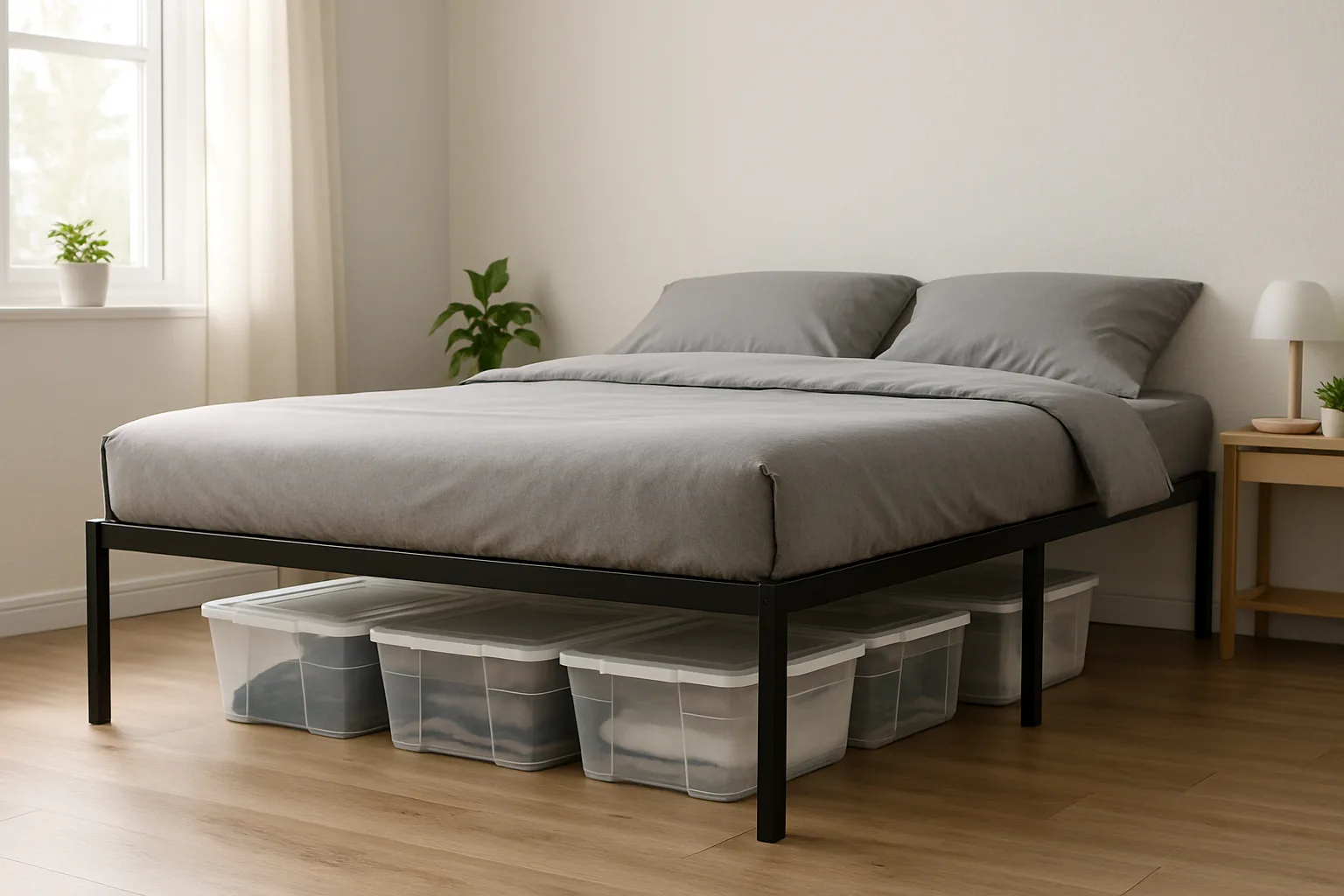
Under-bed clearance is one of the most useful features of a tall frame in a small bedroom. For ideas on using that space and the closet together, see this guide to small closet organization on a budget.
Wood platform bed
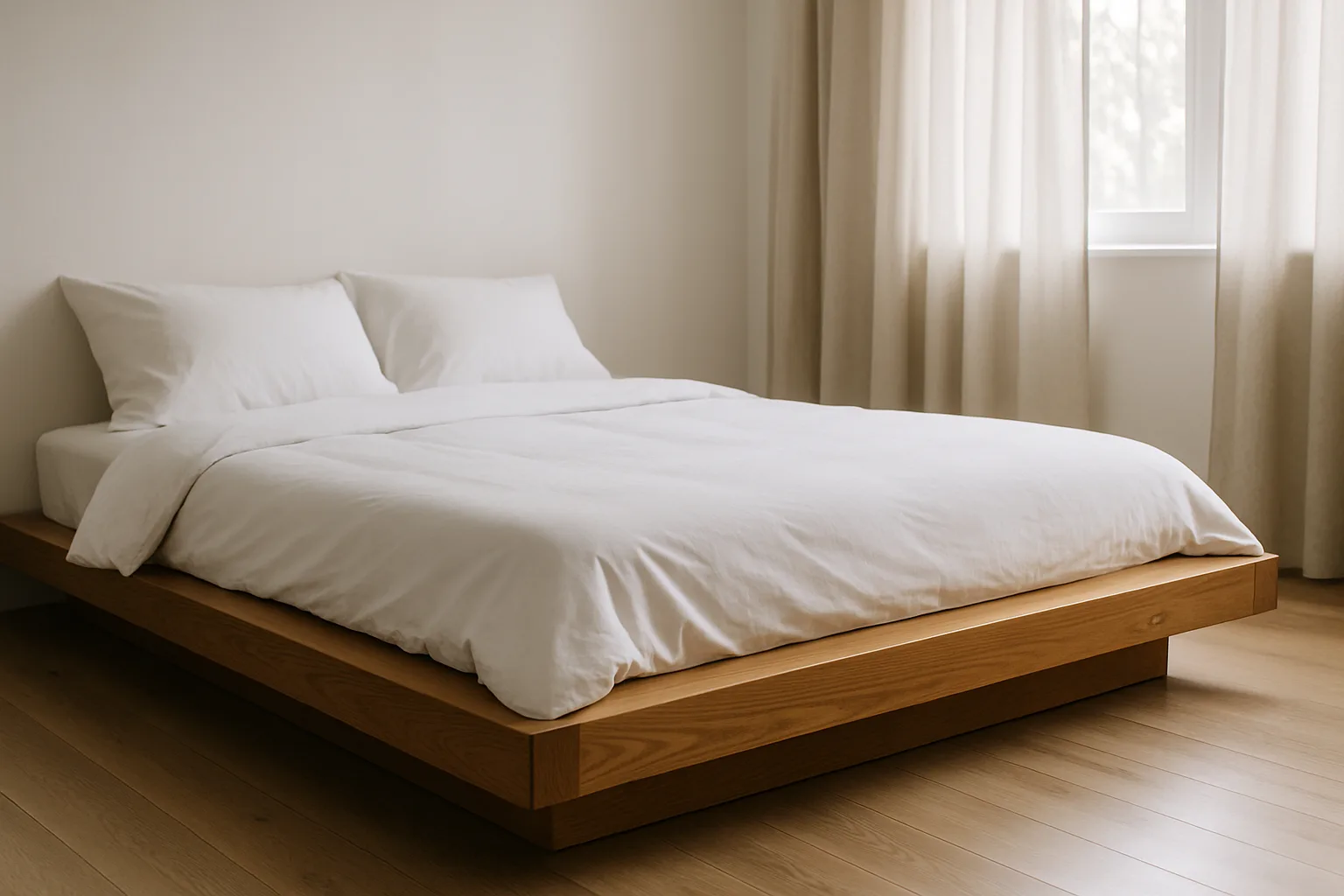
A wood platform bed looks finished on its own and needs nothing else. The Zinus Alexia pairs a solid wood frame and headboard with plywood slats and steel support, and the listing gives a 700-pound weight rating and a five-year limited warranty. Wood frames tend to sit lower than tall metal foundations, which suits modern and minimal rooms but leaves less storage room underneath. Low-slung frames also mean a lower sitting height, which some people find harder to get up from.
 Zinus Alexia Wood Platform BedCheck today’s price on AmazonBuy on Amazon →
Upholstered platform bed
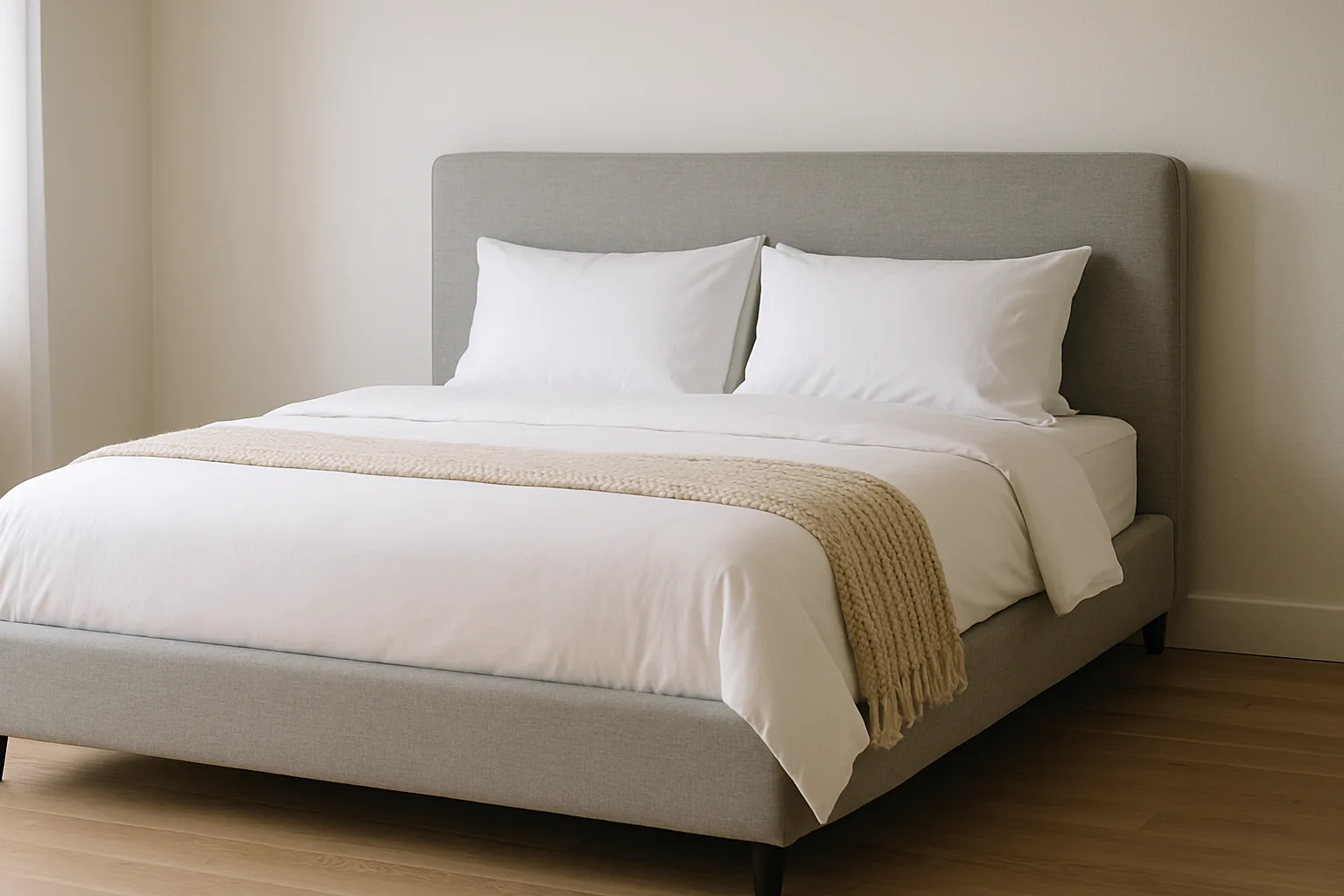
An upholstered frame wraps the rails and headboard in fabric, which softens the room and makes sitting up in bed more comfortable. The Zinus Shalini has a tufted, stitched headboard and wood slat support, with a listed 700-pound weight capacity and a five-year limited warranty. Fabric frames show pet hair and stains more than wood or metal, so darker or textured fabrics are easier to live with.
Adjustable bases
Adjustable bases raise the head and often the foot of the bed with a remote. They are popular for reading and watching TV in bed, and some people find a raised head helps with snoring or reflux. Most work with foam and many hybrid mattresses in a specific thickness range; traditional innersprings are usually too stiff to bend. Before buying, confirm that the mattress manufacturer approves adjustable bases, that the base fits inside the current frame if the plan is to keep it, and that there is an outlet within reach.
Bed height and room fit
- Total height is frame plus foundation plus mattress. A 14-inch platform with a 12-inch mattress puts the top of the bed about 26 inches off the floor.
- A comfortable sitting height lets feet rest flat on the floor with knees roughly level with the hips when sitting on the edge.
- Nightstands look best with tops near the height of the mattress top.
- Small rooms benefit from frames without footboards and from storage underneath; this list of space-saving bedroom upgrades has more ideas.
- Measure the path into the room as well as the room itself; headboards and one-piece foundations need to fit through doors and around stair landings.
Preventing squeaks and shifting
- Retighten all bolts a week or two after assembly; wood and metal settle.
- Seat every slat fully in its holder and add felt tape where wood slats touch metal.
- Use felt pads or rubber cups under the legs on hard floors.
- Add a non-slip pad between a smooth metal platform and the mattress if the mattress drifts.
Bottom line
Match the base to the mattress first. Innerspring on a rail frame still wants a box spring; foam and hybrid mattresses want a firm, flat platform or foundation with tight slat spacing and a center support on queen and larger sizes. After that, choose by height, storage, style and budget, and check the mattress warranty's support rules before the frame goes in the cart.
Posted by Kristopher Larson
Frequently asked questions
Do you need a box spring for a memory foam mattress?
Usually not. Foam and hybrid mattresses need a firm, flat base, such as a platform bed, a slatted foundation or a solid surface. Most foam mattress makers do not call for a box spring with springs, and an old box spring that sags can make the mattress sag too.
How far apart should bed slats be?
Requirements vary by mattress brand. Sealy and Stearns & Foster allow slats at least 3 inches wide spaced no more than 4 inches apart, while many foam mattress makers ask for gaps of about 3 inches or less. Check the specific mattress warranty, and add a bunkie board if the gaps are too wide.
Does a queen bed frame need a center support?
Yes, for most mattresses. Queen, king and California king frames should have a center rail with legs to the floor so the middle of the bed doesn't flex. Sealy, for example, specifies a center support and five to six legs for those sizes.
What is the difference between a foundation and a box spring?
A box spring contains springs or a flexing grid and was designed to pair with traditional innerspring mattresses. A foundation is a rigid box with closely spaced slats and no springs, which suits foam, hybrid and most innerspring mattresses. Many products sold as box springs today are actually foundations.
What is a bunkie board?
A bunkie board is a thin, flat support panel, typically 1 to 2 inches thick, that lays over a frame's slats. It creates an even surface when slats are spaced too far apart and is common on bunk beds, daybeds and platform frames where the slats sit inside the side rails.
How tall should a bed be?
A comfortable height lets a person sit on the edge with feet flat on the floor and knees roughly level with the hips. Total height combines the frame, any foundation and the mattress; a 14-inch platform frame with a 12-inch mattress puts the sleeping surface about 26 inches off the floor.
Keep reading
More from the blog

Best Christmas Tree Stand for a Real Tree: Steel vs. Plastic vs. Ratchet (Cinco, Jack-Post, Krinner)

Costway Christmas Inflatables Reviewed: Snow Globe, Nativity, Santa on a Dinosaur and More

C3 vs. C6 vs. C7 vs. C9 Christmas Lights: Which Bulb Size for Rooflines, Trees and Bushes