Best Super Automatic Espresso Machine: De'Longhi vs. Philips
De'Longhi Dinamica Plus and Magnifica Duo vs. Philips LatteGo: coffee dose, grind, milk foam, iced drinks, cleaning and how to get stronger coffee.
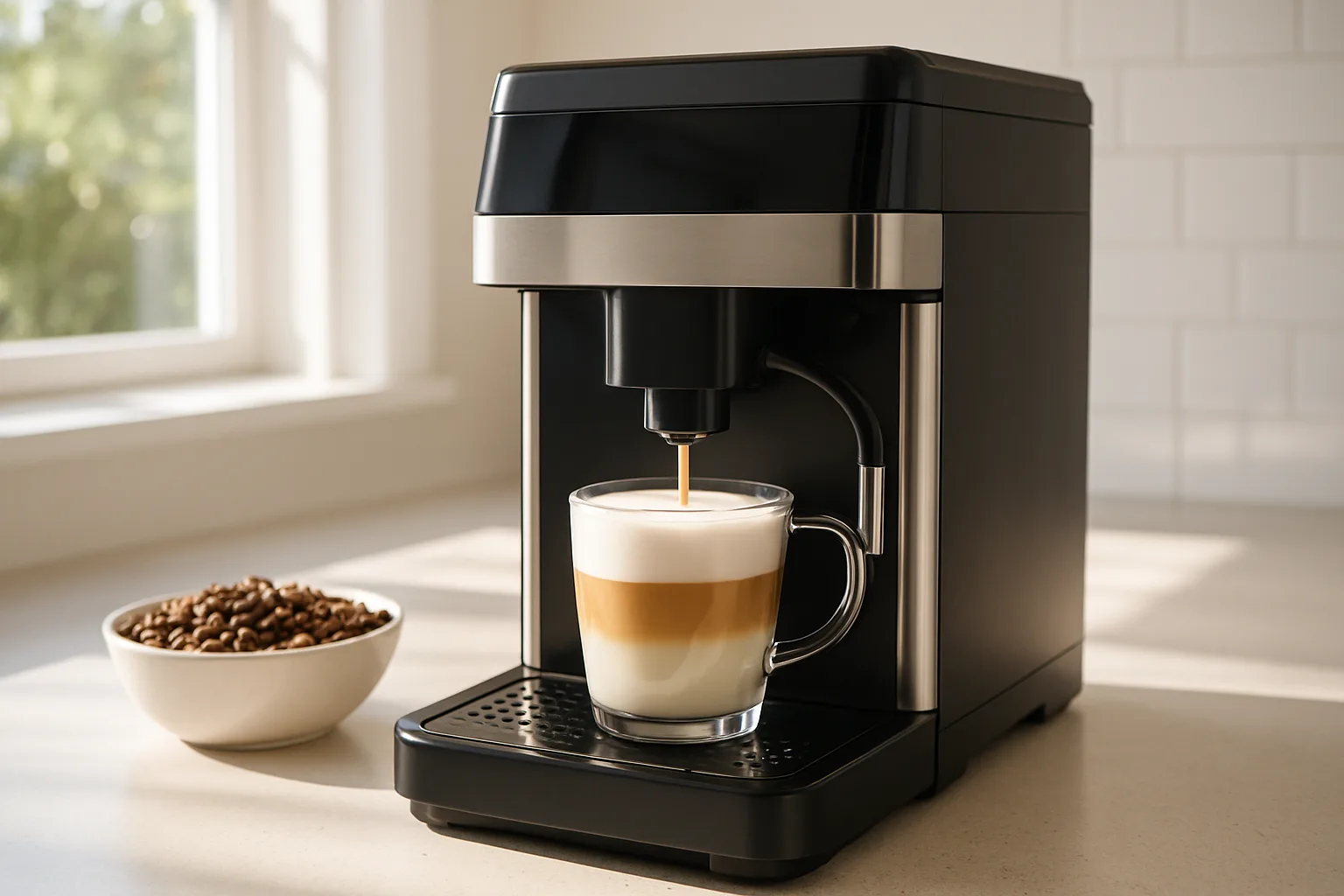
A super-automatic espresso machine grinds, doses, tamps, brews and froths milk at the press of a button. De'Longhi and Philips make the best-known models, and from the outside they look almost the same. In the cup they are not. The biggest difference is how much ground coffee each machine puts in the brew group, and that one number decides whether an espresso tastes rich or thin.
This guide compares the De'Longhi Dinamica Plus, the De'Longhi Magnifica Duo and the Philips LatteGo machines on dose, grind, milk, temperature, ease of use and cleaning, then covers how to get stronger coffee out of a Philips.
As an Amazon Associate, Best Utah Real Estate earns from qualifying purchases.
Quick verdict
- Strongest espresso and silkiest milk: the De'Longhi Dinamica Plus. Its largest dose holds roughly 50 percent more coffee than the Philips 5400 can grind, and its milk foam comes out finer.
- Hot and iced drinks from one machine: the De'Longhi Magnifica Duo, with a full cold menu, a cold brew program and separate hot and cold milk carafes.
- Easiest to use and clean: the Philips 3200 Series LatteGo. The two-piece LatteGo milk system clips on in seconds and the brew group slides out for rinsing. Expect milder coffee unless you use the tricks below.
The machines side by side
| Machine | Shop | Largest coffee dose | Grinder | Milk system | Iced drinks | Brew group |
|---|---|---|---|---|---|---|
| De'Longhi Dinamica Plus |  Buy on Amazon | About 12 to 15 g (Doppio+) | Stainless steel conical burrs | Large double-walled milk carafe | No | Not removable with grounds inside |
| De'Longhi Magnifica Duo |  Buy on Amazon | Longest grind via Coffee Crema, up to about 10 seconds | Stainless steel conical burrs, 13 settings | Separate hot and cold milk carafes | Yes, plus cold brew | Same design as other De'Longhi machines |
| Philips 3200 Series LatteGo |  Buy on Amazon | About 8 g, give or take 0.5 g | Built-in grinder | LatteGo, two parts | No | Removable, even with power on |
| Philips 3300 Series LatteGo |  Buy on Amazon | About 8 g, give or take 0.5 g | Built-in grinder, 12 settings | LatteGo, two parts | No | Removable, even with power on |
| Philips 5400 | About 7 to 9 g | Ceramic burrs | LatteGo | No | Removable |
Dose is the whole story
Espresso strength comes from how much coffee goes in versus how much liquid comes out. A classic espresso runs about 1 part coffee to 2 parts liquid. These machines grind by time, and the software sets how long, so the brew group never gets more coffee than the maker allows.
On Philips machines that cap is low. The Philips 3300 grinds about 6 g on its lowest bean setting and roughly 7.8 to 8.8 g on its highest. Its smallest espresso still pours about 32 g, which works out near 1 to 4. That is closer to a lungo than an espresso, and it explains why so many Philips owners call their coffee weak. The 3200 and 5500 use the same brew group, so the same limit applies. The Philips 5400 lands in the same place: about 7 to 9 g at most, with spent pucks too coarse and loose to pick up in one piece.
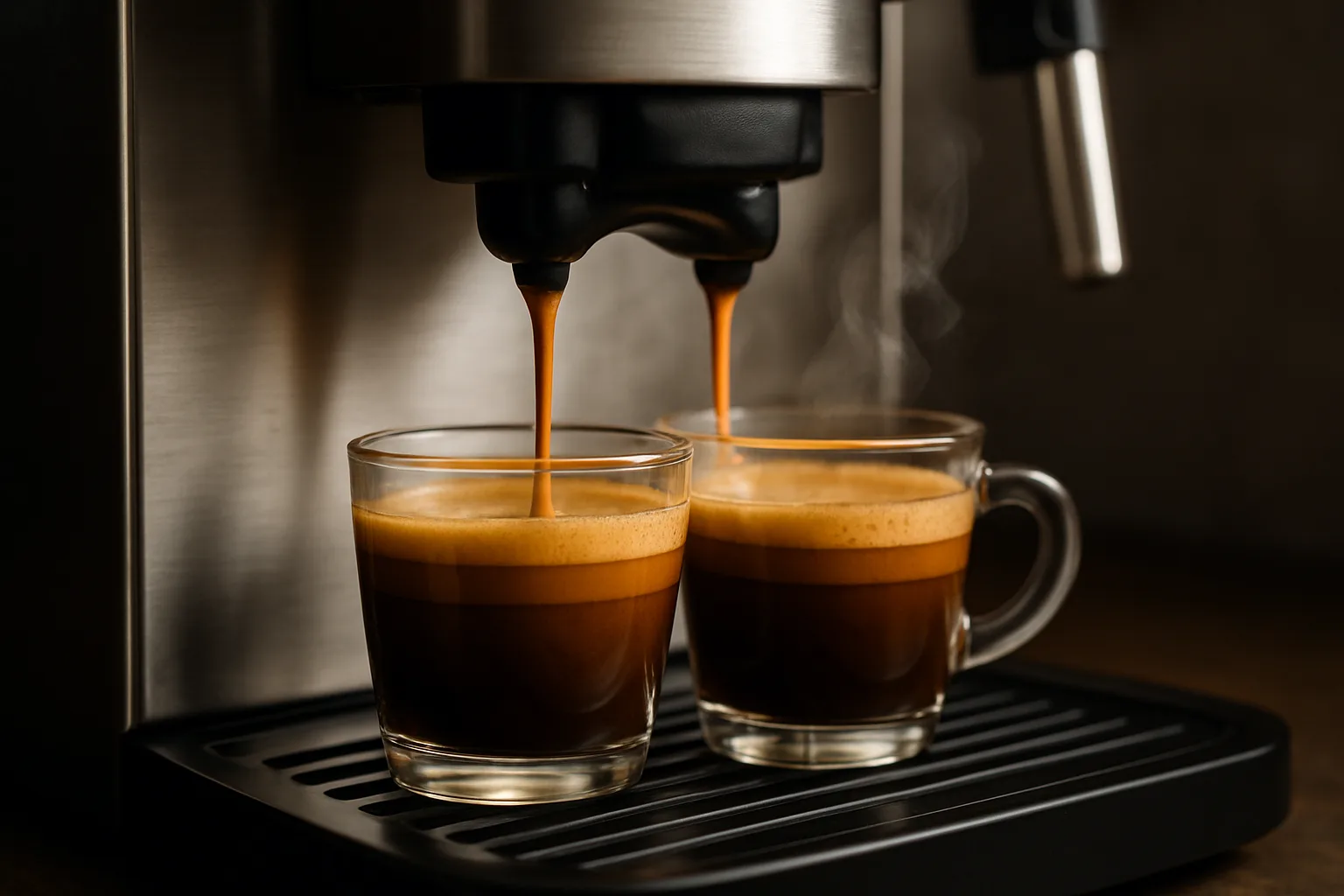
The De'Longhi Dinamica Plus grinds about 12 to 15 g on its Doppio+ drink, with a thick, compact puck. Pull that dose down to a 30 ml shot and the espresso is far more intense than the Philips 5400's: dark chocolate and berry notes up front, where the Philips shot is mild, without much depth. The catch is that Doppio+ expects to pour around 80 ml, so a short, strong shot means stopping it yourself.
Grind: steel vs. ceramic burrs
Both De'Longhi machines use stainless steel conical burrs. The Dinamica Plus grinds fine enough with fresh beans to stall the machine, which shows how far its range goes. The Philips 5400 uses ceramic burrs and doesn't grind as fine even near the bottom of its scale; with the same beans, a setting of 2 on the Philips 5400 is still coarser than 3.5 on the Dinamica Plus.
A fine grind still matters on a Philips LatteGo. The 3300 ships near the middle of its 12 settings. At the coarsest setting its espresso measured only about 3 percent total dissolved solids (TDS, the share of the drink that is dissolved coffee). At a setting of 2 it reached 4 to 5 percent, peaking at 5.2. A cafe-strength espresso sits closer to 9 or 10 percent, so even the best setting gives about half the strength. A grind that is too coarse can also leave sludge in the grounds bin instead of firm pucks.
Milk: LatteGo vs. De'Longhi carafes
Philips LatteGo is two plastic pieces with no tubes. It hooks onto the front of the machine in one motion and rinses clean under a tap. On the Philips 5400 the foam comes out frothy and drinkable, but bubbly rather than silky.
The Dinamica Plus carafe is larger, double-walled and sturdier. Its cappuccino foam has finer bubbles and a creamier texture that brings out the sweetness of the milk. No super-automatic makes true steam-wand microfoam, but the De'Longhi gets closer. The Magnifica Duo's hot carafe makes the same silky foam; a lever on the carafe sets the foam texture (about three-quarters of the way works well), and hot milk comes out around 55°C (131°F). After each milk drink the machine asks you to run a short clean cycle through the milk spout.
Milk choice changes the result as much as the machine. Whole milk around 3.5 percent fat foams the creamiest, and oat milk works well in iced lattes.
Temperature, noise and everyday use
For a long coffee crema of about 150 ml, the Philips 5400 poured 154 ml at about 75°C (167°F) at the top of the cup. The Dinamica Plus poured nearly 80°C (176°F). Both are hot; the De'Longhi runs a little hotter.
The Philips 5400 is easier to set up. Its screen shows drink size in milliliters, it has color-coded user profiles for different people in the house, and a light comes on over the cup when a drink starts. The Dinamica Plus lists sizes as small, medium, large and largest without saying what they mean in milliliters, though its My function lets you save your own amounts. Its touch icons are also easy to brush by accident, which starts a drink you didn't want. The Magnifica Duo uses buttons below the screen, not a touchscreen, and has three user profiles.
On build, the Dinamica Plus is made in Italy and feels heavier, with a solid metal drip tray, a clear water tank with a lid and fill funnel, and a power switch on the back. The Philips 5400 is made in Romania, with a lighter drip tray and an open water tank. Both have low-water sensors, and both are mostly plastic on the outside, like nearly every super-automatic.
How to get stronger coffee from a Philips
- Max out the bean setting. Choose three beans every time. That is the only way to reach about 8 g.
- Grind fine. Move to the low end of the 12 settings (around 2) for the strongest result the grinder allows.
- Use the pre-ground chute. Press and hold the bean button to bypass the grinder, then add up to about 12 g of ground coffee down the chute. That raised the 3300's espresso to about 7 percent TDS, much closer to a real espresso. The brew group strains to compress that much, so it is not an everyday habit, and brush the chute clean afterward so leftover grounds don't mold.
- Add robusta. Robusta beans carry noticeably more caffeine than arabica, and even a 20 percent robusta blend gives more crema.
- Still too weak? A De'Longhi with a larger dose is the real fix.
The picks in detail
De'Longhi Dinamica Plus
This is the pick for anyone who drinks straight espresso or wants milk drinks that still taste like coffee. The Doppio+ dose of about 12 to 15 g is the largest here, the steel burrs grind fine and the milk carafe makes the creamiest foam. The trade-offs are a less clear menu, sizes without milliliters and touch icons that are easy to bump. Its brew group stays in place while grounds are inside; the machine ejects the puck itself.
One note on versions: the Dinamica Plus sold on Amazon is the newer ECAM380.85, which lists 24 one-touch drinks including iced coffee, the LatteCrema Hot milk system, 13 grind settings and four user profiles. The Doppio+ dose and shot details above come from the earlier 370.85, so check the drink menu on the listing if Doppio+ matters to you.
De'Longhi Dinamica PlusCheck today’s price on Amazon

 Buy on Amazon →
De'Longhi Magnifica Duo
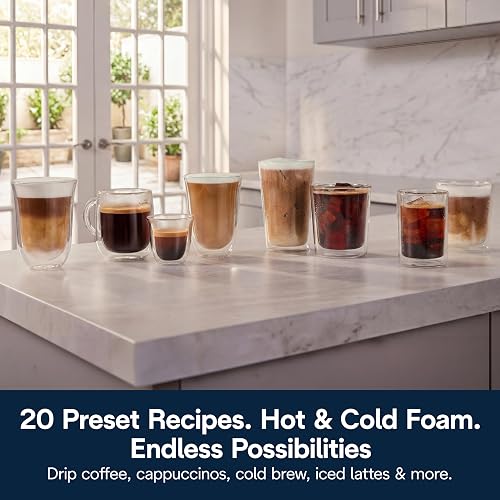
The Magnifica Duo is De'Longhi's most affordable machine with a cold drink menu: cold brew, iced coffee, iced latte, iced cappuccino, iced Americano, iced espresso, iced flat white, iced latte macchiato and cold milk. The "iced" drinks are a hot shot, about 80°C (176°F), poured over ice with cold milk at about 20°C (68°F); the hot extraction keeps the aroma. Cold brew is its own slower program that brews at around 58°C (136°F) before going over ice.
For hot drinks, a five-bean small espresso pours about 33 g of balanced, chocolatey coffee. For a stronger shot, choose Coffee Crema with five beans and stop it near 32 g; that drink grinds the longest, up to about 10 seconds. Its "drip coffee" is two 6-second grind-and-brew cycles stacked together, so Coffee Crema at about 150 ml is the better long black coffee. The chute takes up to 15 g of pre-ground coffee. It has 13 grind settings, a brushed-look plastic finish and a removable hot-water spout.
De'Longhi Magnifica DuoCheck today’s price on Amazon

 Buy on Amazon →
Philips 3200 Series LatteGo
The 3200 is the simple, low-fuss choice. LatteGo is the easiest milk system here to attach and clean, and the brew group comes out even with the power on for a rinse under the tap. Its drinks are milder because the dose stops near 8 g. Lattes and cappuccinos hide a milder shot better than straight espresso does.
Philips 3200 Series LatteGoCheck today’s price on Amazon

 Buy on Amazon →
Philips 3300 Series LatteGo
The 3300 shares the same brew group, dose limit and LatteGo system, and its 12-step grinder and pre-ground chute make the strength tips above work. It pours a very consistent 32 to 33 g espresso every time. Compare its drink menu with the 3200's on the current listing. Above it, the Philips 5500 Series LatteGo is the higher-end LatteGo model, but it uses the same brew group, so it doesn't make stronger coffee.
Philips 3300 Series LatteGoCheck today’s price on Amazon
 Buy on Amazon →
Cleaning and maintenance
- Rinse the brew group. On a Philips, pull it out and rinse it regularly; old grounds build up fast. A De'Longhi brew group comes out only with the machine off and no grounds inside.
- Clean the milk path after every drink. Rinse the LatteGo parts, or run the De'Longhi's milk-spout clean cycle when prompted.
- Empty the grounds bin before it overflows.
- Brush out the pre-ground chute any time you use it.
- Use fresh beans. Freshly roasted beans give more crema on any machine.
Who should buy which
- Straight espresso drinkers: the De'Longhi Dinamica Plus, for the largest dose and the finest grind.
- Iced latte and cold brew fans: the De'Longhi Magnifica Duo.
- Milk-drink households that value easy cleaning: the Philips 3200 or 3300 Series LatteGo.
- Anyone who wants to learn real espresso by hand: skip the super-automatics and see the beginner semi-automatic espresso machines instead.
Planning a coffee bar? A good blender covers smoothies and frozen coffee drinks that an espresso machine can't.
Posted by Kristopher Larson
Frequently asked questions
Is De'Longhi or Philips better for super-automatic espresso?
De'Longhi makes the stronger espresso and the silkier milk foam, mainly because its higher-end machines grind a much larger dose: about 12 to 15 g on the Dinamica Plus versus roughly 7 to 9 g on a Philips. Philips is easier to use day to day, with drink sizes shown in milliliters and the simple two-piece LatteGo milk system.
Why is the coffee from my Philips espresso machine so weak?
Philips LatteGo machines grind at most about 8 g of coffee, yet the smallest espresso pours about 32 g. That ratio of roughly 1 to 4 is closer to a lungo than an espresso. Set three beans, grind near the fine end of the scale, or add about 12 g of ground coffee through the pre-ground chute for a noticeably stronger shot.
What is the best super-automatic espresso machine for iced coffee?
The De'Longhi Magnifica Duo is De'Longhi's most affordable machine with a cold menu. It makes iced lattes, iced cappuccinos, iced Americanos and more, has a separate cold milk carafe, and runs a dedicated cold brew program that extracts at around 58°C before going over ice.
Is iced coffee from an espresso machine brewed cold?
No. Iced drinks on a super-automatic are a hot shot, around 80°C, poured over ice and topped with cold milk. Only a cold brew program, such as the one on the Magnifica Duo, extracts at a lower temperature, and it still isn't fully cold.
Can a super-automatic espresso machine make microfoam?
Not true steam-wand microfoam. De'Longhi's milk carafes come closest, with finer bubbles and a creamier texture, while Philips LatteGo foam is frothier and more bubbly. Whole milk around 3.5 percent fat gives the creamiest result on either brand.
How do you clean a super-automatic espresso machine?
Rinse the milk system after each milk drink, empty the grounds bin and drip tray often, and rinse the brew group regularly. Philips brew groups slide out even with the power on; De'Longhi brew groups come out only with the machine off and no grounds inside. If you use the pre-ground chute, brush it clean so leftover coffee doesn't mold.
Keep reading
More from the blog
How to Turn Your Garage Into a Home Gym or Personal Training Studio: Flooring, Racks and Local Rules
How to Turn a Spare Room Into a Home Podcast Studio: Mic, Interface and Acoustic Treatment
Home Dog Grooming Setup: Shernbao vs Shelandy Dryers and the Right Table