Best Sunrise Alarm Clock: Hatch Restore 3 vs. Philips SmartSleep vs. Lumie vs. Loftie
Hatch Restore 3, Philips SmartSleep, Lumie, Hue Twilight and Loftie compared on light at the pillow, sunrise, sound, flicker and what needs a subscription.
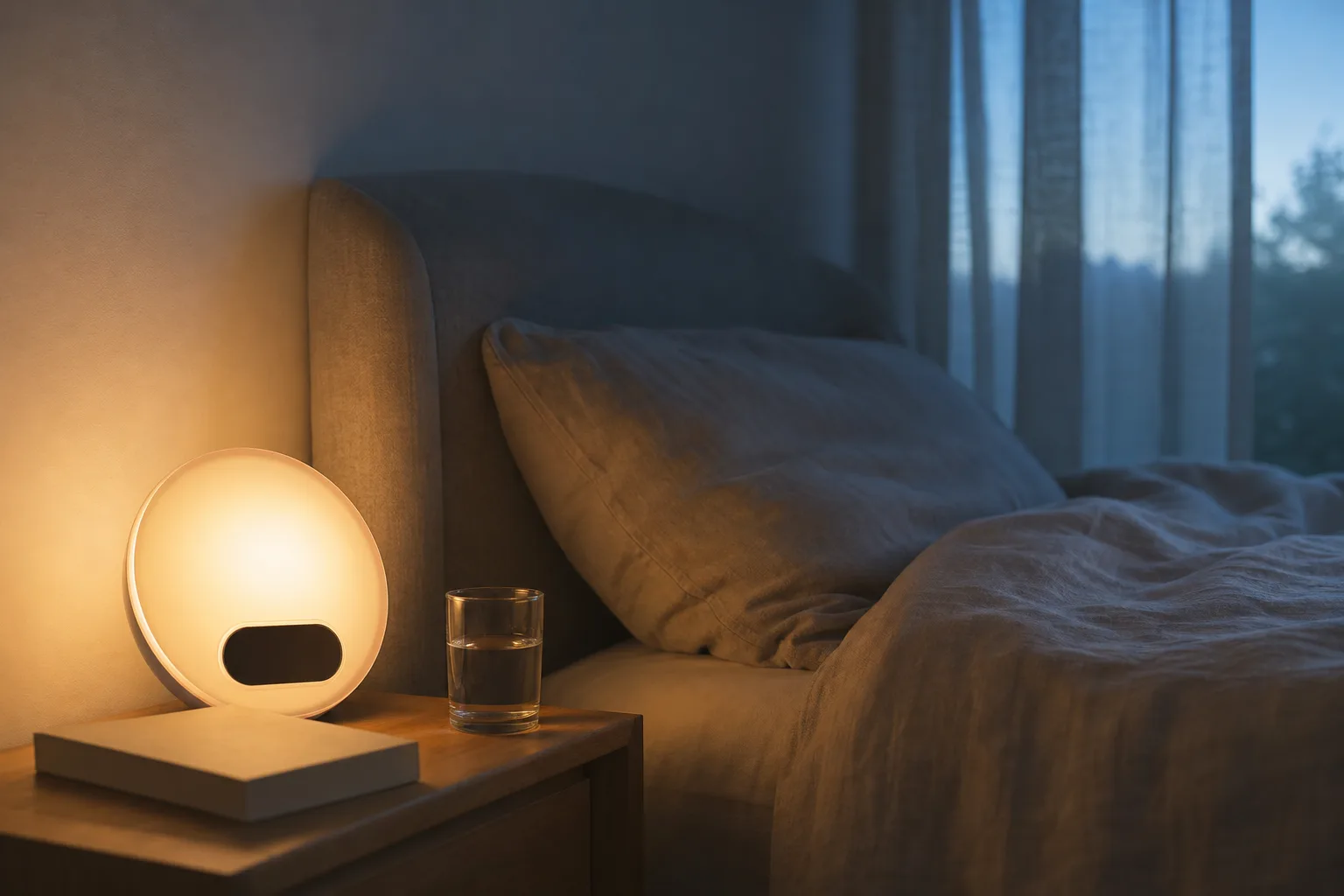
A sunrise alarm clock brightens slowly before your alarm, so the room is already light when it's time to get up. Whether it helps depends mostly on how much light reaches your eyes from the pillow, and the popular models differ a lot: some that look bright on a nightstand send little light toward the bed, and the brightest lamp has no clock at all.
Below: how the Hatch Restore 3, Philips SmartSleep, Lumie, Hue Twilight, Loftie and Casper Glow compare on brightness, sunrise, sound, ease of use and subscriptions.
Quick verdict
- Best smart sunrise clock: the Hatch Restore 3. Bright enough at the pillow, practically flicker-free, the best sound of the group, and the core features need no subscription.
- Brightest clock-style light: the Lumie Bodyclock Shine 300. Strong output, sunrises up to 90 minutes and a self-dimming display, but 24-hour time only.
- Best no-app clock with 12-hour time: the Philips SmartSleep HF3650. Bright and smooth, with a tap-on night light and a backup alarm for power cuts, but the most confusing menus here.
- Simplest pick: the Philips SmartSleep HF3520. Setup runs on the clock face, no phone needed, and the sunrise is bright enough at the pillow.
- Most natural-looking sunrise: the Philips Hue Twilight. The brightest lamp, with a dawn-like sunrise, but no clock or speaker.
- Best phone-free alarm without a sunrise: the Loftie Alarm Clock. A two-stage alarm, a free sound library and on-clock controls, with no sunrise.
- Best wind-down lamp: the Casper Glow Light. A cordless twist-to-dim glow light, pleasant for evenings but too dim to wake most people.
The sunrise alarm clocks side by side
| Sunrise light | Shop | Reaches about 250 lux at 18 in? | Longest sunrise | Clock and sound | App needed? |
|---|---|---|---|---|---|
| Hatch Restore 3 | 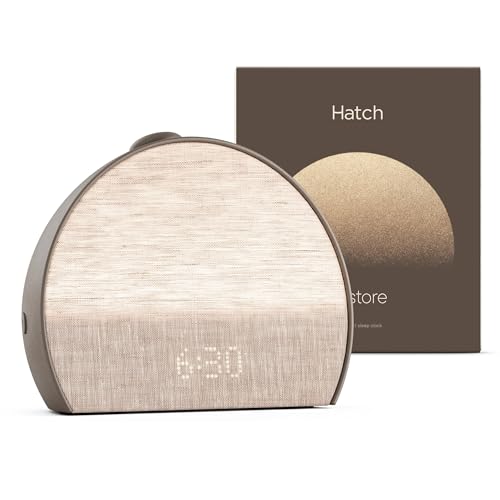 View on Amazon | Yes | 60 minutes | Dimmable clock, sound machine, forward-facing speaker | For setup and routines; daily controls on the device |
| Lumie Bodyclock Shine 300 |  View on Amazon | Yes | 90 minutes | Auto-dimming 24-hour clock, 15 sounds or FM radio | No |
| Philips SmartSleep HF3650 | 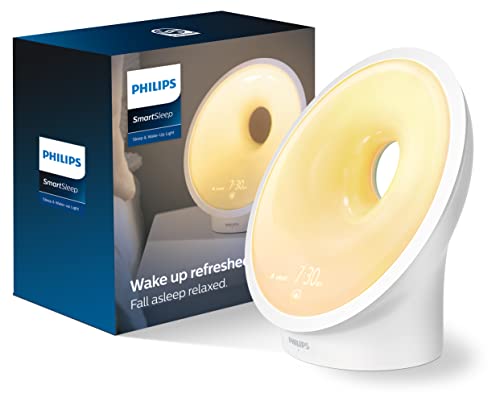 View on Amazon | Yes | About 40 minutes | Auto-dimming clock, FM radio, sounds, backup alarm | No |
| Philips SmartSleep HF3520 |  View on Amazon | Yes | About 40 minutes | Auto-dimming clock, FM radio, 5 nature sounds | No |
| Philips Hue Twilight |  View on Amazon | Yes | 60 minutes | No clock, no speaker | Yes, and a Hue Bridge for wake-up automations |
| Loftie Alarm Clock |  View on Amazon | No sunrise feature | None | Clock, two-stage alarm, 100+ sounds, Bluetooth speaker | For setup, then optional |
| Casper Glow Light |  View on Amazon | No | App-scheduled glow | No clock, no speaker | Yes (iOS app) |
Best smart sunrise clock
Hatch Restore 3
Bright at the pillow, essentially flicker-free and the best-sounding alarm and sound machine of the group, with core features free.
- 5–60 min sunrise
- Forward-facing speaker
- Tap-to-show clock
Good for
- A phone-free nightstand with light and sound in one
- Flicker-sensitive sleepers
- White noise or colored noise all night
Skip it if
- You want simple setup with no app
- You only want a sound machine
How the sunrise lights compare
Light at the pillow matters more than total brightness
Lumens measure all the light a lamp puts into the room; lux measures how much lands on your face, which is what counts for waking. On total output, the Hue Twilight (about 570 lumens) and the Lumie Shine 300 (about 550) lead by a wide margin, well ahead of Lumie's own Glow 150 and Luxe 700. The Philips SmartSleep lamps land in the middle, and the Hatch Restore 3 and Loftie's separate Loftie Lamp sit near the bottom.
At the face, the order changes. The Hatch Restore 3 aims its light forward, so at one foot it puts more light on the face than most of the clock-style lights here, and about 30% more than the Restore 2. The Philips lamps pass most Lumie models for the same reason, while lamps that glow in every direction, like the Casper Glow and the Loftie Lamp, drop to last.
A sensible target is about 250 lux at your eyes by wake time. Wake too abruptly and you lower the peak or lengthen the sunrise; sleep through it and you do the opposite. At a typical 18 inches from the nightstand, the Hatch Restore 3, the Lumie Shine 300, all three Philips SmartSleep models, the Hue Twilight and a basic JALL clock reach that level with enough brightness steps to fine-tune it. The Casper Glow and the Loftie Lamp don't come close. If bright light bothers you in the morning, a dimmer lamp can still work.
Morning light is one of the main signals the body uses to set its daily clock, as the Sleep Foundation's overview of light and sleep explains. A sunrise clock is a wake-up aid, not a treatment, and far dimmer than a light therapy box.
Sunrise length and shape
A good sunrise starts almost imperceptibly and builds slowly. The Hue Twilight follows that curve best, with the three Philips lamps close behind; Lumie's ramps are a little less gradual but still good, and the Casper Glow's is decent. The Loftie Lamp stays faint and then jumps sharply at the end. The Hatch's sunrise presets vary in how evenly they ramp, so try a few.
The Lumie Shine 300 and Luxe 700 allow sunrises up to 90 minutes, the Hatch Restore 3 and Hue Twilight up to 60, and the Philips HF3520 and HF3650 about 40.
Flicker
Some LED lamps flicker invisibly when dimmed, which bothers some people. By the IEEE 1789 flicker-risk guideline, the Hatch Restore 3 is the cleanest, with essentially no flicker at any level. The Philips HF3650 and HF3520 and the Lumie Luxe 700 switch fully off and on 120 times a second, and the Shine 300 joins them once dimmed. The Casper Glow picks up some flicker at half brightness but stays low-risk.
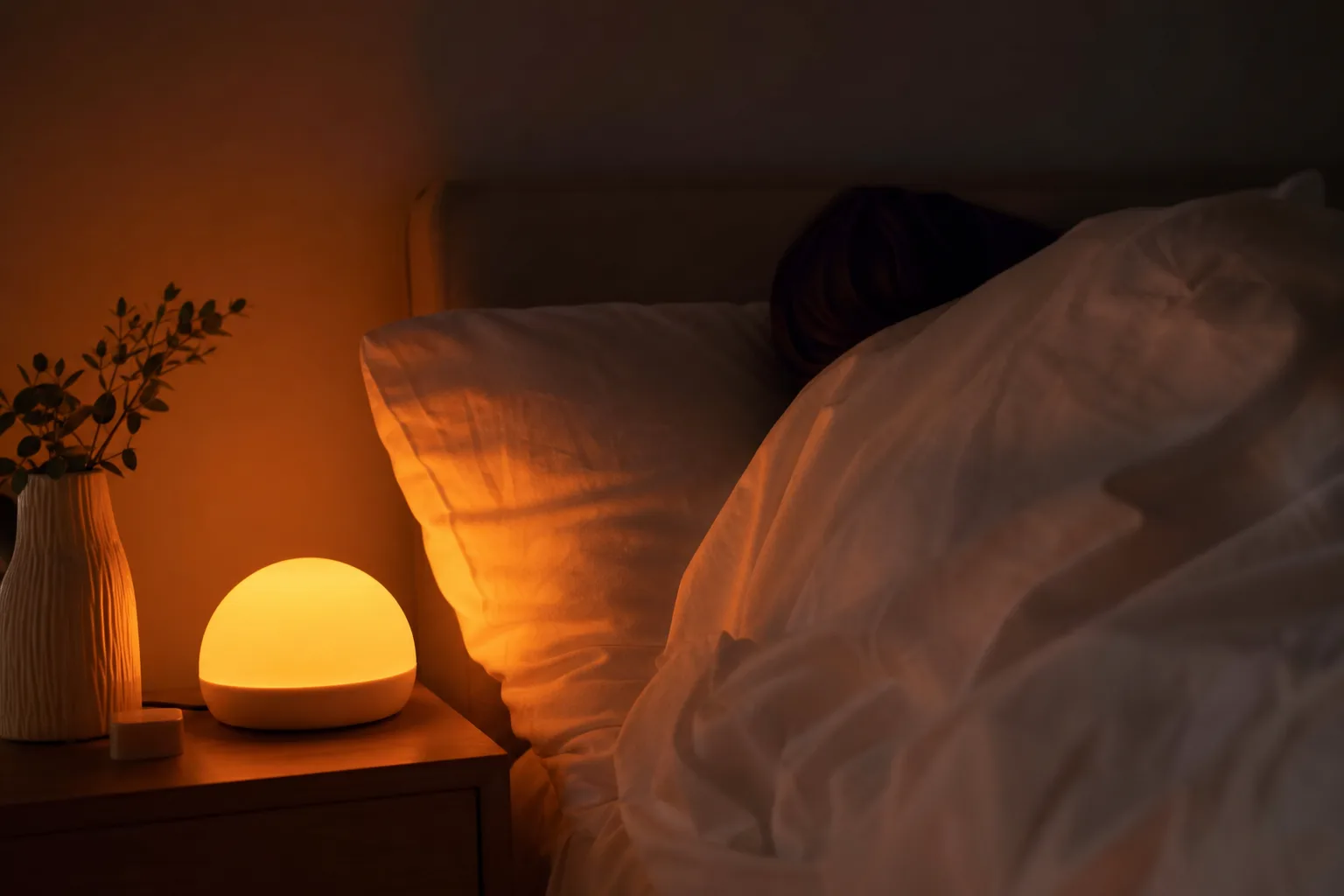
Alarm sounds and sleep sounds
The light is meant to do the waking, but if you want a sound as backup, the choice matters. The Hatch Restore 3 has the best alarm sounds and the only forward-facing speaker (the others fire out the back), so it also gets the loudest. It's the best sound machine here too, with colored noises and ambient sounds that play very quietly or loud. Lumie and Philips offer pleasant nature-sound alarms, and Lumie's 150, 300 and 700 add a basic white noise track. The Hue Twilight and Casper Glow have no speaker.
Two other models have quirks: the Philips HF3500 won't let you turn off its audible alarm, and the Lumie Rise 100 and Glow 150 must be re-armed every morning.
Ease of use at night
The Philips HF3650 is the hardest to set up: every menu is an icon, and it drops back to the home screen if you pause to check the manual. The Lumie Shine 300's many buttons take some learning. Both are fine once set. The Philips HF3520 walks you through setup on the clock face.
For a pitch-black room, every clock here can turn its display off except the Philips HF3500, which only dims. The Lumie and the Philips HF3650 and HF3520 dim automatically; a basic JALL clock goes fully dark but must be switched off by hand each night. All Lumie clocks show 24-hour time only.
For shift workers, the app-controlled lights allow as many alarms as you like. The Lumie Shine 300 and Luxe 700 allow a separate alarm for each day of the week, and the Philips HF3650 and HF3520 two.
Subscriptions: what's free and what isn't
Only the Hatch has a paid tier. Hatch+ adds a large library of meditations, sleep stories, music and soundscapes, with a 30-day trial included. Without it, the Restore 3 still does everything a sunrise clock needs: the sunrise alarm, the reading light, alarms with included wake sounds and a good set of free sleep sounds, including the colored noises. Finding the free sounds takes digging, since locked and unlocked tracks share the same screens and each must be previewed one at a time. The content library also only opens while the clock is plugged in and online.
The Loftie Alarm Clock includes its whole sound library free, and the Philips and Lumie clocks have no app at all. The Hue Twilight has no subscription, but its wake and sleep automations need a separately sold Hue Bridge; the smart bulbs vs. smart switches guide covers how a bridge fits into the rest of the house.
Brightest clock-style light
Lumie Bodyclock Shine 300
The brightest traditional sunrise clock, with sunrises up to 90 minutes and a display that turns itself off.
- 15–90 min sunrise and sunset
- Auto-dimming display
- 15 sounds or FM radio
Good for
- Heavy sleepers who need plenty of light
- Experimenting with long sunrises
- Different wake times each weekday
Skip it if
- You want 12-hour time
- Flicker bothers you
The picks in detail
Hatch Restore 3: best smart sunrise clock
The Hatch Restore 3 is a sunrise light, sound machine and clock in one device that looks like decor rather than electronics. Unlike the Restore 2, it runs day to day from its own buttons: start or stop the bedtime routine or alarm, switch on a reading light that is very bright in a dark room, or flip a side switch to skip tomorrow's alarm. The clock face can stay off all night; tap the device and the time appears for a moment. Sunrises run 5 to 60 minutes, and it's essentially flicker-free.
The weak spot is the app: setup is fiddly, and less tech-savvy owners may struggle. Once the sleep sounds and weekday and weekend alarms are set, you rarely open it again. It doesn't track sleep.
Best smart sunrise clock
Hatch Restore 3
Bright at the pillow, essentially flicker-free and the best-sounding alarm and sound machine of the group, with core features free.
- 5–60 min sunrise
- Forward-facing speaker
- Tap-to-show clock
Good for
- A phone-free nightstand with light and sound in one
- Flicker-sensitive sleepers
- White noise or colored noise all night
Skip it if
- You want simple setup with no app
- You only want a sound machine
Lumie Bodyclock Shine 300: brightest clock-style light
The Lumie Bodyclock Shine 300 is the brightest traditional sunrise clock and one of the most adjustable, with sunrise and sunset lengths from 15 to 90 minutes. Its display dims itself and goes dark in a dark room, there's a night light, and it allows a different alarm for each weekday with 15 wake sounds or FM radio. Downsides: the buttons take getting used to, it flickers when dimmed, and it shows 24-hour time only.
Brightest clock-style light
Lumie Bodyclock Shine 300
The brightest traditional sunrise clock, with sunrises up to 90 minutes and a display that turns itself off.
- 15–90 min sunrise and sunset
- Auto-dimming display
- 15 sounds or FM radio
Good for
- Heavy sleepers who need plenty of light
- Experimenting with long sunrises
- Different wake times each weekday
Skip it if
- You want 12-hour time
- Flicker bothers you
Philips SmartSleep HF3650: best no-app clock with 12-hour time
The Philips SmartSleep HF3650 sits close behind the Lumie for brightness with a smooth ramp. It adds 12-hour time, nicer alarm sounds than the Shine 300, an auto-off display and a dim orange night light you tap on at night. It's the only clock here with a backup alarm that still goes off during a power cut, and it has a phone charging dock and RelaxBreathe, a light-guided breathing mode. Expect a frustrating first setup with its icon-only menus. It flickers when dimmed.
Best no-app clock with 12-hour time
Philips SmartSleep HF3650
A bright, smooth sunrise with 12-hour time, a tap-on night light and an alarm that works through a power cut.
- 25 brightness settings
- Power backup alarm
- FM radio
Good for
- Homes with frequent outages
- Anyone who wants no app
- Middle-of-the-night trips with a dim night light
Skip it if
- You hate icon-only menus
- Flicker bothers you
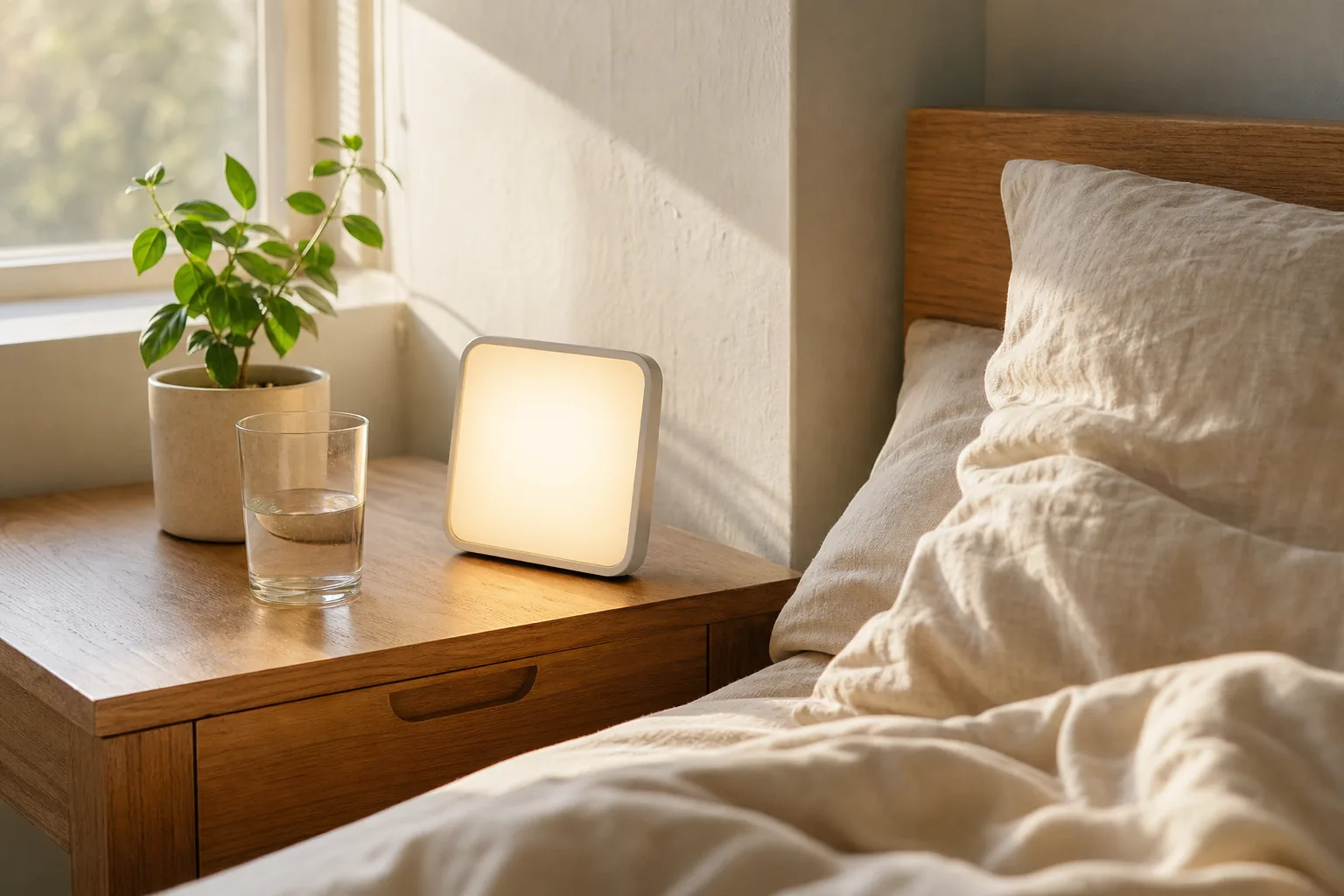
Philips SmartSleep HF3520: simplest pick
The Philips SmartSleep HF3520 is the one for someone who doesn't want an app: setup prompts appear on the clock face as soon as it's plugged in. Its sunrise shifts from red through orange to yellow on the same gradual curve as the HF3650 and gets bright enough at the pillow. It has 20 brightness settings, two alarms, five nature sounds, FM radio, tap snooze and an auto-dimming display. It also flickers when dimmed.
Simplest pick
Philips SmartSleep HF3520
A no-app sunrise clock that sets itself up on its own screen and gets bright enough to wake you.
- 20 brightness settings
- 2 alarms
- 5 nature sounds and FM radio
Good for
- A gift for someone who avoids apps
- Weekday and weekend alarms
Skip it if
- You want sunrises longer than about 40 minutes
- Flicker bothers you
Philips Hue Twilight: most natural-looking sunrise
The Philips Hue Twilight isn't a clock but a smart bedside lamp with the brightest output and the most convincing sunrise here: a dim blue start, a warm 2,000 K glow, then a 2,700 K white. It aims light downward, which is likely to disturb a partner less and can reach you even facing away. Sunrises go up to 60 minutes. There's no display or sound, the Wake Up and Go to Sleep automations need a Hue Bridge.
Most natural-looking sunrise
Philips Hue Twilight
The brightest lamp and the most realistic sunrise of the group, in a bedside lamp with no clock or speaker.
- Up to 60 min sunrise
- Downward-aimed light
- Hue Bridge for automations
Good for
- Existing Hue homes
- Couples where one person wakes earlier
- The most dawn-like light
Skip it if
- You want a clock or alarm sound
- You don't have a Hue Bridge
Loftie Alarm Clock: best phone-free alarm without a sunrise
The Loftie Alarm Clock is for people who want the phone out of the bedroom but don't want light to wake them. Its two-phase alarm plays a gentle chime, then a louder tone, and more than 100 sounds (white noise, nature, meditations) come with no subscription. Volume, brightness and sounds can be changed on the clock, and it doubles as a Bluetooth speaker. The light is a soft night light, not a sunrise. Setup needs the app and 2.4 GHz Wi-Fi; after that it can run offline.
Best phone-free alarm without a sunrise
Loftie Alarm Clock
A two-stage alarm, a free sound library and on-clock controls for a bedroom without a phone.
- Two-phase alarm
- 100+ sounds included
- Bluetooth speaker
Good for
- Keeping the phone out of the bedroom
- Light sleepers who don't want a sunrise
- No subscriptions
Skip it if
- You want a sunrise light to wake you
Casper Glow Light: best wind-down lamp
The Casper Glow Light is a cordless puck that charges on a wireless pad. Flip it to turn it on or off, twist to dim, and lift it off the base as a night light. The iOS app schedules a dimming evening glow and a brightening morning one. It's pleasant for winding down but falls well short of 250 lux at the pillow, so it won't wake deep sleepers.
Best wind-down lamp
Casper Glow Light
A twist-to-dim cordless glow light for evenings and a gentle morning glow, too dim to wake most sleepers.
- Twist to dim
- Wireless charging base
- iOS app
Good for
- Reading and winding down
- A portable night light
Skip it if
- You need light bright enough to wake you
- You use Android
Who should buy which
- Want one device for light, sound and a dark nightstand? The Hatch Restore 3, and the free features are enough.
- Sleep through everything? The Lumie Shine 300, or the Philips HF3650 if you need 12-hour time.
- Buying for a parent or someone who avoids apps? The Philips HF3520.
- Already on Hue, or share the bed with a later riser? The Hue Twilight.
- Don't want light at all, just a phone-free alarm? The Loftie Alarm Clock.
- Mostly after a calm evening light? The Casper Glow.
For the rest of the bedroom, see how to choose a mattress and the percale vs. sateen sheets guide.
Posted by Kristopher Larson
Frequently asked questions
Do sunrise alarm clocks actually work?
They can make waking easier for many people, as long as enough light reaches your eyes. About 250 lux at the face by wake time is a sensible starting point. Lamps that glow softly in every direction often fall well short of that at pillow distance, so choose one that aims its light toward the bed.
How bright should a sunrise alarm clock be?
Aim for roughly 250 lux reaching your eyes, then adjust. If you wake abruptly, lower the peak brightness or lengthen the sunrise; if you sleep through it, raise the brightness or shorten the sunrise. A lamp with many brightness steps makes this easier to fine-tune.
Do you need a Hatch+ subscription for the Hatch Restore 3?
No. The sunrise alarm, the reading light, alarms with included wake sounds and a good set of sleep sounds, including colored noise, work without a subscription. Hatch+ adds a larger library of meditations, stories, music and soundscapes, and a 30-day trial comes with the clock.
Which sunrise alarm clock works without an app?
The Philips SmartSleep HF3520 and HF3650 and the Lumie Bodyclock Shine 300 are set up entirely on the clock. The HF3520 is the simplest: its setup prompts appear on the display as soon as it is plugged in.
How long should a sunrise alarm last?
Many clocks default to about 30 minutes, which is a reasonable place to start. Longer sunrises give a more gradual wake-up; the Lumie Shine 300 allows up to 90 minutes, and the Hatch Restore 3 and Philips Hue Twilight up to 60.
Will a sunrise alarm clock wake my partner?
It can, since the whole room gets brighter. A lamp that aims light down toward one side of the bed, like the Philips Hue Twilight, is less likely to disturb the other sleeper than one that lights the room in every direction. Placing the clock on the early riser's nightstand helps too.
Keep reading
More from the blog
Best Hair Dryer: Dyson Supersonic vs. Nural vs. Shark SpeedStyle vs. Laifen Swift
Best Mouse Traps: Victor Snap Traps vs. Electronic Traps vs. Tomcat vs. Tin Cat

Best Cat Water Fountain: PETKIT vs. PETLIBRO vs. FEELNEEDY vs. PetSafe