Salt Lake City's Single-Family Zoning Rewrite: What Is Decided, What Is Proposed and What It Means for Owners
Salt Lake City's Expanding Housing Options plan would allow small homes, duplexes and townhomes on 2,000-square-foot lots in most single-family zones. Here is what has been decided, what is still proposed before a December 2026 Council vote, and what it could mean for owners, buyers and small investors.
A Salt Lake City homeowner on a 6,000-square-foot lot could soon be allowed to add a second or third small house behind the first one and sell it separately. That is the core of Expanding Housing Options, a rewrite of the city's single-family zoning rules that the City Council is expected to vote on as soon as December 2026.
The proposal covers the zones where most of the city's detached houses sit, so it touches a large share of owners in Salt Lake City. It has also changed since the Planning Commission endorsed it, and none of it is law yet. This article separates what has been decided from what is still proposed, then looks at what it could mean for owners, buyers and small investors.
Where Things Stand in November 2026
| Step | Status |
|---|---|
| City Council starts the effort (March 2025) | Done |
| Planning Commission recommends approval (Sept. 23, 2026) | Done. The vote was unanimous but advisory only |
| Council briefing and straw polls (Oct. 20, 2026) | Done. Straw polls are informal and not binding |
| Council public hearings (Nov. 10 and Nov. 17, 2026) | Scheduled by the city |
| Final Council vote | Not taken. Tentatively early December 2026 |
The Planning Commission first heard the item on Sept. 9 in a meeting crowded enough that the city opened an overflow room, according to KSL. A public notice error pushed the recommendation to Sept. 23. The Council has the final say and can adopt, change or reject the plan.
The city's own summary is on its Expanding Housing Options project page.
Which Properties Are Affected
The changes apply to six low-density residential zones: R-1/5,000, R-1/7,000, R-1/12,000, R-2, SR-1 and SR-1A. City staff say those zones make up about 36% of the city's land and 77% of its residentially zoned land, and Building Salt Lake reported they hold more than 37,000 properties.
Being in one of those zones does not mean a lot has room for anything new. Staff estimate about 35% of the affected properties have enough open space for at least one added home, before counting trees, slope, utilities and fire access. The Salt Lake Tribune put the eligible number at about 13,100 properties, spread roughly as follows:
- Northwest and west-side neighborhoods: nearly one-third
- Sugar House: about a quarter
- East bench: about 17%
- Central City: about 13%
- The Avenues: about 5%
- Capitol Hill: about 3%
Mixed-use, commercial and apartment zones are not part of this proposal. Historic district protections would stay in place, and the plan does not ban new full-size single-family houses, KSL reported.
What the Proposal Would Allow
Everything in this section is the version the Planning Commission recommended in September. It is proposed, not adopted.
A new "small lot dwelling" option
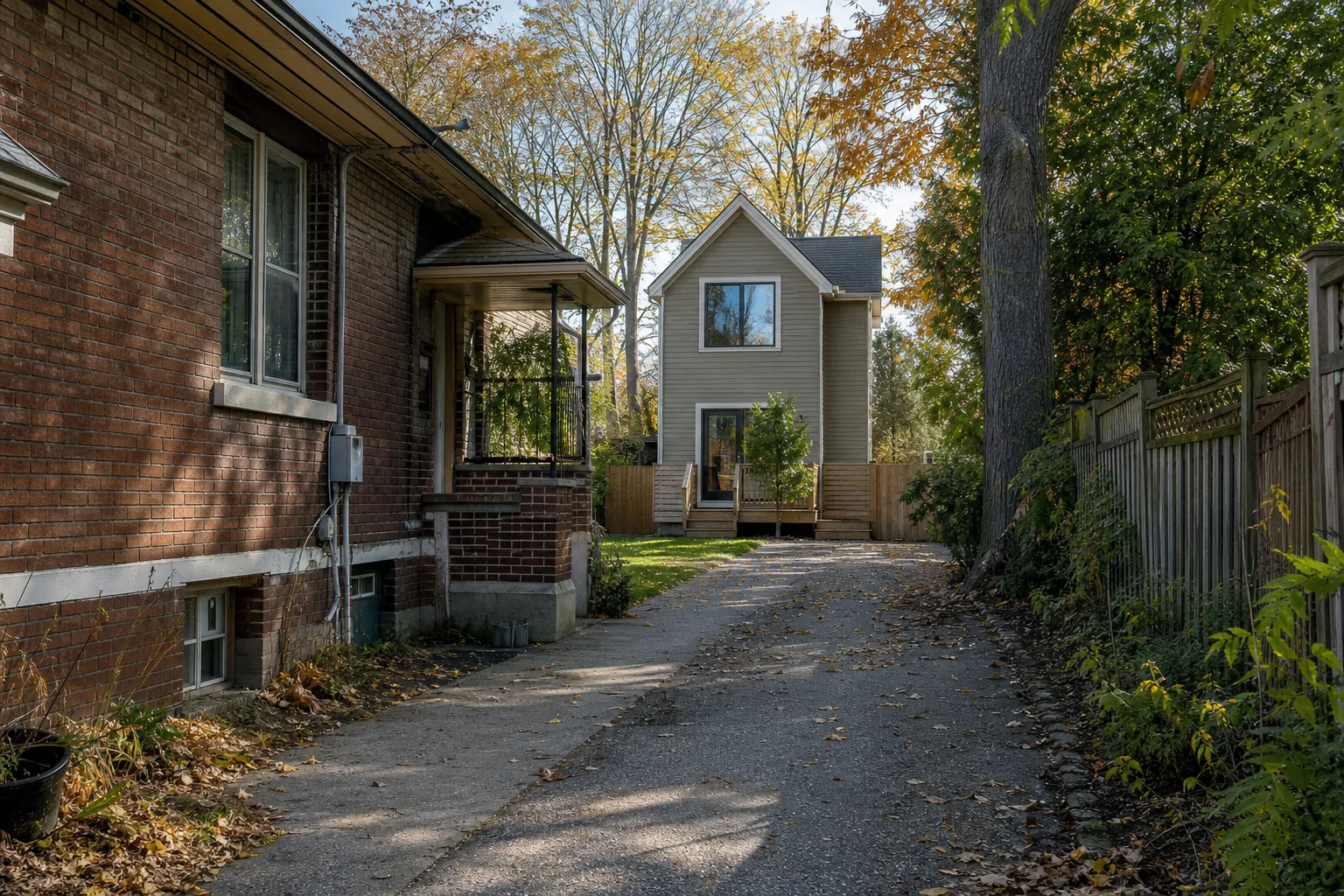
- Housing types: small single-family houses, duplexes, triplexes, fourplexes and townhomes, with up to four units in a building.
- Land per home: at least 2,000 square feet of lot for each unit. A fourplex would need 8,000 square feet, or 6,000 if an existing house is kept.
- Size limits: a footprint of up to 1,000 square feet for a single house and 850 square feet per unit in other building types. Interior space is capped at 1,200 square feet per unit, or up to 1,700 square feet in a building no taller than 17 feet.
- Parking: one off-street space per unit.
- Approval: a permitted use. A project that meets the code would not need a rezone, a planning petition or a public hearing, so neighbors would not get a formal notice.
- Ownership: the homes could sit on one lot, be split onto their own lots, or be sold as condominiums. Lots without street frontage could be created if a recorded plat shows access by an easement, shared driveway or alley.
The existing zoning stays. An owner could keep using a lot exactly as it is used today.
Changes to the base rules for every lot in these zones
- Height: 30 feet for pitched roofs, up from 28, and 24 feet for flat roofs, up from 20. SR-1A would be 25 and 20 feet.
- Side yards: 4 feet on one side and 10 feet on the other.
- Front yards: 20 feet, or matching a next-door front yard.
- Building coverage: up to 50% of the lot.
- Lot width: minimum widths removed, which staff say would make some currently unbuildable lots legal.
- Duplexes in R-2 and SR-1: minimum lot drops from 8,000 to 5,000 square feet, and the cap on duplexes per block face goes away.
- Flag lots: allowed without a conditional use hearing, with a 20-foot access strip instead of 24.
What the Council Changed on Oct. 20
In straw polls at its Oct. 20 briefing, the Council signaled three things, according to the Salt Lake Tribune and Building Salt Lake:
- An owner-occupancy rule. An owner who builds small lot dwellings would have to live in one of the units. The Planning Commission version had no such rule.
- No larger minimum lot. Members rejected raising the land required per home from 2,000 to 3,000 square feet.
- A second look at setbacks, so new buildings more closely match the houses around them.
Council member Erika Carlsen argued that the owner-occupancy rule serves homeownership and keeps the benefit away from large investors. Council member Chris Wharton said that without it the changes could draw institutional buyers and more demolitions. Critics, including University of Utah real estate professor Andra Ghent, told Building Salt Lake the rule would sharply cut how many homes get built.
Because straw polls are not binding, the final ordinance could differ. The exact owner-occupancy wording, including how it would apply after a unit is sold, has not been published in final form.
How Much Would Actually Get Built
City planners do not expect a wave of construction. Their track record with similar programs is modest:
- Backyard accessory dwelling units (ADUs) have been allowed by right in the city since 2023. Staff counted 83 completed.
- The affordable housing incentives adopted in 2024 had produced building permits for 19 units on five properties.
- Durham, North Carolina, which adopted the same 2,000-square-foot lot standard, saw 215 small lot homes built over four years, according to the city's staff report.
Planners estimated around 130 Salt Lake City owners might add small lot dwellings over the next four years. With an owner-occupancy rule, Council Chair Alejandro Puy said the total would likely fall to "a couple of dozen or less" by 2030.
What It Could Mean for Homeowners
What could be built next door. If the plan passes in something like its current form, a neighbor with enough land could add one or more two-story homes of up to 1,200 square feet each, with height limits a few feet above today's, without a hearing. Most blocks would see little or no change in the near term if the city's own estimates hold.
Options for an owner's own lot. An ADU in Salt Lake City cannot be sold apart from the main house. A small lot dwelling could be. That is the main practical difference, and it gives an owner a way to sell part of a deep lot, house a relative, or downsize into a new small home and sell the original. The statewide ADU picture is covered in Utah ADU rules by city and in the report on Utah's detached ADU law.
Property values. No source reviewed for this article offers a reliable forecast, and none is made here. What can be said is that the right to add a sellable home would be a new use for lots large enough to qualify. Whether buyers pay more for those lots will only show up in sales after the rules are final, and any change in market value would eventually reach the tax notice, a process covered in how Utah assessed values get set.
What It Could Mean for Buyers
The city's case for the plan is affordability. Planners told the Council the median home price was about $615,000 and that buying it takes a household income of $162,230, against a city median income of $74,925. The current median sale price in Salt Lake City is $590,000, with 967 homes on the market.
A new 1,200-square-foot house on a 2,000-square-foot lot would give buyers a detached option between a condo and a full-size house. Supply would arrive slowly, though. Buyers who need something smaller now are still looking mostly at existing Salt Lake City townhomes, and recent conditions are summarized in the October 2026 Salt Lake City sales report.
Buyers looking at a house in an affected zone should check three things during due diligence: the zone, the lot size, and whether the lot sits in a historic district.
What It Could Mean for Small Investors
The owner-occupancy straw poll is the item to watch. As recommended by the Planning Commission, an investor could have bought a house on a large lot and added units to rent or sell. If the Council's version holds, only an owner living on the property could use the small lot option. That fits a live-in strategy like the one in the Utah house hacking guide far better than a pure rental purchase.
Two pieces would not depend on the small lot rules: the smaller minimum lot for duplexes in R-2 and SR-1, and the flag lot changes. Investors who want units that already exist can browse multi-family homes for sale in Salt Lake City. Nobody should price a purchase on rules that have not passed.
What to Watch Next
- The second public hearing on Nov. 17 at 7 p.m.
- The published ordinance text, especially the owner-occupancy language and any revised setbacks.
- The Council vote, tentatively in early December. The date could move.
- The effective date and any transition rules if it passes.
Listings across the city and the rest of the state are updated daily on Best Utah Real Estate.
Sources: Salt Lake City Planning Division (petition PLNPCM2025-01184 and project schedule); Building Salt Lake (Feb. 20, Sept. 24 and Nov. 2, 2026); The Salt Lake Tribune (Oct. 22, 2026); KSL (Sept. 10, 2026).
Posted by Kristopher Larson
Frequently asked questions
Has Salt Lake City approved the single-family zoning changes?
No. As of mid-November 2026 the Expanding Housing Options proposal is still pending before the City Council. The Planning Commission recommended approval on Sept. 23, 2026, the Council scheduled public hearings for Nov. 10 and Nov. 17, and a final vote is tentatively expected in early December.
Which Salt Lake City zones would the proposal change?
It applies to the R-1/5,000, R-1/7,000, R-1/12,000, R-2, SR-1 and SR-1A zones. City staff say those zones cover about 36% of the city's land and 77% of its residentially zoned land. Mixed-use, commercial and apartment zones are not part of it.
What is a small lot dwelling in the Salt Lake City proposal?
It is a new housing category that would allow small single-family houses, duplexes, triplexes, fourplexes and townhomes on at least 2,000 square feet of lot per unit. As recommended by the Planning Commission, each unit is capped at 1,200 square feet of interior space, or up to 1,700 square feet in a building no taller than 17 feet, with one off-street parking space per unit.
Could a neighbor build without a public hearing?
Under the proposal, yes. Small lot dwellings would be a permitted use, so a project that meets the zoning code would not need a rezone, a planning petition or a public hearing. A subdivision plat is still required when new lots are created, and historic district rules would continue to apply.
Would owners have to live on the property to use the new rules?
That is undecided. The version the Planning Commission recommended had no owner-occupancy rule. In a non-binding straw poll on Oct. 20, 2026, the City Council signaled it wants to require the owner to live in one of the units, and the final ordinance will settle the question.
How is a small lot dwelling different from an ADU in Salt Lake City?
An accessory dwelling unit stays part of the same property as the main house and cannot be sold on its own. Under the proposal, small lot dwellings could be placed on their own lots or sold as condominiums. City staff counted 83 ADUs completed since the city began allowing them by right in 2023.
Salt Lake City, Utah housing market
A quick read on what homes are doing in Salt Lake City right now — pulled live from the MLS.
Keep reading
More from the blog

Salt Lake City's Big Projects in 2026: What's Finished, Under Construction and Still Only Planned
Salt Lake Valley Pizza by Style and City: A Map for Movers
Salt Lake City Food Neighborhoods: Where Food Lovers Should Buy