What to Compare Before Investing in a Louvered Pergola for North American Weather
Choosing a louvered pergola is a long-term property investment that goes far beyond sticker price. This guide breaks down what to compare — from aluminum grade and weather ratings to smart features and total cost of ownership — so you can buy with confidence for any North American climate.
Upgrading an outdoor living space with a premium architectural structure represents a substantial property investment that can significantly enhance a home's long-term market value and everyday usability. Because a motorized or adjustable louvered pergola is a permanent addition to the home's exterior blueprint, smart property owners know they must look beyond initial upfront price tags. Choosing the cheapest available option often leads to unexpected hidden expenses, including premature component failures, structural sagging, and expensive professional repairs. To secure genuine, long-term satisfaction, buyers should approach the market with a discerning eye, evaluating technical specifications, manufacturing standards, and engineering metrics. Conducting a rigorous, detailed comparison ensures that your hard-earned budget is directed toward a system that provides reliable weather protection, seamless operation, and exceptional structural integrity through every season of the year.
Imported vs North American-Made Outdoor Structures
One of the first critical cross-roads a buyer will encounter is deciding between budget-friendly imported kits and precision-fabricated, North American-made systems. While imported models often seem attractive due to their lower initial cost, they regularly come with severe operational disadvantages that emerge over time:
Shipping and Logistical Timelines: Imported structures frequently involve unpredictable international freight schedules and complicated customs delays, whereas domestic manufacturers provide predictable, reliable delivery windows.
Customer Support and Replacement Parts: If a component is damaged during installation or requires replacement years later, domestic fabricators can ship parts immediately from local warehouses, avoiding multi-month overseas backlogs.
Warranty Reliability and Recourse: Enforcing a warranty with a distant international manufacturer can be incredibly difficult, while North American brands operate under domestic consumer protection laws and maintain accessible service networks.
Climatic Specialization: Import kits are generally mass-produced for mild, uniform climates and often lack the structural reinforcement required to survive severe regional weather.
Weather Performance Across Canada and the USA
The varied climate of North America means that an outdoor shading system cannot be designed with a "one size fits all" philosophy; it must be engineered to handle a wide range of intense environmental conditions.
In Canada and the northern United States, a system must be structurally rated to handle heavy winter snow loads without buckling under the weight. In coastal areas, it must resist high-velocity wind loads and heavy downpours, utilizing advanced internal gutter channels to redirect large volumes of water. Concurrently, in warmer southern regions, the materials must withstand relentless ultraviolet exposure and extreme summer heat without cracking, warping, or losing color vibrancy.
Materials: Why Aluminum Grade and Finish Matter
The underlying material composition determines whether a structure will look pristine for decades or deteriorate after just a few seasons. Premium systems are built using high-grade, heat-treated extruded aluminum alloys that provide an excellent strength-to-weight ratio, ensuring the framework remains perfectly rigid without placing excessive stress on home foundations or deck footings.
Equally important is the quality of the exterior surface protection. Low-end options often use thin, standard wet paint that quickly chalks, chips, and peels under sun exposure. Superior manufacturers apply thick, multi-stage architectural powder coatings that chemically bond with the aluminum, providing outstanding resistance to corrosion, scratches, and fading. This premium finish ensures that the structure completely resists moisture-induced oxidation, eliminating the risk of rust stains or structural degradation. If you're also weighing other smart home upgrades for your property, the same durability-vs-cost framework applies.
Smart Features That Add Everyday Value
A modern luxury pergola should offer more than basic manual adjustments; it should integrate advanced automated technology that enhances everyday convenience and lifestyle comfort. When evaluating different brands, look closely at available smart features:
Whisper-Quiet Motorized Louvers: High-quality electric internal motors allow users to adjust roof angles seamlessly with a remote control, smartphone app, or integrated wall switch.
Automated Rain and Wind Sensors: Intelligent sensors can automatically close the louvers at the first drop of rain to protect outdoor furniture, or open them during extreme wind events to reduce uplift forces.
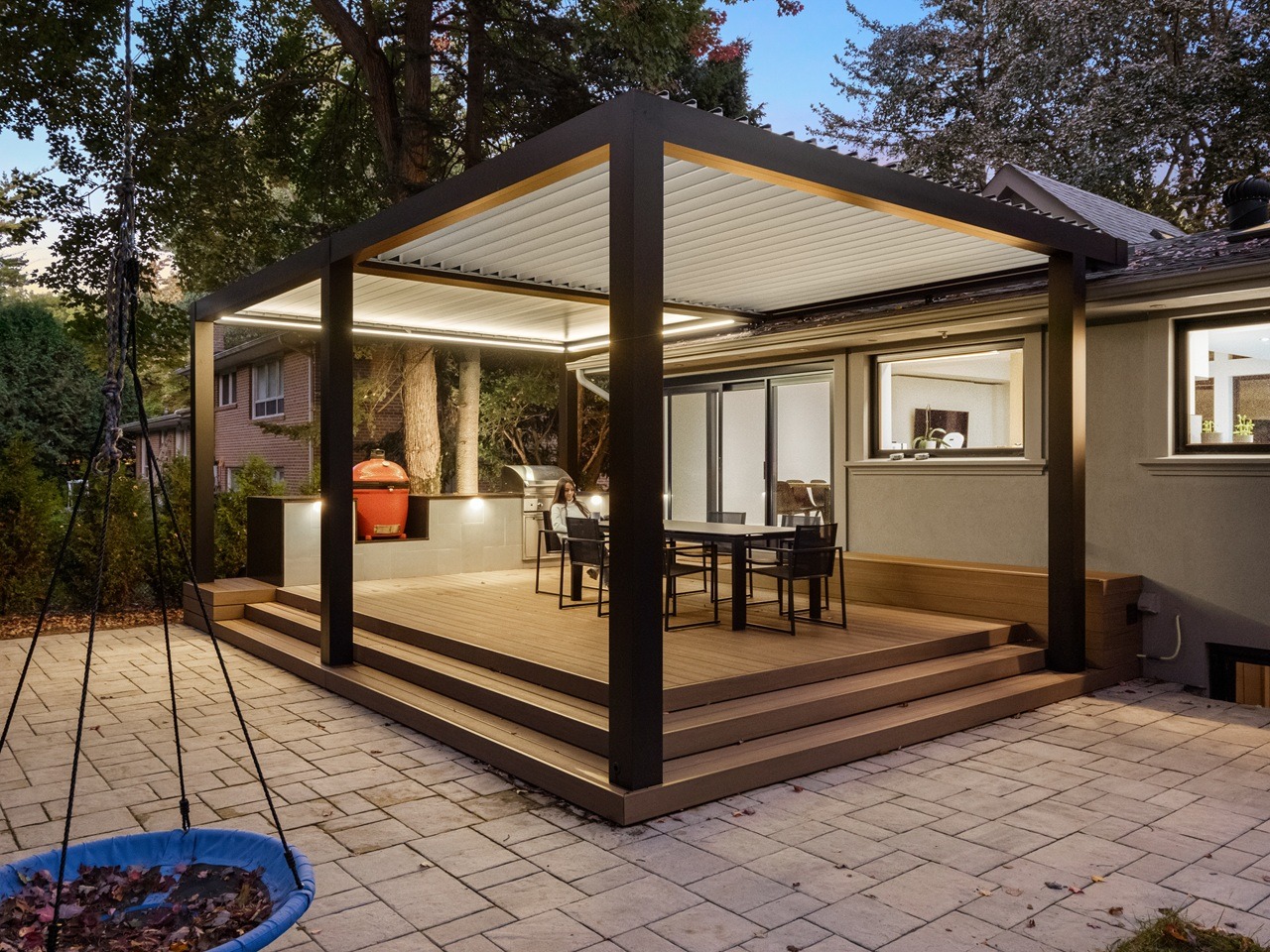
Integrated LED Lighting Systems: Built-in dimmable LED strips or perimeter lighting extend the usability of the outdoor room long after the sun goes down.
Motorized Zip Screens and Privacy Walls: Vertical screens can be seamlessly integrated into the perimeter beams, providing on-demand protection from bugs, wind, and nosy neighbors.
Smart-Home Integration: Advanced control systems pair easily with popular home automation platforms and voice assistants, allowing you to adjust your outdoor environment with simple voice commands.
Total Cost of Ownership Beats the Lowest Price
When analyzing a backyard improvement budget, smart buyers prioritize the total cost of ownership over the initial purchase price. A low-priced, unreinforced pergola kit may look like a bargain at first, but it can quickly become an expensive burden if it requires constant replacement parts, professional paint touch-ups, or structural reinforcement after a single harsh winter.
Furthermore, poor installation support or the lack of an integrated drainage system can lead to water pooling, which can rot existing wooden decks or damage expensive outdoor furniture underneath. By investing in a premium, heavy-duty system backed by local engineering, you avoid these recurring maintenance costs. A durable structure preserves your initial investment, protects your outdoor valuables, and consistently enhances your home's overall equity. Homeowners thinking about long-term property value may also want to explore whether smart home upgrades are worth the investment as a complementary improvement strategy.
A Better Deal Is the One That Performs for Years
In the final analysis, the most successful purchase is not the one that saves a few dollars on the invoice, but the one that performs flawlessly for years in real-world conditions. When comparing different options, smart buyers carefully weigh heavy-duty engineering, comprehensive warranty terms, domestic manufacturing origins, and proven climate resilience. Selecting a system built specifically for the demanding weather patterns of Canada and the United States ensures that your outdoor living room will remain safe, functional, and visually stunning for decades. By focusing on quality craftsmanship and structural reliability, you can invest with absolute peace of mind, knowing that your new architectural sanctuary is fully prepared to handle whatever nature delivers. For broader home improvement context, understanding how your outdoor and indoor environment affects daily wellbeing can reinforce why quality outdoor spaces matter.
Frequently asked questions
What makes a louvered pergola suitable for harsh North American winters?
Is a North American-made pergola worth the higher upfront cost?
What smart features should I look for in a motorized louvered pergola?
How does a louvered pergola affect my home's resale value?
What is total cost of ownership for a louvered pergola?
Keep reading
More from the blog
Gas Line Installation: What Homeowners Need to Know First
Roof Timeline Guide for Buying an Older Utah Home
How to Choose Windows for a Utah Home With a Mountain View