Snow Canyon State Park: Trails, Fees and the Neighborhoods Next Door
Snow Canyon trails sorted by effort, current day-use fees, the best months to go, and the neighborhoods that sit closest to the park in Ivins and Santa Clara.
Most visitors to Southern Utah drive straight past Snow Canyon State Park on the way to Zion. People who live in Ivins, Santa Clara and west St. George use it the other way around: as a weekday hiking spot ten minutes from home, a sunrise run on a paved path, and the reason a lot of buyers pick the northwest side of the valley in the first place.
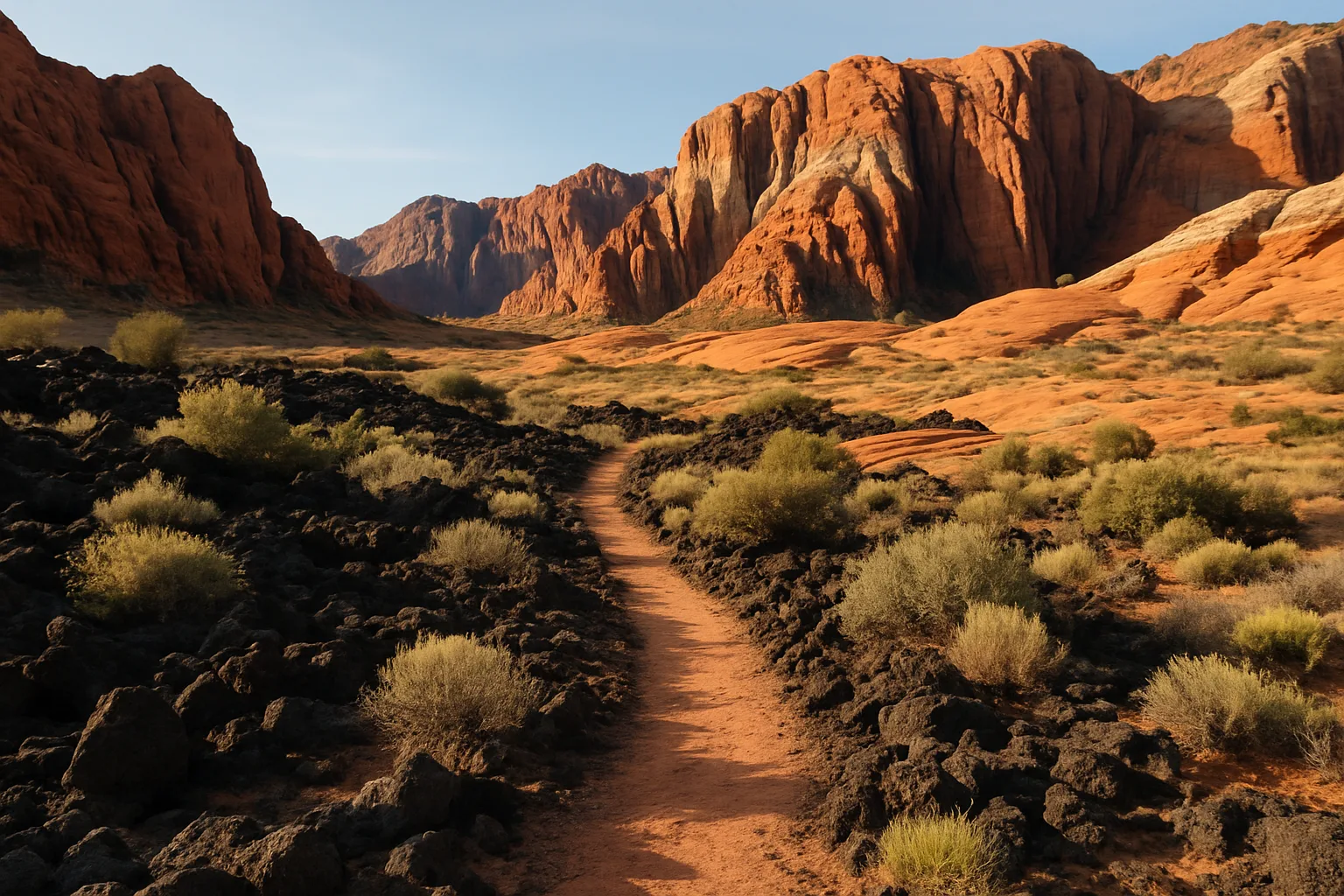
The park covers about 7,400 acres of red and white Navajo sandstone and black lava rock, and sits inside the 62,000-acre Red Cliffs Desert Reserve. Elevations run from roughly 3,100 to 4,100 feet. Below is a practical breakdown of the trails by effort level, what it costs to get in, when to go, and the neighborhoods that sit right on the park's edge.
Snow Canyon at a Glance
- Hours: 6 a.m. to 10 p.m., every day of the year.
- Day-use fee: $15 per vehicle for Utah residents ($10 for Utah residents 65 and older), $20 per vehicle for non-residents, and $3 per person on foot or bike.
- Trails: more than 38 miles of hiking trails, a 3-mile paved path for walking and biking (6 miles round trip), and over 15 miles of equestrian trails.
- Dogs: allowed on park trails and in the campground on a leash no longer than 6 feet.
- Camping: a 38-site campground open year-round, $40 a night for a standard site and $45 with water and electric hookups. Reservations open four months ahead.
Current fees, closures and trail conditions are posted on the Utah State Parks Snow Canyon trail page.
How the Canyon Got Its Look
The pale and red cliffs are Navajo Sandstone: wind-blown sand dunes from the Early Jurassic, roughly 183 million years ago, that hardened into rock. The black rock covering the canyon floor is much younger. According to the Utah Geological Survey, lava from the Santa Clara volcano flowed over the sandstone about 27,000 years ago. That lava pushed old streams into new paths, which is why lava-capped ridges now sit above today's canyon floors.
The park opened in 1962, three years after the state created it. It was first called Dixie State Park and was later renamed for Lorenzo and Erastus Snow, two leaders of the early settlement of Southern Utah.
Trails Sorted by Effort
All distances below are round trip, from the state park's trail list.
Easy: a short walk after work
- Jenny's Canyon (0.5 mile): a sandy path to a short slot canyon and an overlook. Good for kids and visiting relatives.
- Pioneer Names (0.5 mile): leads to an alcove where settlers wrote their names and dates on the rock in axle grease in the 1880s.
- Johnson Canyon (2 miles): crosses a lava field into a shaded side canyon, where a 200-foot waterfall can run after steady rain. The trail is closed every year from March 15 to September 14 to protect wildlife, except for ranger-led hikes. Fall and winter are the time to go.
- Whiptail (6 miles): the paved path along the canyon floor, shared by walkers, runners and cyclists. Scooters and skateboards aren't allowed.
- Tortoise Walk (0.3 mile): an ADA-accessible walk with exhibits about the desert tortoise, the threatened species the Red Cliffs Desert Reserve was created to protect.
Moderate: a Saturday morning
- Lava Flow (2.5 miles): crosses the 27,000-year-old lava field and passes two lava tubes. Bring a flashlight to look inside (glow sticks aren't permitted).
- Petrified Dunes (1.2 miles): open slickrock marked with iron route markers. Rain can leave shallow pools in the rock that briefly hold fairy shrimp and tadpoles.
- Butterfly (2 miles): sandstone and lava to a split-rock formation, connecting to the Lava Flow trail.
- Hidden Pinyon (1.5 miles): a self-guided loop with 19 numbered stops about the plants and geology.
Difficult: bring real water
- Cinder Cone (1.5 miles): short but steep switchbacks up an extinct volcano to the rim of its crater. The trailhead is off State Route 18 north of the main canyon.
- Scout Cave (6 miles): drops into a wash, climbs a set of steps, and reaches a cave looking back over the canyon toward Ivins and St. George.
- Red Sands (3.5 miles): sand and rock ledges to three seasonal pools known as the Three Ponds.
When to Go
October through April is the main season. Days are mild, Johnson Canyon is open from mid-September, and the sandstone is comfortable to walk on at midday.
Summer is a different park. Temperatures can reach 117°F, and the park advises against hiking or biking between 11 a.m. and 7 p.m. and recommends at least a liter of water per person per hour. Residents who keep hiking through summer go at first light. The park opens at 6 a.m.
Race mornings: a few fall and spring events close Snow Canyon Drive or the Whiptail path for a morning. They're listed on the park's page ahead of time.
After dark: Snow Canyon is a designated Urban Night Sky Place, so the canyon floor stays darker than most places this close to a city.
Living Next to the Park
The park's south entrance is on Snow Canyon Drive in Ivins, and the neighborhoods closest to it share a few traits: red-rock views on most lots, quick trail access, and dark nights. Homes near the park tend to sell on the view as much as the floor plan, which is why so many listings there are Ivins homes with views.
- Entrada at Snow Canyon: a gated golf community at the canyon's mouth, technically in St. George. Entrada listings include patio homes and larger custom homes.
- Palisades at Snow Canyon: a smaller Ivins neighborhood a short drive from the park entrance. See current Palisades at Snow Canyon homes.
- Kayenta and the Ivins bench: low-profile desert homes built to blend into the landscape, near the Kayenta art village and Tuacahn.
- Santa Clara: the older town to the south, with established streets and a short drive to the park road. Browse Santa Clara homes for sale.
Buyers who want a wider choice of price points and newer subdivisions can widen the search to St. George, trading a few more minutes of driving to the trailheads. For other trails close to Ivins, see this guide to Ivins parks and trails.
Practical Tips Before the First Visit
- Buy the day pass online before busy weekends. Anyone visiting more than a handful of times a year should compare the cost with a Utah State Parks annual pass.
- Stay on the trail. The dark, crusty soil between plants is biological soil crust that takes years to recover once it's stepped on, and the reserve protects tortoise habitat.
- Expect sand. Several "easy" trails are deep sand, which is slow going. Trail shoes work better than sandals.
- Check current conditions on the park's website before heading out. Seasonal closures, flash-flood warnings and race-day road closures are posted there.
The Bottom Line
Snow Canyon is one of the main things people mean when they say they want to live on the west side of the St. George area. A 0.5-mile slot canyon after dinner, a lava tube on a Saturday, a paved path at sunrise: it's an everyday park for the people who live around it. For homes within a short drive of the trailheads, start with the neighborhoods above or contact Best Utah Real Estate for a tour of the area.
Frequently asked questions
How much does it cost to get into Snow Canyon State Park?
Day use is $15 per vehicle for Utah residents, $10 for Utah residents 65 and older, and $20 per vehicle for non-residents, covering up to eight people. Walkers and cyclists pay $3 per person. Fees can change, so confirm on the Utah State Parks website before visiting.
What is the best easy hike in Snow Canyon?
Jenny's Canyon is a good first pick: a half-mile round trip to a small slot canyon and an overlook. Pioneer Names (0.5 mile) and Johnson Canyon (2 miles) are also rated easy, though Johnson Canyon is closed from March 15 to September 14 every year except for ranger-led hikes.
Are dogs allowed in Snow Canyon State Park?
Yes. Dogs are allowed on the park's trails and in the campground on a leash no longer than 6 feet, and owners must pick up after them. In summer, sandstone and lava rock get hot enough to burn paws, so early-morning visits are safer for dogs.
When is the best time of year to visit Snow Canyon?
October through April is the most comfortable season, and Johnson Canyon reopens in mid-September. Summer temperatures can reach 117°F, and the park advises against hiking or biking between 11 a.m. and 7 p.m. during the hottest months.
Can you see lava tubes in Snow Canyon?
Yes. The 2.5-mile Lava Flow trail crosses a lava field about 27,000 years old and passes two lava tubes. Bring a flashlight to look inside, and expect uneven, sharp rock around the openings. Glow sticks aren't permitted.
Which neighborhoods are closest to Snow Canyon State Park?
The park's entrance is on Snow Canyon Drive in Ivins. Entrada at Snow Canyon, Palisades at Snow Canyon, Kayenta and parts of Santa Clara are all a short drive from the trailheads, and many homes there have red-rock views.
Ivins, Utah housing market
A quick read on what homes are doing in Ivins right now — pulled live from the MLS.
Keep reading
More from the blog

A Guide to Ivins Utah's Stunning Parks and Trails

Things to Do in Ivins, Utah
55+ Communities in the Salt Lake City Area