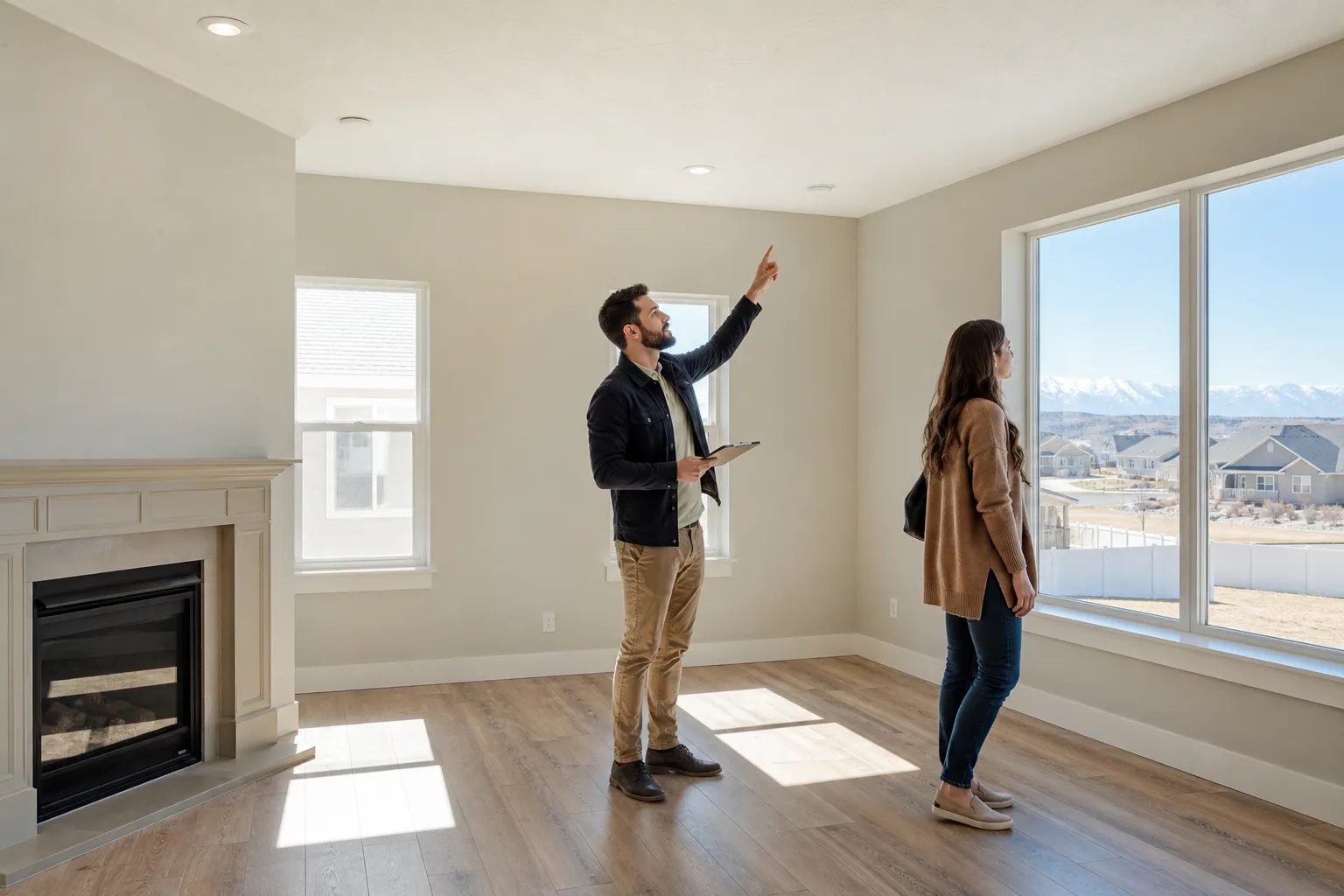
How to Negotiate a Home Purchase in Utah When Listings Are Sitting
Price is only one of the things a Utah buyer can negotiate. Here is how to read a listing's history, when to ask for seller-paid closing costs or a rate buydown instead of a lower price, and how the state purchase contract handles each request.
When homes sell in a weekend, negotiating means deciding how far over the asking price to go. When homes sit, the conversation changes, and many buyers do not realize how much is on the table. The asking price is one item. Closing costs, the interest rate, repairs, the possession date and even the washer and dryer are all written into the same contract and all open to discussion.
This is a practical walk through negotiating a purchase in Utah: how to tell which sellers are flexible, what to ask for, and where each request goes in the state's Real Estate Purchase Contract.
Start With the Market the Home Is In
Leverage is local. A well-priced house in a popular school boundary can still draw several offers while a townhome a mile away waits two months. Three numbers show which situation a buyer is in:
- Days on market. The longer a home has been listed compared with the local norm, the more open the seller usually is.
- Sale-to-list ratio. This is what homes actually sell for as a share of the asking price. A ratio of 97% means the typical seller came down about 3%.
- Homes for sale. More choices for buyers means more competition among sellers.
As a reference point, here are the current figures for two of the state's largest markets:
| City | Median days on market | Sale-to-list ratio | Homes for sale |
|---|---|---|---|
| Salt Lake City | 34 days | 97.7% | 960 |
| St. George | 40 days | 98.1% | 997 |
The same numbers for any city are on its market report, such as the Salt Lake City market report.
Read the Listing's History Before Making an Offer
The current asking price says little. The history says a lot. Ask the agent for the full listing history and look for four things:
- Total time for sale. A home that was pulled off the market and relisted shows a fresh day count. The history shows the real one.
- Price reductions. One recent cut suggests a seller testing the market. Several cuts suggest a seller who wants out.
- Failed contracts. A home that went under contract and came back may have an inspection or appraisal problem. Ask why the deal ended.
- Vacancy. An empty house costs the owner a mortgage payment, utilities and insurance every month.
A seller who listed last week at a fair price has little reason to bend. A seller three price cuts in, paying for an empty house, usually does.
Six Things a Buyer Can Ask For
1. A lower price
Base the number on recent sales of similar homes nearby, not on a percentage off. An offer that comes with three comparable sales attached is harder to dismiss than a round number. A lower price reduces the loan, the down payment and, slightly, the property tax basis.
2. Seller-paid closing costs
Utah's contract has a line for this. Section 2.2 lets the seller contribute a set dollar amount at settlement, and Section 8.3(c) says the buyer may apply it to a permanent or temporary reduction in the mortgage interest rate, loan costs, closing costs and prepaid escrow funds. For a buyer short on cash, a seller credit can matter more than the same amount off the price, because it lowers the money needed at closing.
3. An interest rate buydown
The seller credit can pay to lower the rate, either for the first years of the loan or for its whole life. On a tight budget, that often cuts the monthly payment more than a price reduction of the same size. The math is worked through in rate buydowns, assumable loans and ARMs for Utah buyers. Lenders cap how much a seller may contribute, and the cap depends on the loan type and down payment, so confirm the limit with the lender before writing the offer.
4. Repairs or a credit after the inspection
The due diligence period is a second round of negotiation. If the inspection finds a worn roof or an aging furnace, the buyer can ask the seller to fix it, reduce the price, or give a credit. Anything agreed has to be in writing before the Due Diligence Deadline. See whether a seller has to fix everything on the inspection report.
5. A home warranty and included items
Section 2.3 of the contract has a checkbox for a seller-paid home warranty up to a stated amount. Section 7.3 covers washers, dryers, refrigerators and electric vehicle chargers, which transfer only if their boxes are checked. These are small items that sellers often agree to without argument.
6. Timing
A seller who needs to close fast, or who needs a few weeks in the home after closing, may trade price for a date that works. Possession terms belong in the contract, and a stay after closing should be in a written leaseback.
Price Cut or Seller Credit: Which Is Worth More?
| Lower price | Seller credit | |
|---|---|---|
| Cash needed at closing | Slightly lower | Much lower |
| Monthly payment | A little lower | Noticeably lower if used for a buydown |
| Best for | Buyers with cash who plan to stay a long time | Buyers stretching to qualify or short on cash |
| Watch for | The appraisal still has to support the price | Lender limits on seller contributions |
A buyer who expects to refinance within a few years gets less from a permanent buydown, since the benefit ends when the loan is replaced. In that case a lower price or a temporary buydown usually makes more sense.
Negotiating With a Builder
Builders rarely cut the base price, because the lower number becomes the comparison for every later sale in the community. They are more willing to pay toward the rate, cover closing costs or include upgrades. Three tactics help:
- Ask what the incentive costs the builder in dollars, then ask for that amount in the form that helps most.
- Ask whether the incentive requires the builder's own lender, and compare that lender's rate and fees with an outside quote.
- Look at finished homes that have been sitting. A completed house costs the builder money every month, and that is where the largest concessions appear.
Listings of completed and under-construction homes are on the Salt Lake City new construction page, and the process is covered in buying new construction homes in Utah.
Protect the Offer With the Right Conditions
A strong negotiating position depends on being able to walk away. In Utah's contract, the buyer's conditions for due diligence, appraisal and financing apply only if their boxes are checked. Leaving them on keeps the earnest money protected while the inspection and appraisal are done. The updated form and its earnest money rules are explained in what changed in Utah's new Real Estate Purchase Contract.
The appraisal is its own lever. If the home appraises below the agreed price and the appraisal condition applies, the buyer can ask the seller to lower the price to the appraised value, split the difference, or cancel by the Appraisal Deadline.
Mistakes That Cost Buyers Money
- Opening with an insult. An offer far below recent sales with no evidence often gets no counteroffer at all.
- Negotiating only on price. A seller who will not move on price may pay closing costs or leave appliances.
- Waiving the inspection. In a slow market there is no reason to give it up, and its findings are leverage.
- Missing a deadline. Requests made after the Due Diligence Deadline have no force.
- Forgetting the monthly total. HOA dues, insurance and property taxes belong in the comparison between two homes.
- Verbal agreements. If it is not in the contract or an addendum, it is not part of the deal.
A Simple Sequence
- Get fully approved by a lender and know the seller-contribution limit for the loan.
- Pull the listing history and three recent comparable sales.
- Decide what matters most: price, cash at closing or monthly payment.
- Write the offer with conditions checked and a clear list of what is requested.
- Use the inspection to confirm or reopen the terms before the deadline.
- Put every agreed change in writing.
Buyers who want a lower rate without a buydown can also look at Utah homes with assumable loans. Homes for sale across the state, with price history on each listing, are on Best Utah Real Estate.
Posted by Kristopher Larson
Frequently asked questions
How much below asking price should a buyer offer in Utah?
There is no fixed percentage. Base the offer on recent sales of similar homes nearby and on how long the home has been listed. The local sale-to-list ratio shows how far sellers typically come down; in Salt Lake City it is currently 97.7%.
Can a seller pay a buyer's closing costs in Utah?
Yes. Utah's Real Estate Purchase Contract has a line for a seller contribution at settlement, which the buyer can apply to closing costs, loan costs, prepaid escrow funds or a lower interest rate. Lenders limit how much a seller may contribute, and the limit depends on the loan type.
Is a price reduction or a rate buydown better?
A buydown usually lowers the monthly payment more than the same dollars off the price, which helps buyers who are stretching to qualify. A lower price is better for buyers with cash who plan to stay a long time or who expect to refinance soon.
Can a buyer renegotiate after the home inspection?
Yes, if the due diligence condition applies. Before the Due Diligence Deadline the buyer can ask for repairs, a credit or a lower price, or cancel and get the earnest money back. Any agreement has to be in writing.
Do home builders in Utah negotiate?
Builders seldom lower the base price but often pay toward the interest rate, closing costs or upgrades. The largest concessions tend to be on finished homes that have been waiting for a buyer.
How can a buyer tell if a seller is motivated?
Look at the full listing history. Long time on the market, several price reductions, a relisting, a failed contract or a vacant house all point to a seller who is more likely to accept a lower price or pay some of the buyer's costs.
Keep reading
More from the blog
Utah City in Vineyard: What Buyers Should Check Before Betting on the New Downtown
5 Utah Towns Where Funded Projects Are Arriving Before Prices Catch Up
Utah County Housing Market 2026: Prices Hold While Sellers and Buyers Both Step Back