Utah Hillside Homes: How to Check for Landslide Risk Before Making an Offer
Hillside views come with a risk most listings never mention. Using Draper's 2023 slide as a case study, this step-by-step plan shows Utah buyers how to check hazard maps, geotechnical reports, insurance, and warning signs before making an offer.
A ridgeline lot with an unbroken view of the Salt Lake Valley is one of the most sought-after things a Utah buyer can own. The same slopes that deliver those views also carry a risk most listing descriptions never mention: the ground itself can move. Along the Wasatch Front, landslides have destroyed homes in established subdivisions, and in most cases the warning signs were visible well before the final failure.
This does not mean hillside homes are a bad purchase. Thousands of foothill homes have stood for decades without trouble. It means the due diligence on a sloped lot is different from the due diligence on a flat one, and the standard home inspection was never designed to cover it.
What Happened in Draper's Hidden Canyon Estates
The clearest recent example sits in Draper, at the south end of the Salt Lake Valley. In Hidden Canyon Estates, a newly built home on Springtime Road began showing cracks within about two months of its owners moving in. Damage spread through the sidewalk, garage, and interior walls. In October 2022, Draper revoked the certificates of occupancy on that house and the home next door, declaring both unfit to live in because of shifting soil and foundation breaks.
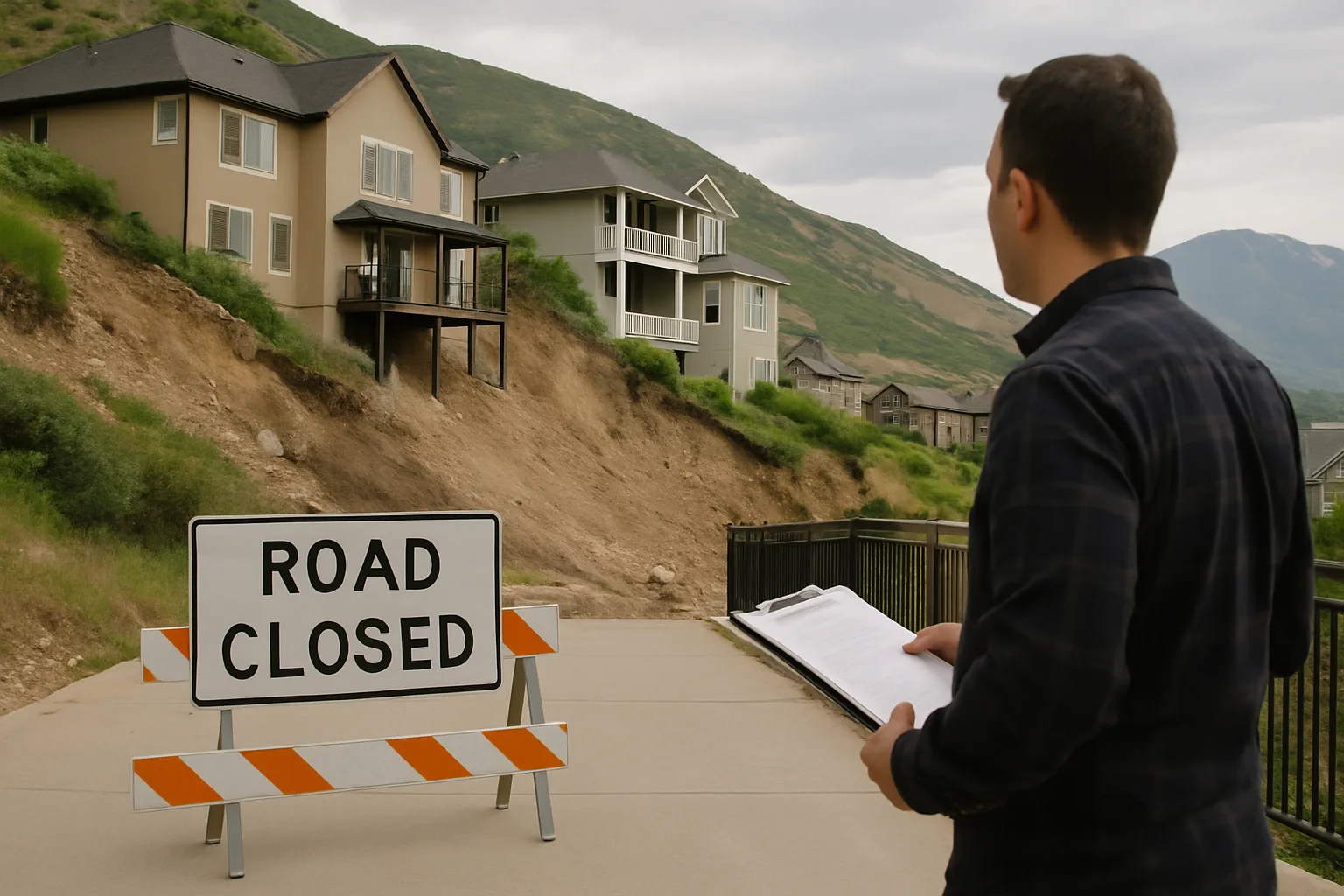
Both homes sat empty through a record snowpack winter. In the early morning of April 22, 2023, as that snow melted, one house and half of its neighbor slid down the hillside. Because the families had already been evacuated, no one was hurt. The builder said the retaining wall and slope had "experienced a complete failure." Nearby trails were closed, the city later condemned two more homes in the area, and work on a permanent retaining wall to restore the slope did not begin until roughly two years after the collapse.
Three lessons from Hidden Canyon apply to almost any hillside purchase:
- New construction is not proof of stability. These were brand-new homes that had passed the city's approval process.
- The damage showed up early. Cracks appeared months before the slide, which gave owners and officials time to act before anyone was hurt.
- Water was the trigger. The failure came during spring runoff after an exceptionally heavy winter.
Why Wasatch Front Hillsides Move
Much of the Wasatch Front foothill zone sits on sediment left behind by ancient Lake Bonneville, along with layers of clay-rich soil that lose strength when they become saturated. Developing a slope usually means cutting into the uphill side of a lot and using that material to fill the downhill side, creating a flat building pad. The result is a foundation that may rest partly on native ground and partly on engineered fill, often held in place by a retaining wall.
According to the Utah Geological Survey, most landslides happen when groundwater rises because of heavy rain, snowmelt, or irrigation. That last item matters for homeowners because it is the one they control. Lawn watering, leaking sprinkler lines, and downspouts that dump roof water onto a slope can all add water to the ground beneath a house. The agency has also pointed out that the hillsides with the best scenery tend to carry the highest risk of slope failure, which is why foothill neighborhoods get extra scrutiny from geologists.
Draper Is Not the Only Example
Utah's landslide history goes back long before the current building boom:
- North Salt Lake, 2014. On August 5, 2014, a slope above Parkway Drive in North Salt Lake gave way. The hillside had been an aggregate mining site in the 1990s before it was reclaimed and partly developed into a subdivision. The slide pushed one home off its foundation, damaged a tennis and swim club, and led to 27 homes being evacuated while officials assessed the slope. The Utah Geological Survey's Parkway Drive landslide report documents the event and the repair work completed in 2015.
- Thistle, 1983. The best-known slide in state history happened in Spanish Fork Canyon after a wet winter and fast snowmelt. It dammed the Spanish Fork River, flooded the town of Thistle, cut the rail line, and closed two highways. It caused more than $200 million in direct damage in 1983 dollars and led to Utah's first presidential disaster declaration. The town was never rebuilt. The Utah Geological Survey's account of the Thistle landslide covers how it unfolded.
The pattern is the same in each case. Water saturates slope material that was already prone to movement, and the ground gives way under whatever sits on top of it.
A Step-by-Step Due Diligence Plan for Hillside Buyers
Step 1: Check the hazard maps before touring
The Utah Geological Survey publishes an online geologic hazards map that shows mapped landslide areas, problem soils, and other hazards across much of the state. A few minutes with the map before scheduling a showing shows whether a property sits in or near a mapped landslide. A mapped hazard does not automatically rule a home out, but it does tell a buyer which questions to ask.
Step 2: Ask for the geotechnical report
Most hillside subdivisions required a geotechnical or geologic hazard report before lots were approved. Buyers can ask the seller, the builder, or the city planning or engineering department for copies. These reports describe the soil, the slope analysis, and any conditions the engineer attached to construction, such as drainage requirements or setbacks from the slope.
Step 3: Hire an independent professional
A general home inspector checks roofs, furnaces, and wiring, not slope stability. On a sloped lot, especially one with tall retaining walls or a home near the edge of a fill slope, a separate review by a licensed geotechnical engineer or engineering geologist is worth the cost. Buyers can confirm that any engineer or geologist is licensed in Utah using the state's professional license lookup. The Utah Geological Survey also keeps a geologic hazard resource page for homebuyers and real estate agents.
Step 4: Walk the property for warning signs
Slope movement tends to leave clues. Buyers should look for:
- Cracks in the driveway, sidewalk, or garage slab that are wider at one end
- Retaining walls that lean, bulge, or show stair-step cracking
- Doors and windows that stick or have gaps that taper
- Fresh patching, caulking, or paint over cracks
- Tilted fences, utility poles, or trees on or below the slope
- Soggy ground or seeping water on a slope during dry weather
Step 5: Read the disclosures and ask follow-up questions
Utah sellers are expected to disclose known material defects, and a history of soil movement, cracking retaining walls, or past repairs falls into that category. Buyers should ask directly about any earlier engineering work, drainage fixes, or insurance claims tied to settling or movement.
Step 6: Confirm what insurance actually covers
Standard homeowners policies typically exclude earth movement, including landslides and settling. Coverage for earth movement, where available, is usually a separate endorsement or policy with its own limits. Buyers should get answers from their insurance agent in writing before removing contingencies, the same way they would for wildfire risk on foothill properties.
Step 7: Keep the inspection contingency open long enough
A geotechnical review can take longer than a standard inspection. Buyers should build enough time into the due diligence deadline in the purchase contract to schedule the engineer, receive the report, and negotiate if anything turns up.
How Slope Risk Affects Value and Resale
Two homes that look identical in the listing photos can sell very differently depending on what sits beneath them. A property near a documented slide, or one with a visibly failing retaining wall, can take longer to sell, attract lower offers, or prompt a lender or appraiser to ask for engineering documentation before closing. Owners who keep their geotechnical reports, repair records, and drainage improvements on file are in a much stronger position when it is time to sell.
For owners already living on a slope, the most practical steps are about water: keep sprinkler systems in good repair, avoid overwatering near the top of a slope, direct downspouts away from the hillside, and watch retaining walls for new cracks each spring.
Shopping Hillside Neighborhoods With Clear Eyes
Draper's ridge communities, including SunCrest, remain popular for their views, cooler summer temperatures, and quick access to trails. Many homes there and elsewhere along the foothills sit on well-engineered, well-drained lots. The difference between a good hillside purchase and a costly one usually comes down to the homework done before the offer.
Buyers comparing Draper homes with views against other neighborhoods can browse current Utah listings at Best Utah Real Estate, then use the steps above to check any hillside property before committing to it.
Frequently asked questions
How can a buyer tell if a Utah home is in a landslide area?
The Utah Geological Survey's online geologic hazards map shows mapped landslide areas across much of the state. Buyers should also ask the seller, builder, or city for any geotechnical report prepared for the subdivision, and hire a licensed geotechnical engineer to review a sloped lot.
Does homeowners insurance cover landslide damage in Utah?
Standard homeowners policies typically exclude earth movement, including landslides and settling. Earth movement coverage, where available, usually requires a separate endorsement or policy. Buyers should confirm coverage in writing before closing.
Is a home inspection enough for a hillside property?
No. A general home inspection covers systems and visible defects, not slope stability. On a sloped lot or a home with large retaining walls, an independent review by a geotechnical engineer or engineering geologist is the appropriate check.
What causes landslides along the Wasatch Front?
Most landslides happen when groundwater rises from snowmelt, heavy rain, or irrigation. Clay-rich soils and fill placed to create building pads lose strength when saturated, which is why many slides happen in spring after heavy winters.
What happened to the homes that slid in Draper in 2023?
Two homes on Springtime Road in Draper's Hidden Canyon Estates had been evacuated after the city revoked their certificates of occupancy in October 2022. On April 22, 2023, one home and half of the other slid down the hillside. No one was injured, and repair of the slope with a permanent retaining wall began about two years later.
Are all hillside homes in Draper risky?
No. Many foothill homes sit on well-engineered, well-drained lots and have performed well for decades. Risk varies lot by lot, which is why hazard maps, geotechnical reports, and an independent engineering review matter more than the neighborhood name.
Draper, Utah housing market
A quick read on what homes are doing in Draper right now — pulled live from the MLS.
Keep reading
More from the blog
Best places to see in Draper, Utah
Pros and Cons of Living in Draper, Utah
Types of Metal Roofing: What Homebuyers Should Know