Why Utah County Homeowners Repaint More Often Than They Expect
Utah County's dust, wind, and freeze-thaw swings wear exterior paint faster than the bucket promises. Learn the two paint clocks, what prep matters, and a simple five-year check to time your repaint.
The first thing new Utah County homeowners notice isn't the wind. It's the dust. Lehi and Saratoga Springs sit in a stretch where construction never really stopped, and that fine grit blows against siding and stucco for months. It works into every small gap the last paint job left open, and by the second spring you're staring at chalky patches you didn't have before.
So no, paint in this county doesn't last as long as the bucket says. I've walked these neighborhoods from Eagle Mountain down to Provo, and the honest answer is that most homes here need real attention closer to five to seven years out, not the decade people plan for. Whether you've just closed on a home east of the freeway or you're about to list in Orem, knowing the local repaint rhythm saves you money. If you'd rather hand the whole job to someone who knows the terrain, a painting company working in this county every week reads surface damage faster than a homeowner can.
Here's what nobody explains at closing: Utah County actually runs two paint clocks at once, and which one you're on depends entirely on when your house was built and where it sits on the valley floor.
The two paint clocks running in the same valley
New construction is the first clock. Homes in Vineyard, Eagle Mountain, and the western bench went up fast, and they went up in batches. Builders spray and move on. That's not a knock on them, it's just the economics of a subdivision on a schedule. What it means for you is that your finish is thin in the places that matter, and your neighbors' homes are aging at exactly the same rate. Walk your block during a dry week and you'll see the same hairline cracks in the same spots on every house.
The second clock belongs to older neighborhoods. Think the tree-lined streets of Provo, the brick bungalows around American Fork, the foothill homes in Alpine and Highland. Those houses have been painted four or five times already, which sounds like a good thing until a crew skips the scraping and just lays new paint over old. Layered paint traps moisture, and trapped moisture does more damage than sun ever will.
Student rental stock near BYU and UVU is a third pressure point. Turnover windows are tight, so corners get cut between semesters, and the paint shows it within a couple of years. If you own rentals there, budget for repaints on a shorter cycle than your own residence. Same county, completely different math.
What's actually tearing up your exterior
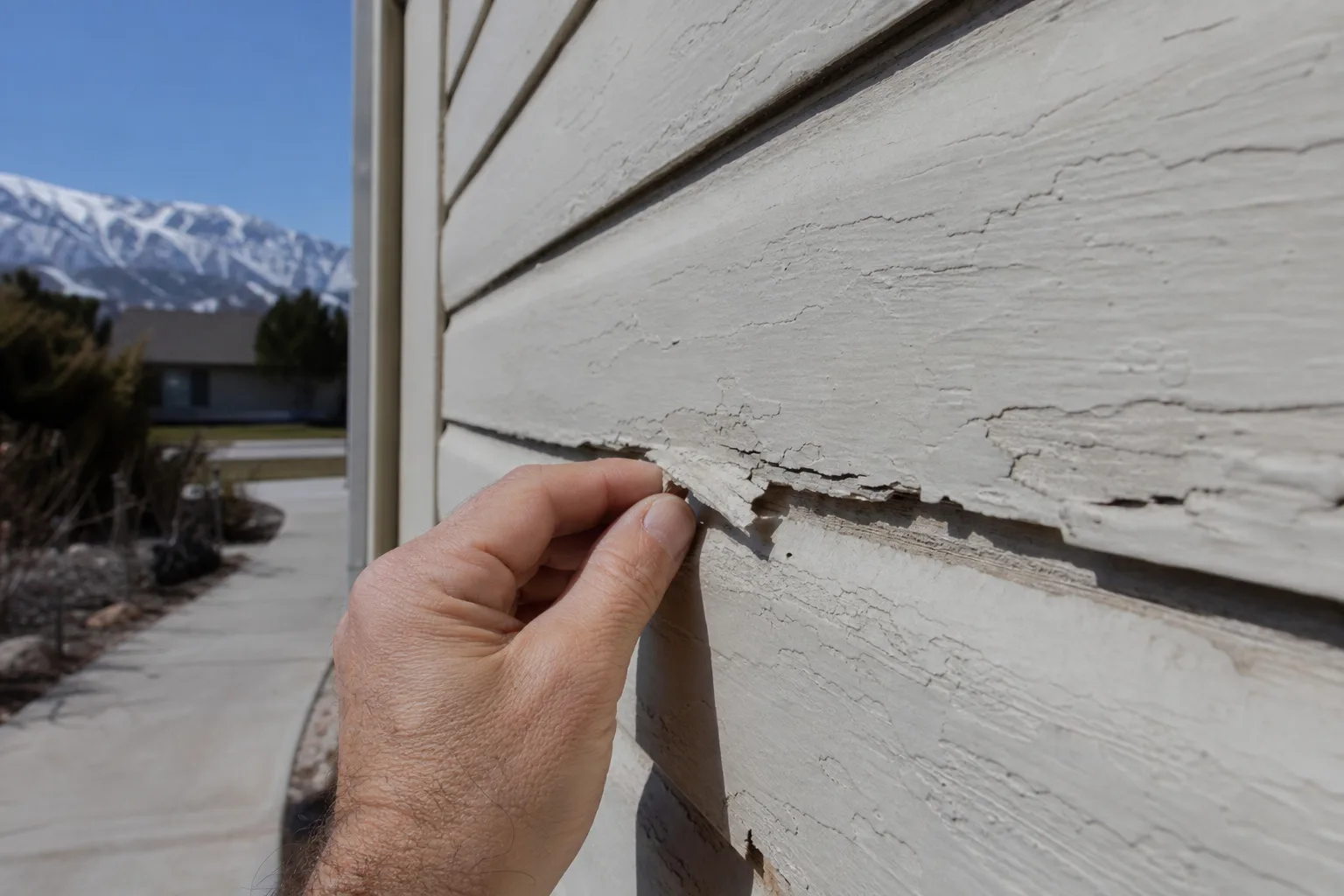
It isn't the heat alone. Anyone who has lived here through July knows the sun is relentless, but the real damage comes from the swing. According to the National Weather Service, northern Utah routinely moves through sharp temperature changes as seasons turn, and that cycle is what kills a rushed paint job. Paint expands and contracts with your siding. Water gets behind a weak edge during a thaw, freezes overnight, and pushes the film loose from the inside.
Then there's the wind. It funnels down American Fork and Provo Canyons, and it comes across Utah Lake with nothing to slow it down. Wind doesn't just strip paint, it drives grit and dust into the surface until the finish feels like sandpaper. Once that happens, new paint won't bond properly without a real cleaning and sanding first.
And the sun exposure is split. A south or west facing wall will fail years before the shaded north side of the same house. If a contractor quotes your whole exterior as one uniform job without pointing that out, ask why. The good ones will tell you which elevations need more prep before you ask.
Why prep is the entire ballgame here
I'd rather hire a crew that's slow and thorough than one that's quick and shiny. In this climate, prep is roughly two thirds of whether your paint lasts. Utah County has plenty of dry, warm stretches perfect for exterior work, which is exactly why a lot of work gets squeezed into a short window and rushed.
Proper prep here looks like this:
Wash the whole exterior, not just the visible siding, to get construction dust and lake grit off
Scrape and sand any loose or chalking areas back to a sound edge
Fill and caulk gaps at trim, window frames, and penetrations where freeze thaw finds a way in
Spot prime bare wood and any repaired patches, because raw material drinks paint unevenly
Use products rated for wide temperature swings, not the cheapest bucket on the shelf
Interior work follows a different logic. Indoors, your enemy is dry air and cheap paint that scuffs. Low sheen finishes on walls hold up better in hallways and family rooms than flat does, even though flat hides imperfections. If you're preparing a home for sale, the U.S. Department of Housing and Urban Development maintains resources on homeownership programs that are useful if a repair budget is part of your planning, particularly for buyers working through a first purchase. Our guide to seasonal care steps to protect your roof pairs well with a repaint plan.
A five year repaint cycle for the Wasatch Front
Here's the framework I use when friends ask me whether their house needs paint. It's a five year walk through, and it takes about twenty minutes with a notepad and a phone camera. I call it the two elevation check, and it's built around the fact that your house ages at different speeds on different sides. Anyone can do it on a Saturday, and it beats guessing based on how the house looks from the driveway.
Years one and two
Photograph the south and west elevations in direct sun. Look for fading and for a chalky film that rubs off on your hand. Note anything.
Years three and four
Check the caulk lines around windows and doors. Press a fingernail into the seal. If it's brittle or pulling away, water is getting in already, and repainting over failing caulk wastes the whole job.
Year five and beyond
Look at the underside of eaves and the shaded north wall. If the film there is still tight but the sunny walls are failing, you don't need a full repaint. You need the failing elevations done properly, and you can honestly tell a contractor that.
That last point matters more than people realize. Full house repaints get sold to homeowners who only needed two sides, and in a county where south facing walls cook while north facing walls sit in shade all day, that's money you didn't have to spend.
What a resale timeline changes
If your home is going on the market in the next twelve months, the calculus flips completely. Curb appeal stops being maintenance and starts being a number. Buyers in Lehi and Provo compare your house against new construction down the road, and fresh paint is the cheapest way to close that visual gap. I'd prioritize the front elevation, the entry, and any room a buyer walks through in the first thirty seconds, then stop. Nobody is judging your laundry room. A good rule is to spend on what the camera sees in listing photos and skip everything else.
Rentals are the opposite case. There you want durable finishes and neutral colors that survive back-to-back leases without a full repaint between tenants. Going bold in a college rental is money burned.
Choosing who does the work
Utah's air quality rules are worth a mention if you're sensitive to fumes or working in an occupied home, and the Environmental Protection Agency publishes consumer guidance on paints and coatings that covers what those labels actually mean. Beyond that, the questions that separate crews are boring ones. How do you handle prep? What product line, and why that one? Can I see a project you finished two winters ago, not two weeks ago?
That last question is the one that matters most. A two week old paint job looks great no matter who did it. A two winter old paint job tells you whether the prep held up through a real freeze thaw cycle, and that's the only review of a painter worth reading in this county.
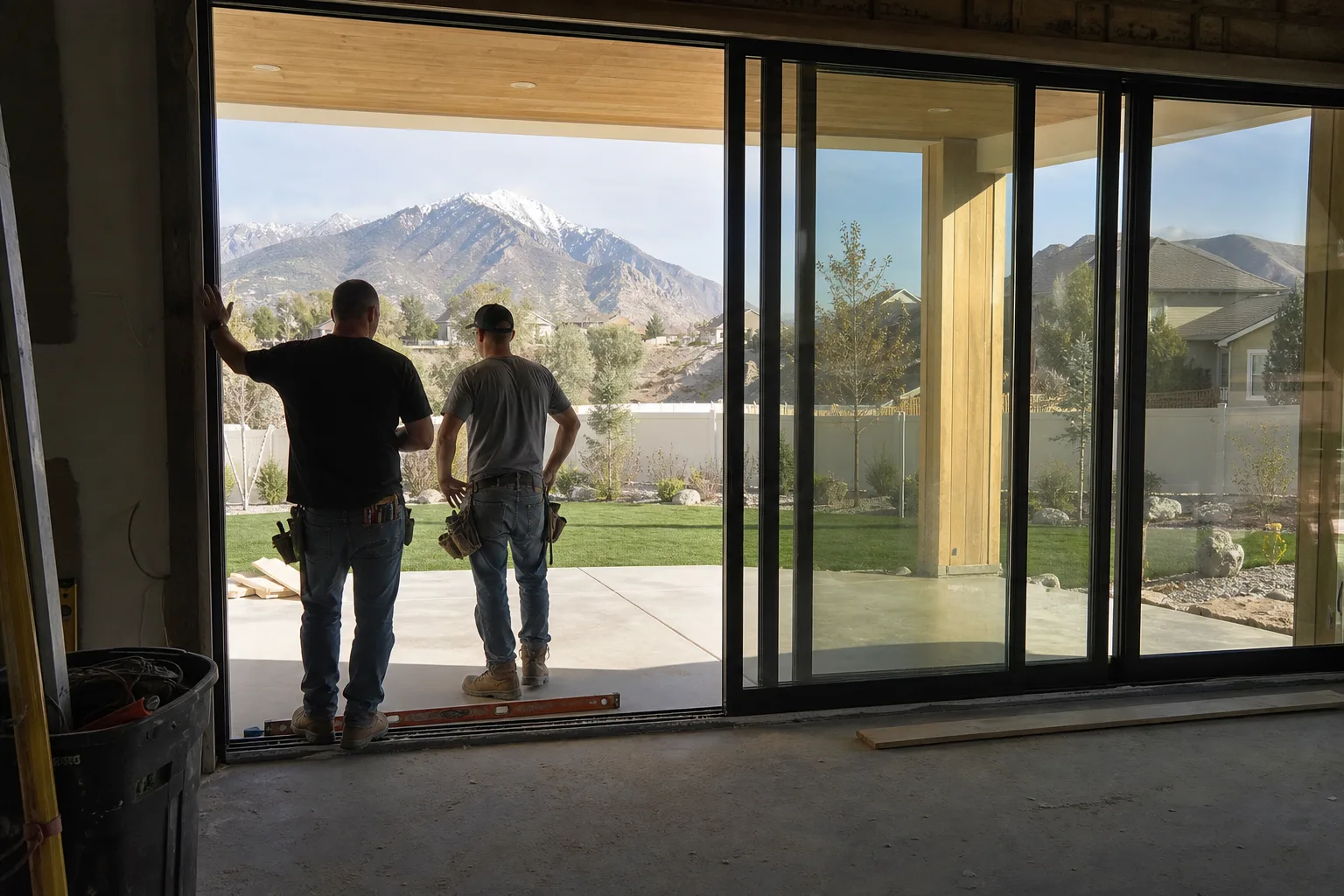
So take the twenty minute walk around your house this weekend. Photograph the sunny walls, poke the caulk lines, and write down what you find. That notepad will tell you more about your repaint timeline than any contractor's pitch, and when you do bring someone in, you'll be able to ask better questions than they expect. If you're buying and relying on a home inspection, remember paint condition rarely gets deep scrutiny, and upgrading Utah homes with new doors or windows means fresh caulk and trim paint too.
Frequently asked questions
How often should you repaint a house exterior in Utah County?
Why does exterior paint fail faster in Utah County?
Do I need to repaint the whole house or just some sides?
What prep work matters most before painting in Utah?
Should I repaint before selling my home in Utah County?
How can I judge a painter's work before hiring?
Keep reading
More from the blog

Democrats Win Congress: What It Means for Utah Mortgage Rates

Credit Union Personal Loan vs. Bank Offer: Key Differences

Buying a Utah Home With a Protection Dog in Mind: 6 Things to Check