What Your Home's Heating System Is Actually Doing at 3 A.M.
Your furnace runs a predictable four-stage cycle all night. Learn what each sound means, what to check before a cold snap, and when a noise calls for an emergency visit.
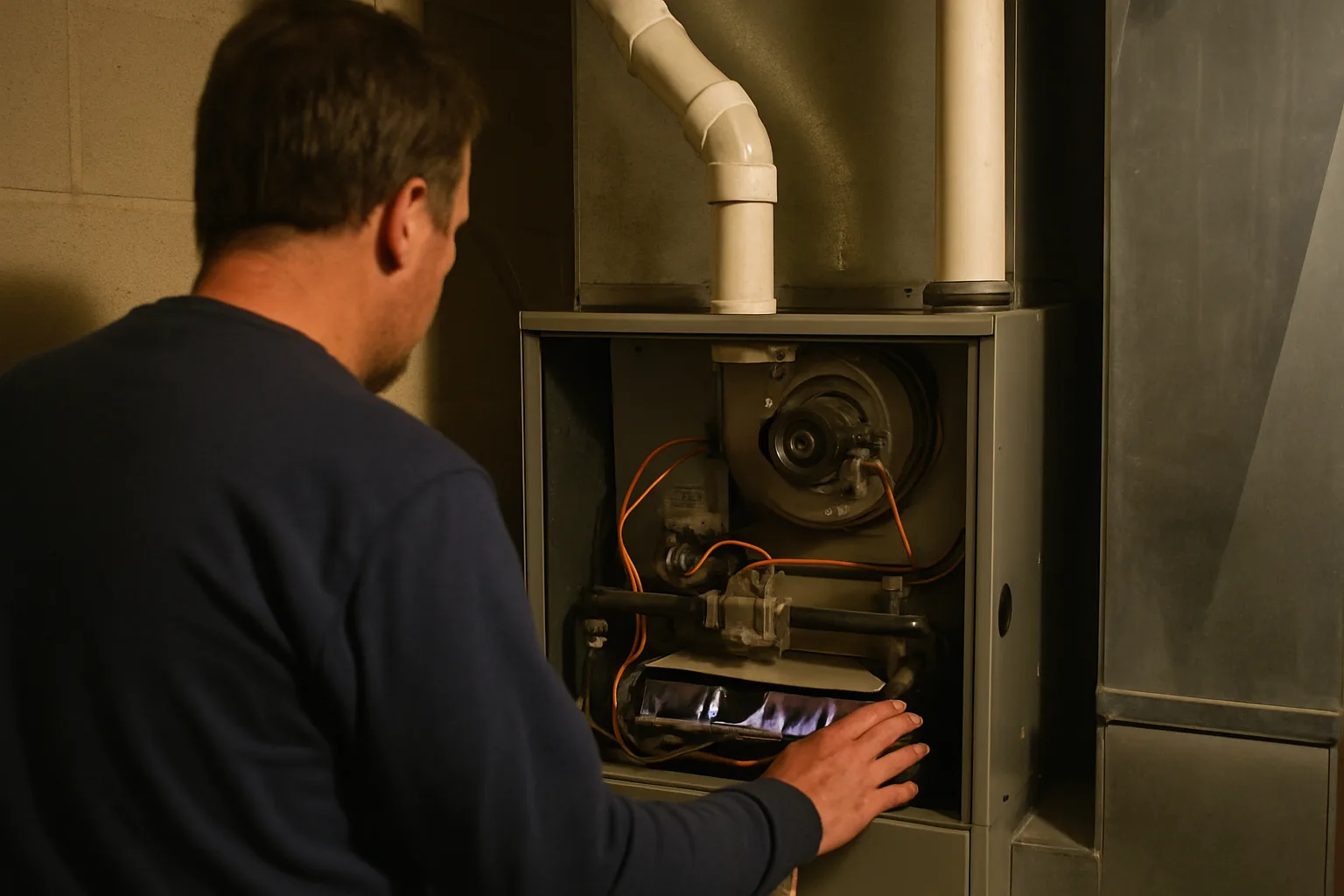
The house is quiet, and then it isn't. A click, a low whoosh, maybe a knock from somewhere near the basement stairs. If you've ever sat up in bed wondering whether that noise is normal, you're in the vast majority of homeowners. It's normal. Almost always.
Most people never think about their furnace until it stops working. But the system runs a tight, predictable loop all night long, and once you understand that loop, the strange sounds stop being scary and start being useful information. If something does go sideways at an awkward hour, a team offering 24 hour HVAC service for homes can walk you through it, but you'd be surprised how much you can diagnose from your own bedroom. Here's what's actually happening in your house between midnight and sunrise.
The Four-Stage Cycle Nobody Explains to You
Your furnace isn't a light switch. It's a sequence, and every stage has its own sound. I call this the Four-Stage Cycle, and once you can name each stage, you can tell a healthy system from a struggling one in about ten seconds.
Stage one: the call. Your thermostat drops below the set temperature and sends a signal. That's the click.
Stage two: the ignition. The inducer motor spins up first to clear the burners, then ignition happens. That's the whoosh, roughly 30 to 60 seconds after the click.
Stage three: the blower. The main blower pushes warmed air through the ducts. This is the long, steady hum you hear for several minutes.
Stage four: the cool-down. The burners shut off before the blower does, letting the last of the heat escape the heat exchanger. That's the second whoosh you hear at the end.
A healthy system hits all four stages in that order, every single time. If you hear a whoosh with no blower, or a blower with no whoosh, something's off. That pattern alone is worth more to a technician than any description you could give over the phone.
Why Overnight Is When Problems Show Up
Daytime heat cycles are short. Your house warms up fast, the system shuts off, and the flaws stay hidden. Overnight, the system has to work continuously against falling outdoor temperatures, and that's when weak components finally show themselves.
According to the Department of Energy, heating and cooling account for the largest share of a typical home's energy use, which means your system is the hardest working piece of equipment you own. energy.gov is worth bookmarking if you want to understand where your money actually goes each month. A furnace that ran fine in October can start short-cycling in January, and the difference is almost always the temperature gap, not a sudden mechanical failure.
Here's the thing most homeowners miss: your indoor comfort is a moving target. A system sized correctly for a mild evening will struggle on the coldest night of the year, and that's by design. Oversizing a furnace so it never struggles is worse, because oversized systems short-cycle, wear out faster, and leave cold spots in the rooms farthest from the unit.
What the Forecast Has to Do With Your Furnace
Your heating system is really a weather machine. It exists to fight the difference between the air outside and the air you want inside, and that difference is called the load. When the National Weather Service predicts a hard freeze, your system is about to face its biggest load of the season. You can check the forecast at weather.gov and see the battle coming before it arrives.
That means the night before a cold snap is the smartest time to do a five-minute check of the things you can actually control:
Replace the filter if it's gray. A clogged filter restricts airflow, and restricted airflow is the single most common cause of furnace problems.
Walk the house and feel every vent. Weak airflow in one room and strong in another usually means a duct issue, not a furnace issue.
Check the return grille. If a rug or a piece of furniture is covering it, the system is suffocating itself.
Clear the outdoor vents. High-efficiency furnaces pull air from outside and exhaust through pipes on the exterior wall. Snow or leaves blocking those pipes will shut the system down.
Set the thermostat, then leave it alone. Big setbacks overnight force a long recovery in the morning, which is harder on the system than holding a steady temperature.
None of this requires a tool kit. It requires ten minutes and a flashlight.
The Sounds That Mean Something (And the Ones That Don't)
Not every noise is a warning. Ticking from the ducts is metal expanding and contracting. A single loud bang at startup is usually a delayed ignition, which is worth a look but rarely an emergency. Whistling is a filter or duct restriction. Two sounds deserve real attention. A high-pitched screech often means a failing blower bearing, and it gets worse before it gets better. A low rumble that repeats every few minutes points to short cycling, which wears out the ignition system and the blower motor at the same time.
If either shows up at 3 a.m., you don't need to panic, but you do need to decide whether this is a tomorrow-morning call or a tonight call. If the house is losing heat and the temperature is heading toward the range where pipes are at risk, it's a tonight call. One thing I'd push back on: don't shut the system off completely just because it's making a noise you don't recognize. A furnace that's still running is still keeping your pipes above freezing, and in a hard freeze, that matters more than the noise. Check the outdoor temperature first, then decide.
Where the Safety Line Actually Sits
Furnaces burn fuel, and fuel produces combustion byproducts that need to leave your house. The National Institute of Standards and Technology publishes material on combustion safety and measurement, and their homepage at nist.gov is a good starting point if you want to understand what gets tested and why. You don't need to know the chemistry. You need to know one thing: if your carbon monoxide alarm sounds, you leave the house and call from outside. You don't open windows and go back to bed. You don't troubleshoot. That's the whole protocol, and no amount of furnace knowledge changes it.
Beyond that, the practical rule is simple. Strange noise with the house staying warm? Schedule a visit during business hours. No heat, no hot water, or a carbon monoxide alarm? That's when 24 hour hvac service stops being a convenience and starts being the right call. Most homeowners wait too long because they don't want to pay an after-hours rate, and then they pay for a frozen pipe instead.
The other thing worth saying: a maintenance plan costs less than almost any repair you'll face, and it catches problems in October instead of February. Every technician I've talked to says the same thing, which is that the emergency calls they wish they could prevent are the ones they had a chance to prevent the year before. New homeowners should build this into their post-move repair and expense budget, and buyers can weigh furnace age and upkeep when making an offer.
So the next time you hear that click, then the whoosh, then the hum, you'll know exactly what your house is doing and why. That's a better way to sleep than wondering. And if the cycle breaks, you'll know the difference between a morning phone call and a middle-of-the-night one, which is the only thing that actually matters at 3 a.m. If you're heating a home in colder spots like Pine Valley or Parowan, that winter load is even bigger.
Frequently asked questions
Why does my furnace make a whoosh sound at night?
What furnace noises mean I should call a technician?
Should I turn off my furnace if it makes a strange noise?
What should I do if my carbon monoxide alarm goes off?
Is it better to set the thermostat back overnight?
When is an after-hours HVAC call worth the cost?
Keep reading
More from the blog
Buying in Vineyard, Utah in 2026: What's Built and What's Still Coming Downtown
Selling a Utah Home With a Mechanic's Lien
Overlooked Drainage Details Shaping Modern Property Design